Discover how effective blog navigation improves SEO, user experience, internal linking, and content discovery while helping visitors find the right information quickly.
Introduction
Publishing high-quality blog posts is only valuable if readers can easily find them. Even the most informative content loses its impact when visitors struggle to navigate your website or discover related articles. That's why blog navigation plays a critical role in both user experience and search engine optimization.
A well-designed navigation system helps users explore your website naturally, encourages them to read multiple articles, and reduces frustration. At the same time, it helps search engines understand your website's structure, discover new pages faster, and distribute authority through internal links.
Modern blogs should offer more than a simple menu. Features like breadcrumb navigation, related posts, category pages, search functionality, popular articles, and clear internal links guide readers toward the information they need while increasing engagement and session duration.
Good navigation also supports topical authority, making it easier for Google and AI-powered search engines to understand how different pieces of content connect. This improves crawlability, indexing, and the overall SEO performance of your website.
Whether you run a business website, technology blog, educational portal, or eCommerce store, an organized navigation system creates a smoother user journey and helps convert visitors into loyal readers and customers.
In this comprehensive guide, you'll learn how to build effective blog navigation, improve content discoverability, optimize navigation for SEO, and create a website structure that benefits both users and search engines.
At Argenius, we design SEO-friendly websites and content structures that improve navigation, increase user engagement, and support long-term organic growth.
What is Blog Navigation?
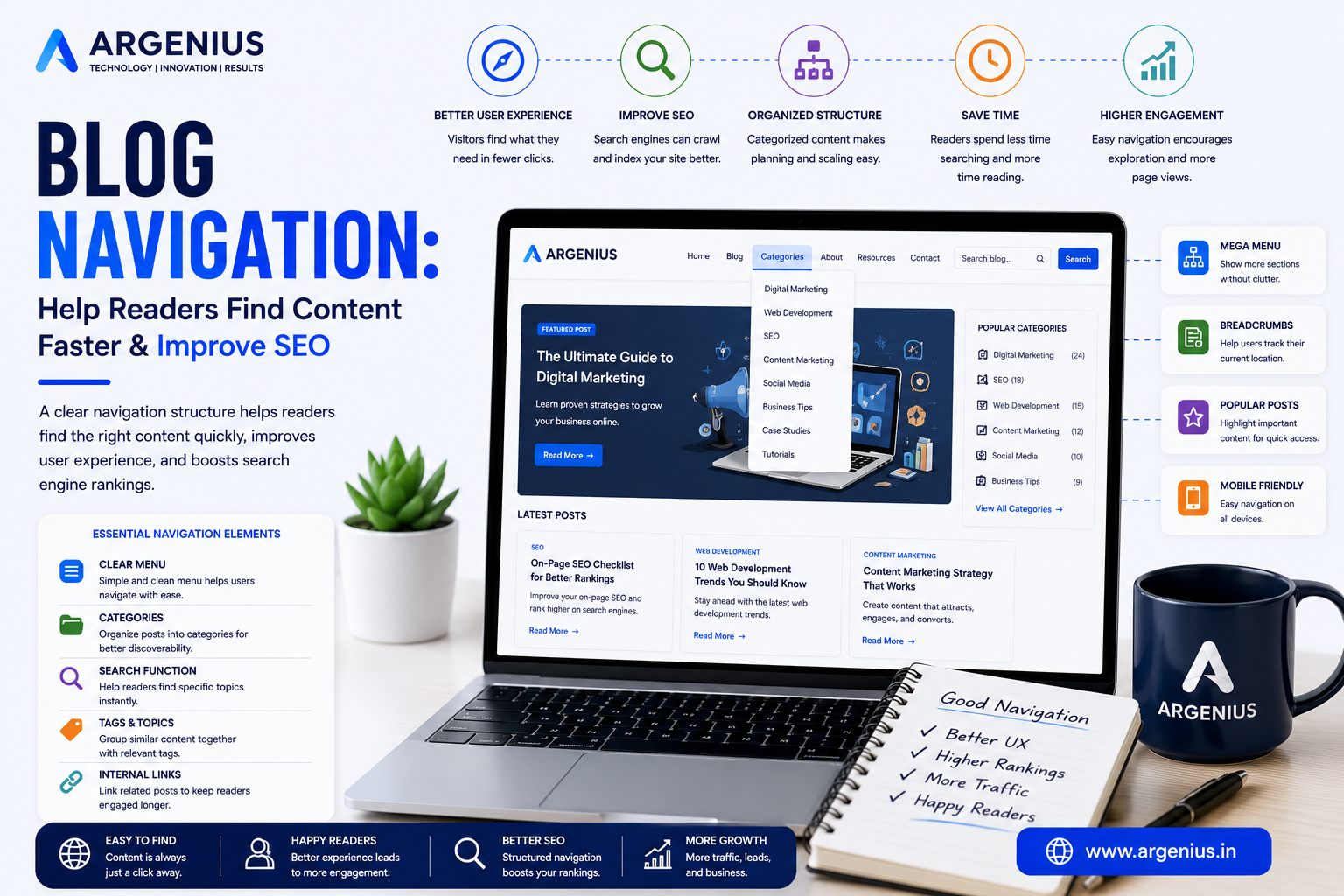
Blog navigation is the system that helps visitors move through your website and quickly find the content they're looking for.
It includes:
- Main Navigation Menu
- Categories
- Tags
- Breadcrumbs
- Search Bar
- Related Posts
- Popular Articles
- Sidebar Navigation
- Footer Links
- Internal Links
A strong navigation structure ensures users can reach important content with minimal effort.
Why Blog Navigation Matters
Easy navigation benefits both readers and search engines.
Key advantages include:
- Better User Experience
- Faster Content Discovery
- Improved SEO
- Lower Bounce Rate
- Higher Time on Site
- More Page Views
- Better Crawlability
- Stronger Internal Linking
- Higher Engagement
- Increased Lead Generation
Visitors who can easily find relevant information are more likely to stay on your website and take action.
Benefits of Good Blog Navigation
An organized navigation system provides long-term business value.
Benefits include:
- Improved Organic Rankings
- Better Website Structure
- Enhanced User Satisfaction
- Increased Content Visibility
- Better Mobile Experience
- Stronger Topical Authority
- More Returning Visitors
- Easier Website Management
- Higher Conversion Rates
- Long-Term SEO Growth
A well-planned navigation strategy supports both content marketing and business growth.
Essential Elements of Blog Navigation
Every successful blog should include:
Main Navigation Menu
Provides access to the most important sections of the website.
Categories
Organize content into broad topics.
Search Function
Helps users locate specific articles instantly.
Breadcrumb Navigation
Shows visitors where they are within the website structure.
Related Posts
Encourage readers to continue exploring similar content.
Popular Posts
Highlight the most useful or frequently visited articles.
Sidebar Navigation
Provides quick access to categories, recent posts, and featured content.
Footer Navigation
Offers additional links to important pages and resources.
Internal Links
Connect related articles to improve navigation and SEO.
Call-to-Action Sections
Guide visitors toward services, contact pages, or lead-generation opportunities.
Common Navigation Mistakes
Avoid these common issues:
- Complicated Menus
- Too Many Navigation Items
- Broken Links
- No Search Bar
- Missing Breadcrumbs
- Weak Internal Linking
- Confusing Category Names
- Poor Mobile Navigation
- Hidden Important Pages
- Inconsistent Navigation Structure
Simple and intuitive navigation always performs better than overly complex layouts.
How Navigation Improves SEO
Search engines rely on website structure to discover and understand content.
Good navigation helps:
- Improve Crawl Efficiency
- Strengthen Internal Linking
- Distribute Link Authority
- Improve Indexing
- Build Topic Clusters
- Reduce Orphan Pages
- Increase User Engagement
- Improve Core Web Vitals
- Enhance E-E-A-T Signals
- Support AI Search Visibility
A logical navigation system strengthens your entire SEO strategy.
Step-by-Step Framework for Creating Effective Blog Navigation
An organized navigation system helps visitors quickly discover valuable content while improving your website's SEO.
Follow this proven framework:
- Plan Your Website Structure
- Create Clear Main Navigation Menus
- Organize Content into Categories
- Add Search Functionality
- Implement Breadcrumb Navigation
- Link Related Blog Posts
- Display Popular & Recent Articles
- Optimize Navigation for Mobile Devices
- Improve Internal Linking
- Regularly Review and Update Navigation
A structured navigation system creates a smooth user journey and encourages visitors to explore more pages.
Creating User-Friendly Navigation Menus
Your navigation menu is one of the first things visitors interact with.
Best practices include:
- Keep Menu Items Simple
- Use Clear Labels
- Prioritize Important Pages
- Limit Primary Navigation Links
- Group Similar Topics
- Include Blog Categories
- Add Contact & Services Pages
- Keep Navigation Consistent
Simple menus improve usability and reduce visitor confusion.
Mobile Navigation Best Practices
A large percentage of visitors browse blogs using smartphones.
To improve the mobile experience:
- Use Responsive Menus
- Add a Hamburger Menu
- Keep Buttons Easy to Tap
- Optimize Loading Speed
- Avoid Large Dropdowns
- Keep Navigation Visible
- Use Sticky Navigation Where Appropriate
- Test Across Different Devices
Mobile-friendly navigation improves both SEO and user satisfaction.
Internal Linking Strategy
Internal links are one of the most effective navigation tools.
Best practices include:
- Link Related Articles
- Connect Topic Clusters
- Use Descriptive Anchor Text
- Link to Category Pages
- Link to Service Pages
- Update Older Articles
- Avoid Broken Links
- Balance Link Distribution
Strong internal linking helps readers discover more content while improving crawlability.
Breadcrumb Navigation
Breadcrumbs show visitors where they are within your website.
Example:
Home → Blog → SEO → Blog Navigation
Benefits include:
- Better User Experience
- Easier Navigation
- Improved Crawlability
- Rich Search Results
- Reduced Bounce Rate
- Better Site Structure
Breadcrumbs are especially useful for websites with large content libraries.
SEO Optimization for Blog Navigation
Navigation should support both users and search engines.
Optimize:
- Navigation Menu
- Category Pages
- Breadcrumb Navigation
- Internal Links
- URL Structure
- Heading Hierarchy
- XML Sitemap
- Footer Navigation
- Image Alt Text
- Schema Markup
A clean navigation structure improves indexing and strengthens overall SEO performance.
AI Search Optimization
AI-powered search engines understand websites better when navigation is logical and content relationships are clearly defined.
Improve AI visibility by:
- Using descriptive navigation labels.
- Creating logical content hierarchies.
- Connecting related articles.
- Organizing topic clusters.
- Writing unique category descriptions.
- Using structured headings.
- Adding FAQs.
- Keeping navigation simple and consistent.
These practices improve visibility in Google AI Overviews, ChatGPT, Gemini, and Perplexity.
Measuring Navigation Performance
Track these metrics to evaluate how effectively users navigate your blog.
Monitor:
- Average Session Duration
- Pages per Session
- Bounce Rate
- Navigation Clicks
- Search Usage
- Scroll Depth
- Internal Link Clicks
- Returning Visitors
- Organic Traffic
- Lead Conversions
Regular analysis helps identify areas where navigation can be improved.
Cost of Professional Blog Navigation Optimization (₹ INR)
| Service |
Estimated Cost |
| Basic Navigation Setup |
₹5,000 – ₹10,000 |
| SEO Navigation Optimization |
₹8,000 – ₹20,000 |
| Complete Website Navigation Planning |
₹15,000 – ₹40,000 |
| Advanced UX & Navigation Audit |
₹20,000 – ₹60,000 |
| Complete SEO & UX Strategy |
₹30,000 – ₹2,00,000+ |
Factors Affecting Cost
The overall investment depends on:
- Website Size
- Number of Pages
- Navigation Complexity
- User Experience Design
- SEO Requirements
- Internal Linking Strategy
- Technical Improvements
- Ongoing Maintenance
A professionally planned navigation structure improves usability, SEO, and long-term business growth.
Best Practices
Follow these best practices for blog navigation:
- Keep navigation simple and intuitive.
- Organize content into logical categories.
- Use descriptive menu labels.
- Add breadcrumb navigation.
- Include a powerful search feature.
- Build strong internal links.
- Optimize for mobile devices.
- Highlight popular and related posts.
- Regularly audit navigation performance.
- Remove broken or outdated links.
These practices create a seamless browsing experience while supporting SEO.
Common Mistakes to Avoid
Avoid these common navigation errors:
- Overcrowded navigation menus
- Too many dropdown levels
- Broken internal links
- No search functionality
- Missing breadcrumbs
- Poor mobile usability
- Confusing category names
- Inconsistent navigation
- Hidden important pages
- Never updating the navigation structure
Keeping navigation clean and user-focused improves engagement and discoverability.
Future Trends in Blog Navigation
Navigation continues to evolve with changing user behavior and AI technologies.
Emerging trends include:
- AI-Powered Content Recommendations
- Personalized Navigation
- Voice Search Navigation
- Semantic Content Clustering
- Intelligent Internal Linking
- Dynamic Navigation Menus
- AI Search Optimization
- Visual Search Experiences
- Predictive User Journeys
- Entity-Based Website Architecture
Businesses adopting these innovations will deliver better user experiences and stronger search visibility.
Why Businesses Choose Argenius
At Argenius, we design SEO-friendly websites with intuitive navigation that helps visitors discover content quickly while improving search engine performance.
Our services include:
- Website Navigation Planning
- SEO Content Strategy
- Internal Linking Optimization
- Keyword Research
- Technical SEO
- On-Page SEO
- Website Development
- WordPress Development
- Digital Marketing
- Performance Optimization
Our focus is on creating websites that are easy to navigate, optimized for search engines, and built to generate long-term business growth.
Final Thoughts
An effective blog navigation system is much more than a menu—it shapes how visitors experience your website and how search engines understand your content. Clear navigation, logical categories, strategic internal links, and mobile-friendly design help readers find valuable information quickly while improving crawlability and SEO performance. When visitors can easily explore your content, they spend more time on your website, engage with additional pages, and are more likely to become customers.
As your blog expands, regularly review your navigation structure to ensure it remains simple, organized, and aligned with your content strategy. Small improvements, such as refining menus, adding breadcrumbs, and strengthening internal links, can significantly improve both user satisfaction and search rankings. At Argenius, we help businesses build SEO-optimized website navigation that enhances user experience, supports topical authority, and drives sustainable organic growth.
Frequently Asked Questions
What is blog navigation?
Blog navigation is the system that helps visitors move through your website using menus, categories, search, breadcrumbs, internal links, and related posts to find relevant content quickly.
Why is blog navigation important for SEO?
Good navigation improves crawlability, strengthens internal linking, enhances user experience, reduces bounce rates, and helps search engines understand your website structure.
What should every blog navigation include?
A well-structured blog should include a clear menu, categories, search functionality, breadcrumb navigation, related posts, internal links, and footer navigation.
How does breadcrumb navigation help?
Breadcrumbs improve navigation by showing users their location within the website hierarchy, making it easier to move between pages while also supporting SEO.
Should blog navigation be optimized for mobile?
Yes. Responsive menus, touch-friendly buttons, and fast-loading navigation are essential for providing a good mobile experience and improving search performance.
Does Argenius provide website navigation optimization?
Yes. Argenius offers website navigation planning, SEO optimization, internal linking strategies, website development, technical SEO, and digital marketing services to create user-friendly websites that improve engagement and generate more leads.