
Micro Frontends: Modern Architecture for Scalable & Enterpri...
Micro Frontends enable development teams to build scalable web applications by dividing the frontend...
Read MoreSupport By : +91 63927 02800
Fashion is one of the most visually demanding and brand-sensitive categories in ecommerce — and the gap between a fashion website that genuinely represents a brand's identity and one that presents the same clothes generically is enormous. A fashion website is not just a catalogue of products with buy buttons — it is the digital equivalent of a flagship store, communicating the brand's aesthetic, its values, its target customer's lifestyle, and the quality of its products through every visual and experiential choice made in its design and build. When this is done well, customers do not just buy from the website — they develop a relationship with the brand and return for every new season's collection. When it is done poorly, even genuinely excellent fashion products fail to generate the customer loyalty they deserve because the brand experience online does not match the quality of the physical product.
As a specialist fashion website development company with 1,300+ fashion brand and clothing business websites built over 15 years — for clothing brands, designer boutiques, ethnic wear specialists, jewellery brands, accessory labels, sportswear companies, kids fashion brands, multi-brand fashion retailers, and fashion marketplaces — we bring both the visual design sensitivity and the ecommerce technical capability that fashion websites require. Our clothing brand website development and fashion ecommerce website design work is built on understanding fashion psychology, how online fashion customers browse and buy, what product presentation elements most influence purchase decisions, and how the technical aspects of a fashion website — loading speed, mobile shopping experience, size guide accuracy, returns policy clarity — collectively determine whether a fashion brand builds an online customer base or loses potential buyers to friction at every step of the purchase journey.

Our apparel website development India services cover every type of fashion business — from D2C clothing brands launching their first online store to established designer boutiques, ethnic wear specialists, multi-brand fashion retailers, and fashion marketplace platforms building national-scale fashion commerce.
A complete D2C online fashion store development project creates the brand-owned sales channel that gives your clothing brand control over its customer relationships, its brand presentation, and its margins — without marketplace commission structures or algorithm-controlled visibility. We build fashion brand ecommerce websites with complete product catalogue management, size and variant handling, lookbook and collection launch capabilities, customer account and order history, multiple payment options, and the brand storytelling sections that turn a product catalogue into a brand experience that customers return to.
Learn MoreDesigner boutiques and independent fashion labels need boutique website development that communicates the exclusivity, craftsmanship, and creative identity that distinguishes a curated boutique from mass-market fashion — through design quality that matches the brand's aesthetic, product photography presentation that gives each piece the attention it deserves, the designer's story and creative philosophy, collection launches and lookbooks that generate excitement among the brand's audience, and appointment or custom order enquiry systems for boutiques that work with clients personally.
Learn MoreEthnic wear — sarees, lehengas, salwar kameez, sherwanis, wedding wear, festival collections — requires website design that honours the richness and cultural depth of Indian traditional fashion while making the online buying experience as intuitive and confidence-building as possible for customers who are making significant purchasing decisions for important occasions. We build ethnic wear brand websites with the visual grandeur these collections deserve, detailed fabric and embellishment descriptions, occasion-based filtering, customisation options for bridal and wedding wear, and the authenticity that traditional fashion customers look for when evaluating whether a brand understands and respects the craft it sells.
Learn MoreMulti-brand fashion retailers and fashion marketplace platforms need fashion brand web development that serves both the customer-facing shopping experience and the brand or seller management backend simultaneously. We build fashion marketplaces with brand onboarding systems, product listing management for multiple sellers, unified search and category navigation across the entire catalogue, individual brand storefront pages, order routing and fulfillment coordination, seller dashboards with sales analytics, and the customer account experience that makes multi-brand fashion shopping feel curated rather than cluttered.
Learn More
Fashion website development costs depend on the number of products, design complexity, brand category (mass market versus luxury), whether you need a standard product catalogue or a full ecommerce store with brand experience features. All pricing is fixed before work begins.
| Website Type | Best For | Key Features | Price Range (INR) 💰 |
|---|---|---|---|
| Starter Fashion Store | New Clothing Brands / Small Boutiques | Up to 100 Products, Brand Design, Collection Pages, Size Guide, Razorpay, Basic SEO | ₹25,000 – ₹60,000 |
| ⭐ Professional Fashion Brand Website | Established Clothing Brands / D2C Fashion | Custom Design, Full Catalogue, Lookbook, Wishlist, Reviews, Loyalty, Multi-Payment, SEO | ₹60,000 – ₹2,00,000 |
| Boutique / Designer Website | Designer Labels / Luxury Boutiques | Premium Design, Curated Collection, Appointment Booking, Custom Order Enquiry, Campaign Pages | ₹80,000 – ₹2,50,000 |
| Ethnic Wear Brand Website | Saree / Lehenga / Wedding Wear Brands | Rich Visual Design, Fabric Details, Occasion Filter, Customisation Enquiry, Regional Language Option | ₹70,000 – ₹2,00,000 |
| Jewellery Brand Website | Jewellery and Accessories Brands | High-Resolution Gallery, Metal / Stone Filter, Try-On Feature, Certificate Display, Custom Orders | ₹60,000 – ₹2,00,000 |
| Fashion Marketplace / Multi-Brand | Fashion Retailers / Multi-Brand Platforms | Brand Onboarding, Multi-Seller CMS, Unified Cart, Seller Dashboards, Analytics, API | ₹3,00,000 – ₹15,00,000 |
👉 Note: Fashion website development cost in India depends on product count, design complexity, brand positioning (mass market to luxury), and ecommerce feature requirements. Contact us for a detailed, fixed-price proposal tailored to your fashion business — delivered within 24 hours of our discovery discussion.
Every fashion website project begins with deep understanding of the brand — its aesthetic identity, its design philosophy, its target customer profile (age, lifestyle, spending habits, fashion sensibility), its competitive positioning, and what makes it genuinely distinctive from every other brand in its category. A streetwear brand targeting 18-25 year olds needs a completely different visual language and shopping experience from a bridal wear brand serving mothers and daughters planning once-in-a-lifetime celebrations. Understanding this brand identity and customer profile is the non-negotiable foundation for every design and build decision that follows.
Fashion website design is a specialist discipline — it must communicate the brand's visual identity while creating a shopping experience that is intuitive enough that customers can browse and buy without friction, and beautiful enough that browsing the website feels like a pleasurable brand interaction rather than a utilitarian transaction. We develop the visual design direction — typography, colour system, layout approach, photography treatment — that authentically expresses the brand's identity, then design the full website experience from homepage to product page to checkout with the combination of visual impact and functional clarity that converts fashion browsers into buyers.
In fashion ecommerce, product presentation quality is a direct sales driver — the better a product looks on the website, the more units it sells. We design product pages that present each item with the photography depth, colour accuracy, detail visibility, and size information that give online shoppers the confidence to buy without trying on. We plan the catalogue architecture — how products are categorized, how collections are organized, how filtering works — to serve the browsing behavior of fashion customers who often shop by occasion, colour, style, or material rather than a specific product they already have in mind.
We develop the complete fashion ecommerce website — product catalogue with size and colour variants, shopping cart with saved cart functionality, wishlist and favourites, guest and registered checkout, multiple payment options (Razorpay with UPI, cards, and net banking), prepaid and COD options, order confirmation and status emails, returns and exchange request system, and the admin dashboard that gives your team full catalogue management, order management, and customer management capability. Fashion-specific features like size guides, outfit suggestions, and recently viewed products are built to the standard that fashion customer shopping expectations require.
We manage the complete launch — hosting, SSL, Google Analytics 4 with ecommerce tracking, Google Search Console submission, fashion-specific structured data implementation for Google Shopping, and the Product schema markup that helps your products appear in Google Shopping results and product knowledge panels. We set up fashion brand social media shopping integrations where applicable — Instagram Shopping, Facebook Shop, and Pinterest Product Pins. We provide comprehensive training for your fashion brand team on catalogue management, order processing, inventory updates, collection launches, promotion and discount management, and the analytics dashboards that show you which products are selling, which are being wished for but not purchased, and where in the checkout flow potential customers are dropping off.
The fashion marketplace model in India has created enormous opportunity for clothing brands to reach customers at scale — Myntra, Amazon Fashion, Flipkart Fashion, Meesho, and Ajio collectively serve hundreds of millions of fashion shoppers who the average independent fashion brand could never reach through its own marketing. For most fashion brands, being present on one or more of these platforms is genuinely valuable and should remain part of the brand's distribution strategy. The problem is when the marketplace becomes the brand's only online presence — because that is when the brand loses something it can never fully recover through marketplace sales: the customer relationship.
When a customer buys your clothing on Myntra, they know they bought from Myntra. They have a Myntra account, Myntra loyalty points, Myntra notifications about future sales, and a Myntra relationship that will direct them to your competitors' products in the same category as readily as it will show them your next collection. You do not know who this customer is. You cannot communicate with them directly. You cannot tell them about your new collection unless they happen to see it in Myntra's algorithm-controlled feed. And you are paying 25% to 40% commission for every unit sold through this channel that costs you the customer relationship. A brand-owned website changes all of this — every direct customer becomes a brand relationship rather than a marketplace transaction, and that relationship compounds in value with every season.
What a fashion brand's own website provides that marketplace presence cannot:
The most successful Indian fashion brands use both channels — marketplaces for customer acquisition at scale, and their own website for customer retention, brand building, and margin improvement. Building the owned channel alongside the marketplace presence is the strategic investment that the most commercially sustainable fashion businesses consistently make.
The fashion product page is where the purchase decision is made or lost — and it is the most important page on any fashion ecommerce website. A customer who arrives on a product page is typically already interested in the item. They want to visualise themselves wearing it, understand how the fit works, assess the quality through the photography and description, verify that their size is available, check the price and any offers, confirm the returns policy so they are not taking a risk they cannot recover from, and then complete the purchase as smoothly as possible. Every element of the product page either supports or undermines each of these mental steps.
Most Indian fashion websites — particularly independent clothing brands — fail the fashion product page at multiple points. Insufficient photography — single flat-lay images without model photography do not help customers visualise fit. Vague size guides — "S/M/L available" without actual measurements leaves customers who have been burned by incorrect online size guesses too uncertain to purchase. Missing fabric and care information — customers making purchase decisions for higher-priced items specifically look for fabric composition and care instructions before buying. Unclear return and exchange policy — customers who are not confident they can exchange if the size or colour is wrong will not buy from a brand they have not purchased from before. We build fashion product pages that address every one of these conversion points — because the product page that serves every mental step in the purchase decision converts browsers into buyers at a dramatically higher rate than one that addresses only some of them.
The specific product page elements we build into every fashion ecommerce website:
A fashion product page built with all of these elements consistently converts at 2x to 4x the rate of a minimal product page on the same item — because it gives every type of fashion buyer the specific information they need to feel confident in their purchase without the product in their hands.
Fashion brands live by their collections — seasonal drops, festive edits, collaborative capsules, and limited edition releases that create excitement and drive purchase urgency among loyal customers. We build collection and lookbook management systems that allow your team to launch new collections as events — with editorial photography presentation, collection story content, early access and pre-order capability for loyal customers, and the social sharing architecture that turns collection launches into organic awareness moments when customers share lookbook imagery on their social media. Each collection is managed through a simple admin interface that lets your team publish new launches without developer assistance.
Size uncertainty is the single largest barrier to first-time purchase for online fashion buyers in India — customers who have been burned by inconsistent sizing from online brands are understandably cautious about ordering from a brand they have not previously purchased from. We build comprehensive size guide systems with brand-specific measurements in multiple size scales, body measurement input tools that recommend the right size for the customer's measurements, fit notes on individual products noting whether items run small or large, and model photography with model height and the specific size worn displayed — giving customers the multiple data points they need to make a confident size decision without needing to exchange the order because of sizing uncertainty.
Fashion is one of the highest-volume product search categories on Google — Indian consumers search for specific clothing types, occasions, colours, and styles with extraordinary specificity. We build fashion-specific SEO architecture into every website — Product structured data that enables Google Shopping appearance, collection and category pages optimized for the specific search queries your target customers use, product descriptions structured for both search visibility and purchase conversion, image alt text that captures visual search queries, and the sitelink search box that helps repeat customers find specific products directly. Fashion brands with properly structured SEO consistently generate meaningful organic traffic to their product pages from customers who were searching for exactly what they sell.
Customer reviews with outfit photographs are the highest-converting social proof available in fashion ecommerce — and the Indian fashion buyer's increasing sophistication means they actively look for customer reviews and real-customer photographs before purchasing from a new brand. We build comprehensive review systems that encourage customer photo submissions post-delivery, display reviews with product-specific filtering, integrate Instagram user-generated content where customers have tagged the brand, and show review summary statistics that give first-time visitors an immediate impression of the brand's customer satisfaction record. Brands with 50+ product reviews with customer photographs consistently convert first-time visitors at significantly higher rates than those without this social proof.
Fashion brands that build customer retention through loyalty systems consistently achieve higher customer lifetime value than those that treat every purchase as a standalone transaction. We build loyalty programme infrastructure — points earning on every purchase, bonus points on new collection purchases, exclusive early access for loyalty members, birthday discounts, and referral rewards — integrated directly into the ecommerce platform so loyalty accrual and redemption happens automatically without manual management overhead. For fashion brands with both physical and online presence, we build loyalty systems that work across both channels, recognising and rewarding customers wherever they purchase.
Fashion browsing in India is overwhelmingly mobile-first — customers discover fashion brands on Instagram, click through to the website on their phone, browse collections while commuting, and increasingly complete purchases without ever viewing the website on a desktop. We design every fashion website as a mobile-first experience — with swipe-navigable product image galleries, thumb-friendly size and colour selection, one-tap add to cart, simplified mobile checkout with UPI payment integration that reduces checkout friction to the absolute minimum, and the loading speed optimization that keeps impatient mobile shoppers engaged rather than bouncing before the product images finish loading.
Our fashion ecommerce website design experience covers every category of the Indian fashion industry — from emerging D2C clothing brands launching their first online store to established designer labels, ethnic wear specialists, jewellery brands, and fashion marketplace platforms. Every fashion category has its own customer psychology and website requirements.

As an experienced fashion website development company in India, we understand that a luxury designer label's website requires a completely different visual language and customer experience from a value-for-money ethnic wear brand or a youth-focused streetwear label — and we apply this fashion-category-specific expertise to every project rather than using the same generic ecommerce template for every fashion business.
We deliver fashion store website design services for fashion brands and clothing businesses across India — from fashion hubs like Delhi's Sarojini Nagar and Chandni Chowk to Mumbai's fabric markets, Surat's textile industry, Jaipur's ethnic wear manufacturers, and the emerging fashion startups building national brands from every Indian city.
Fashion website development requires a genuinely different approach from standard ecommerce development — it requires understanding fashion aesthetics and brand identity, knowing how fashion customers browse and buy online, appreciating the visual standards that fashion product photography demands, and designing the product page elements that specifically address the unique conversion barriers of fashion ecommerce — size uncertainty, quality assessment through a screen, and fit visualisation without a fitting room. Generic ecommerce development without this fashion-specific understanding produces fashion websites that function as ecommerce but fail as fashion brand experiences.
With 1,300+ fashion brand websites built over 15 years, our team brings genuine fashion ecommerce expertise to every project — understanding both the creative and the commercial requirements of fashion digital presence.

We have built over 1,300 fashion brand and clothing business websites across India — for every fashion category from ethnic wear to luxury fashion to sportswear. This depth of real fashion website experience means we understand what works at the product page, collection page, and checkout levels for Indian fashion ecommerce customers specifically.
We design fashion websites that are genuinely specific to each brand's visual identity — not a generic ecommerce template with the brand's logo placed on it. Every colour choice, typography selection, photography treatment, and layout decision is made in service of expressing the brand's specific aesthetic and communicating its identity to its target customer with authenticity and precision.
We design every fashion website as a mobile-first experience because that is where India's fashion shoppers are — browsing on phones, discovering on Instagram, and increasingly completing purchases without visiting the desktop. Swipeable galleries, thumb-friendly navigation, UPI checkout, and fashion-category-specific mobile shopping UX are built into every project as standard requirements.
We build fashion-specific SEO into every website — Product structured data for Google Shopping, collection and category pages optimized for fashion search queries, image optimization with descriptive alt text that captures visual searches, and the fashion content strategy that builds organic product discovery through Google over time. Fashion brands with strong organic search presence consistently grow at lower customer acquisition cost than those dependent entirely on paid social advertising.
We configure fashion ecommerce-specific analytics tracking — product page views versus add-to-carts versus purchases for each SKU, collection performance comparison, checkout abandonment by stage, size selection patterns, and wishlist analytics — giving your team the data to understand exactly which products are loved but not converting (often a size or photography issue) and which are converting well and should be expanded or restocked.
























These numbers represent real fashion websites built for real clothing brands and fashion businesses across India — brands that built loyal direct customer bases, reduced marketplace dependency, and created digital brand experiences that customers return to for every new collection and every seasonal wardrobe update.


Every garment your brand creates represents a creative vision — a specific aesthetic, a quality standard, a customer relationship that your design and manufacturing process has invested in. When that garment is presented on a generic ecommerce template, stripped of brand context, competing for attention with identical-looking products on a marketplace platform, it cannot fully communicate the value and distinctiveness that went into creating it. The customer sees the product but not the brand — and in fashion, the brand is often what makes the product worth what it costs.
A brand-owned fashion website changes this entirely. It gives your brand the space to tell its story — where the fabrics come from, how the designs are developed, what the quality standards mean in practice, who the designers and makers are, and what community of customers has already chosen this brand as part of their personal style. These brand dimensions do not just make customers feel good about their purchase — they make customers willing to pay fair prices for quality clothing rather than expecting marketplace discount prices, and they make customers return for every subsequent collection rather than treating each purchase as a one-time transaction.
Whether you are launching a new clothing brand and want to start with a digital presence that reflects your brand ambitions from day one, an established fashion business that wants to reduce marketplace dependency and build direct customer relationships, or a designer boutique that wants to extend your physical store experience to an online audience — our team is ready to build the fashion digital presence your brand deserves with 15 years of fashion website expertise and genuine appreciation for what makes fashion brands distinctive.
Whether you need a clothing brand website development project that launches your D2C brand with the right digital foundation, a fashion ecommerce website design that makes your existing collection sell better online, a boutique website development for your designer store, an apparel website development India project for your established clothing business, or an online fashion store development platform that builds your brand's owned customer base alongside your marketplace presence — our team has the specific fashion website expertise, visual design capability, and ecommerce technical depth to build a website that genuinely represents your brand and grows your fashion business.
Tell us about your fashion brand — its aesthetic, its customer, its product range, and what you most need the website to achieve. We will respond within 24 hours with an honest assessment and a fixed-price proposal.
15 years of fashion website expertise. 1,300+ fashion brands served. Every category. Brand-first approach always.
Honest answers to the questions fashion brand founders and clothing business owners most commonly ask when planning a website project in India.
Fashion website development cost in India depends on the brand category, product count, design requirements, and ecommerce feature scope. A starter fashion ecommerce store for a new clothing brand with up to 100 products typically ranges from ₹25,000 to ₹60,000. A professional fashion brand website with custom design, complete product catalogue, lookbook, wishlist, reviews, and loyalty system typically ranges from ₹60,000 to ₹2,00,000. A boutique or designer brand website with premium design and custom order capability typically ranges from ₹80,000 to ₹2,50,000. An ethnic wear or jewellery brand website with specialty features like customisation enquiry, fabric detail pages, and occasion filtering typically ranges from ₹60,000 to ₹2,00,000. A multi-brand fashion marketplace typically ranges from ₹3,00,000 to ₹15,00,000. We provide a detailed, fixed-price proposal for your specific fashion business after our discovery discussion.
Both are legitimate choices for Indian fashion brands, and the right answer depends on your specific requirements and growth stage. Shopify is excellent for fashion brands that need to launch quickly, want reliable hosting without server management, need access to a large app ecosystem for marketing and operations, and plan to scale to significant order volumes — Shopify handles high-traffic fashion sales reliably. A custom-built fashion website (typically on WooCommerce or a custom Laravel backend) is the right choice when you need specific functionality that Shopify's platform cannot accommodate, want complete design flexibility without template constraints, need deep integration with custom inventory or manufacturing systems, or prefer not to pay ongoing Shopify subscription fees as the business scales. For most emerging Indian fashion brands, we recommend starting with either a well-configured Shopify store or a WordPress WooCommerce store — both provide solid foundations for growth without over-engineering the technical infrastructure before the brand has validated its market. We advise every fashion client honestly on the right platform for their specific situation during our discovery conversation.
Returns and size exchanges are the most significant operational challenge for online fashion businesses in India, and how they are handled on the website affects both the customer experience and the conversion rate of first-time buyers. We build returns and exchange systems with several key elements. A clear returns policy page with specific timeframes, conditions, and process steps — linked prominently from every product page and from the footer. A self-service returns initiation system where customers can log their return request with reason, providing the customer with a reference number and the business with the structured data needed to process the return efficiently. A size exchange workflow that processes size swap requests alongside returns — including whether the correct size is available before committing the customer to the exchange wait. Prepaid return shipping label generation where the business offers this service. And the policy language that is specific enough to be actually useful — "14-day returns for unworn, unwashed items with tags attached, excluding sale items and custom orders" is more trustworthy and more conversion-positive than "hassle-free returns." We build the policy and process around your specific returns operations rather than a generic returns template.
Every fashion website we build includes a product management system specifically designed for the operational realities of running a fashion ecommerce business — where new products need to be added before collection launches, size and colour availability needs to be updated as stock changes, seasonal price adjustments need to be managed, and discontinued products need to be removed or archived without breaking existing URLs. We design the product management CMS around your team's specific workflow — whether that is a single founder managing everything themselves or a larger team with separate catalogue, inventory, and marketing roles. We provide comprehensive training after launch covering product addition, variant management, inventory level updating, collection and category management, promotional pricing, and order management. For fashion businesses with larger product catalogues, we can implement CSV bulk product import functionality so large catalogue updates do not require entering each product individually through the admin interface. We also provide documentation of all common product management tasks that your team can reference independently when they encounter an unfamiliar situation after launch.
Competing directly with Myntra or Nykaa Fashion on product discovery, search visibility, or brand awareness at scale is not a realistic objective for an independent fashion brand website — these platforms have marketing budgets and customer bases that no independent brand can match directly. The effective strategy for a fashion brand website is differentiation and customer retention rather than head-to-head platform competition. Your brand website competes not for the same marketplace customer who browses Myntra's entire catalogue — it serves your existing customers and brand-loyal prospects who specifically want to buy from your brand and will visit your website directly once they know it exists. The brand website's job is to convert the customers that social media, word of mouth, and marketplace exposure have already introduced to the brand into direct, loyal buyers who check your website first when they want new clothes. Practically, this means communicating brand story and brand values that marketplace listings cannot communicate, offering a superior product experience and brand relationship that makes direct purchase preferable to marketplace repeat purchase, and using email marketing, WhatsApp communications, and loyalty programmes to build habitual direct buying behavior among your most valuable customers. Many successful Indian fashion brands use marketplace presence for acquisition and their own website for retention — a combined strategy that is more effective commercially than either channel alone.
Photography quality is the single most important factor in fashion ecommerce conversion — because online fashion customers make purchase decisions almost entirely based on what they can see in product images. The minimum photography required for a fashion website to convert effectively is: model photography showing each product being worn, photographed from front and back, on a model whose height is specified so customers can assess garment length; detail photography showing fabric texture, embellishment, print detail, and any craft elements that justify the product's price; and flat-lay or ghost mannequin photography as supplementary images showing the garment's silhouette. For brands selling multiple colour variants of the same style, photographs of every colour variant are significantly more conversion-effective than a single colour with a colour swatch — customers can see the actual colour rendering in photography rather than trusting a small swatch. For ethnic wear and higher-priced fashion, additional context photography showing the garment in a styled setting consistent with the brand's aesthetic adds to the purchase confidence. We advise every fashion client on the photography requirements for their specific catalogue and price point during the project discovery phase, and we design the website around the photography assets available while being clear about which additional photography would most improve conversion if invested in before launch.
Yes — Instagram and Facebook Shopping integration is something we set up as part of every fashion ecommerce website project where the platform and account eligibility requirements are met. Instagram Shopping allows products from your website's catalogue to be tagged directly in Instagram posts and stories, creating a seamless path from social discovery to product page to purchase that removes the friction of the "link in bio" redirect for customers who want to buy immediately after seeing a product they like. We set up the Facebook Business Manager integration that connects your product catalogue to Instagram and Facebook, configure the product feed synchronisation that keeps product information and pricing current across all platforms, implement the Meta Pixel tracking that allows you to run retargeting campaigns to people who have visited specific product pages, and verify the Instagram Shopping review approval before handing over to your team. For fashion brands with active Instagram followings, Shopping integration consistently increases the direct purchase rate from social media traffic — because every post with a product tag becomes a direct path to purchase rather than a discovery moment that requires the customer to take additional steps to find the product.
Yes — we offer ongoing maintenance and support plans for all fashion websites we build. Fashion ecommerce businesses have specific ongoing technical needs — seasonal collection launches need technical support for large product batch uploads, promotional events need technical setup for discount codes and sale pricing, platform and security updates need testing against the fashion ecommerce functionality before application, and new feature additions — wishlists, loyalty upgrades, size recommendation tools, gift card systems — need development capacity when the business is ready to invest in them. Our fashion website maintenance plans cover platform and security updates, weekly backups, uptime monitoring, order system technical monitoring, and a monthly bank of development hours for product management support, feature additions, and design updates for campaigns and seasonal refreshes. For fashion brands at the growth stage that need significant ongoing development — new feature development, conversion rate optimization testing, mobile app development — we offer dedicated development retainer arrangements that give the brand consistent development capacity without scoping a new project for every improvement needed as the business grows.
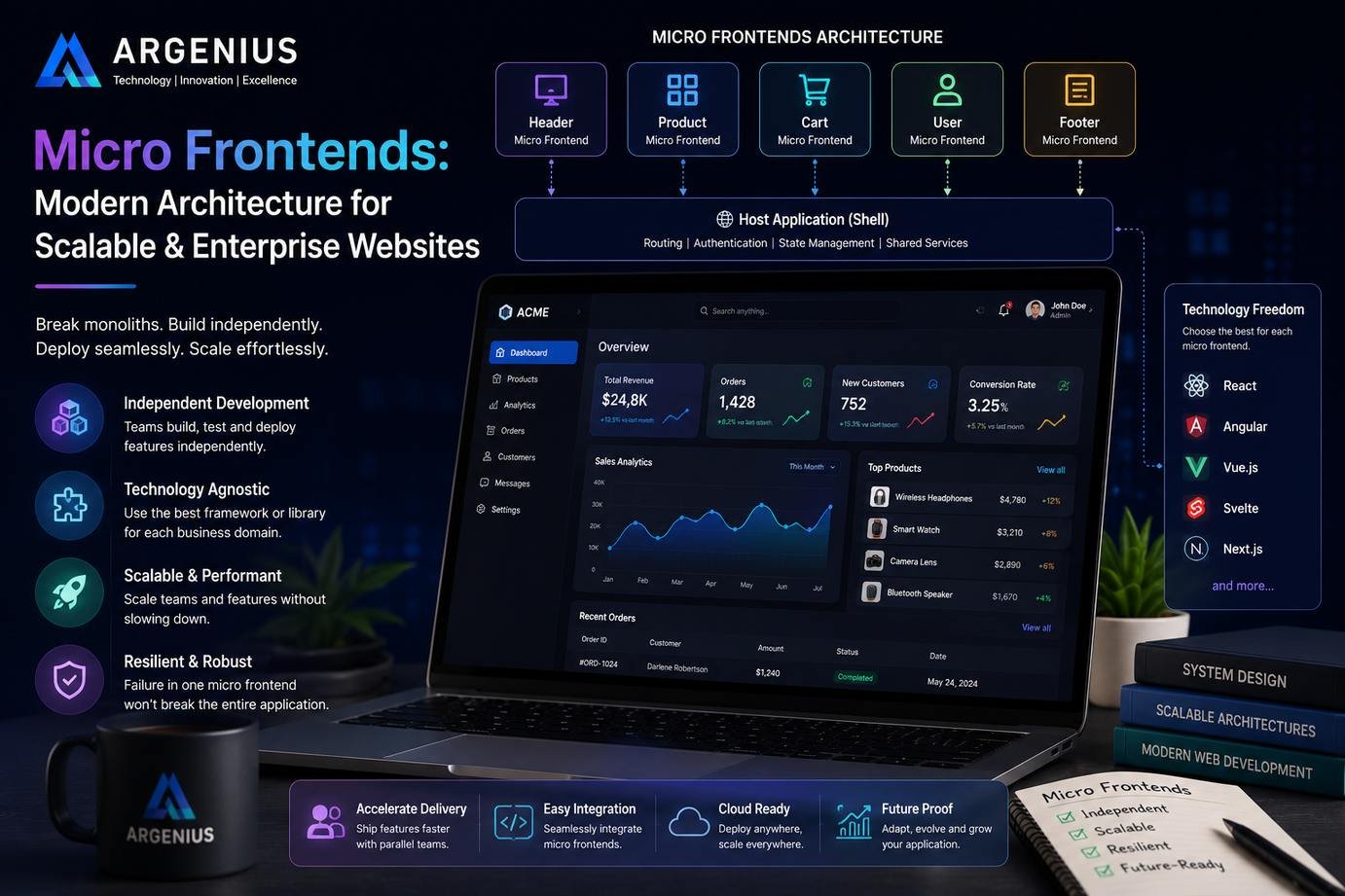
Micro Frontends enable development teams to build scalable web applications by dividing the frontend...
Read More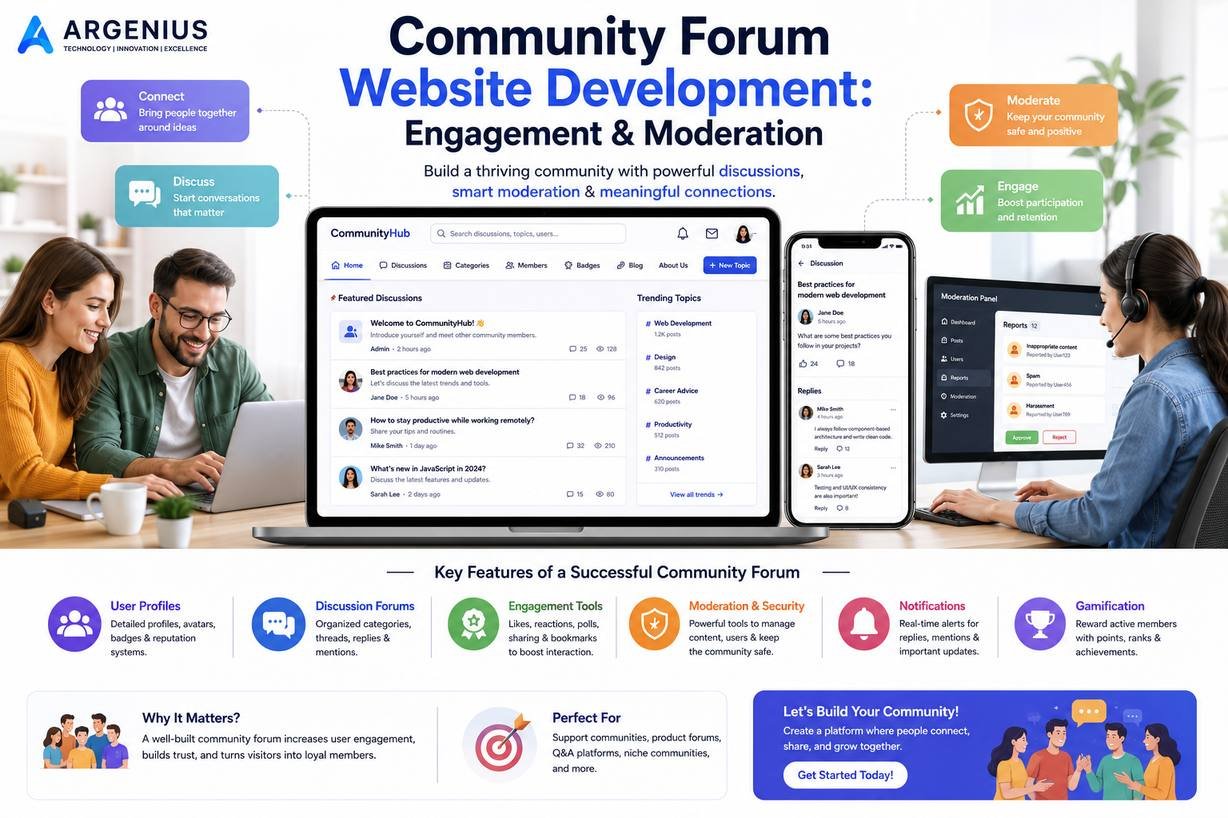
Discover how a modern community forum website can increase user engagement, encourage meaningful dis...
Read More
Discover how a professional travel website can simplify online bookings, manage itineraries, showcas...
Read More