
Micro Frontends: Modern Architecture for Scalable & Enterpri...
Micro Frontends enable development teams to build scalable web applications by dividing the frontend...
Read MoreSupport By : +91 63927 02800
Responsive web design is not a feature that a good modern website happens to include — it is the fundamental design approach that makes a website work in today's multi-device world. A truly responsive website does not just shrink to fit a smaller screen. It thoughtfully reorganises its layout, resizes its typography, adapts its navigation, resizes its images, and reconfigures its interactive elements specifically for each screen size — so that a visitor on a 5-inch budget Android phone has a genuinely good experience, not a desktop experience compressed into a smaller space. This distinction matters enormously for Indian businesses, because the gap between a compressed-desktop website experience and a genuinely mobile-responsive experience is the gap between a visitor who leaves immediately and one who stays, reads, and converts.
As a specialist responsive web design company India with 4,200+ responsive websites designed over 15 years — for businesses across every industry, every size, and every type of customer interaction — we have developed a mobile-first responsive design methodology that begins every project with the smallest screen and the slowest realistic connection speed, designing the complete experience for those constraints before scaling up to larger screens. This approach produces websites that are not just technically responsive but genuinely excellent on mobile — the standard that matters for the majority of Indian web users who will experience your website on their smartphones, often on 4G or 3G connections, as their primary or only point of digital contact with your business.

Our responsive web design services cover every type of website and every business need — from building new websites with mobile-first responsive design to converting existing non-responsive websites into properly mobile-friendly experiences, ecommerce responsive design, and corporate website responsive overhauls.
We build new websites from the ground up using a mobile-first design methodology — designing every page layout, every navigation pattern, every content block, and every interactive element for the smartphone screen first, then thoughtfully scaling the design to tablet and desktop screens. This approach produces websites that are not just technically responsive but genuinely excellent on mobile — because the primary design attention went to the screen type where the majority of your visitors will experience your website.
Learn MoreFor businesses with existing websites that are not properly mobile-responsive — which typically means they were built before 2016 or built without proper mobile consideration — we convert the existing website into a properly mobile friendly website design India standard without requiring a complete rebuild, in cases where the existing website's technical foundation supports this approach. The result is a website that retains its existing content and SEO equity while gaining the mobile-friendly performance that Google now requires for competitive search rankings.
Learn MoreEcommerce on mobile has specific responsive design requirements beyond general websites — the product browsing experience, the add-to-cart interaction, the checkout flow, and the payment experience all need to be optimised specifically for touch-screen operation on variable connection speeds. Our responsive ecommerce design addresses all of these mobile-specific commerce requirements — producing online stores where mobile shoppers can browse, select, and complete purchases as smoothly as desktop shoppers, which is the standard that drives meaningful mobile conversion rates.
Learn MoreOur cross device website design service ensures your website delivers a consistently high-quality experience across the complete range of devices Indian users actually use — from entry-level Android smartphones with 360px wide screens to mid-range tablets at 768px, to laptops at 1366px, to large desktop monitors at 1920px and beyond. This comprehensive device coverage is tested not just in browser emulators but on actual physical devices — because the difference between an emulated experience and a real-device experience often reveals issues that emulators miss entirely.
Learn MoreA website can be visually responsive — meaning its layout adapts to different screen sizes — while still performing poorly on mobile due to large unoptimised image files, render-blocking scripts, or third-party integrations that slow mobile loading significantly. True mobile optimized website design addresses both the layout responsiveness and the performance optimisation simultaneously — ensuring the website loads within Google's recommended 3-second threshold on mobile connections and meets Core Web Vitals standards that directly affect both user experience and Google search rankings.
Learn MoreFor businesses who are not sure whether their current website meets modern mobile responsiveness standards — or who suspect it does not but need a detailed assessment before deciding on a course of action — we provide comprehensive responsive website audits that test the website across multiple device types and screen sizes, assess Core Web Vitals scores, check Google's mobile-friendliness test results, and identify every specific element that is failing mobile visitors, along with clear recommendations for how each issue should be addressed.
Learn More
We begin every responsive design project by understanding which specific devices your actual and potential customers use to access the web. This varies by industry and audience — a B2B industrial equipment company may have 60% desktop visitors, while a restaurant or salon may have 85% mobile visitors. Understanding this device distribution shapes the responsive design priorities — determining which screen sizes need the most design attention, what performance standards are most critical for the actual connection speeds your visitors use, and what interactive patterns work best for your specific audience's device preferences.
On a desktop screen, a website can display multiple columns of information simultaneously — a sidebar navigation alongside main content, a header with complex menu structures, large imagery alongside text. On a mobile screen, all of this must be reorganised into a single-column linear flow that maintains logical reading order and navigation clarity. We plan this mobile information architecture before any visual design begins — determining how every piece of content and every navigation element will be organised on small screens, and how that organisation will expand intelligently as screen size increases to desktop proportions.
We design the complete visual experience at multiple breakpoints — typically mobile (320px–767px), tablet (768px–1023px), and desktop (1024px and above) — with each breakpoint designed to look genuinely designed rather than squeezed or stretched. Typography scales appropriately for readability at each size. Images are designed with composition that works when cropped for different aspect ratios. Touch targets — buttons, links, form elements — are sized at minimum 44×44 pixels on mobile so they are reliably tappable without accidental misses. Navigation patterns adapt from mobile hamburger menus to full horizontal navigation on desktop in a way that feels natural rather than mechanical.
We develop responsive websites with performance as a parallel design constraint — optimising images for each screen size using srcset and responsive image techniques so mobile devices download appropriately sized images rather than downloading large desktop-scale files and scaling them down in the browser; implementing lazy loading for images and content below the fold; minimising render-blocking resources that delay the initial page display; and using modern CSS techniques like Flexbox and CSS Grid that produce flexible layouts without the JavaScript performance overhead that older responsive frameworks required. The result is websites that are not just responsive but fast on mobile.
Before every website goes live, we conduct thorough multi-device testing — on actual physical devices including multiple Android smartphones at different price points, iPhones, Android tablets, iPads, and various desktop configurations — not just in browser developer tools that simulate responsive behaviour. We verify Core Web Vitals scores — Largest Contentful Paint, First Input Delay, Cumulative Layout Shift — using Google's PageSpeed Insights and real-device field data to confirm the website meets Google's performance thresholds. We test every interactive element — forms, navigation menus, carousels, accordions — on touch devices to ensure they operate correctly with finger input rather than only with mouse pointer precision. Only after passing this comprehensive testing protocol does a responsive website go live.
Mobile responsiveness is not a technical nicety for Indian business websites — it is a fundamental business requirement that directly affects customer acquisition, Google search rankings, paid advertising ROI, and the credibility impression your business makes on every potential customer who finds you online.
India's internet penetration is driven overwhelmingly by smartphones — a significant proportion of India's internet users access the web exclusively on mobile devices and have never browsed on a desktop. For businesses targeting consumers in Indian cities and towns, mobile is not a secondary channel — it is the primary and often the only channel through which potential customers will ever encounter the website. A website that is not genuinely mobile-friendly is failing the majority of its audience before they have read a single word of content.
Google implemented mobile-first indexing in 2019 — meaning Google primarily uses the mobile version of your website to determine its rankings in search results for all queries, including desktop searches. A website that is poorly optimised for mobile signals to Google that it provides a poor user experience for the majority of searchers, and Google responds by ranking it below mobile-optimised competitors for the same keywords. Mobile responsiveness is not just about serving mobile users — it is about maintaining and improving search visibility for all users including desktop searchers.
Every rupee spent on Google Ads, Facebook Ads, or Instagram Ads that drives a click to a non-responsive website is a partially wasted rupee — because a significant proportion of those clicks will come from mobile users who immediately bounce from the poor mobile experience rather than converting. Google's Quality Score system actively penalises ads whose landing pages provide poor mobile experiences, which increases the cost-per-click for those campaigns. A responsive landing destination consistently improves paid advertising ROI by converting more of the traffic the ad spend generates into enquiries and sales.
Google's Core Web Vitals — the set of performance metrics that Google uses to assess user experience and that directly affect search rankings — are measured on mobile connections and mobile devices. A website that passes Core Web Vitals on desktop but fails them on mobile receives a negative ranking signal. Beyond rankings, loading speed on mobile is directly correlated with conversion rate — Google's own research shows that each additional second of mobile loading time increases the bounce probability by 32%, and that pages loading in 1–3 seconds have dramatically higher conversion rates than pages loading in 4–7 seconds.
For the majority of Indian businesses, the first impression a potential customer has of the company is not in person, not on the phone, and not on a desktop website — it is on a mobile screen. The quality of that first mobile impression directly shapes the customer's assessment of the business's professionalism, credibility, and the quality of what it offers. A mobile experience that looks broken, loads slowly, or is difficult to use communicates that the business does not care enough about its customers' experience to invest in their primary access point — which is a damaging first impression regardless of how good the actual business is.
Some businesses solve the mobile problem by maintaining a separate mobile website — a second website at a mobile subdomain that serves mobile visitors. This approach creates significant operational overhead: two websites to update whenever content changes, two sets of content that can fall out of sync, two SEO programmes to manage rather than one, and the technical complexity of device detection and redirect management. A single responsive website eliminates all of this overhead — content updated once appears correctly on every device, SEO effort applies to a single URL structure, and the operational simplicity compounds in value over years of website management.
Our responsive web design services pricing reflects the genuine scope of each project — the number of pages, the design complexity, whether we are building new or converting existing, and any specific performance or feature requirements. All pricing is fixed before work begins.
| Service Type | Best For | What's Included | Price Range (INR) 💰 |
|---|---|---|---|
| Responsive Business Website | Small to Mid-Size Businesses | Mobile-First Design, 5–15 Pages, All Device Testing, Core Web Vitals Optimised, CMS, SEO | ₹15,000 – ₹60,000 |
| ⭐ Professional Responsive Website | Established Businesses / Services | Custom Responsive Design, 15–30 Pages, Animations, Multi-Device Testing, Analytics, SEO | ₹40,000 – ₹1,50,000 |
| Mobile-Friendly Conversion | Existing Non-Responsive Websites | Mobile Responsiveness Fix, Responsive CSS, Touch Optimisation, Speed Improvement, Testing | ₹20,000 – ₹80,000 |
| Responsive Ecommerce Website | Online Stores / Product Brands | Mobile-First Shopping UX, Touch-Friendly Cart, Mobile Checkout, UPI Payment, Speed Optimised | ₹40,000 – ₹2,50,000 |
| Corporate Responsive Website | Large Companies / Enterprises | Enterprise Responsive Design, 30+ Pages, Design System, Performance Audit, Integrations | ₹80,000 – ₹4,00,000 |
| Mobile Performance Audit + Fix | Slow Mobile Websites / Core Web Vitals Issues | Comprehensive Mobile Audit, Speed Optimisation, Core Web Vitals Fix, Report, Monitoring | ₹15,000 – ₹60,000 |
👉 Note: Responsive website design cost in India depends on the number of pages, design complexity, whether we are building new or converting existing, and specific performance requirements. Contact us for a detailed, fixed-price proposal specific to your website needs — delivered within 24 hours of our initial discussion.
Most websites built in the past five years will pass Google's basic mobile-friendliness test — they use a responsive CSS framework like Bootstrap that prevents the most obvious mobile layout failures. The content does not overflow the screen. Text is legible without zooming. Buttons are large enough to tap. By the minimal technical standard of "not broken on mobile," these websites qualify as mobile-friendly. But passing Google's mobile-friendliness test is the floor of mobile design quality, not the ceiling — and there is a significant distance between a website that is technically not broken on mobile and one that is genuinely excellent on mobile.
A genuinely mobile-excellent website has been designed specifically for how people interact with their phones — not just technically adapted. Navigation that works with one thumb. Content that loads in the seconds before a user's patience runs out. Forms that trigger the correct mobile keyboard for each field type (numeric keyboard for phone numbers, email keyboard for email addresses). Tap targets that activate reliably without accidental mis-taps. Images that are sized and cropped for portrait phone screens rather than just scaled down from horizontal desktop compositions. Content that is prioritised for the scanning behaviour of mobile users rather than the sequential reading behaviour of desktop users. The businesses whose websites provide this level of mobile experience consistently see dramatically better mobile conversion rates than those whose websites merely avoid being technically broken on smaller screens.
What genuinely mobile-excellent responsive design looks like in practice:
Every website we build as a responsive website design agency is built to this mobile-excellent standard — not just the technically responsive minimum, but the genuinely mobile-optimised experience that converts mobile visitors into customers at the rates that mobile-first design produces.
In 2021, Google introduced Core Web Vitals as official ranking factors — specific, measurable performance metrics that Google uses to assess the user experience quality of web pages and that directly affect where those pages appear in search results. These metrics are particularly important for mobile performance, because they are measured on mobile-class hardware and mobile connection speeds. Understanding what these metrics measure and why they matter helps explain why the technical quality of responsive website design is not just an engineering concern but a business-critical commercial factor.
The three Core Web Vitals metrics are: Largest Contentful Paint (LCP) — which measures how quickly the main content of a page loads and becomes visible, with Google's good threshold being under 2.5 seconds; Cumulative Layout Shift (CLS) — which measures how much the page's layout unexpectedly jumps and shifts while loading, which is particularly disruptive on mobile where a shift that moves content off-screen can cause users to lose their place and mis-tap elements; and Interaction to Next Paint (INP) — which measures how quickly the page responds to user interactions like button taps and menu opens, with poor responsiveness creating the frustrating experience of tapping something and waiting for the page to respond. Websites that fail these metrics rank below websites that pass them for the same keywords — making Core Web Vitals performance not just a user experience quality indicator but a direct determinant of whether potential customers even see the website in search results.
How our responsive design process addresses each Core Web Vitals metric:
We verify Core Web Vitals performance on every website we deliver before launch, and we include post-launch monitoring in every project to ensure the live website maintains the performance standards that support both good user experience and competitive search rankings.
Responsive website design requires a specific technical expertise that goes beyond visual design — it requires deep knowledge of CSS layout systems, responsive image techniques, performance optimisation, touch interaction design, and the testing methodology that genuinely verifies cross-device quality rather than assuming emulator results represent real-device experience. Many web design agencies claim to build responsive websites but deliver websites that technically adapt to different screen sizes without genuinely being designed and optimised for mobile users.
With 4,200+ responsive websites built over 15 years, our team has the specific responsive design expertise, mobile performance optimisation capability, and multi-device testing process that produces websites genuinely excellent on mobile — not just technically responsive.

We have built over 4,200 responsive websites for Indian businesses across 15 years — across every industry and every website type. This depth of responsive design experience means we have solved every mobile design challenge your project will present, and we apply those solutions from the start rather than discovering them through iteration.
We design every website starting from the smallest mobile screen and working up — not the reverse. This mobile-first approach produces websites that are genuinely designed for mobile rather than desktop websites that have been shrunken to fit smaller screens. The difference in mobile user experience between these two approaches is significant and directly affects conversion rates from mobile visitors.
We build Core Web Vitals performance optimisation into every responsive website as a standard requirement — not as an optional upgrade. Every website we deliver is tested against LCP, CLS, and INP thresholds before launch, and post-launch monitoring verifies that real-world field data matches lab test performance. This performance standard directly supports both better user experience and better Google search rankings.
We test every responsive website on actual physical devices — not just browser developer tool emulators — including multiple Android smartphone price points, iPhones, Android tablets, and iPads. Real-device testing consistently reveals issues that emulators miss, including touch interaction problems, rendering differences between browser engines, and performance issues that only appear under actual device hardware constraints.
We measure mobile performance before and after every responsive design project — comparing Google PageSpeed scores, Core Web Vitals metrics, mobile bounce rates, and mobile conversion rates between the old and new websites. Our responsive design projects consistently produce dramatic mobile performance improvements, and we share these measurements with every client so the ROI of the responsive design investment is clearly visible in data.
Our responsive web design company India has built mobile-first responsive websites for businesses across every major industry sector. Every industry has specific mobile design requirements — the way a healthcare professional's website needs to display emergency contact information on mobile is different from how an ecommerce store needs to optimise its mobile checkout — and we apply these industry-specific requirements to every project.












We deliver mobile friendly website design India services for businesses across the country — working remotely with structured communication, milestone-based delivery, and the systematic testing process that verifies responsive quality across real devices before every website goes live.


















These numbers represent real responsive websites built for real businesses across India — businesses whose mobile visitor experience, Google search rankings, and mobile conversion rates improved measurably when their website was built or rebuilt with genuine mobile-first responsive design.


The shift to mobile-first internet usage in India happened faster than in almost any other country in the world — driven by the combination of affordable smartphones and affordable data that made mobile internet access available to hundreds of millions of Indians simultaneously. The businesses that recognised this shift early and invested in genuine mobile-first website design built a digital competitive advantage that has compounded over the years — better mobile user experience meant lower bounce rates, better search rankings, more enquiries from mobile visitors, and better return on paid advertising investment. All of these advantages have grown year over year as mobile internet usage in India has continued to increase.
The businesses that delayed this investment — either because they did not recognise the urgency or because they believed their existing desktop website was "good enough" — have seen the opposite compound: declining search rankings as Google's mobile-first indexing increasingly favoured mobile-optimised competitors, increasing paid advertising costs as Quality Scores fell due to poor mobile landing page experiences, and a growing gap between the mobile experience their competitors offered and the one they provided to potential customers whose first and most common access point to the business was a smartphone.
The good news for businesses that have not yet made the responsive design investment is that the gap is closable — and the improvement in search visibility, mobile conversion rate, and paid advertising ROI that a genuine mobile-first responsive website produces is typically visible within weeks of the new website going live. The question is simply whether to close that gap now, when the investment cost is known and manageable, or to continue accumulating the daily cost of the mobile gap until competitive pressure makes the investment unavoidable.
Whether you need a new mobile friendly website design India project built mobile-first from the ground up, responsive web design services that convert your existing non-responsive website into a properly mobile-optimised experience, mobile responsive website development for your ecommerce store, a comprehensive cross device website design that works perfectly across all screen sizes, or a mobile optimized website design with full Core Web Vitals performance optimisation — our team has the specific responsive design expertise, testing methodology, and technical depth to deliver a website that genuinely serves every customer on every device.
Tell us about your business and your current website situation. We will provide an honest assessment of your mobile responsiveness gaps and a fixed-price proposal for the work needed to close them — within 24 hours of our initial conversation.
4,200+ responsive websites built. 15 years of experience. Mobile-first always. Core Web Vitals guaranteed.
Honest answers to the questions business owners most commonly ask about responsive and mobile-friendly website design in India.
The quickest way to get an initial assessment is Google's free PageSpeed Insights tool — enter your website URL at pagespeed.web.dev and Google will provide both a mobile performance score and a mobile usability assessment, along with specific issues identified. You can also access Google's Mobile-Friendly Test through Google Search Console if your website is already registered. Beyond these technical tools, the most revealing test is simply opening your own website on a mid-range Android smartphone and trying to use it the way a potential customer would — navigating the menu, reading the content, finding the contact information, and completing an enquiry form. If any of these activities is difficult, slow, or frustrating on a real phone, your website has mobile experience issues that are likely costing you visitors and enquiries every day. Our free responsive audit provides a comprehensive assessment covering all of these dimensions — technical performance metrics, mobile usability issues, specific broken elements on different screen sizes, and specific recommendations for what needs to be fixed and how urgently.
Responsive design and adaptive design are two different technical approaches to serving appropriate website experiences to different device types. Responsive design uses fluid CSS layouts, flexible grids, and CSS media queries to create a single layout that fluidly adapts to any screen size — the same HTML is served to all devices, and CSS determines how it arranges itself at different widths. Adaptive design serves different fixed-width page templates to different device categories — detecting the user's device type and serving a specifically designed layout for that category, typically desktop, tablet, and mobile. Responsive design is the current industry standard for most websites because it serves a continuous range of screen sizes with a single codebase — significantly simpler to maintain as content changes, naturally accommodating the enormous variety of screen sizes that exist across Android devices rather than only three categories. Adaptive design can produce better-optimised experiences for specific device categories when very precise device-specific interactions are required, but at significantly higher implementation and maintenance cost. We use responsive design for the vast majority of projects and recommend it as the appropriate approach for essentially all standard business websites.
The cost of making an existing website mobile-friendly depends on the website's current technical foundation and how extensive the changes needed are. For websites built on a modern platform like WordPress or a recent custom framework — where the existing code is clean and the templates are accessible — adding proper responsive CSS, fixing non-responsive elements, and optimising mobile performance typically ranges from ₹20,000 to ₹80,000 depending on the website's size and complexity. For websites built on very outdated platforms, using table-based layouts, or on frameworks that fundamentally do not support responsive behaviour — the most efficient and cost-effective approach is typically a full rebuild on a modern responsive foundation rather than attempting to retrofit responsiveness onto a technical architecture that was never designed for it. Our free audit of your existing website determines which situation your website is in and gives you an honest recommendation about whether a mobile-friendly conversion or a full rebuild is the more appropriate and cost-effective approach for your specific website.
Yes — mobile-friendliness is a confirmed Google ranking factor and has been since 2015, with its importance growing significantly since Google introduced mobile-first indexing in 2019. Under mobile-first indexing, Google primarily uses the mobile version of your website to determine its rankings for all searches — desktop and mobile. This means that a website with poor mobile experience is ranked based on that poor mobile experience, even for users searching on desktop. Additionally, Core Web Vitals — the performance metrics that Google incorporated into its ranking algorithm in 2021 — are measured on mobile-class hardware and connections. A website that fails Core Web Vitals on mobile receives a ranking disadvantage relative to mobile-optimised competitors for the same keywords. The ranking improvement from a properly mobile-optimised website varies by competitive landscape — in markets where competitors are also not well mobile-optimised, the improvement can be dramatic; in competitive markets where leading competitors are already well-optimised, the improvement from mobile optimisation brings the website to competitive parity from which other SEO work can build. We monitor search performance before and after every responsive design project and share the data with clients.
Core Web Vitals are a set of three specific performance metrics that Google uses to assess the user experience quality of web pages — and that directly affect where pages rank in Google search results as of 2021. The three metrics are Largest Contentful Paint (LCP) — which measures how quickly the main content of a page becomes visible, with a good score being under 2.5 seconds; Cumulative Layout Shift (CLS) — which measures how much the page's layout jumps around while loading, with a good score being below 0.1; and Interaction to Next Paint (INP) — which measures how quickly the page responds to user inputs like button taps, with a good score being under 200 milliseconds. Websites that pass all three thresholds receive a ranking benefit over otherwise similar websites that fail them. For most Indian business websites, LCP and CLS are the most commonly failing metrics — LCP because of unoptimised images and slow hosting, and CLS because of images without dimensions and web fonts that cause text reflow. You can check your website's Core Web Vitals scores using Google's PageSpeed Insights tool (pagespeed.web.dev) — enter your URL and the tool will show you exactly which metrics you pass or fail and why. We fix all failing Core Web Vitals as part of every responsive website project we undertake.
Responsive website project timelines depend on the scope of the project. A small responsive business website of 5–15 pages with standard features typically takes 3 to 5 weeks. A professional responsive business website of 15–30 pages with custom design and full SEO structure typically takes 4 to 8 weeks. A responsive ecommerce website depends on the product catalogue size but typically takes 5 to 12 weeks. A responsive corporate website of 30+ pages typically takes 8 to 14 weeks. A mobile-friendly conversion of an existing website typically takes 2 to 5 weeks depending on the website's size and current technical state. The most significant client-side factor affecting timeline is the availability of content — text, images, and other assets that the website will display. Clients who have their content prepared and organised before the project starts consistently complete their projects faster than those who prepare content during the development phase. We provide a structured content checklist at the start of every project to help your team prepare efficiently.
Yes — and this is one of the most important differentiators in our testing methodology. Browser developer tools simulate different screen sizes but cannot fully replicate the hardware performance, browser engine differences, or actual touch interaction experience of real physical devices. We test every responsive website on actual physical devices including multiple Android smartphones at different price points — from entry-level devices with 2GB RAM and smaller screens that represent a significant proportion of India's smartphone market, to mid-range devices, to current flagship phones — as well as iOS devices at multiple sizes. We also test on Android and iOS tablets and on multiple desktop browser configurations. This real-device testing consistently reveals issues that emulators miss — including touch interaction problems, hardware-specific rendering differences, and performance issues that only appear under actual device hardware and memory constraints. The entry-level Android smartphone test is particularly important for Indian websites because this device category represents a large proportion of the Indian web audience and is the most demanding performance benchmark — a website that loads and works well on an entry-level device will work excellently on every other device in the typical Indian user's possession.
Argenius brings 15 years of responsive website design experience, 4,200+ responsive websites built across every Indian industry, and a mobile-first design methodology that produces websites genuinely excellent on mobile rather than just technically not broken on mobile. Our responsive design process is built around the standards that actually matter for Indian businesses — Core Web Vitals performance that affects Google rankings, genuine mobile usability that converts smartphone visitors rather than just adapting desktop layouts, and real-device testing that verifies quality on the actual devices your potential customers use. We build Core Web Vitals performance optimisation and comprehensive multi-device testing into every project as standard — not as premium upgrades — because delivering a responsive website that looks good but performs poorly on mobile or fails Core Web Vitals would be an incomplete delivery regardless of its visual quality. And we have 15 years of measurable results across thousands of real Indian businesses to demonstrate that this standards-focused approach consistently produces responsive websites that genuinely improve mobile search visibility, mobile conversion rates, and overall digital business performance for the businesses we serve.
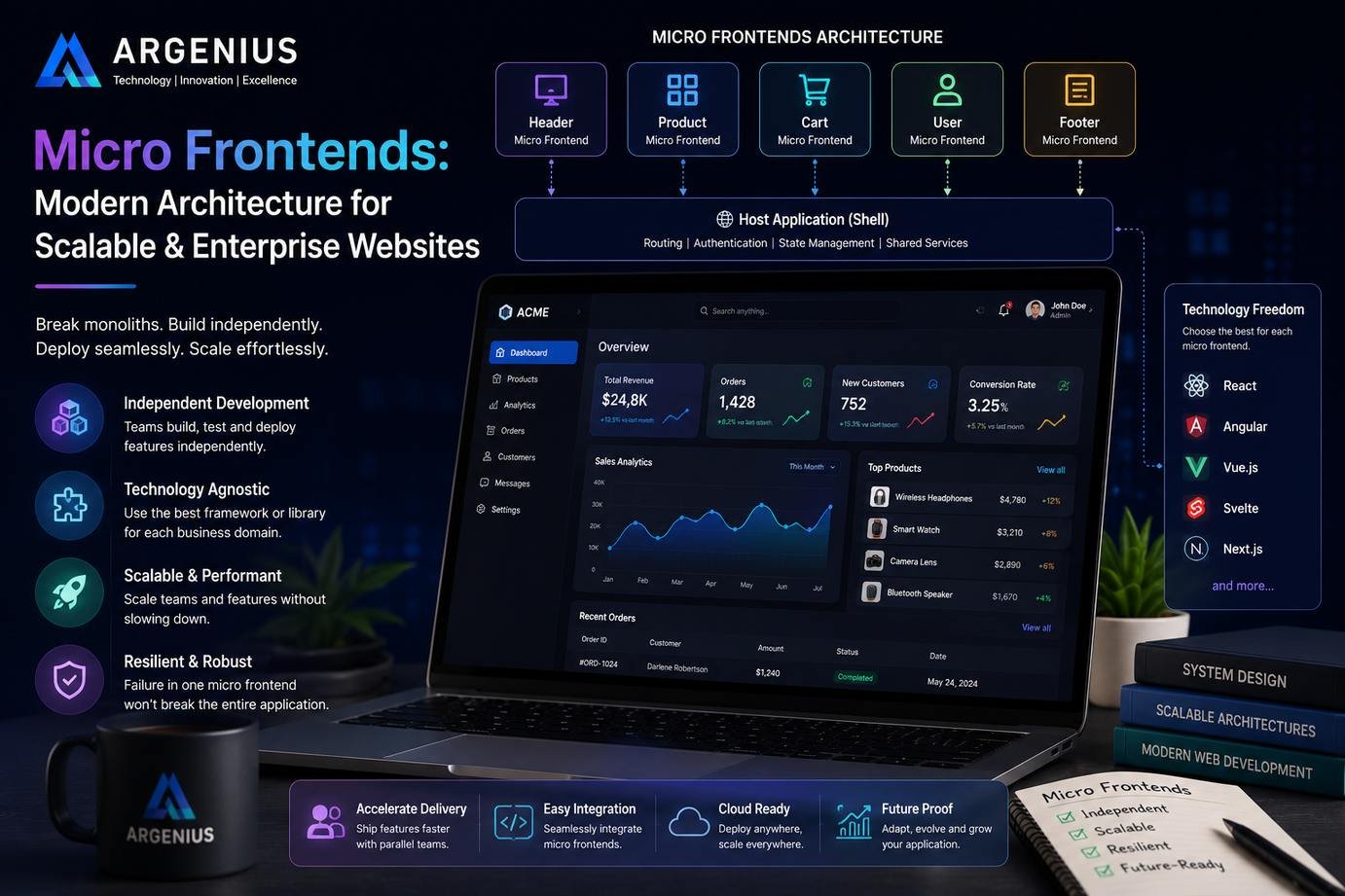
Micro Frontends enable development teams to build scalable web applications by dividing the frontend...
Read More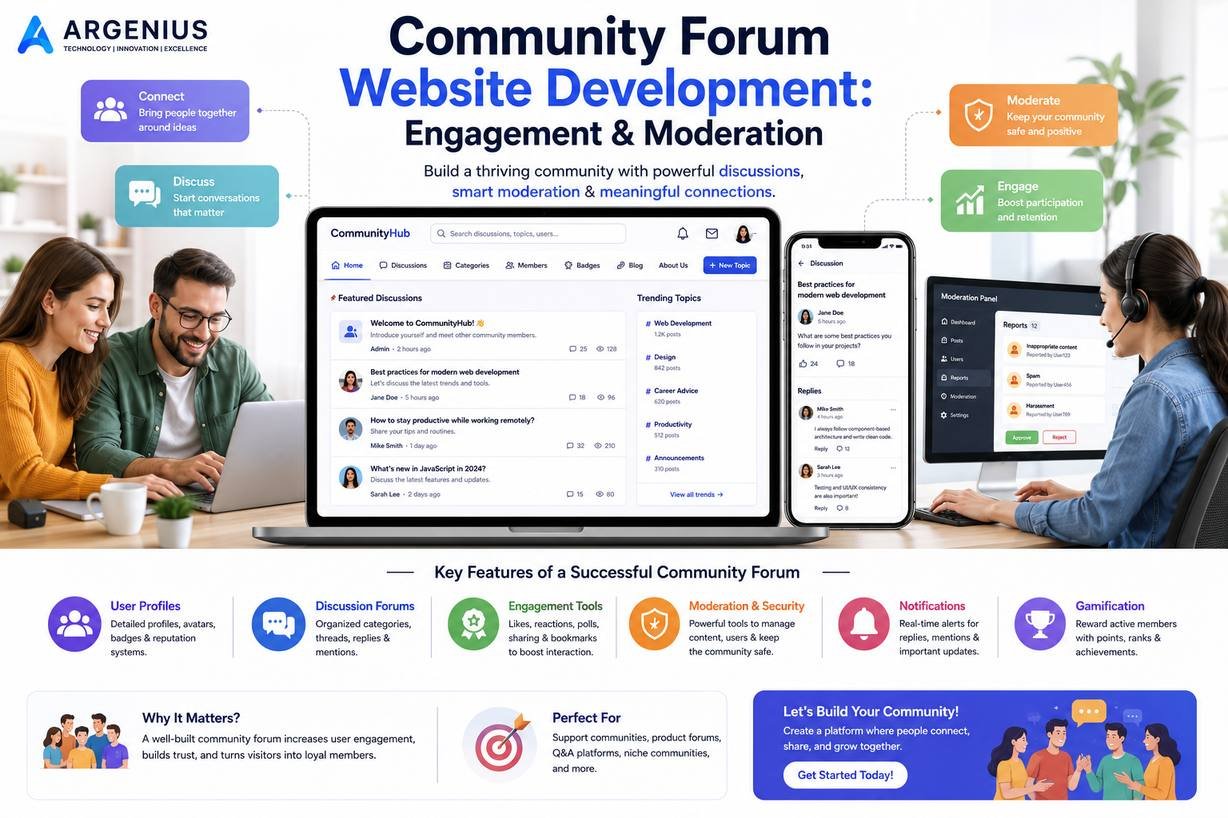
Discover how a modern community forum website can increase user engagement, encourage meaningful dis...
Read More
Discover how a professional travel website can simplify online bookings, manage itineraries, showcas...
Read More