Explore the top advantages and disadvantages of social media. Learn how it impacts communication, business, and daily life in this complete guide.
Top Advantages and Disadvantages of Social Media – Complete Guide
Social media has become one of the most powerful forces shaping modern life. From the moment most of us wake up to the moment we go to sleep — Instagram, Facebook, Twitter, LinkedIn, YouTube, and dozens of other platforms are woven into nearly every hour of our day.
But here is the question that genuinely matters — is social media making our lives better or worse? Is it a tool for connection and growth, or a source of distraction and harm?
The honest answer is — it is both. And understanding exactly what the advantages and disadvantages of social media are — for individuals, students, and businesses alike — is the key to using it intelligently rather than being used by it.
At Argenius, we work with businesses and individuals navigating the digital world every day. This complete guide gives you a balanced, clear, and genuinely useful breakdown of the advantages and disadvantages of social media — so you can make smarter decisions about how you use it.
What is Social Media — A Quick Overview
Before diving into the advantages and disadvantages of social media, a quick foundation is helpful.
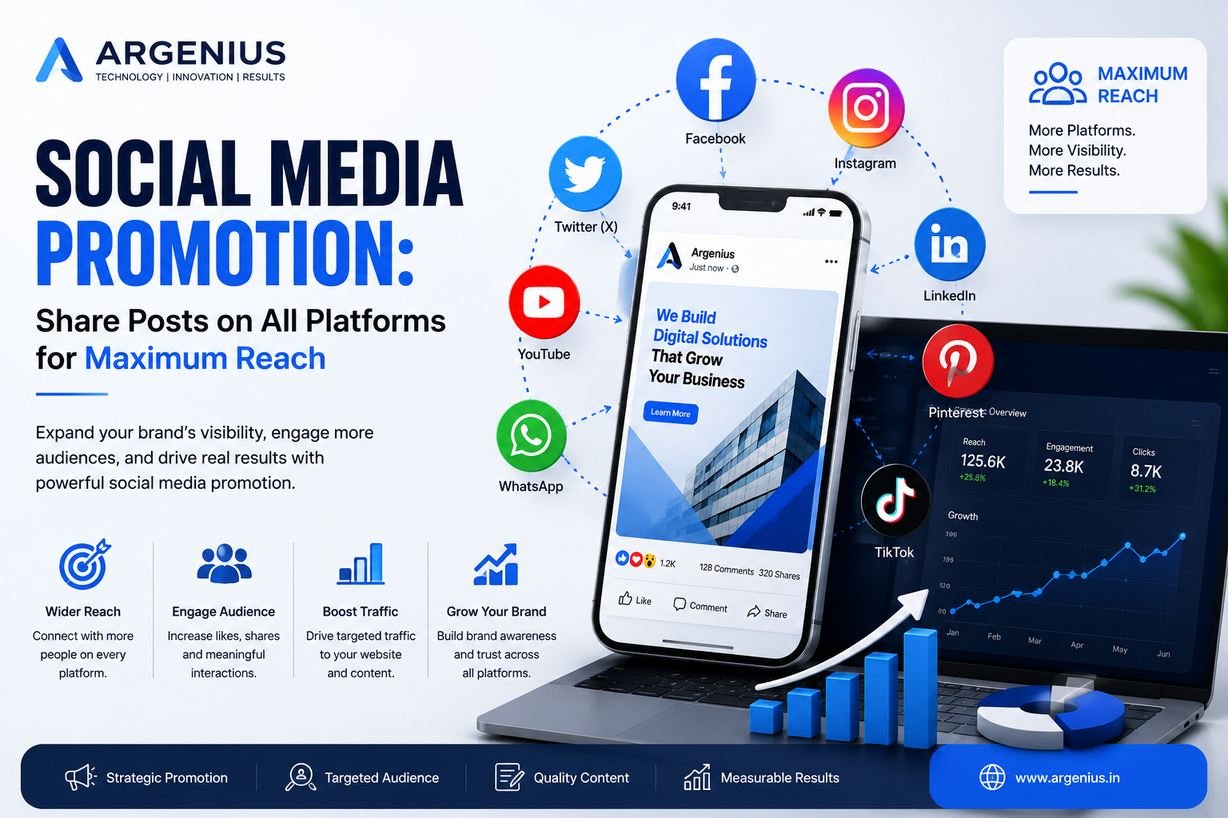
Social media refers to digital platforms and applications that allow users to create content, share information, build communities, and interact with others in real time. The category includes social networks like Facebook and LinkedIn, visual platforms like Instagram and Pinterest, video platforms like YouTube and TikTok, microblogging platforms like Twitter, and messaging apps like WhatsApp and Snapchat.
What makes social media fundamentally different from all previous communication technologies is the combination of scale, speed, and interactivity. A single person with a phone can now reach millions of people instantly — something that was simply impossible before social media existed.
This extraordinary power is exactly why the advantages of social media are so significant — and why the disadvantages of social media deserve equally serious attention.
20 Advantages of Social Media — The Real Benefits
Let us start with the positives. Here are the most significant advantages of social media that genuinely improve lives, businesses, and communities:
1. Global Connectivity at Zero Cost
Perhaps the most fundamental of all advantages of social media is the ability to connect with anyone, anywhere in the world — instantly and for free. Families separated by geography stay close. Friends maintain relationships across time zones. Professionals collaborate across continents.
This level of global connectivity was unimaginable just two decades ago and remains one of the most transformative benefits social media has delivered to humanity.
2. Free and Instant Information Access
Social media has democratized access to information in a way nothing before it has. Breaking news reaches people on Twitter before traditional media publishes it. Educational content on YouTube teaches skills to people who could never afford formal training. Expert insights on LinkedIn reach professionals who would otherwise never encounter them.
This is one of the most powerful merits of social media — knowledge and information that was once accessible only to privileged few is now available to anyone with internet access.
3. Powerful Business and Marketing Opportunities
The advantages of social media in business are enormous and continue to grow. Businesses of every size can now reach precisely targeted audiences, build brand communities, generate leads, drive sales, and provide customer service — all through social platforms.
For small businesses especially, social media levels the competitive playing field in a way traditional advertising never could. A smart social media strategy allows a startup to compete directly with established brands — reaching the same audiences at a fraction of the cost.
This is a core reason why understanding the advantages and disadvantages of social media advertising is essential for any modern business owner.
4. Building Personal and Professional Brands
Social media gives every individual the platform to build a personal brand — to share their expertise, establish their professional reputation, and create opportunities that their offline presence alone could never generate.
LinkedIn has transformed professional networking. Twitter has created thought leaders. Instagram has built entire careers for creators and entrepreneurs. The ability to build a personal brand through social media is one of its most democratizing and genuinely life-changing advantages.
5. Educational Resources and Learning
YouTube alone has fundamentally changed how people learn. From coding tutorials and cooking lessons to university-level lectures and language learning — social media platforms are home to some of the most valuable free educational resources ever created.
For students specifically, the advantages of social media for students include access to study groups, academic discussions, expert explanations, and peer-to-peer learning communities that dramatically extend learning beyond the classroom.
6. Raising Awareness for Important Causes
Social media has proven to be one of the most powerful tools ever created for raising awareness about social issues, health causes, environmental challenges, and humanitarian crises.
Movements that might have taken years to build momentum through traditional channels can now reach millions of people within days through social media — mobilizing support, driving donations, changing public opinion, and in some cases changing laws and policies. This is one of the most meaningful merits of social media from a societal perspective.
7. Real-Time Customer Service and Support
For businesses, social media has transformed customer service from a reactive, phone-based function into a proactive, public, real-time engagement channel. Customers can reach brands directly and publicly — and brands that respond quickly and genuinely build loyalty that no advertising campaign can replicate.
This is a significant practical advantage of using social media for businesses — particularly for building long-term customer relationships in competitive markets.
8. Entertainment and Creative Expression
Social media is home to some of the most creative, entertaining, and culturally rich content ever produced — from short films and music videos to comedy sketches, art showcases, and live performances.
For creators, social media provides an unprecedented platform for sharing creative work with global audiences without needing a record label, publisher, film studio, or gallery. For audiences, it offers unlimited entertainment personalized to individual interests and tastes.
9. Community Building Around Shared Interests
One of the most genuinely beautiful advantages of social media is its ability to connect people who share niche interests — bringing together communities that would never have found each other in the physical world.
Whether it is rare book collectors, amateur astronomers, people living with specific health conditions, or fans of obscure music genres — social media creates spaces where people who feel isolated in their local environments find genuine community and belonging online.
10. Crisis Communication and Emergency Information
During natural disasters, public health emergencies, and civic crises — social media has become an essential channel for rapidly distributing critical information to large populations.
Government agencies, health organizations, emergency services, and news outlets use social platforms to share real-time updates, safety instructions, and resource information during emergencies — saving lives in situations where the speed of information is literally critical.
11. Job Opportunities and Career Growth
LinkedIn and other professional social platforms have transformed recruitment and job searching. Employers find talent and talent finds opportunities through social networks in ways that traditional job boards and recruitment agencies simply cannot replicate.
Beyond job searching, social media enables career development through professional learning communities, industry discussions, mentor connections, and thought leadership content — making it one of the strongest practical advantages of using social media for career-oriented individuals.
12. Supporting Small Businesses and Entrepreneurs
Social media has given small businesses, home-based entrepreneurs, and individual creators the ability to reach customers directly — without expensive traditional advertising, without retail shelf space, and without distribution networks.
Countless businesses have been built entirely through Instagram, Facebook Marketplace, and YouTube — demonstrating one of the most economically significant advantages of social media for entrepreneurship and economic empowerment.
13. Real-Time Trend Awareness
For businesses, marketers, researchers, and curious individuals alike — social media provides unparalleled real-time insight into what topics, products, conversations, and cultural moments are capturing public attention right now.
This trend awareness is one of the most practically valuable advantages of social media for businesses trying to stay culturally relevant and for marketers trying to create timely, resonant content.
14. Collaboration Across Distances
Remote teams, international partnerships, academic collaborations, and creative joint ventures are all enabled and enhanced by social media and the digital communication tools built around it.
The COVID-19 pandemic demonstrated how essential digital collaboration tools — many of which are built on social media infrastructure — are for maintaining productivity and human connection when physical proximity is impossible.
15. Amplifying Underrepresented Voices
Before social media, mainstream media gatekeepers controlled which voices and perspectives reached large audiences. Social media has fundamentally disrupted that power structure — giving underrepresented communities, marginalized groups, and independent thinkers direct access to global audiences without needing institutional approval.
This democratization of voice and platform is one of the most socially significant merits of social media and continues to reshape culture, politics, and public discourse in profound ways.
20 Disadvantages of Social Media — The Real Risks
Now for the other side of the coin. Here are the most significant disadvantages of social media that individuals, students, and businesses need to take seriously:
1. Mental Health Impact
This is arguably the most significant of all disadvantages of social media — particularly for young people. Extensive research consistently links heavy social media use with increased rates of anxiety, depression, loneliness, and poor self-esteem.
The mechanisms are well understood — constant exposure to carefully curated highlight reels of other people's lives creates unrealistic social comparisons. Validation-seeking through likes and comments creates unhealthy emotional dependencies. The infinite scroll design of most platforms is intentionally engineered to be addictive.
2. Privacy and Data Security Risks
Every interaction on social media generates data — and that data is extraordinarily valuable to the platforms and the advertisers they serve. Disadvantages of social networking sites in terms of privacy are significant and growing.
Personal information shared on social platforms — location data, relationship status, political views, purchasing behavior, health information — is collected, analyzed, and monetized. Data breaches, unauthorized access, and misuse of personal information are real and recurring risks for social media users.
3. Cyberbullying and Online Harassment
The anonymity and distance that social media provides creates conditions where bullying, harassment, and hate speech thrive in ways that would rarely occur in face-to-face interactions.
Cyberbullying is one of the most serious disadvantages of social media for students — with research showing significant links between online harassment and serious mental health consequences including anxiety, depression, and in extreme cases, self-harm. The 24/7 nature of social media means there is no safe space or off switch for those being targeted.
4. Misinformation and Fake News
Social media algorithms are optimized for engagement — and emotionally charged, sensational, or outrageous content generates far more engagement than nuanced, accurate information. This creates a structural incentive for misinformation to spread.
False information about health, politics, finance, and current events spreads faster on social media than corrections ever do — with real-world consequences including vaccine hesitancy, political polarization, and financial scams affecting millions of people.
This is one of the most societally dangerous 10 disadvantages of social media that researchers and policymakers are actively grappling with.
5. Addiction and Time Wastage
Social media platforms are deliberately designed to be addictive. Variable reward mechanisms — the same psychological principles behind slot machines — keep users scrolling in search of the next interesting post, notification, or social validation hit.
The average person spends over two hours daily on social media — much of it unintentionally and unproductively. For students and professionals, this represents one of the most practically damaging disadvantages of using social media in terms of lost time, reduced focus, and diminished productivity.
6. Negative Impact on Real Relationships
Paradoxically, one of the most significant disadvantages of social networking is its negative impact on real human relationships. Time spent scrolling social feeds is time not spent in genuine face-to-face connection. Families sit together in rooms staring at separate screens. Dinners are documented for Instagram rather than enjoyed in present company.
Research consistently shows that heavy social media users report feeling more lonely — not less — than lighter users. The illusion of connection that social media provides can actually deepen real-world isolation.
7. Reduced Attention Span
The bite-sized content format of most social media platforms — short videos, quick posts, rapid-fire feeds — is fundamentally reshaping how human brains process information. The ability to focus deeply on complex tasks for extended periods is genuinely declining in heavy social media users.
This is one of the 5 disadvantages of social media most relevant to students and knowledge workers — for whom deep focus and sustained concentration are essential professional capabilities.
8. Sleep Disruption
The blue light emitted by phone screens suppresses melatonin production and disrupts natural sleep cycles. The emotional stimulation of social media content — news, social comparisons, notifications — activates the brain in ways that make relaxation and sleep significantly harder.
Late-night social media use is one of the most common and underappreciated disadvantages of social media affecting physical health, cognitive performance, and emotional wellbeing across all age groups.
9. Reputation Damage
A single poorly considered post, an ill-timed opinion, or content taken out of context can permanently damage personal or professional reputations in hours. Social media's permanence and virality mean that mistakes made online can follow individuals and businesses for years — regardless of whether they were genuine errors or misunderstandings.
High-profile career endings, business boycotts, and relationship breakdowns caused by social media posts are now common enough to be a recognized cultural phenomenon.
10. Security and Scam Risks
Social media platforms are fertile environments for scammers, phishing attacks, identity theft, and financial fraud. Fake profiles, fraudulent giveaways, investment scams, and romance fraud all operate extensively through social platforms — targeting users who trust the connections and communities they encounter online.
Understanding these disadvantages of social networking sites from a security perspective is essential for protecting both personal and business interests in the digital environment.
Advantages and Disadvantages of Social Media for Students
Students represent one of the most significant and most affected user groups when it comes to social media. Here is a specific breakdown of advantages and disadvantages of social media for students:
Advantages for Students: Access to free educational resources across YouTube and other platforms dramatically supplements formal education. Online study communities and peer learning groups provide academic support. Research tools and academic discussions on social platforms expand learning beyond classroom walls. Career networking through LinkedIn creates early professional opportunities. Global perspective exposure broadens worldviews in ways local education alone cannot.
Disadvantages for Students: Academic distraction is perhaps the most immediate concern — social media notifications constantly compete with study focus. Cyberbullying disproportionately affects school-age users with serious mental health consequences. Social comparison culture creates significant anxiety and self-esteem challenges during developmentally vulnerable years. Sleep disruption from evening social media use directly impacts academic performance and cognitive function. Exposure to age-inappropriate content remains an ongoing concern across most major platforms.
The advantages and disadvantages of social media for students ultimately depend heavily on how consciously and intentionally the platforms are used — with parental guidance and digital literacy education playing critical roles in shaping outcomes.
Advantages and Disadvantages of Social Media Advertising
For businesses specifically, understanding the advantages and disadvantages of social media advertising is essential for making smart marketing investment decisions.
Advantages of Social Media Advertising: Unmatched targeting precision allows businesses to reach exactly the right audience by demographics, interests, and behavior. Cost flexibility makes social advertising accessible to businesses of every budget size. Complete performance measurability gives businesses real-time insight into what is working. Direct audience engagement creates two-way brand relationships impossible in traditional advertising. Rapid campaign deployment allows businesses to respond to market opportunities in hours rather than weeks.
Disadvantages of Social Media Advertising: Ad fatigue is real — users are bombarded with promotional content and increasingly skilled at ignoring it. Platform algorithm changes can dramatically impact campaign performance overnight with no warning. Negative public comments on ads are visible to all — creating reputation management challenges. Click fraud and bot traffic can inflate metrics while delivering zero real business value. Increasing competition for audience attention is continuously driving up advertising costs across all major platforms.
Social Media Good or Bad — The Balanced Verdict
The social media good or bad debate misses the point by forcing a binary choice about something fundamentally more nuanced.
Social media is a tool — extraordinarily powerful and genuinely neutral in itself. Like any powerful tool, its value depends entirely on how it is used. A hammer builds houses and breaks windows. Social media connects communities and spreads misinformation. Both are true simultaneously.
The most accurate answer to the social media good or bad debate points is this — social media amplifies. It amplifies connection and isolation. It amplifies creativity and distraction. It amplifies opportunity and risk. It amplifies the best and worst of human nature at unprecedented scale.
For individuals, the question is not whether to use social media — it is how to use it with enough intentionality and self-awareness to capture the genuine benefits while minimizing the real costs.
For businesses, the question is not whether social media matters — it absolutely does. The question is how to build a presence that genuinely serves both business goals and audience needs rather than just adding to the digital noise.
Pros and Cons of Social Networking — Quick Reference
Here is a clean summary of the key pros and cons of social networking for easy reference:
| Advantages |
Disadvantages |
| Global connectivity |
Mental health risks |
| Free information access |
Privacy concerns |
| Business growth opportunities |
Cyberbullying |
| Personal branding |
Misinformation spread |
| Educational resources |
Addiction and time waste |
| Community building |
Reduced attention span |
| Career opportunities |
Sleep disruption |
| Crisis communication |
Reputation risks |
| Creative expression |
Security and scam threats |
| Raising awareness |
Negative relationship impact |
Final Thoughts — Use Social Media, Do Not Let It Use You
The advantages and disadvantages of social media are both real, both significant, and both deserving of serious consideration from anyone who uses these platforms — which in 2024 means virtually everyone.
The benefits of social media — connection, opportunity, education, community, business growth — are genuinely transformative when accessed intentionally. The disadvantages of social media — mental health impact, privacy risks, misinformation, addiction — are equally real and genuinely harmful when left unaddressed.
The most important thing any individual, student, or business can do is develop a clear, conscious relationship with social media — using it as a deliberate tool rather than a default habit. Set boundaries around usage. Curate your feeds with intention. Use platforms that genuinely serve your goals. Step away when they do not.
At Argenius, we help businesses build smart, strategic social media presences that deliver real value — without the pitfalls that come from using these platforms without a clear plan. Whether you need a complete social media strategy, content planning, advertising management, or digital brand building — our team is ready to help you harness the genuine power of social media while navigating its challenges intelligently.
Ready to build a smarter social media strategy for your business? Connect with Team Argenius today.
— Team Argenius