A well-structured blog improves readability, user experience, and search rankings. Learn how to create SEO-friendly blog posts using the right headings, formatting, keyword placement, internal linking, and content strategy.
Introduction
Writing a blog post is easy, but writing one that consistently ranks on Google and keeps readers engaged requires a well-planned structure. Many websites publish valuable content that never reaches the first page of search results simply because it lacks proper organization, keyword optimization, and user-focused formatting.
A strong blog post structure helps both readers and search engines understand your content. Clear headings, logical flow, optimized images, internal links, concise paragraphs, and strategic keyword placement make your article easier to read while improving its visibility in search results.
Google increasingly rewards content that provides an excellent user experience. Well-structured articles encourage visitors to stay longer, explore additional pages, and interact with your website. These positive engagement signals can contribute to better search performance over time.
Effective blog writing is no longer about adding keywords repeatedly. Instead, it's about answering user questions comprehensively, organizing information logically, and making content accessible across all devices. Whether you're writing educational articles, product guides, or service pages, the structure of your content plays a crucial role in its success.
In this complete guide, you'll learn how to create an SEO-friendly blog post structure, optimize every section of your article, improve readability, and write content that performs well in Google Search and AI-powered search platforms.
At Argenius, we create content strategies that combine technical SEO, user intent, and engaging writing to help businesses attract qualified traffic and generate long-term growth.
What is Blog Post Structure?
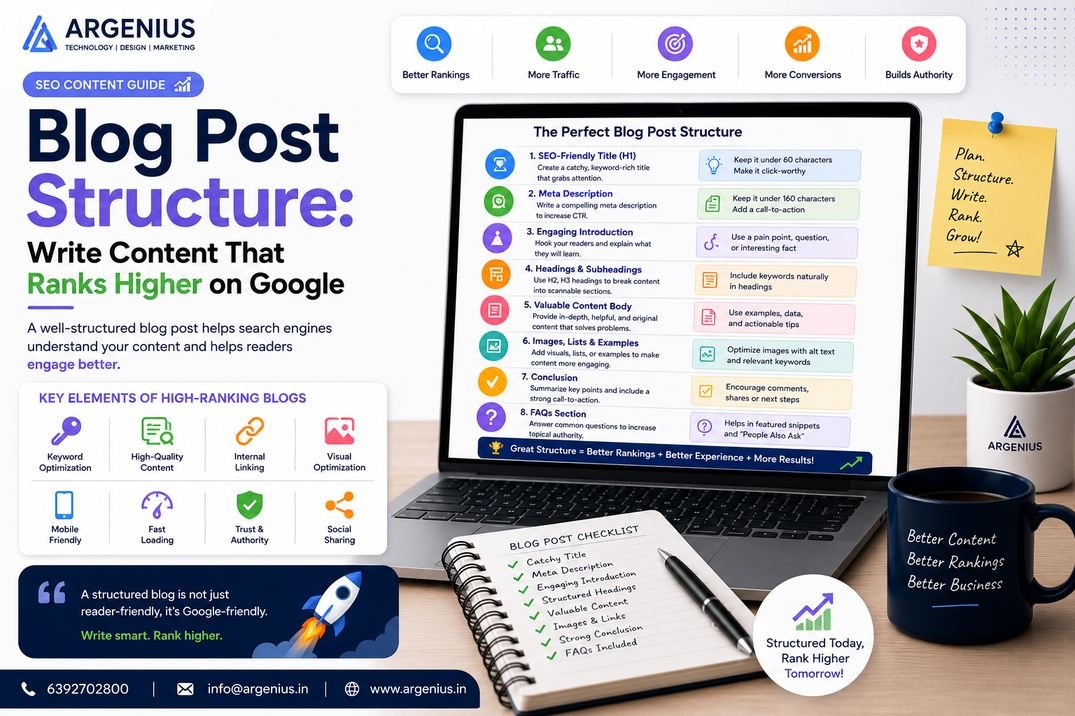
A blog post structure is the organized framework that determines how your content is presented to readers and search engines.
It includes:
- Introduction
- Headings & Subheadings
- Content Sections
- Images
- Lists
- Tables
- Internal Links
- External References
- FAQs
- Conclusion
- Call-to-Action
A clear structure improves readability, navigation, and SEO performance.
Why Blog Structure Matters
A well-organized blog post offers several important benefits.
It helps you:
- Improve SEO
- Increase User Engagement
- Reduce Bounce Rate
- Increase Time on Page
- Improve Readability
- Enhance User Experience
- Increase Featured Snippet Opportunities
- Improve AI Search Visibility
- Encourage Internal Link Clicks
- Increase Conversion Rates
Well-structured content serves both users and search engines effectively.
Essential Elements of a High-Ranking Blog Post
Every SEO-friendly blog should include:
- Compelling Title
- Strong Introduction
- Clear Heading Hierarchy
- Short Paragraphs
- Optimized Images
- Bullet Lists
- Comparison Tables
- Internal Links
- FAQs
- Clear Conclusion
- Call-to-Action
These elements create a better reading experience while supporting search visibility.
Understanding Search Intent
Before writing any article, identify what readers are searching for.
Common search intents include:
Informational
Users want to learn something.
Example:
"What is Technical SEO?"
Navigational
Users are looking for a specific website or brand.
Example:
"Argenius Blog"
Commercial Investigation
Users compare products or services before making a decision.
Example:
"Best Website Development Company"
Transactional
Users are ready to purchase or contact a business.
Example:
"Hire WordPress Developer"
Matching your content to search intent significantly improves ranking potential.
Ideal Blog Post Layout
A professional blog typically follows this structure:
- Title
- Introduction
- Problem Statement
- Explanation
- Step-by-Step Guide
- Benefits
- Best Practices
- Common Mistakes
- FAQs
- Conclusion
- CTA
This logical flow keeps readers engaged from beginning to end.
Heading Structure Best Practices
Use headings to organize your content effectively.
Recommended hierarchy:
- H1 (Blog Title)
- H2 (Main Sections)
- H3 (Subtopics)
- H4 (Rarely Needed)
Avoid skipping heading levels, as a logical hierarchy helps both readers and search engines understand your content.
Common Blog Structure Mistakes
Avoid these common errors:
- Long Paragraphs
- No Headings
- Poor Formatting
- Keyword Stuffing
- Missing Internal Links
- Weak Introduction
- No FAQs
- No Call-to-Action
- Large Blocks of Text
- Ignoring Mobile Readers
Correcting these mistakes can significantly improve content quality and user engagement.
SEO Content Writing Framework
Creating content that ranks requires a systematic approach. A successful SEO content writing framework ensures that every article is useful for readers while also being easy for search engines to understand.
Follow this proven process:
- Research the primary keyword.
- Understand the user's search intent.
- Analyze top-ranking competitors.
- Create a detailed content outline.
- Write an engaging introduction.
- Use a logical heading structure.
- Naturally include keywords.
- Add relevant internal links.
- Answer common user questions.
- End with a strong conclusion and CTA.
A structured workflow helps you publish consistent, high-quality content that performs well in search results.
Keyword Placement Strategy
Keywords should be placed naturally throughout the article rather than forced into every paragraph.
Place your primary keyword in:
- Blog Title
- SEO Title
- URL Slug
- Meta Description
- First 100 Words
- At Least One H2 Heading
- Image Alt Text
- Conclusion
- FAQ Section
Use secondary keywords naturally throughout the article to improve topical relevance without affecting readability.
Writing for Readers First
Search engines increasingly reward content that genuinely helps users.
When writing your blog:
- Solve the reader's problem.
- Answer questions clearly.
- Use simple language.
- Avoid unnecessary jargon.
- Include real examples.
- Keep the content actionable.
- Maintain a conversational tone.
- Write with clarity and authority.
Great SEO begins with delivering value to real people.
Content Formatting That Improves Rankings
Well-formatted content is easier to read and keeps visitors engaged.
Follow these formatting tips:
- Use short paragraphs.
- Break long sections into smaller headings.
- Add bullet points for easy scanning.
- Use numbered steps for tutorials.
- Highlight important SEO terms in bold.
- Include tables where comparisons are helpful.
- Add relevant images with descriptive alt text.
- Leave enough white space for readability.
A clean layout improves user experience across desktop and mobile devices.
Internal Linking Best Practices
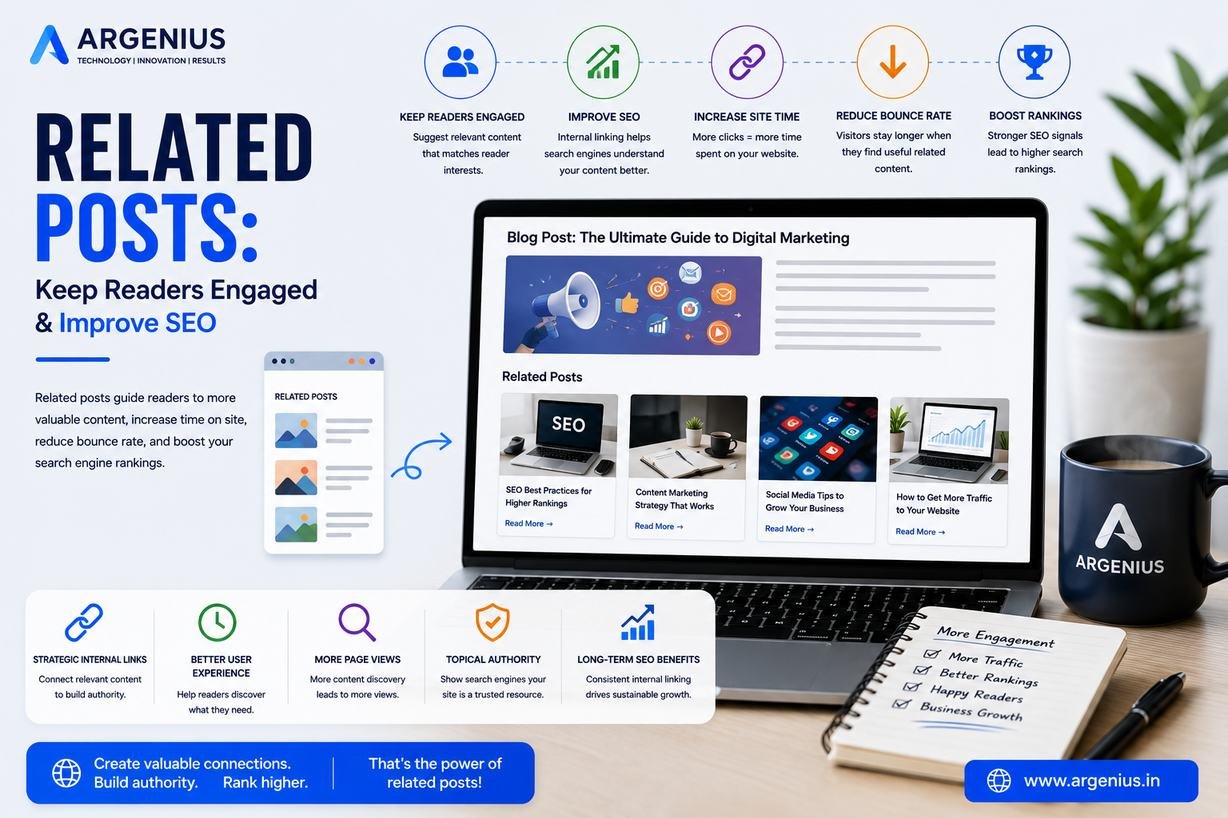
Internal links help search engines understand your website while encouraging visitors to explore more pages.
Best practices include:
- Link to related blog posts.
- Connect articles within the same topic cluster.
- Use descriptive anchor text.
- Link to service pages where relevant.
- Update older blogs with links to newer content.
- Avoid excessive or irrelevant links.
A strong internal linking strategy improves navigation and distributes SEO value throughout your website.
Featured Snippet Optimization
Featured snippets appear above standard search results and can significantly increase visibility.
To improve your chances:
- Answer questions directly.
- Use concise definitions.
- Create numbered lists.
- Add bullet points.
- Include comparison tables.
- Write clear FAQ sections.
- Organize information logically.
Structured content is more likely to be selected for featured snippets.
AI Search Optimization
AI-powered search platforms prioritize content that is comprehensive, trustworthy, and easy to understand.
To optimize for AI search:
- Answer questions completely.
- Cover the topic in depth.
- Maintain logical heading structures.
- Demonstrate expertise.
- Use factual information.
- Include FAQs.
- Add practical examples.
- Keep paragraphs concise.
This approach improves visibility across Google AI Overviews, ChatGPT, Gemini, and Perplexity.
Content Length & Readability
There is no fixed word count that guarantees rankings. The goal is to fully satisfy the user's search intent.
Improve readability by:
- Writing short sentences.
- Keeping paragraphs under five lines.
- Using headings every few sections.
- Including visuals where appropriate.
- Avoiding repetitive information.
- Explaining technical concepts clearly.
Readable content keeps visitors engaged and encourages them to continue reading.
Cost of Professional Content Writing (₹ INR)
| Service |
Estimated Cost |
| SEO Blog (1,000–1,500 Words) |
₹2,000 – ₹5,000 |
| Premium Blog (2,000–3,000 Words) |
₹5,000 – ₹15,000 |
| Technical Blog Writing |
₹8,000 – ₹20,000 |
| Industry Research Articles |
₹10,000 – ₹30,000 |
| Complete SEO Content Strategy |
₹20,000 – ₹1,00,000+ |
Factors Affecting Cost
Content writing costs depend on:
- Research Depth
- Topic Complexity
- Word Count
- SEO Optimization
- Competitor Analysis
- Graphics & Visual Assets
- Editing Requirements
- Publishing Frequency
Quality content is a long-term investment that continues generating traffic and leads over time.
Best Practices
Follow these best practices for creating high-ranking blog posts:
- Research keywords before writing.
- Understand user search intent.
- Write unique, valuable content.
- Use proper heading hierarchy.
- Optimize images.
- Add relevant internal links.
- Include FAQs.
- Update older articles regularly.
- Optimize meta titles and descriptions.
- Publish consistently.
These habits improve both SEO performance and user satisfaction.
Common Mistakes to Avoid
Avoid these common blog writing mistakes:
- Keyword stuffing
- Ignoring search intent
- Weak introductions
- Long, unstructured paragraphs
- Poor heading hierarchy
- Missing internal links
- No FAQs
- Duplicate content
- Publishing without proofreading
- Never updating old articles
Correcting these issues helps improve rankings and reader engagement.
Future Trends in SEO Content Writing
Content marketing continues to evolve alongside search technology.
Important trends include:
- AI-Assisted Content Research
- Topic Clusters
- Entity-Based SEO
- Voice Search Optimization
- Visual Search
- Interactive Content
- Personalized Experiences
- E-E-A-T Focus
- AI-Friendly Content Structure
- Data-Driven Content Strategies
Keeping up with these trends helps maintain long-term organic visibility.
Why Businesses Choose Argenius
At Argenius, we create content that is designed to rank, engage readers, and generate business results.
Our services include:
- SEO Content Writing
- Blog Strategy
- Keyword Research
- Technical SEO
- On-Page SEO
- Content Marketing
- Website Development
- WordPress Development
- Digital Marketing
- Website Optimization
Our content strategies focus on improving search visibility while supporting long-term business growth.
Final Thoughts
A well-planned blog post structure is one of the strongest foundations of successful SEO content. Organizing your article with clear headings, logical flow, strategic keyword placement, internal links, FAQs, and a compelling conclusion improves both readability and search performance. Great content is not just about ranking—it is about helping readers find accurate, useful, and actionable information.
As search engines continue to prioritize user experience and content quality, businesses that publish structured, informative, and trustworthy articles will gain a competitive advantage. At Argenius, we help businesses create SEO-driven content strategies that attract qualified traffic, build authority, and generate sustainable online growth.
Frequently Asked Questions
What is a blog post structure?
A blog post structure is the organized layout of an article, including the introduction, headings, content sections, images, FAQs, conclusion, and call-to-action, making it easier for readers and search engines to understand.
Why is blog structure important for SEO?
A clear structure improves readability, helps search engines understand your content, increases user engagement, and improves the chances of ranking higher.
What is the ideal length of an SEO blog?
There is no fixed length. The ideal blog should comprehensively answer the user's query while maintaining quality and readability.
Should every blog include FAQs?
Yes. FAQs answer additional user questions, improve user experience, and can increase the chances of appearing in featured snippets and AI-generated search results.
How many internal links should I add?
Add internal links naturally wherever they help readers discover related content. Focus on relevance instead of quantity.
Does Argenius provide SEO content writing services?
Yes. Argenius offers SEO content writing, keyword research, content strategy, technical SEO, website development, and digital marketing services to help businesses increase organic traffic and generate quality leads.