Discover how a consistent blog publishing schedule improves SEO, builds audience trust, increases organic traffic, and helps businesses grow through strategic content marketing.
Introduction
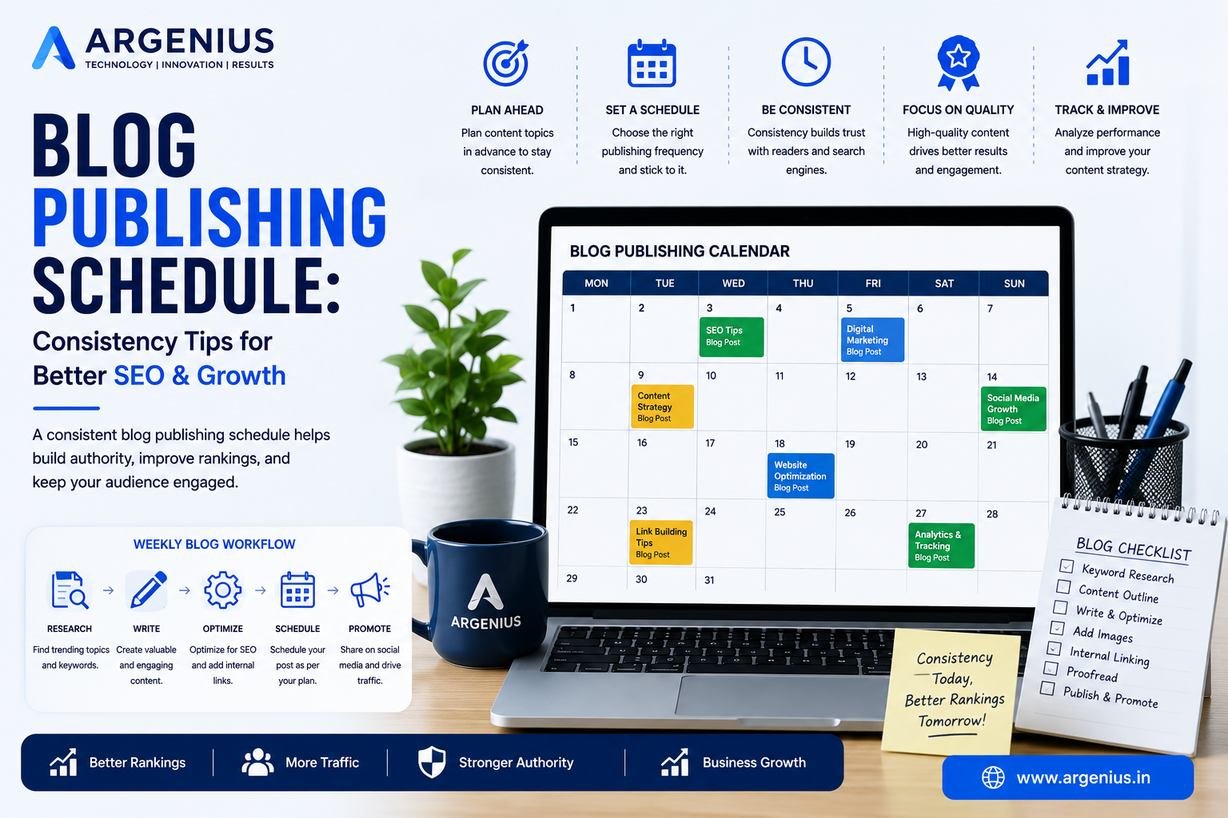
Publishing high-quality blog content occasionally is better than publishing poor-quality content every day—but the most successful blogs combine both quality and consistency. A well-planned blog publishing schedule helps businesses maintain a steady flow of valuable content, build audience trust, improve search engine visibility, and support long-term organic growth. Instead of publishing randomly whenever time allows, successful websites follow a structured content calendar aligned with their business goals and audience needs.
Consistency plays an important role in content marketing because it helps readers know when to expect new articles while also allowing search engines to crawl and index fresh content regularly. Over time, a reliable publishing schedule contributes to stronger topical authority, improved keyword coverage, and increased opportunities to rank for competitive search queries.
A publishing schedule is more than deciding how often to write blog posts. It includes keyword research, content planning, editorial workflows, writing, reviewing, publishing, promotion, and ongoing updates. By organizing these activities into a repeatable process, businesses can produce high-quality content without sacrificing accuracy or consistency.
The ideal publishing frequency depends on your resources, industry, competition, and business objectives. Some websites benefit from publishing several articles each week, while others achieve excellent results with one comprehensive, well-optimized article every week or every two weeks. The key is maintaining a schedule that your team can sustain over the long term.
Whether you operate a startup, an eCommerce business, a software company, an educational platform, or a service-based website, a structured publishing schedule helps you stay organized, avoid content gaps, and maximize the return on your content marketing efforts.
In this comprehensive guide, you'll learn how to create an effective Blog Publishing Schedule, maintain consistency, improve SEO, and build a content strategy that supports sustainable business growth.
At Argenius, we help businesses develop SEO-focused content calendars and publishing strategies that generate qualified traffic, strengthen brand authority, and deliver measurable business results.
What is a Blog Publishing Schedule?
A Blog Publishing Schedule is a structured plan that defines when blog posts will be researched, written, reviewed, published, and updated.
It helps content teams stay organized while ensuring a consistent publishing frequency.
A publishing schedule typically includes:
- Publishing Dates
- Blog Topics
- Target Keywords
- Content Categories
- Assigned Writers
- Editors
- Review Deadlines
- Publication Status
- Promotion Plan
- Update Schedule
A clear publishing plan reduces delays and improves workflow efficiency.
Why Consistency Matters
Consistency is one of the strongest foundations of successful content marketing.
Regular publishing helps:
- Build Reader Trust
- Improve SEO
- Increase Organic Traffic
- Strengthen Topical Authority
- Improve Brand Visibility
- Generate More Leads
- Increase Returning Visitors
- Improve Team Productivity
- Support Long-Term Growth
- Maintain Content Quality
Publishing consistently creates momentum that compounds over time.
Benefits of a Blog Publishing Schedule
Following a structured publishing schedule provides many long-term advantages.
Benefits include:
- Better Content Planning
- Improved Editorial Workflow
- Stronger SEO Performance
- Higher Audience Engagement
- Increased Content Quality
- Better Resource Management
- Faster Publishing Process
- Improved Collaboration
- More Consistent Branding
- Higher ROI from Content Marketing
Consistency helps transform blogging into a scalable business asset.
Essential Components of a Publishing Schedule
A successful publishing schedule should include:
Content Calendar
Plan future blog topics in advance.
Keyword Planning
Assign target keywords to every article.
Editorial Workflow
Define writing, editing, and approval processes.
Publishing Frequency
Determine how often new articles will be published.
Content Categories
Balance content across different topics.
Promotion Strategy
Plan how articles will be shared after publication.
Performance Tracking
Measure the success of every published article.
Content Updates
Schedule reviews for evergreen content.
Team Responsibilities
Assign tasks to writers, editors, and SEO specialists.
Deadlines
Set realistic timelines for every publishing stage.
How Often Should You Publish?
There is no universal publishing frequency that works for every business.
A practical approach is:
- 1 Article per Week – Suitable for small businesses and startups.
- 2–3 Articles per Week – Ideal for growing businesses.
- 4–5 Articles per Week – Effective for competitive industries with larger content teams.
- Daily Publishing – Best for news websites or high-volume content platforms with dedicated editorial resources.
The best schedule is one your team can maintain consistently without compromising quality.
Common Publishing Mistakes
Avoid these common mistakes:
- Publishing Without a Plan
- Inconsistent Posting
- Prioritizing Quantity Over Quality
- Ignoring Keyword Research
- Missing Deadlines
- Skipping Content Reviews
- Never Updating Older Posts
- Weak Editorial Process
- No Performance Tracking
- Lack of Promotion
Avoiding these issues helps create a sustainable and effective content strategy.
Step-by-Step Content Planning Framework
A structured content planning process helps maintain publishing consistency while ensuring every article supports your business goals.
Follow this framework:
- Define Your Content Goals
- Perform Keyword Research
- Identify Target Audience
- Create Monthly Content Calendar
- Assign Topics to Writers
- Set Writing & Editing Deadlines
- Optimize Content for SEO
- Publish According to Schedule
- Promote Every Blog Post
- Analyze Performance & Improve
Following a repeatable workflow helps maintain quality and consistency throughout the year.
Creating an Editorial Calendar
An editorial calendar keeps your content team organized and prevents publishing delays.
Include the following information:
- Blog Title
- Target Keyword
- Search Intent
- Content Category
- Assigned Writer
- Editor
- Writing Deadline
- Publishing Date
- Promotion Channels
- Update Schedule
A detailed editorial calendar ensures every article moves smoothly from planning to publication.
Balancing Content Types
Publishing the same type of content repeatedly can reduce reader engagement.
Create a balanced content mix, including:
- How-To Guides
- Beginner Tutorials
- Industry News
- Case Studies
- Product Comparisons
- Listicles
- Expert Interviews
- Frequently Asked Questions
- Checklists
- Evergreen Guides
A diverse content strategy attracts different audience segments and strengthens topical authority.
SEO Optimization for a Publishing Schedule
Consistency alone isn't enough—every published article should also follow SEO best practices.
Optimize every post by:
- Targeting One Primary Keyword
- Adding Relevant Secondary Keywords
- Writing Compelling Meta Titles
- Creating Optimized Meta Descriptions
- Using Proper Heading Structure
- Adding Internal Links
- Optimizing Images
- Improving Page Speed
- Updating Evergreen Articles
- Monitoring Search Performance
Publishing optimized content consistently delivers stronger long-term SEO results.
AI Search Optimization
AI-powered search engines prioritize websites that publish reliable, well-structured, and consistently updated content.
Improve AI visibility by:
- Publishing high-quality articles regularly.
- Building topic clusters.
- Updating evergreen content.
- Maintaining consistent formatting.
- Answering common user questions.
- Strengthening internal linking.
- Adding FAQ sections.
- Keeping information accurate and current.
These practices improve visibility in Google AI Overviews, ChatGPT, Gemini, and Perplexity.
Measuring Publishing Performance
Track these metrics to evaluate your publishing strategy.
Monitor:
- Organic Traffic
- Keyword Rankings
- Published Articles per Month
- Click-Through Rate (CTR)
- Average Session Duration
- Bounce Rate
- Returning Visitors
- Lead Generation
- Conversion Rate
- Content Engagement
Regular analysis helps identify which topics, publishing frequency, and content formats generate the best results.
Cost of Professional Content Planning (₹ INR)
| Service |
Estimated Cost |
| Monthly Content Calendar |
₹5,000 – ₹12,000 |
| SEO Content Planning |
₹10,000 – ₹25,000 |
| Complete Editorial Strategy |
₹20,000 – ₹50,000 |
| Content Marketing Management |
₹30,000 – ₹1,00,000 |
| Enterprise Content Strategy |
₹75,000 – ₹5,00,000+ |
Factors Affecting Cost
The total investment depends on:
- Number of Articles
- Content Quality Requirements
- Keyword Research Scope
- Editorial Workflow
- Industry Competition
- SEO Strategy
- Team Size
- Ongoing Content Management
A professionally planned publishing schedule helps maximize content ROI while reducing workflow bottlenecks.
Best Practices
Follow these best practices for a successful Blog Publishing Schedule:
- Publish on a consistent schedule.
- Prioritize quality over quantity.
- Plan content at least one month in advance.
- Use an editorial calendar.
- Perform keyword research before writing.
- Maintain a balanced mix of content formats.
- Update evergreen articles regularly.
- Track publishing performance.
- Promote every published article.
- Continuously refine your strategy based on analytics.
These practices create a sustainable content marketing system that supports long-term growth.
Common Mistakes to Avoid
Avoid these common publishing mistakes:
- Publishing randomly
- Missing publishing deadlines
- Creating content without keyword research
- Ignoring content quality
- Never updating older articles
- Skipping proofreading
- Not promoting published content
- Inconsistent branding
- Weak internal linking
- Ignoring analytics
Avoiding these issues helps maintain consistency, improve SEO, and strengthen your brand authority.
Future Trends in Blog Publishing
Content publishing continues to evolve with automation and artificial intelligence.
Emerging trends include:
- AI-Assisted Content Planning
- Predictive Publishing Schedules
- Personalized Content Recommendations
- Automated Editorial Workflows
- AI Keyword Research
- Content Performance Forecasting
- Intelligent Content Calendars
- Voice Search Optimization
- Multi-Channel Content Distribution
- AI-Based Content Refresh Suggestions
Businesses adopting these technologies will improve efficiency while maintaining consistent content quality.
Why Businesses Choose Argenius
At Argenius, we help businesses build scalable content marketing systems that combine strategic planning, SEO optimization, and consistent publishing.
Our services include:
- SEO Content Strategy
- Content Calendar Planning
- Content Writing
- Keyword Research
- Website Development
- WordPress Development
- Technical SEO
- Content Marketing
- Performance Optimization
- Digital Marketing
Our focus is on helping businesses publish high-quality content consistently while driving measurable SEO and business growth.
Final Thoughts
A well-planned Blog Publishing Schedule is the foundation of successful content marketing. Consistency builds trust with readers, helps search engines discover fresh content regularly, and creates a predictable workflow that improves productivity. Instead of publishing whenever inspiration strikes, businesses should follow a structured editorial calendar that aligns with their SEO strategy, audience needs, and long-term business goals.
Remember that consistency does not mean publishing every day—it means publishing high-quality content at a sustainable pace. Even one well-researched, optimized article each week can outperform inconsistent publishing when supported by keyword research, internal linking, promotion, and regular content updates. At Argenius, we help businesses develop strategic publishing schedules that improve search visibility, increase organic traffic, and create lasting content marketing success.
Frequently Asked Questions
What is a blog publishing schedule?
A Blog Publishing Schedule is a structured plan that defines when blog posts will be researched, written, reviewed, published, promoted, and updated to maintain consistency and improve content management.
How often should I publish blog posts?
The ideal publishing frequency depends on your resources and goals. Many businesses achieve excellent results by publishing one or two high-quality articles each week consistently.
Why is consistency important for SEO?
Consistent publishing helps build topical authority, increases keyword coverage, encourages regular search engine crawling, and keeps your audience engaged over time.
Should I prioritize quality or quantity?
Quality should always come first. Publishing fewer high-value articles consistently is generally more effective than publishing a large number of low-quality posts.
What should an editorial calendar include?
An editorial calendar should include blog topics, target keywords, publishing dates, assigned writers, review deadlines, promotion plans, and update schedules.
Does Argenius provide content planning services?
Yes. Argenius offers content strategy, SEO content writing, keyword research, editorial calendar planning, website development, technical SEO, and digital marketing services to help businesses publish high-quality content consistently and achieve long-term organic growth.