Learn how to write SEO-friendly blog posts that rank higher on Google, attract qualified organic traffic, improve AI search visibility, and convert readers into customers with a proven Blog SEO strategy.
Introduction
Businesses publish millions of blog posts every day, but only a small percentage receive consistent organic traffic from Google. The difference isn't luck—it's Blog SEO.
Writing a blog post is easy. Writing one that ranks on Google, appears in AI-powered search results, and brings qualified visitors month after month requires a well-planned SEO strategy.
Modern Blog SEO is no longer about repeating keywords or writing long articles filled with unnecessary content. Google's algorithms have evolved to prioritize helpful, trustworthy, and experience-driven content that answers user questions better than competing pages. At the same time, AI-powered platforms such as Google AI Overviews, ChatGPT, Gemini, and Perplexity increasingly surface content that demonstrates expertise, covers topics comprehensively, and is easy to understand.
A successful SEO blog combines keyword research, search intent, content structure, internal linking, technical optimization, and user experience. Each element works together to improve visibility, engagement, and conversions.
Whether you operate a startup, ecommerce business, SaaS platform, local company, or enterprise website, well-optimized blog content can become one of your strongest long-term marketing assets. Unlike paid advertisements that stop delivering results when your budget ends, SEO blogs continue attracting visitors long after they are published.
In this guide, you'll learn how Blog SEO works, why it matters, and how to create blog posts that rank higher, attract qualified traffic, and support long-term business growth.
At Argenius, we develop SEO-focused content strategies that help businesses improve Google rankings, increase organic traffic, and generate measurable business results.
What is Blog SEO?
Blog SEO is the process of optimizing blog posts so they rank higher in search engine results and attract relevant organic traffic.
It combines content quality with technical and on-page optimization to make blog posts easier for both users and search engines to understand.
Blog SEO includes:
- Keyword Research
- Search Intent Optimization
- On-Page SEO
- Internal Linking
- Meta Optimization
- Image Optimization
- Content Structure
- Page Speed
- Mobile Optimization
- User Experience
The goal is to create valuable content that answers user questions while meeting Google's ranking guidelines.
Why Blog SEO is Important
A well-optimized blog helps businesses:
- Increase Organic Traffic
- Improve Google Rankings
- Build Brand Authority
- Generate Qualified Leads
- Improve Customer Trust
- Reduce Paid Advertising Costs
- Increase Conversions
- Support Content Marketing
- Build Topical Authority
- Improve Long-Term ROI
Unlike paid campaigns, SEO blogs continue generating traffic for months or even years.
How Blog SEO Works
Google evaluates hundreds of ranking factors before displaying a blog in search results.
Important factors include:
- Search Intent
- Content Quality
- Keyword Relevance
- Internal Linking
- Backlinks
- Core Web Vitals
- Mobile Friendliness
- E-E-A-T
- Page Experience
- Topical Authority
Optimizing these areas increases the likelihood of ranking for competitive keywords.
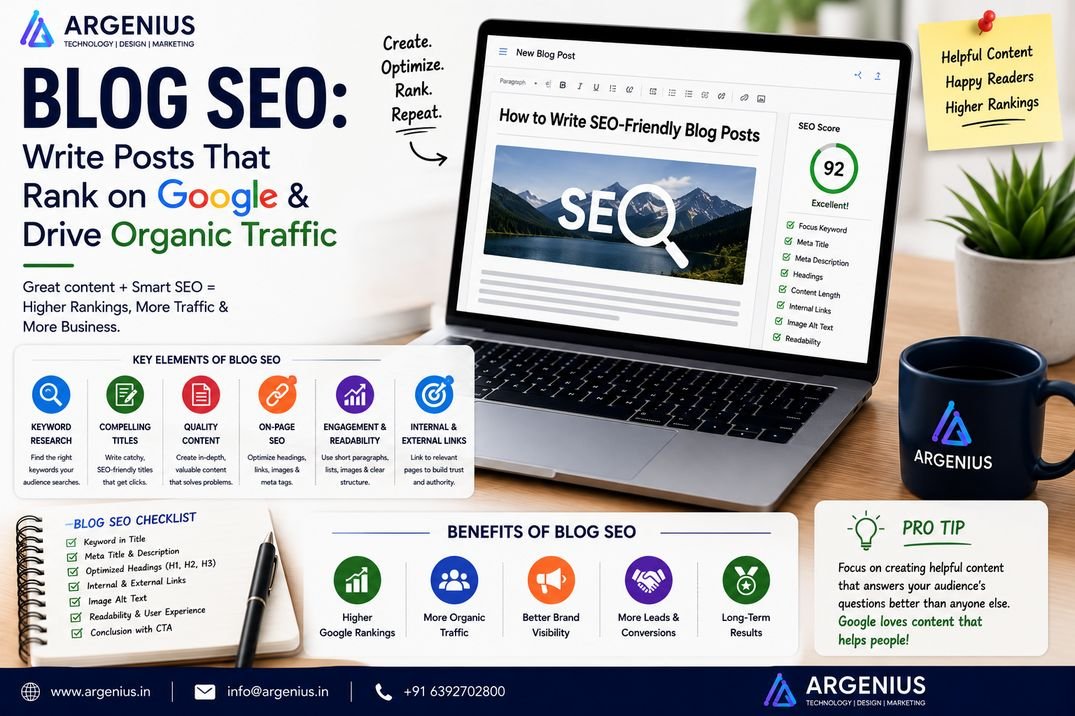
Key Elements of SEO Blog Writing
Keyword Research
Find keywords your audience actually searches for.
Examples:
- Blog SEO
- SEO Blog Writing
- SEO Content Strategy
- On-Page SEO
- Content Marketing
Search Intent
Understand why users are searching.
Intent types include:
- Informational
- Commercial
- Transactional
- Navigational
SEO Title
Create compelling titles that include the primary keyword and encourage clicks.
Example:
Blog SEO Guide: Write Posts That Rank on Google
Meta Description
Write a concise summary that encourages users to visit your page.
Heading Structure
Use a logical hierarchy:
- Introduction
- Main Sections
- Supporting Topics
- FAQs
- Conclusion
A clear structure improves readability and helps search engines understand the page.
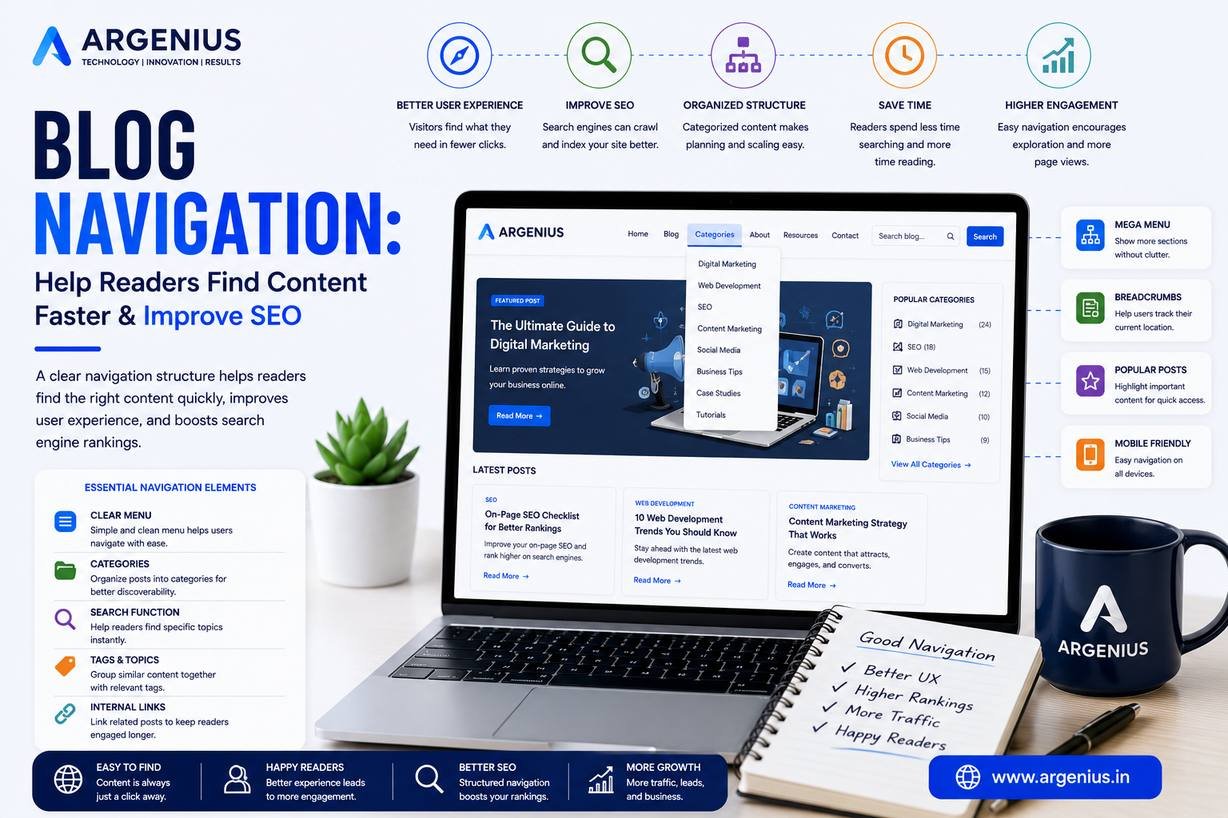
Internal Linking
Connect readers to:
- Related Blog Posts
- Service Pages
- Category Pages
- Case Studies
Internal links improve crawlability and keep users engaged.
Image Optimization
Optimize every image by:
- Compressing file size
- Using descriptive filenames
- Adding ALT text
- Choosing modern formats such as WebP
Mobile Optimization
Ensure blogs load quickly and display properly across smartphones, tablets, and desktops.
Blog SEO vs Traditional Blogging
| Traditional Blogging |
Blog SEO |
| Writes for everyone |
Targets search intent |
| No keyword strategy |
Keyword research driven |
| Limited traffic |
Consistent organic traffic |
| Few optimizations |
Fully optimized content |
| Short-term visibility |
Long-term rankings |
SEO transforms ordinary blog posts into long-term traffic assets.
Benefits of Blog SEO
Businesses investing in Blog SEO often achieve:
- Higher Google Rankings
- Increased Organic Traffic
- Better User Engagement
- More Qualified Leads
- Improved Brand Authority
- Better Conversion Rates
- Higher ROI
- Sustainable Business Growth
- Improved AI Search Visibility
- Stronger Content Ecosystem
Common Types of SEO Blog Posts
Effective blog formats include:
- How-To Guides
- Step-by-Step Tutorials
- Ultimate Guides
- Listicles
- Case Studies
- Industry Trends
- Product Comparisons
- FAQs
- Checklists
- Best Practices
Diversifying content formats helps attract users at different stages of the buying journey.
Blog SEO and AI Search
AI-powered search platforms evaluate content based on completeness, expertise, and usefulness.
To improve visibility in Google AI Overviews, ChatGPT, Gemini, and Perplexity:
- Answer questions clearly.
- Cover related subtopics.
- Demonstrate expertise.
- Use semantic keywords naturally.
- Build topic clusters.
- Keep content updated.
- Add FAQs and internal links.
Creating comprehensive, trustworthy content improves both traditional SEO and AI search visibility.
Businesses That Benefit from Blog SEO
Blog SEO delivers value across industries, including:
- Software Companies
- SaaS Platforms
- Ecommerce Stores
- Healthcare Providers
- Educational Institutions
- Financial Services
- Law Firms
- Real Estate Agencies
- Travel Businesses
- Digital Marketing Agencies
Any business seeking long-term organic traffic can benefit from a strategic Blog SEO approach.
Step-by-Step Blog SEO Strategy
Writing an SEO-friendly blog is more than inserting keywords. A successful Blog SEO Strategy combines keyword research, search intent, content quality, technical optimization, and user experience to create content that ranks consistently and drives qualified traffic.
Step 1: Perform Keyword Research
Every successful blog starts with choosing the right keyword.
Research:
- Primary Keyword
- Long-Tail Keywords
- Question-Based Keywords
- Low-Competition Keywords
- Related Keywords
- Search Volume
- Keyword Difficulty
Example:
Primary Keyword:
Blog SEO
Supporting Keywords:
- SEO Blog Writing
- SEO-Friendly Blog Posts
- Blog Optimization
- Content SEO
- Google Ranking Tips
- SEO Content Strategy
Step 2: Understand Search Intent
Before writing, identify what users actually want.
Search Intent Types:
- Informational
- Commercial Investigation
- Transactional
- Navigational
Your content should fully satisfy the user's intent rather than simply targeting keywords.
Step 3: Create an SEO-Friendly Structure
A well-organized article improves readability and helps search engines understand the page.
Recommended structure:
- Introduction
- Topic Explanation
- Benefits
- Step-by-Step Guide
- Best Practices
- Common Mistakes
- FAQs
- Conclusion
- CTA
Clear heading hierarchy improves user experience and crawlability.
Step 4: Write Helpful, Original Content
Google rewards content that demonstrates:
- Experience
- Expertise
- Authority
- Trustworthiness
Focus on solving user problems with practical, accurate, and actionable information instead of writing solely for search engines.
Step 5: Optimize On-Page SEO
Each blog should include:
- Primary Keyword
- Related Keywords
- SEO Title
- Meta Description
- Image ALT Text
- Internal Links
- External References (where appropriate)
- Optimized URL
- FAQ Section
These elements improve search visibility and click-through rates.
Step 6: Improve Technical SEO
Support your content with strong technical foundations.
Optimize:
- Core Web Vitals
- Mobile Responsiveness
- Page Speed
- HTTPS
- XML Sitemap
- Structured Data
- Crawlability
Technical SEO ensures search engines can efficiently index and rank your content.
Step 7: Build Internal Links
Connect your blog to relevant pages such as:
- Related Articles
- Service Pages
- Category Pages
- Case Studies
- Contact Page
Internal linking strengthens topical authority and helps users discover more valuable content.
Step 8: Monitor and Update
SEO is an ongoing process.
Track:
- Organic Traffic
- Keyword Rankings
- CTR
- Bounce Rate
- Time on Page
- Conversions
- Indexed Pages
Update existing blogs with fresh information to maintain rankings and relevance.
Blog SEO Checklist
Before publishing, ensure your blog includes:
- ✅ Keyword Research
- ✅ Search Intent Alignment
- ✅ SEO Title
- ✅ Meta Description
- ✅ Optimized URL
- ✅ Proper Heading Structure
- ✅ Internal Links
- ✅ Image Optimization
- ✅ Mobile-Friendly Design
- ✅ Fast Loading Speed
- ✅ FAQ Section
- ✅ Strong Call-to-Action
Using a checklist helps maintain consistency across all published content.
Best Blog SEO Tools
Free Tools
- Google Search Console
- Google Analytics
- Google Trends
- Google Keyword Planner
- Google PageSpeed Insights
- Google Rich Results Test
Premium Tools
- Ahrefs
- Semrush
- Surfer SEO
- SE Ranking
- Screaming Frog SEO Spider
- Moz Pro
- Grammarly
These tools assist with keyword research, content optimization, technical audits, and performance tracking.
Blog SEO for AI Search
As AI-powered search evolves, blogs should be optimized for both traditional search engines and AI assistants.
To improve visibility in Google AI Overviews, ChatGPT, Gemini, and Perplexity:
- Answer user questions directly.
- Cover related topics comprehensively.
- Use semantic keywords naturally.
- Demonstrate real expertise.
- Add FAQs.
- Build topic clusters.
- Strengthen internal linking.
- Update content regularly.
AI systems increasingly favor trustworthy, well-structured, and complete content.
Cost of Blog SEO Services (₹ INR)
The cost of Blog SEO depends on content quality, optimization depth, and publishing frequency.
| Service |
Estimated Cost |
| SEO Blog Writing |
₹3,000 – ₹8,000 per blog |
| Blog SEO Optimization |
₹5,000 – ₹15,000 |
| Monthly Blog SEO Management |
₹20,000 – ₹60,000 |
| Complete Content Marketing Package |
₹40,000 – ₹1,00,000+ |
| Enterprise SEO Blogging |
Custom Pricing |
Factors Affecting Cost
Pricing depends on:
- Content Length
- Keyword Research
- Industry Competition
- Technical SEO
- Internal Linking
- Graphics & Media
- Publishing Frequency
- Performance Monitoring
Investing in Blog SEO creates long-term assets that continue generating traffic and leads.
Best Practices
To maximize Blog SEO performance:
- Write for users before search engines.
- Target one primary keyword per article.
- Cover the topic comprehensively.
- Use clear heading structures.
- Optimize images and page speed.
- Add relevant internal links.
- Include FAQs.
- Update older blog posts regularly.
- Monitor performance through analytics.
- Publish consistently.
Consistency and quality are key to long-term SEO success.
Common Mistakes to Avoid
Avoid these common blogging mistakes:
- Writing without keyword research
- Ignoring search intent
- Keyword stuffing
- Publishing thin content
- Weak internal linking
- Duplicate content
- Poor readability
- Ignoring mobile optimization
- Neglecting technical SEO
- Never updating old articles
Eliminating these mistakes helps improve rankings, engagement, and user satisfaction.
Future Trends in Blog SEO
Blog SEO continues to evolve alongside AI and changing search behaviors.
Key trends include:
- Google AI Overviews
- Generative Engine Optimization (GEO)
- Semantic SEO
- Entity-Based Search
- Voice Search Optimization
- Topic Clusters
- Interactive Content
- Video Integration
- Personalized Search
- AI-Assisted Content Discovery
Businesses that focus on user-first, experience-driven content will remain competitive in the future.
Why Businesses Choose Argenius
At Argenius, we develop Blog SEO strategies that combine keyword research, technical optimization, content marketing, and user experience to deliver measurable business growth.
Our Blog SEO Services include:
- SEO Blog Writing
- Keyword Research
- Search Intent Analysis
- Content Strategy
- On-Page SEO
- Technical SEO
- Topic Cluster Planning
- Internal Linking Strategy
- SEO Audits
- Monthly Performance Reports
Our goal is to help businesses rank higher, attract qualified traffic, and convert readers into loyal customers.
Final Thoughts
A successful Blog SEO strategy is built on creating content that genuinely helps users while following SEO best practices. From selecting the right keywords and understanding search intent to optimizing technical performance and internal linking, every element contributes to better rankings and stronger organic visibility.
Modern search engines and AI-powered platforms reward websites that consistently publish comprehensive, trustworthy, and user-focused content. Businesses that invest in SEO-friendly blogs not only improve their search performance but also build long-term authority, trust, and customer relationships.
Instead of treating blogs as isolated pieces of content, make them part of a broader content marketing strategy that supports your business goals. Argenius helps businesses create high-quality SEO blogs that rank on Google, perform well in AI search, and generate sustainable organic growth.
Frequently Asked Questions
What is Blog SEO?
Blog SEO is the process of optimizing blog posts to improve their visibility in search engines, attract organic traffic, and satisfy user search intent.
Why is Blog SEO important?
Blog SEO helps businesses increase organic traffic, improve search rankings, build topical authority, and generate qualified leads over the long term.
How long does it take for a blog to rank on Google?
Depending on competition, website authority, and content quality, a blog may start ranking within a few weeks, while competitive keywords may take several months.
How often should I publish SEO blogs?
Publishing one to four high-quality, optimized blogs each month is a sustainable approach for many businesses. Consistency is more important than volume.
Does Blog SEO help AI-powered search?
Yes. Comprehensive, well-structured, and trustworthy blogs are more likely to appear in Google AI Overviews, ChatGPT, Gemini, and Perplexity responses.
Does Argenius provide Blog SEO services?
Yes. Argenius offers SEO Blog Writing, Keyword Research, Search Intent Analysis, Content Strategy, Technical SEO, On-Page Optimization, and Complete Blog SEO Services to help businesses achieve long-term organic growth.