
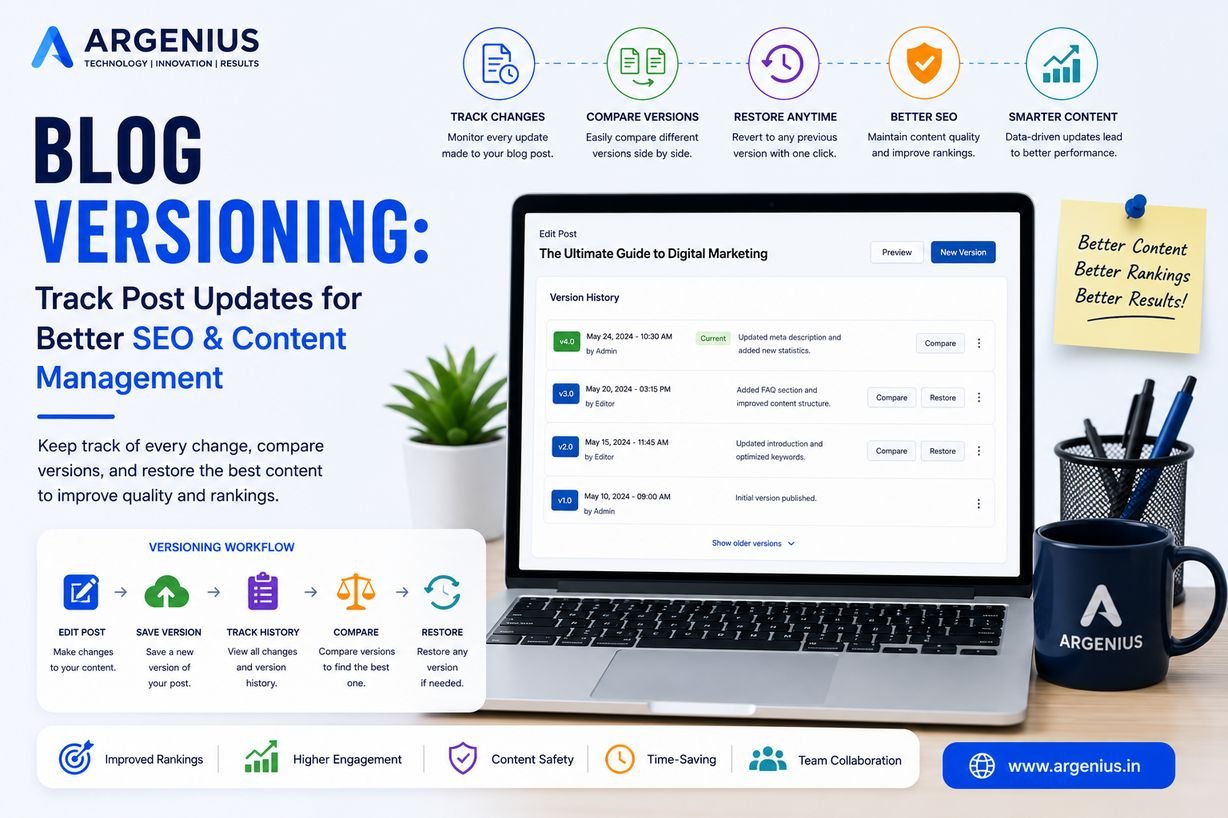
Discover how blog versioning helps manage content updates, improve SEO, maintain accuracy, strengthen user trust, and keep blog posts relevant over time.
Introduction
Publishing a blog post is not the end of the content creation process. As industries evolve, search algorithms change, and new information becomes available, blog articles need regular updates to remain accurate and competitive. Without a structured process for managing these changes, it becomes difficult to track what was updated, when it was changed, and why the changes were made. This is where Blog Versioning becomes an essential part of modern content management.
A blog versioning system records every significant update made to a blog post, creating a clear history of revisions over time. Whether you're correcting outdated information, improving SEO, adding new research, refreshing images, or expanding content, version tracking ensures every update is documented and manageable. This improves collaboration, maintains consistency, and reduces the risk of accidental errors.
Versioning is especially valuable for evergreen content that is updated frequently. Instead of creating duplicate articles, businesses can continuously improve existing posts while preserving their search engine authority and historical performance. This approach helps maintain rankings, increase reader trust, and maximize the long-term value of every published article.
Beyond SEO, version history supports content teams by making it easier to review edits, restore previous versions if needed, and understand how content has evolved. It also improves transparency, making it clear to readers when an article has been reviewed or updated with the latest information.
Whether you manage a business website, educational portal, technology blog, news platform, or eCommerce website, implementing a structured blog versioning strategy ensures your content remains accurate, trustworthy, and optimized for long-term success.
In this comprehensive guide, you'll learn how Blog Versioning works, why it's important, how to track post updates effectively, and how it contributes to better SEO, user experience, and content management.
At Argenius, we help businesses develop scalable content management systems that simplify version tracking, improve SEO, and keep website content accurate and up to date.
What is Blog Versioning?
Blog Versioning is the process of recording and managing changes made to a blog post over time.
Instead of losing previous edits, every important update is tracked and documented.
Common updates include:
- Content Revisions
- SEO Improvements
- Keyword Updates
- Image Replacements
- Internal Link Updates
- External Link Fixes
- Statistics Updates
- Formatting Changes
- CTA Improvements
- Technical Corrections
Versioning creates a reliable history of how your content evolves.
Why Blog Versioning Matters
Keeping track of updates improves both content quality and workflow efficiency.
Benefits include:
- Better Content Accuracy
- Improved SEO
- Easier Team Collaboration
- Faster Error Recovery
- Better Content Management
- Reader Transparency
- Higher Trust
- Easier Content Audits
- Consistent Publishing Standards
- Long-Term Content Value
A structured version history helps maintain quality across your entire blog.
Benefits of Tracking Post Updates
Maintaining version history offers several long-term advantages.
These include:
- Better Search Rankings
- Improved User Experience
- Stronger Content Consistency
- Faster Collaboration
- Reduced Publishing Errors
- Better Compliance
- Easier Content Rollback
- Improved Editorial Workflow
- Higher Reader Confidence
- Increased ROI from Existing Content
Tracking updates ensures every improvement is documented and measurable.
Types of Blog Updates
Different types of updates may require new versions.
SEO Updates
Improve keywords, metadata, headings, and internal links.
Content Expansion
Add new sections, examples, or FAQs.
Information Updates
Replace outdated facts and statistics.
Design Updates
Refresh layouts, images, or visual elements.
Technical Updates
Fix formatting, broken links, or performance issues.
Compliance Updates
Revise content to reflect new policies or legal requirements.
Why Version History Improves Trust
Readers value transparency and accurate information.
Displaying update history helps:
- Show Content Freshness
- Increase Credibility
- Improve Reader Confidence
- Demonstrate Expertise
- Build Brand Trust
- Support Accurate Information
- Encourage Return Visits
- Strengthen Authority
- Improve User Experience
- Increase Content Reliability
Transparent updates reassure readers that your content is actively maintained.
Common Versioning Mistakes
Avoid these common issues:
- No Update Records
- Duplicate Articles Instead of Updates
- Untracked SEO Changes
- Broken Internal Links
- Outdated Statistics
- No Editorial Workflow
- Missing Backup Copies
- Inconsistent Formatting
- Ignoring Update Dates
- Never Auditing Older Content
Poor version management often leads to inconsistent content quality.
Step-by-Step Blog Versioning Workflow
A structured versioning process helps maintain content quality, improve collaboration, and ensure every update is properly documented.
Follow this workflow:
- Audit Existing Blog Posts
- Identify Content That Needs Updates
- Create a New Version Before Editing
- Document Every Major Change
- Review SEO Elements
- Update Internal & External Links
- Proofread and Approve Changes
- Publish the Updated Version
- Monitor Performance
- Schedule Future Reviews
A consistent workflow ensures every content update contributes to long-term SEO and business growth.
Content Update Checklist
Before publishing an updated version of any blog post, review the following checklist:
- Update Outdated Information
- Verify Statistics and Data
- Improve Readability
- Optimize Keywords
- Refresh Meta Title
- Update Meta Description
- Review Heading Structure
- Fix Broken Links
- Add New Internal Links
- Replace Low-Quality Images
- Update Call-to-Action
- Improve FAQs
- Optimize Featured Image
- Check Mobile Experience
- Test Page Speed
Following this checklist helps maintain consistency across your entire content library.
Creating a Version History
Every important update should be documented for future reference.
Include details such as:
- Version Number
- Update Date
- Author or Editor
- Changes Made
- SEO Improvements
- New Sections Added
- Removed Content
- Link Updates
- Image Changes
- Review Status
A well-maintained version history simplifies collaboration and future content audits.
SEO Benefits of Blog Versioning
Regularly updating blog posts is one of the most effective long-term SEO strategies.
Version tracking helps:
- Keep Content Fresh
- Improve Search Rankings
- Increase Organic Traffic
- Refresh Keywords
- Improve Internal Linking
- Strengthen Topical Authority
- Reduce Outdated Information
- Improve User Experience
- Maintain Content Accuracy
- Increase Reader Trust
Search engines reward websites that consistently maintain accurate and high-quality content.
AI Search Optimization
AI-powered search engines prioritize reliable, current, and authoritative information.
Improve AI visibility by:
- Updating content regularly.
- Documenting significant revisions.
- Maintaining factual accuracy.
- Expanding comprehensive guides.
- Improving topic coverage.
- Strengthening internal links.
- Updating FAQs.
- Refreshing examples and statistics.
These practices improve visibility across Google AI Overviews, ChatGPT, Gemini, and Perplexity.
Measuring Content Performance After Updates
After publishing a new version, monitor performance to evaluate the impact of your changes.
Track:
- Organic Traffic
- Keyword Rankings
- Click-Through Rate (CTR)
- Average Time on Page
- Bounce Rate
- Pages per Session
- Returning Visitors
- Conversion Rate
- Internal Link Clicks
- Lead Generation
Comparing performance before and after updates helps determine which improvements deliver the greatest results.
Cost of Professional Content Version Management (₹ INR)
| Service |
Estimated Cost |
| Basic Content Update |
₹3,000 – ₹8,000 |
| SEO Content Refresh |
₹8,000 – ₹20,000 |
| Complete Blog Audit & Version Management |
₹15,000 – ₹40,000 |
| Enterprise Content Management System |
₹30,000 – ₹1,00,000 |
| Complete SEO Content Strategy |
₹50,000 – ₹3,00,000+ |
Factors Affecting Cost
The total investment depends on:
- Number of Blog Posts
- Website Size
- Content Quality
- SEO Requirements
- CMS Platform
- Editorial Workflow
- Technical Improvements
- Ongoing Maintenance
Professional version management helps maximize the value of existing content while reducing long-term maintenance costs.
Best Practices
Follow these best practices for Blog Versioning:
- Track every major content update.
- Maintain a clear version history.
- Review evergreen content regularly.
- Refresh outdated statistics.
- Update SEO metadata.
- Improve internal linking.
- Document editorial changes.
- Backup previous versions.
- Schedule periodic content reviews.
- Focus on accuracy and user value.
These practices ensure your content remains relevant, trustworthy, and optimized for search engines.
Common Mistakes to Avoid
Avoid these common versioning mistakes:
- Editing content without tracking changes
- Publishing duplicate articles instead of updating existing ones
- Forgetting to update metadata
- Ignoring broken links
- No editorial approval process
- Missing backup copies
- Updating content without measuring results
- Inconsistent formatting
- Never reviewing evergreen articles
- Ignoring reader feedback
Avoiding these issues helps maintain a reliable and scalable content management process.
Future Trends in Blog Versioning
Content management is becoming increasingly intelligent with AI and automation.
Emerging trends include:
- AI-Powered Content Audits
- Automatic Version Tracking
- Intelligent Content Suggestions
- Predictive Content Updates
- Real-Time Collaboration
- AI SEO Recommendations
- Automated Quality Checks
- Version Comparison Tools
- Semantic Content Analysis
- Smart Editorial Workflows
Businesses that adopt these innovations will manage content more efficiently while maintaining stronger search visibility.
Why Businesses Choose Argenius
At Argenius, we help businesses build scalable content management systems that simplify blog updates, improve SEO, and maintain high-quality digital content.
Our services include:
- Content Management Solutions
- SEO Content Writing
- Website Development
- WordPress Development
- Laravel Development
- Technical SEO
- Content Audits
- Performance Optimization
- Digital Marketing
- Website Maintenance
Our goal is to ensure your content stays accurate, optimized, and valuable throughout its lifecycle.
Final Thoughts
A structured Blog Versioning strategy is essential for maintaining accurate, high-performing content in today's competitive digital landscape. Rather than constantly publishing new articles, businesses can maximize the value of their existing content by tracking updates, refreshing outdated information, improving SEO elements, and documenting every significant change. This approach not only preserves search engine authority but also builds trust with readers by demonstrating a commitment to providing current and reliable information.
As your content library grows, version tracking becomes even more valuable for managing editorial workflows, improving collaboration, and maintaining consistency across your website. Regular content updates supported by a clear version history help improve search rankings, increase organic traffic, and extend the lifespan of evergreen articles. At Argenius, we help businesses implement effective content management strategies that combine version control, SEO optimization, and technical excellence to support sustainable long-term growth.
Frequently Asked Questions
What is blog versioning?
Blog Versioning is the process of recording and tracking changes made to blog posts over time, allowing businesses to manage updates, maintain accuracy, and preserve content history.
Why is blog versioning important?
It helps improve content quality, supports SEO, simplifies collaboration, reduces publishing errors, and ensures every important update is properly documented.
How often should blog posts be updated?
Evergreen content should be reviewed regularly, while time-sensitive articles should be updated whenever new information, statistics, or industry changes become available.
Should I create a new post or update an existing one?
If the topic remains relevant, updating the existing article is usually the better approach because it preserves SEO authority, backlinks, and ranking history.
What should be included in a version history?
A version history should include the update date, version number, editor, summary of changes, SEO improvements, content additions, and any major technical or structural updates.
Does Argenius provide content management solutions?
Yes. Argenius offers content management systems, SEO content optimization, website development, WordPress development, Laravel development, technical SEO, and digital marketing services that help businesses manage and improve their content efficiently.