A content calendar helps you publish blogs consistently, improve SEO, stay organized, and increase organic traffic. Learn how to build an effective editorial calendar with planning strategies, content ideas, publishing schedules, and SEO best practices.
Introduction
Publishing blogs only when inspiration strikes may seem convenient, but it often leads to inconsistent posting, missed SEO opportunities, and slower website growth. Successful blogs and businesses don't rely on random publishing—they follow a well-planned content calendar that keeps their content strategy organized and aligned with business goals.
A blog editorial calendar helps you decide what to publish, when to publish it, who will create it, and how each article supports your SEO and marketing objectives. Instead of scrambling for new ideas every week, you build a structured publishing plan that maintains consistency and improves content quality.
Consistency is one of the most important factors in content marketing. Search engines prefer websites that regularly publish fresh, valuable content, while readers are more likely to return when they know new articles are published on a predictable schedule. A content calendar also makes it easier to target seasonal topics, trending keywords, product launches, and marketing campaigns.
Planning your content in advance allows you to perform proper keyword research, organize internal linking, avoid duplicate topics, and balance different types of content. Whether you're running a personal blog, a business website, or a large content marketing campaign, an editorial calendar helps your entire team stay productive and focused.
In this comprehensive guide, you'll learn how to create an effective content calendar, organize your blog strategy, plan SEO-focused articles, and maintain a publishing schedule that supports long-term organic growth.
At Argenius, we build data-driven content strategies and editorial calendars that help businesses consistently publish high-quality content, improve search visibility, and generate qualified leads.
What is a Content Calendar?
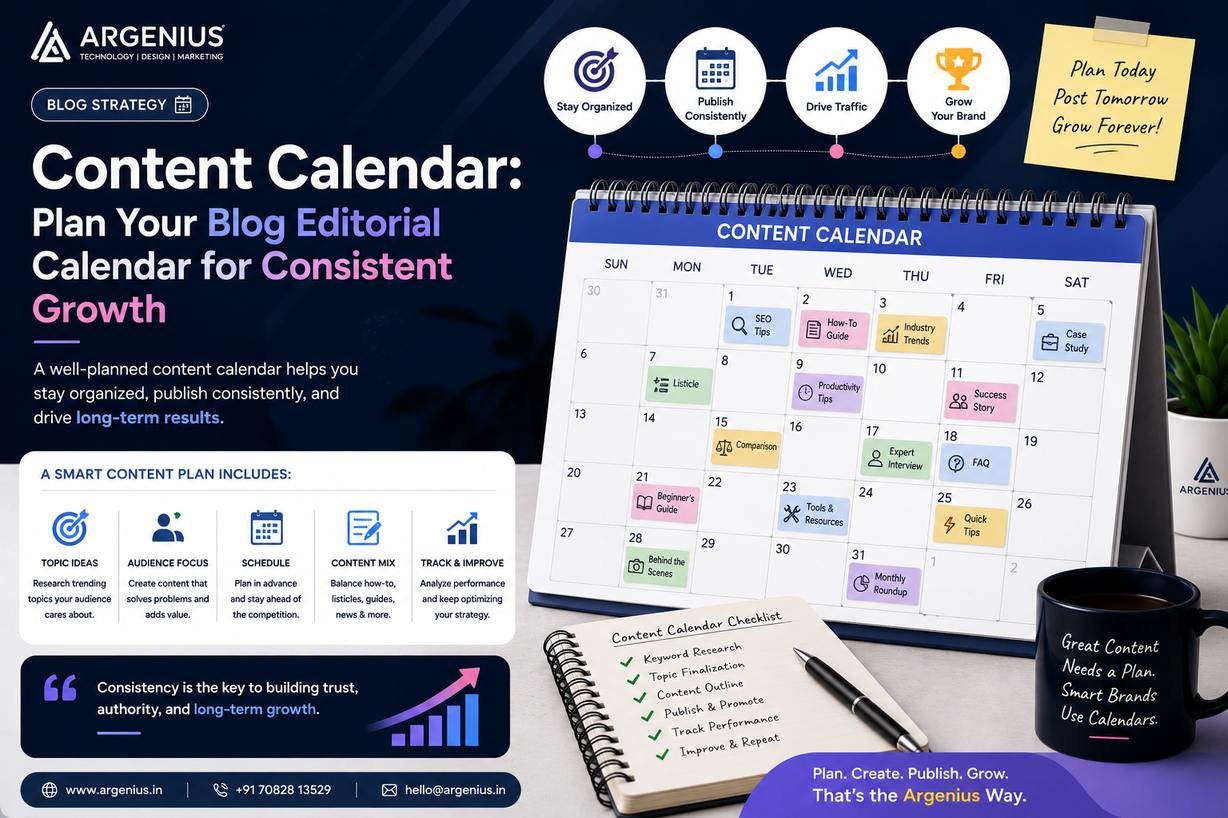
A content calendar is a structured schedule that organizes your upcoming blog posts, publication dates, target keywords, content objectives, and marketing activities.
It typically includes:
- Blog Topics
- Publishing Dates
- Target Keywords
- Content Categories
- Content Status
- Author Assignment
- SEO Checklist
- Internal Links
- Promotion Plan
- Performance Tracking
A content calendar helps maintain consistency while improving productivity and content quality.
Why Every Blog Needs a Content Calendar
A content calendar offers several advantages for bloggers and businesses.
It helps you:
- Publish Content Consistently
- Improve SEO
- Stay Organized
- Increase Organic Traffic
- Plan Seasonal Content
- Reduce Last-Minute Work
- Improve Team Collaboration
- Track Content Performance
- Build Topic Authority
- Generate More Leads
Publishing consistently is one of the strongest indicators of a healthy content strategy.
Benefits of Editorial Planning
Planning your content before writing offers long-term benefits.
These include:
- Better Keyword Targeting
- Higher Content Quality
- Faster Publishing Workflow
- Improved Internal Linking
- Better User Experience
- Stronger Brand Consistency
- Reduced Duplicate Content
- Easier Content Updates
- More Efficient Resource Allocation
- Higher ROI from Content Marketing
Editorial planning transforms blogging from a reactive task into a strategic business process.
Essential Components of a Blog Editorial Calendar
Every editorial calendar should include the following information:
- Blog Title
- Focus Keyword
- Secondary Keywords
- Content Category
- Search Intent
- Publishing Date
- Author
- Content Status
- SEO Title
- Meta Description
- Internal Links
- Call-to-Action
Tracking these details ensures every article is fully optimized before publication.
Types of Content to Include
A successful content calendar should contain a balanced mix of content formats.
Examples include:
Educational Articles
Teach readers valuable skills and answer common questions.
How-To Guides
Provide step-by-step instructions that solve specific problems.
Industry News
Share important updates and explain their impact on your audience.
Case Studies
Show real-world results, customer success stories, and practical examples.
Comparison Articles
Help readers evaluate products, services, or strategies before making decisions.
Evergreen Content
Publish articles that remain useful and relevant for a long time.
A healthy mix of content types keeps your audience engaged while expanding your keyword coverage.
How Often Should You Publish?
The ideal publishing frequency depends on your resources and goals.
General recommendations:
- Small Business Blog: 1–2 posts per week
- Growing Website: 2–4 posts per week
- Large Content Website: 5+ posts per week
Consistency is more important than publishing a high volume of content.
Common Content Planning Mistakes
Avoid these common mistakes:
- Publishing Without a Plan
- Ignoring Keyword Research
- Covering Duplicate Topics
- Missing Internal Links
- Inconsistent Publishing
- No Content Review Process
- Ignoring Analytics
- Not Updating Evergreen Content
- Creating Content Without Search Intent
- Forgetting Promotion
A well-maintained editorial calendar helps prevent these issues.
Step-by-Step Guide to Creating a Content Calendar
A successful content calendar starts with a clear strategy rather than a list of random blog ideas. Planning every stage of content creation ensures consistency, better SEO, and higher productivity.
Step 1: Define Your Goals
Start by identifying what you want to achieve.
Examples include:
- Increase Organic Traffic
- Generate Leads
- Improve Brand Awareness
- Build Industry Authority
- Increase Product Sales
- Educate Customers
Every article should support at least one business objective.
Step 2: Research Keywords
Use keyword research to identify topics your audience is actively searching for.
Focus on:
- Primary Keywords
- Long-Tail Keywords
- Question-Based Keywords
- Low Competition Opportunities
- Seasonal Searches
- Trending Topics
Targeting the right keywords improves your chances of ranking on Google.
Step 3: Organize Content Categories
Divide your content into clear categories.
For example:
- Beginner Guides
- Tutorials
- Industry News
- Product Reviews
- Case Studies
- Comparison Articles
- FAQs
- Company Updates
A balanced content mix keeps your audience engaged while covering multiple search intents.
Step 4: Assign Publishing Dates
Plan realistic publishing schedules.
For each article include:
- Draft Date
- Editing Date
- SEO Review
- Image Creation
- Publishing Date
- Promotion Date
Scheduling every stage helps maintain consistency.
Step 5: Monitor Performance
Track the success of each published article.
Measure:
- Organic Traffic
- Keyword Rankings
- Click-Through Rate (CTR)
- Bounce Rate
- Time on Page
- Conversions
- Backlinks
- Social Shares
Use these insights to improve future content planning.
Editorial Workflow
A structured workflow ensures every blog meets quality and SEO standards.
Recommended workflow:
- Topic Research
- Keyword Research
- Content Outline
- Content Writing
- SEO Optimization
- Editing & Proofreading
- Image Design
- Internal Linking
- Final Review
- Publish
- Promotion
- Performance Tracking
A repeatable workflow saves time and improves content quality.
SEO Content Planning
Your editorial calendar should also include SEO planning.
Track:
- Primary Keyword
- Secondary Keywords
- Search Intent
- Meta Title
- Meta Description
- URL Slug
- Internal Links
- External References
- Schema Opportunities
- Featured Snippet Targets
Planning SEO before writing helps create better-optimized content.
Best Tools for Content Planning
Popular tools include:
- Google Sheets
- Trello
- Notion
- Asana
- ClickUp
- Airtable
- Google Calendar
- Microsoft Excel
Choose a tool that fits your workflow and team size.
Content Calendar Template
A professional editorial calendar should include these columns:
| Column |
Purpose |
| Blog Title |
Planned article topic |
| Focus Keyword |
Primary SEO keyword |
| Category |
Content category |
| Search Intent |
Informational, Commercial, Transactional |
| Author |
Assigned writer |
| Status |
Draft, Review, Published |
| Publish Date |
Scheduled publishing date |
| SEO Title |
Optimized title |
| Meta Description |
Search snippet |
| Internal Links |
Related articles |
| Promotion Channel |
Social, Email, Website |
| Performance |
Traffic & Rankings |
Maintaining this information keeps your content strategy organized and scalable.
Cost of Content Strategy (₹ INR)
| Service |
Estimated Cost |
| Keyword Research |
₹2,000 – ₹10,000 |
| Editorial Calendar Planning |
₹5,000 – ₹20,000 |
| SEO Content Strategy |
₹10,000 – ₹40,000 |
| Monthly Blog Content Planning |
₹15,000 – ₹60,000 |
| Complete Content Marketing Strategy |
₹30,000 – ₹1,50,000+ |
Factors Affecting Cost
Content strategy costs depend on:
- Industry Competition
- Number of Articles
- Keyword Research Depth
- SEO Requirements
- Content Complexity
- Publishing Frequency
- Team Size
- Analytics & Reporting
A well-planned content strategy delivers long-term ROI through consistent organic growth.
Best Practices
Follow these best practices when managing your editorial calendar:
- Plan content at least one month in advance.
- Research keywords before selecting topics.
- Balance evergreen and trending content.
- Maintain a consistent publishing schedule.
- Review performance every month.
- Update older content regularly.
- Build topic clusters around related keywords.
- Include internal links in every article.
- Coordinate content with marketing campaigns.
- Leave room for breaking news and trending topics.
Consistency and planning are the keys to successful content marketing.
Common Mistakes to Avoid
Avoid these content planning mistakes:
- Publishing without a schedule
- Ignoring keyword research
- Creating duplicate topics
- Missing publication deadlines
- Forgetting content promotion
- Never updating evergreen articles
- Not tracking analytics
- Publishing low-quality content
- Ignoring search intent
- Planning too far ahead without flexibility
Avoiding these mistakes helps maintain a productive and effective content strategy.
Future Trends in Content Planning
Content marketing continues to evolve with technology and user behavior.
Key trends include:
- AI-Assisted Editorial Planning
- Predictive Content Strategy
- Topic Cluster SEO
- Entity-Based Content Planning
- Voice Search Content
- Personalized Content Experiences
- Data-Driven Publishing Decisions
- AI Search Optimization
- Interactive Content Calendars
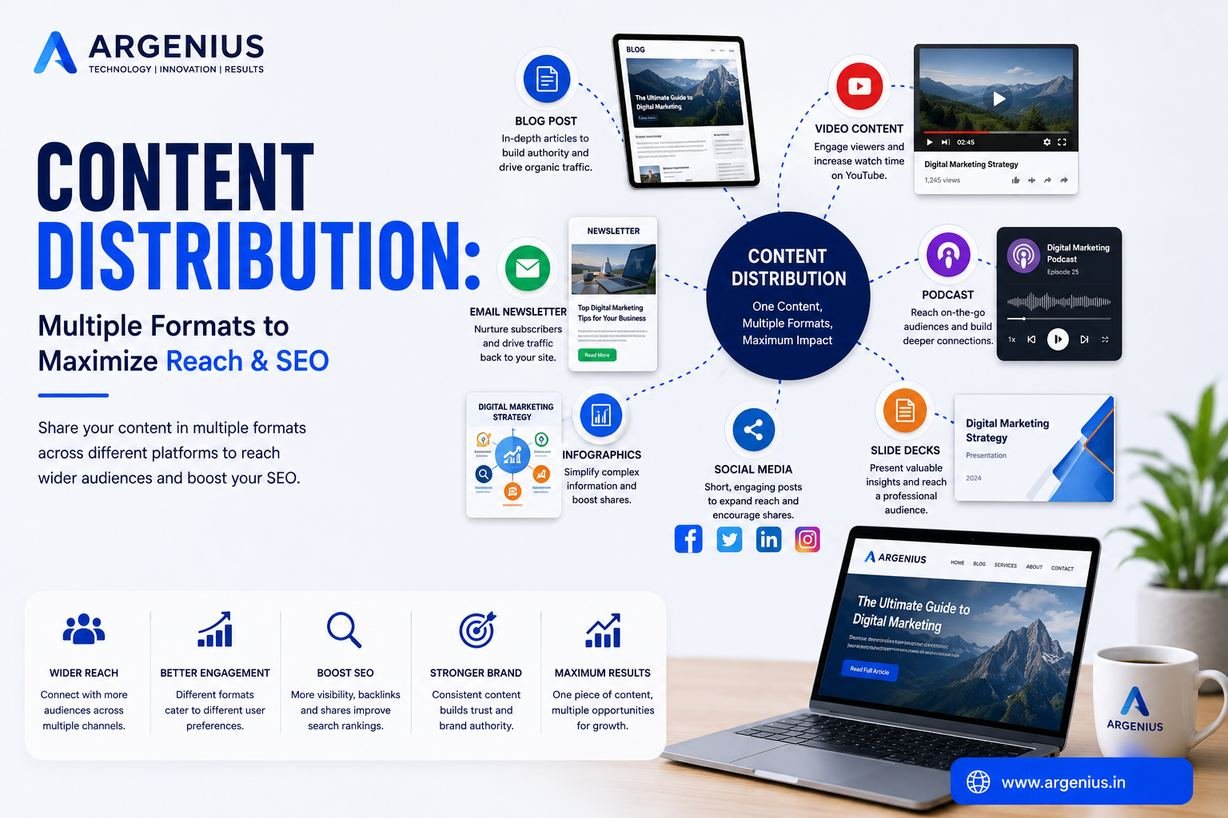
- Multi-Channel Content Distribution
Adapting to these trends helps businesses stay competitive in search results.
Why Businesses Choose Argenius
At Argenius, we create strategic content calendars that align with SEO goals, business objectives, and audience needs.
Our services include:
- SEO Content Strategy
- Editorial Calendar Planning
- Keyword Research
- SEO Content Writing
- Technical SEO
- On-Page SEO
- Website Development
- Content Marketing
- Digital Marketing
- Performance Tracking
We help businesses publish the right content at the right time to maximize visibility, engagement, and lead generation.
Final Thoughts
A well-organized content calendar transforms blogging from an occasional task into a strategic growth engine. By planning topics, researching keywords, scheduling publication dates, and tracking performance, you can create a consistent publishing workflow that supports better SEO, stronger audience engagement, and long-term business growth.
Remember that a content calendar should remain flexible. Analyze performance regularly, update your strategy based on user behavior, and adapt to emerging trends and search opportunities. At Argenius, we help businesses develop data-driven editorial calendars that improve content quality, strengthen search visibility, and generate measurable marketing results.
Frequently Asked Questions
What is a content calendar?
A content calendar is a structured schedule that organizes blog topics, publishing dates, keywords, authors, and marketing activities to ensure consistent and strategic content publishing.
Why is a content calendar important?
It improves organization, supports consistent publishing, strengthens SEO, reduces last-minute work, and helps businesses achieve long-term content marketing goals.
How far in advance should I plan blog content?
Most businesses benefit from planning at least one month ahead while leaving flexibility for trending topics and important industry updates.
Which tool is best for creating a content calendar?
Popular options include Google Sheets, Notion, Trello, ClickUp, Airtable, and Asana. The best choice depends on your workflow and team size.
How often should I update my editorial calendar?
Review and update your calendar every month based on analytics, keyword opportunities, seasonal trends, and business priorities.
Does Argenius help with content planning?
Yes. Argenius provides content strategy, editorial calendar planning, keyword research, SEO content writing, technical SEO, and digital marketing services to help businesses publish content that attracts traffic and generates leads.