Discover how a powerful Content Marketing Strategy helps businesses attract organic traffic, improve search rankings, generate qualified leads, and build long-term customer trust through high-quality content.
Introduction
Imagine two businesses offering similar products and services. One spends heavily on paid advertisements every month to attract visitors, while the other consistently publishes valuable blogs, guides, videos, and resources that answer customer questions. Over time, the second business begins attracting thousands of visitors through Google without paying for every click.
This is the power of Content Marketing Strategy.
Content marketing is no longer just about writing blog posts. It is a structured approach to creating, publishing, and promoting valuable content that attracts the right audience, builds trust, improves search engine rankings, and converts visitors into customers.
Modern consumers research before they buy. They compare products, read reviews, watch videos, and look for expert advice. Businesses that consistently provide useful information become trusted sources, making it easier to generate leads and increase conversions.
Search engines have also evolved. Google now rewards websites that demonstrate expertise, experience, authority, and trustworthiness. AI-powered platforms such as Google AI Overviews, ChatGPT, Gemini, and Perplexity prioritize content that thoroughly answers user questions and provides genuine value.
A successful content marketing strategy combines keyword research, search intent analysis, SEO optimization, audience understanding, and consistent publishing. Instead of creating random articles, businesses build a content ecosystem where every piece supports a larger marketing objective.
Whether you're running a startup, SaaS company, ecommerce store, healthcare business, educational platform, or digital agency, investing in quality content can become one of your most valuable long-term growth assets.
In this guide, you'll learn what content marketing is, why it matters, how to create a successful strategy, and how businesses can use high-quality content to drive sustainable organic traffic and revenue.
At Argenius, we develop data-driven content marketing strategies that help businesses improve visibility, generate qualified leads, and achieve long-term digital growth.
What is Content Marketing Strategy?
A Content Marketing Strategy is a structured plan for creating, publishing, distributing, and optimizing valuable content that attracts, engages, and converts a target audience.
Instead of directly promoting products, content marketing educates, informs, and solves customer problems.
Examples of content include:
- Blog Posts
- Landing Pages
- Case Studies
- Whitepapers
- Videos
- Infographics
- Email Newsletters
- Podcasts
- E-books
- Social Media Content
The objective is to provide value first, which naturally builds trust and encourages customers to choose your business.
Why Content Marketing is Important
A strong content marketing strategy offers several long-term benefits.
It helps businesses:
- Increase Organic Traffic
- Improve Google Rankings
- Generate Qualified Leads
- Build Brand Authority
- Increase Customer Trust
- Improve Conversion Rates
- Support Social Media Marketing
- Reduce Paid Advertising Costs
- Strengthen Customer Relationships
- Improve ROI
Quality content continues to generate value long after it is published.
How Content Marketing Works
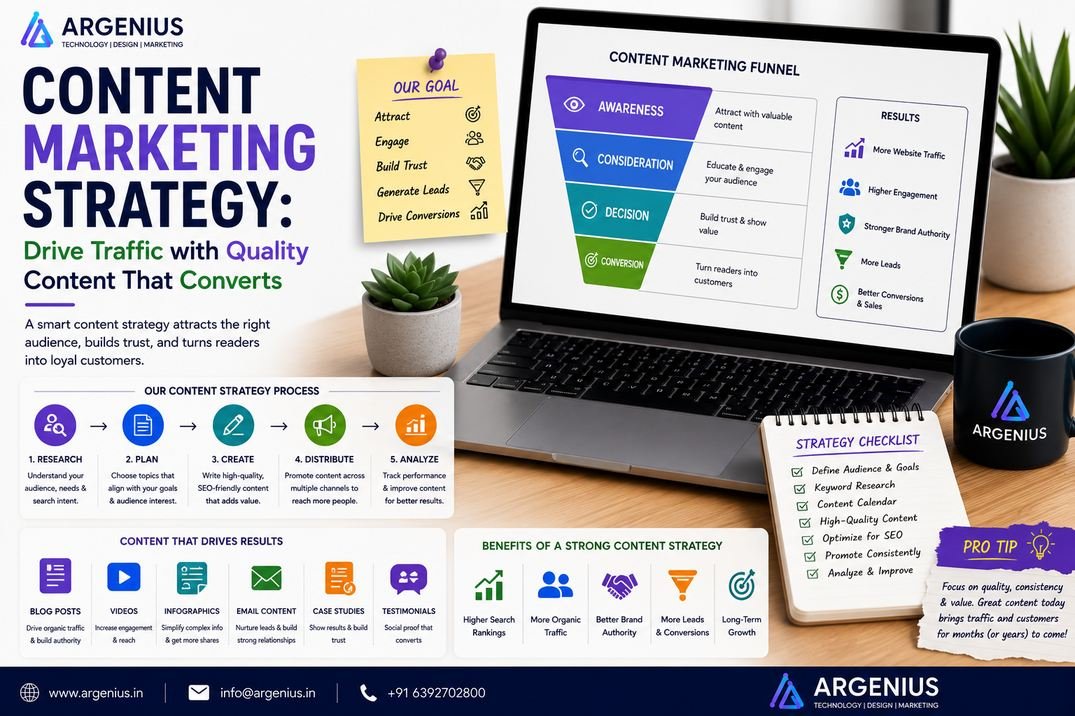
Content marketing follows a customer journey.
Awareness
Users search for answers to problems.
Example:
"What is CRM Software?"
Consideration
Users compare solutions.
Example:
"Best CRM Software for Small Business"
Decision
Users are ready to purchase.
Example:
"Hire CRM Development Company"
By creating content for each stage, businesses guide users from discovery to conversion.
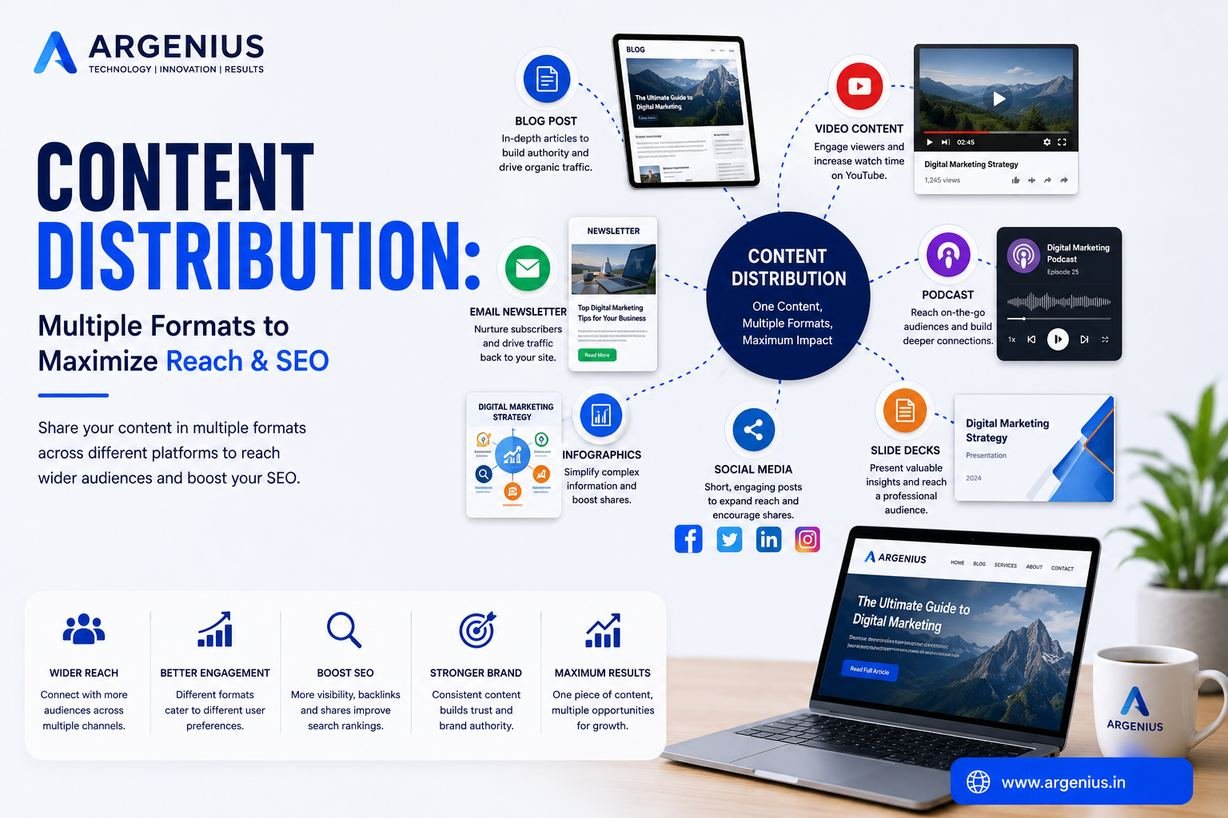
Types of Content Marketing
A successful strategy uses multiple content formats.
Blog Articles
SEO-friendly educational content.
Case Studies
Real business success stories.
Landing Pages
Designed to convert visitors into leads.
Videos
Explainers, tutorials, product demonstrations.
Infographics
Visual representation of complex information.
E-books
Detailed educational resources.
Email Marketing
Personalized content for nurturing leads.
Social Media Content
Engages audiences across platforms.
Podcasts
Build authority and audience loyalty.
Webinars
Interactive educational sessions.
Benefits of Content Marketing
Businesses investing in quality content often experience:
- Higher Organic Rankings
- Increased Website Traffic
- Better Brand Recognition
- More Qualified Leads
- Improved Customer Engagement
- Higher Conversion Rates
- Stronger Customer Loyalty
- Better SEO Performance
- Long-Term ROI
- Sustainable Business Growth
Content Marketing vs Traditional Advertising
| Traditional Advertising |
Content Marketing |
| Interrupts Customers |
Educates Customers |
| Short-Term Results |
Long-Term Growth |
| Paid Traffic |
Organic Traffic |
| Direct Promotion |
Value-Driven Content |
| High Ongoing Cost |
Compounding ROI |
Content marketing creates assets that continue generating traffic and leads over time.
Building a Content Marketing Funnel
An effective content funnel includes:
Top of Funnel (TOFU)
Educational blogs
Examples:
- What is SEO?
- Benefits of Mobile Apps
Middle of Funnel (MOFU)
Comparison content
Examples:
- Flutter vs React Native
- WordPress vs Custom Website
Bottom of Funnel (BOFU)
Conversion-focused pages
Examples:
- Hire Flutter Developers
- Website Development Services
- Request a Free Consultation
Every stage supports the next, moving users toward a purchasing decision.
SEO and Content Marketing
SEO and content marketing work together.
Effective SEO content includes:
- Keyword Research
- Search Intent
- Topic Clusters
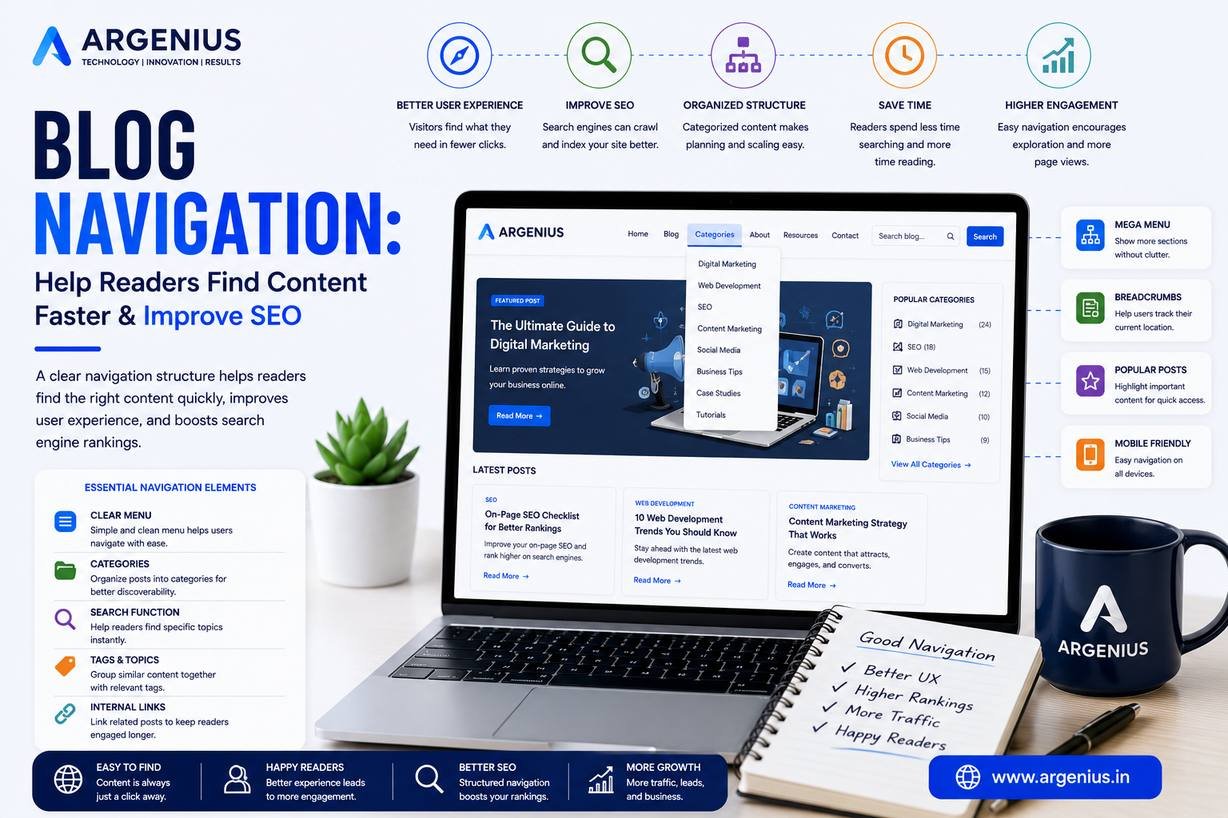
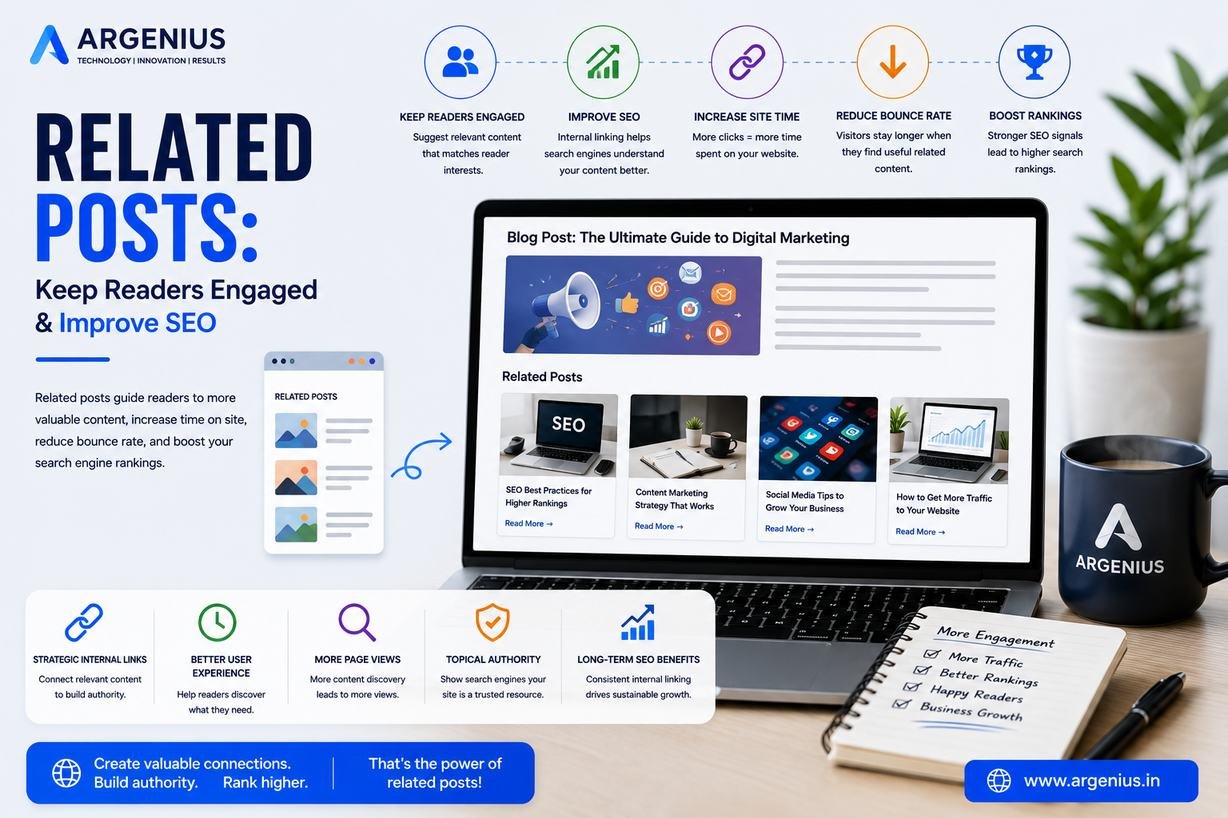
- Internal Linking
- Meta Optimization
- Structured Headings
- Image Optimization
- FAQ Sections
- E-E-A-T Principles
Without valuable content, SEO has limited long-term impact.
Content Marketing and AI Search
AI-powered search engines reward content that is:
- Comprehensive
- Accurate
- Helpful
- Well-Structured
- Experience-Based
- Regularly Updated
Optimizing for Google AI Overviews, ChatGPT, Gemini, and Perplexity requires creating content that answers complete user journeys rather than isolated questions.
Industries That Benefit from Content Marketing
Almost every industry benefits, including:
- Software Companies
- SaaS Platforms
- Ecommerce
- Healthcare
- Finance
- Education
- Travel
- Legal Services
- Real Estate
- Digital Marketing Agencies
Any business that wants to educate customers and build trust can benefit from a strategic content marketing plan.
Step-by-Step Content Marketing Strategy
A successful Content Marketing Strategy is built around understanding your audience, creating valuable content, and continuously optimizing performance. Follow these steps to create a content strategy that drives sustainable organic traffic and qualified leads.
Step 1: Define Your Business Goals
Start by identifying what you want to achieve through content marketing.
Common goals include:
- Increase Organic Traffic
- Generate Qualified Leads
- Improve Brand Awareness
- Increase Product Sales
- Build Industry Authority
- Improve Customer Retention
- Support SEO Growth
Your content should align with measurable business objectives.
Step 2: Understand Your Target Audience
Identify who your ideal customers are.
Research:
- Age Group
- Industry
- Job Role
- Pain Points
- Goals
- Buying Behavior
- Preferred Content Format
The better you understand your audience, the more relevant your content will be.
Step 3: Perform Keyword & Topic Research
Use keyword research tools to discover what your audience is searching for.
Focus on:
- Primary Keywords
- Long-Tail Keywords
- Question-Based Keywords
- Search Intent
- Topic Clusters
- Competitor Keywords
Create content around topics that solve real customer problems.
Step 4: Build a Content Calendar
Plan your content in advance.
Include:
- Blog Posts
- Service Pages
- Case Studies
- Landing Pages
- Videos
- Infographics
- Email Campaigns
- Social Media Posts
A content calendar ensures consistency and avoids publishing random content.
Step 5: Create High-Quality Content
Every piece of content should be:
- Original
- Helpful
- Well-Researched
- Easy to Read
- SEO Optimized
- Mobile Friendly
- Actionable
- Up-to-Date
Focus on providing genuine value rather than simply targeting keywords.
Step 6: Optimize for SEO
Each article should include:
- Primary Keyword
- Secondary Keywords
- Optimized SEO Title
- Meta Description
- Heading Structure
- Internal Links
- External References (where appropriate)
- Image ALT Tags
- FAQ Section
SEO optimization helps search engines understand and rank your content.
Step 7: Promote Your Content
Publishing content is only the beginning.
Promote it through:
- Google Search
- Email Marketing
- LinkedIn
- Facebook
- Instagram
- X (Twitter)
- YouTube
- Industry Communities
Content promotion increases visibility and accelerates traffic growth.
Step 8: Measure Performance
Track key metrics such as:
- Organic Traffic
- Keyword Rankings
- Click-Through Rate (CTR)
- Bounce Rate
- Time on Page
- Lead Generation
- Conversion Rate
- Backlinks
- Social Shares
Use insights to improve future content.
Content Marketing Checklist
Before publishing content, ensure it includes:
- ✅ Audience Research
- ✅ Keyword Research
- ✅ Search Intent Alignment
- ✅ SEO Title & Meta Description
- ✅ Clear Heading Structure
- ✅ Internal Linking
- ✅ Strong Call-to-Action
- ✅ FAQ Section
- ✅ Mobile Optimization
- ✅ Fast Loading Speed
- ✅ Grammar & Readability Review
A checklist helps maintain consistency and content quality.
Best Tools for Content Marketing
Free Tools
- Google Search Console
- Google Analytics
- Google Trends
- Google Keyword Planner
- Google Docs
- Canva
Premium Tools
- Ahrefs
- Semrush
- Surfer SEO
- Grammarly
- Notion
- Trello
- BuzzSumo
- HubSpot
These tools help with planning, writing, optimization, collaboration, and performance tracking.
Content Marketing Strategy for AI Search
As AI-powered search becomes more common, content should be optimized not only for traditional search engines but also for AI assistants.
To improve visibility in Google AI Overviews, ChatGPT, Gemini, and Perplexity:
- Answer user questions clearly.
- Cover topics comprehensively.
- Use semantic keywords naturally.
- Build topic clusters.
- Add FAQs.
- Demonstrate real expertise.
- Update content regularly.
- Improve internal linking.
AI systems favor trustworthy, well-structured, and complete content.
Cost of Content Marketing Services (₹ INR)
The cost of content marketing depends on the scope of work, industry competition, and publishing frequency.
| Service |
Estimated Cost |
| SEO Blog Writing |
₹3,000 – ₹8,000 per article |
| Content Strategy Planning |
₹10,000 – ₹25,000 |
| Monthly Content Marketing |
₹25,000 – ₹75,000 |
| Enterprise Content Marketing |
₹75,000 – ₹2,00,000+ |
| Custom Content Campaigns |
Custom Pricing |
Factors Affecting Cost
Pricing depends on:
- Number of Articles
- Content Length
- Keyword Research
- Industry Competition
- SEO Optimization
- Graphics & Visual Assets
- Content Promotion
- Performance Reporting
Investing in quality content delivers long-term value by generating traffic long after publication.
Best Practices
To build a successful content marketing strategy:
- Publish consistently.
- Focus on solving customer problems.
- Write for humans first and search engines second.
- Use data to guide content decisions.
- Build topic clusters.
- Update older articles regularly.
- Improve internal linking.
- Include compelling calls-to-action.
- Optimize for mobile devices.
- Measure and refine your strategy continuously.
Consistency and quality are more important than publishing large quantities of content.
Common Mistakes to Avoid
Avoid these mistakes:
- Publishing without a strategy
- Ignoring audience needs
- Keyword stuffing
- Creating thin or duplicate content
- Neglecting SEO optimization
- Weak internal linking
- Failing to update outdated content
- Ignoring analytics
- Publishing inconsistently
- Forgetting clear CTAs
Avoiding these issues helps improve engagement, rankings, and conversions.
Future Trends in Content Marketing
Content marketing continues to evolve with changing user behavior and AI technologies.
Key trends include:
- Google AI Overviews
- Generative Engine Optimization (GEO)
- AI-Assisted Content Planning
- Semantic SEO
- Interactive Content
- Video-First Content
- Voice Search Optimization
- Personalized Content Experiences
- Topic Clusters
- Entity-Based SEO
Businesses that consistently produce valuable, experience-driven content will maintain a competitive advantage.
Why Businesses Choose Argenius
At Argenius, we create content marketing strategies that combine SEO, search intent, user experience, and business objectives.
Our Content Marketing Services include:
- Content Strategy Development
- SEO Blog Writing
- Keyword Research
- Topic Cluster Planning
- Content Calendar Creation
- Landing Page Copywriting
- Technical SEO Support
- Internal Linking Strategy
- Content Audits
- Performance Reporting
Our objective is to help businesses attract qualified traffic, build trust, generate leads, and achieve sustainable digital growth.
Final Thoughts
A successful Content Marketing Strategy is much more than publishing blog posts. It is a long-term investment in creating valuable, relevant, and trustworthy content that attracts the right audience at every stage of the customer journey. By understanding user intent, targeting strategic keywords, and consistently delivering high-quality resources, businesses can build lasting relationships with their audience while improving search visibility.
Content marketing also plays a critical role in modern SEO. Search engines and AI-powered platforms increasingly reward websites that demonstrate expertise, answer user questions comprehensively, and provide an exceptional user experience. This makes strategic content creation one of the most effective ways to generate sustainable organic traffic and qualified leads.
Whether your goal is to increase brand awareness, improve search rankings, or drive more conversions, a well-executed content marketing strategy can become a powerful growth engine. Argenius helps businesses develop scalable, SEO-driven content strategies that support long-term success and measurable business results.
Frequently Asked Questions
What is a Content Marketing Strategy?
A Content Marketing Strategy is a structured plan for creating, publishing, promoting, and optimizing valuable content that attracts, engages, and converts a target audience.
Why is content marketing important for SEO?
High-quality content helps improve search rankings, build topical authority, increase organic traffic, and satisfy user intent, making it an essential part of modern SEO.
How often should I publish content?
Consistency matters more than frequency. Many businesses achieve good results by publishing one to four high-quality articles each month, supported by regular updates to existing content.
Which content formats are most effective?
Effective formats include blog posts, landing pages, case studies, videos, infographics, email newsletters, whitepapers, and social media content.
Does content marketing help AI-powered search?
Yes. Comprehensive, well-structured, and trustworthy content is more likely to be referenced by Google AI Overviews, ChatGPT, Gemini, and Perplexity.
Does Argenius provide content marketing services?
Yes. Argenius offers Content Strategy Development, SEO Content Writing, Keyword Research, Content Planning, Topic Cluster Strategy, Landing Page Copywriting, Technical SEO, and Complete Content Marketing Services tailored to business goals.