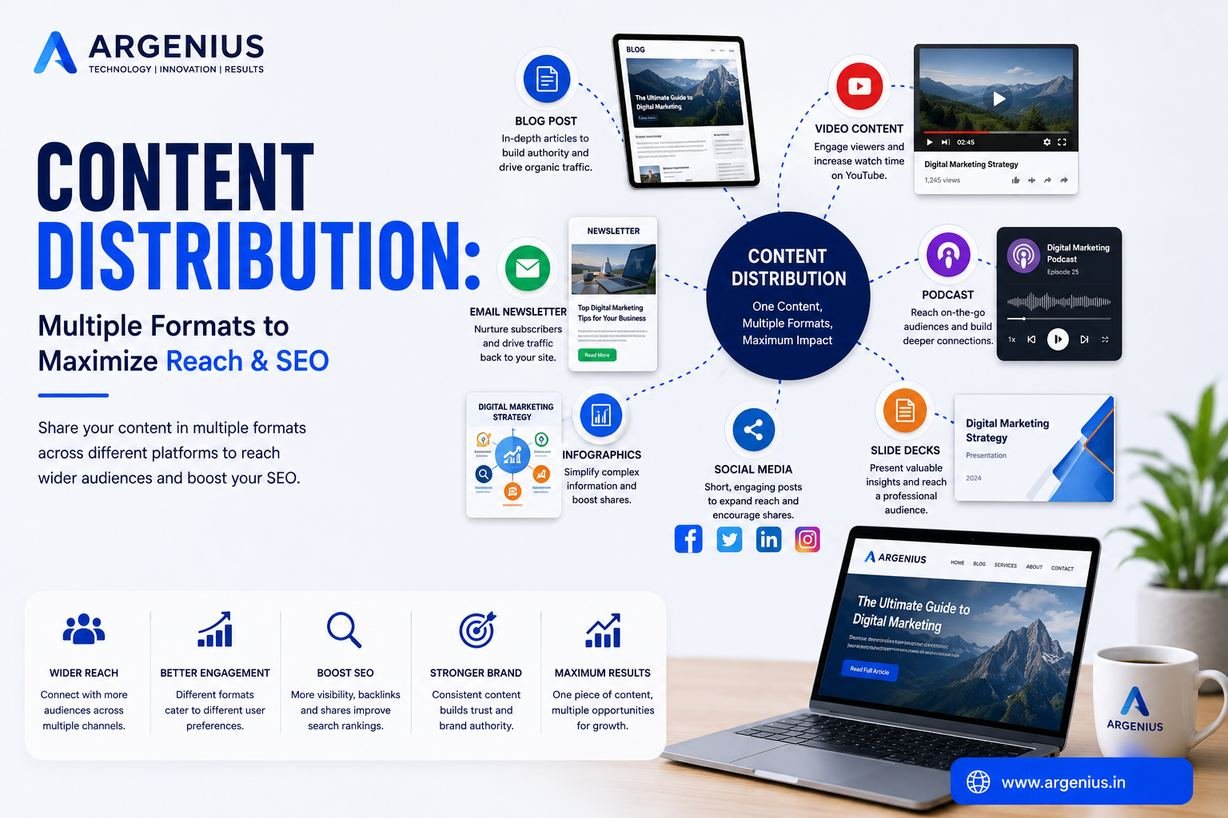
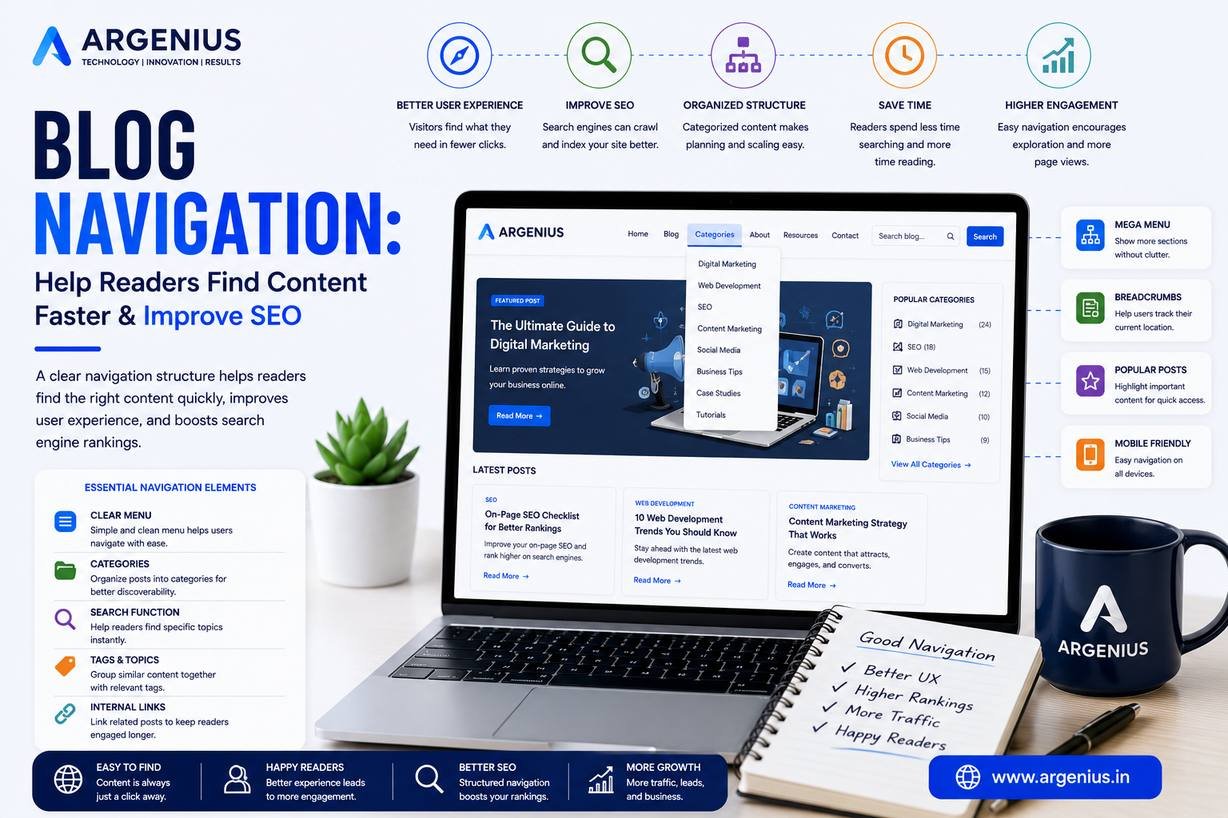
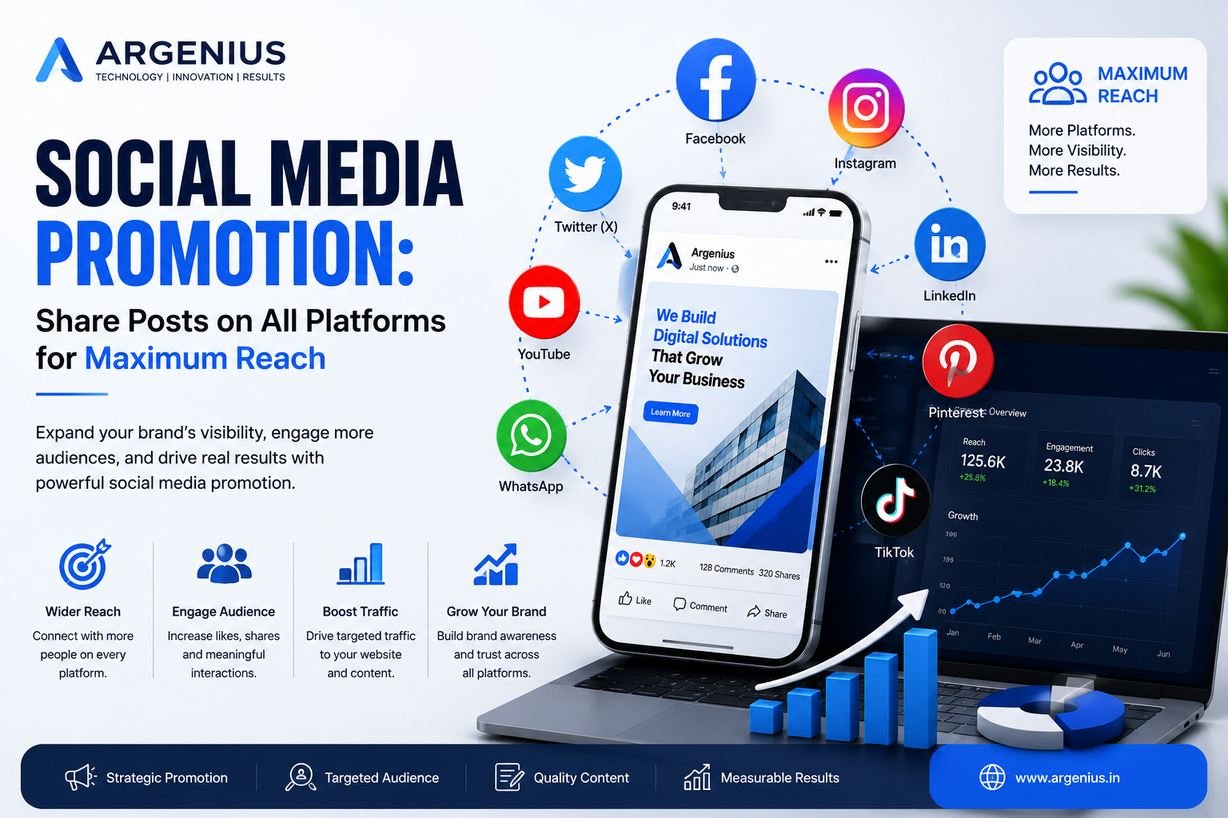
Learn how a Content Refresh Strategy helps improve Google rankings, increase organic traffic, enhance user experience, and keep your website competitive by updating existing blog posts instead of creating new ones.
Introduction
Publishing high-quality blog posts is an essential part of SEO, but creating new content alone isn't enough to maintain strong search rankings. Over time, even the best-performing articles can lose traffic as competitors publish better content, search intent changes, statistics become outdated, and Google's ranking algorithms evolve. This gradual decline makes Content Refresh Strategy one of the most valuable long-term SEO techniques.
A content refresh is the process of updating and improving existing pages rather than creating entirely new ones. Instead of letting older articles become obsolete, businesses can enhance them with updated information, better keyword targeting, improved formatting, fresh visuals, stronger internal links, and more comprehensive answers. These improvements help search engines recognize the page as relevant and useful again.
Refreshing content is often faster and more cost-effective than producing brand-new articles. Since older pages may already have backlinks, authority, and established rankings, improving them can deliver faster SEO results compared to starting from scratch.
The importance of content refreshes has grown even further with Google AI Overviews, ChatGPT, Gemini, and Perplexity. AI-powered search systems prioritize accurate, current, and well-structured information. Regularly updated content signals freshness, expertise, and trustworthiness, increasing the chances of being referenced in AI-generated search experiences.
Whether you manage a business website, ecommerce store, SaaS platform, educational portal, or digital marketing agency, implementing a content refresh strategy can help recover lost traffic, improve rankings, and maximize the return on your existing content.
In this guide, you'll learn what a Content Refresh Strategy is, why it matters, when to update existing content, and the proven techniques that improve search visibility and long-term SEO performance.
At Argenius, we help businesses optimize existing content through strategic refreshes that improve rankings, increase organic traffic, and strengthen topical authority.
What is Content Refresh Strategy?
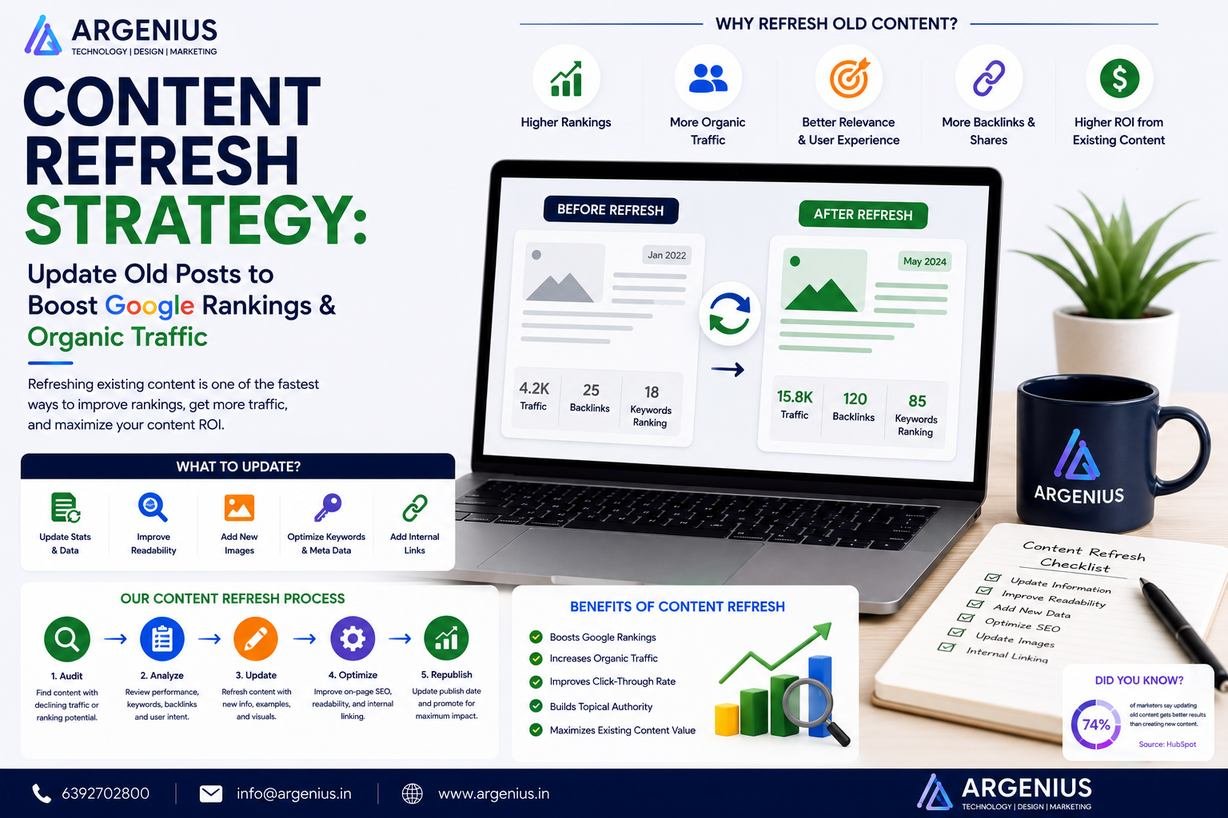
A Content Refresh Strategy is the process of updating existing content to improve its accuracy, relevance, search visibility, and user experience.
Instead of replacing an old article, you enhance it with new information and SEO improvements.
Common updates include:
- New Statistics
- Updated Examples
- Better Keyword Optimization
- Improved Headings
- Fresh Images
- Internal Links
- FAQs
- Better Formatting
- New Sections
- Updated CTAs
The objective is to keep valuable content useful for both users and search engines.
Why Content Refresh is Important
Refreshing content provides numerous SEO and business benefits.
These include:
- Higher Google Rankings
- Increased Organic Traffic
- Better User Experience
- Improved Content Accuracy
- Increased Click-Through Rate (CTR)
- Better Topical Authority
- Higher Conversion Rates
- Improved Internal Linking
- Better AI Search Visibility
- Longer Content Lifespan
Refreshing high-potential pages often produces faster SEO improvements than publishing new content alone.
Content Refresh vs Creating New Content
| Content Refresh |
New Content |
| Updates existing pages |
Creates new pages |
| Faster SEO improvements |
Takes longer to rank |
| Uses existing authority |
Starts with no authority |
| Lower investment |
Higher content production effort |
| Improves existing rankings |
Expands topic coverage |
Both strategies are important, but refreshing existing content often delivers a higher ROI.
Signs Your Content Needs Updating
You should consider refreshing content when you notice:
- Declining Organic Traffic
- Falling Keyword Rankings
- Outdated Statistics
- Broken Links
- Obsolete Screenshots
- Poor CTR
- Increased Bounce Rate
- Competitors Publishing Better Content
- Missing FAQs
- Changes in Search Intent
Identifying these signals early helps maintain strong rankings.
Benefits of Refreshing Old Content
Updating older articles can help:
- Recover Lost Traffic
- Improve Search Rankings
- Increase User Engagement
- Earn More Backlinks
- Improve Page Experience
- Strengthen Internal Linking
- Increase Lead Generation
- Support AI Search
- Extend Content Lifespan
- Build Long-Term Authority
A refreshed article often performs better than an outdated one, even if both target the same keyword.
What Should You Update?
A comprehensive content refresh may include:
- SEO Title
- Meta Description
- Headings
- Introduction
- Statistics
- Examples
- Images
- ALT Text
- Internal Links
- External References
- FAQs
- Conclusion
- Call-to-Action
Updating multiple elements creates a stronger overall improvement.
Content Refresh and AI Search
AI-powered search platforms prefer current and trustworthy information.
Refreshing content helps improve visibility in:
- Google AI Overviews
- ChatGPT
- Gemini
- Perplexity
Updated articles are more likely to be referenced because they provide accurate, comprehensive, and well-structured information.
Industries That Benefit from Content Refresh
A refresh strategy is valuable across industries, including:
- Software Development
- SaaS
- Ecommerce
- Healthcare
- Education
- Finance
- Real Estate
- Manufacturing
- Legal Services
- Digital Marketing
Any website with existing content can benefit from regular updates.
Common Reasons Rankings Drop
Ranking declines often occur because of:
- Outdated Information
- Better Competitor Content
- Weak Internal Linking
- Search Intent Changes
- Technical SEO Issues
- Slow Page Speed
- Poor Mobile Experience
- Declining Backlinks
- Thin Content
- Low User Engagement
A strategic refresh helps address many of these issues.
Step-by-Step Content Refresh Strategy
Refreshing old content is one of the fastest ways to improve Google rankings, recover lost organic traffic, and strengthen your website's authority. Instead of creating new content every time, optimize existing articles that already have ranking potential.
Step 1: Identify Posts That Need Updating
Begin by auditing your existing content.
Look for pages with:
- Declining Organic Traffic
- Falling Keyword Rankings
- Low Click-Through Rate (CTR)
- High Impressions but Few Clicks
- Outdated Information
- Missing Internal Links
- Old Screenshots
- Poor User Engagement
Use Google Search Console and Google Analytics to identify high-potential pages.
Step 2: Analyze Current Rankings
Before editing the article, understand its current performance.
Review:
- Ranking Keywords
- Organic Traffic
- Search Intent
- Competitor Pages
- CTR
- Average Position
- Backlinks
- Indexed Status
This helps determine what improvements are needed.
Step 3: Update the Information
Replace outdated content with accurate and relevant information.
Refresh:
- Statistics
- Industry Data
- Examples
- Screenshots
- Features
- Product Information
- Trends
- References
Fresh information increases user trust and search relevance.
Step 4: Improve Keyword Optimization
Review your keyword strategy.
Include:
- Primary Keyword
- Secondary Keywords
- Long-Tail Keywords
- Question-Based Keywords
- Semantic Keywords
Avoid keyword stuffing and write naturally for users first.
Step 5: Expand Thin Content
Many older blogs lose rankings because they no longer provide comprehensive answers.
Consider adding:
- New Sections
- Comparison Tables
- Step-by-Step Guides
- FAQs
- Best Practices
- Common Mistakes
- Real Examples
- Visual Content
More comprehensive content often performs better for competitive keywords.
Step 6: Improve Internal Linking
Connect refreshed articles to:
- Related Blogs
- Service Pages
- Pillar Pages
- Case Studies
- Category Pages
Internal links improve crawlability, distribute page authority, and increase user engagement.
Step 7: Optimize User Experience
Enhance readability and usability.
Improve:
- Heading Structure
- Short Paragraphs
- Bullet Lists
- Images
- Tables
- Page Speed
- Mobile Responsiveness
- Calls-to-Action
A better user experience supports stronger SEO performance.
Step 8: Monitor Results
After publishing updates, monitor performance regularly.
Track:
- Organic Traffic
- Keyword Rankings
- CTR
- Average Position
- Bounce Rate
- Time on Page
- Conversions
- AI Search Visibility
Content optimization is an ongoing process rather than a one-time task.
Content Refresh Audit Checklist
Before republishing any article, verify:
- ✅ Updated Statistics
- ✅ Current Examples
- ✅ Improved Keyword Optimization
- ✅ Better Headings
- ✅ New Internal Links
- ✅ Updated Images
- ✅ Optimized ALT Text
- ✅ FAQ Section
- ✅ Mobile Optimization
- ✅ Clear CTA
- ✅ Improved Readability
Following a structured checklist ensures consistent quality across all refreshed content.
Best Tools for Content Refresh
Free Tools
- Google Search Console
- Google Analytics
- Google Trends
- Google Keyword Planner
- Google PageSpeed Insights
- Google Search
Premium Tools
- Ahrefs
- Semrush
- Surfer SEO
- Screaming Frog SEO Spider
- Frase
- Clearscope
- Grammarly
These tools help identify declining pages, discover new keyword opportunities, optimize content, and measure performance improvements.
Content Refresh Strategy and AI Search
Modern AI-powered search engines prioritize fresh, accurate, and authoritative information.
To improve visibility in Google AI Overviews, ChatGPT, Gemini, and Perplexity:
- Update articles regularly.
- Expand topic coverage.
- Answer new user questions.
- Improve content structure.
- Add semantic keywords naturally.
- Include updated statistics and examples.
- Strengthen internal linking.
Refreshed content is more likely to be considered reliable by AI-powered search systems.
Cost of Professional Content Refresh Services (₹ INR)
The cost depends on the size of the article, research requirements, and SEO improvements.
| Service |
Estimated Cost |
| SEO Content Audit |
₹3,000 – ₹8,000 |
| Single Blog Refresh |
₹3,500 – ₹7,500 |
| Long-Form Content Refresh |
₹7,000 – ₹15,000 |
| Monthly Content Optimization Package |
₹25,000 – ₹75,000 |
| Enterprise Content Strategy |
Custom Pricing |
Factors Affecting Cost
Pricing depends on:
- Article Length
- Keyword Research
- Competitor Analysis
- Technical SEO
- Content Expansion
- Graphics & Screenshots
- Internal Linking
- Performance Monitoring
Refreshing high-value content often provides a better return on investment than replacing it entirely.
Best Practices
For successful content refreshes:
- Audit your content regularly.
- Prioritize pages with declining traffic.
- Match current search intent.
- Improve readability and formatting.
- Add new sections where valuable.
- Replace outdated statistics.
- Strengthen internal linking.
- Optimize images and page speed.
- Refresh metadata when needed.
- Track results after publishing.
Consistent updates help maintain rankings and authority.
Common Mistakes to Avoid
Avoid these mistakes:
- Updating only the publication date without improving content
- Ignoring search intent changes
- Leaving outdated statistics
- Removing valuable ranking keywords
- Publishing without checking internal links
- Forgetting mobile optimization
- Ignoring user experience
- Keyword stuffing
- Not monitoring performance
- Refreshing low-value pages instead of high-potential ones
Meaningful improvements deliver far better SEO results than superficial changes.
Future Trends in Content Refresh Strategy
Content optimization will continue evolving with search technology.
Important trends include:
- Google AI Overviews
- Generative Engine Optimization (GEO)
- Semantic Search
- Entity-Based SEO
- Experience-Based Content
- Predictive Content Updates
- AI-Assisted Content Audits
- Topic Authority Optimization
- Personalized Search
- Continuous Content Optimization
Businesses that refresh content consistently will be better positioned to maintain long-term search visibility.
Why Businesses Choose Argenius
At Argenius, we help businesses maximize the value of their existing content through strategic SEO refreshes that improve rankings, increase traffic, and strengthen authority.
Our Content Refresh Services include:
- SEO Content Audits
- Content Optimization
- Keyword Research
- Content Expansion
- Internal Linking Strategy
- Technical SEO
- Performance Analysis
- Topical Authority Development
- Content Marketing Strategy
- Monthly SEO Reporting
Our goal is to help businesses recover lost rankings and generate sustainable organic growth without relying solely on new content creation.
Final Thoughts
A well-planned Content Refresh Strategy is one of the most cost-effective ways to improve SEO performance. Instead of allowing valuable articles to lose visibility over time, businesses can update them with fresh information, stronger keyword targeting, improved structure, and better user experience. These enhancements help search engines recognize the content as relevant while providing greater value to readers.
Refreshing existing content also allows businesses to build upon pages that already have authority, backlinks, and search history, making it easier to regain rankings compared to publishing entirely new articles. Regular audits and updates ensure your website stays aligned with changing search intent, industry developments, and Google's evolving ranking systems.
As AI-powered search platforms continue emphasizing accuracy, expertise, and freshness, keeping your content updated becomes even more important. Argenius helps businesses develop comprehensive content refresh strategies that improve visibility across Google Search, Google AI Overviews, ChatGPT, Gemini, and Perplexity, delivering sustainable rankings, increased organic traffic, and long-term business growth.
Frequently Asked Questions
What is a Content Refresh Strategy?
A Content Refresh Strategy is the process of updating existing content with current information, improved SEO, better formatting, and enhanced user experience to improve search rankings and maintain relevance.
How often should I refresh old blog posts?
Review important articles every 6–12 months, or sooner if rankings decline, industry information changes, or competitors publish stronger content.
Does updating old content improve SEO?
Yes. Updating outdated content with fresh information, optimized keywords, improved structure, and stronger internal links can improve rankings, increase organic traffic, and enhance user engagement.
Should I update old content or create new content?
Both are important. However, refreshing high-performing or declining pages often delivers faster SEO results because those pages already have authority and indexing history.
Does Content Refresh help AI-powered search?
Yes. Updated, comprehensive, and well-structured articles are more likely to be referenced by Google AI Overviews, ChatGPT, Gemini, and Perplexity, as AI systems prioritize accurate and current information.
Does Argenius provide Content Refresh services?
Yes. Argenius offers SEO Content Audits, Content Refresh, Keyword Research, Technical SEO, Internal Linking, Content Expansion, and Complete SEO Services to help businesses improve rankings and maximize the value of their existing content.