Discover how Display Ads help businesses increase brand awareness, reach millions of potential customers, improve remarketing campaigns, and generate more leads through visually engaging banner advertisements.
Introduction
In today's highly competitive digital landscape, attracting customers requires more than simply appearing in search results. Businesses must remain visible throughout the customer journey, even before potential customers actively search for their products or services. This is where Display Ads play a crucial role.
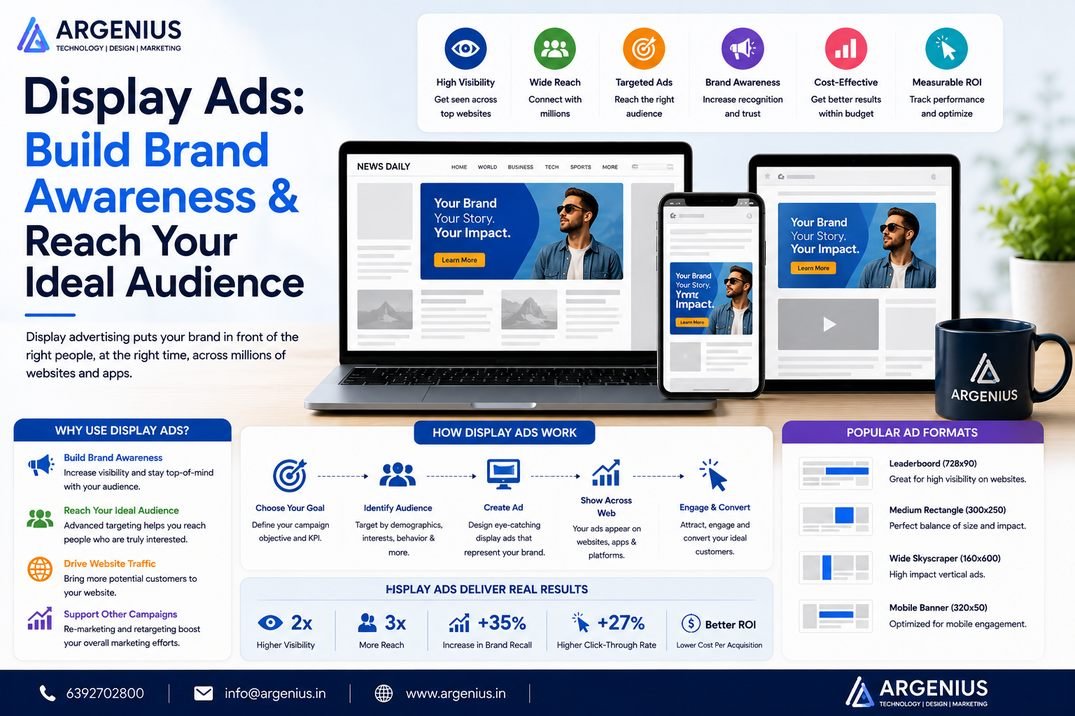
Unlike Search Ads, which appear when users type specific queries into Google, Display Ads are visual advertisements shown across millions of websites, blogs, mobile apps, YouTube, and other digital platforms that are part of the Google Display Network (GDN). These ads help businesses introduce their brand to new audiences, stay top of mind with potential customers, and re-engage previous website visitors through remarketing.
Display advertising is particularly effective for building brand awareness because it combines eye-catching visuals, compelling messaging, and advanced audience targeting. Businesses can reach users based on demographics, interests, browsing behavior, purchase intent, geographic location, and previous interactions with their website. With Google's AI-powered optimization, campaigns automatically improve over time by showing ads to users most likely to engage.
Whether you run an ecommerce store, SaaS platform, healthcare clinic, educational institution, travel company, or local service business, Display Ads can help increase visibility, generate qualified traffic, strengthen brand recognition, and support long-term business growth.
A successful Display Ads Strategy includes audience research, responsive ad design, compelling copy, strategic placements, conversion tracking, remarketing, and continuous performance optimization. When combined with Search Ads and social media advertising, display campaigns become an essential component of a comprehensive digital marketing strategy.
In this complete guide, you'll learn how Display Ads work, the different campaign types, targeting options, optimization techniques, pricing considerations, and best practices for building strong brand awareness and increasing return on investment.
At Argenius, we create high-performing Display Advertising campaigns that help businesses expand their reach, improve brand recall, generate qualified traffic, and achieve measurable marketing success.
What are Display Ads?
Display Ads are visual online advertisements that appear across websites, mobile apps, YouTube, Gmail, and millions of partner websites within the Google Display Network (GDN).
These advertisements can include:
- Banner Images
- Responsive Ads
- Animated Ads
- HTML5 Ads
- Product Ads
- Interactive Ads
- Rich Media Ads
Their primary purpose is to increase visibility and introduce your brand to potential customers before they are ready to buy.
Why Display Ads are Important
Display advertising helps businesses:
- Build Brand Awareness
- Reach New Audiences
- Increase Website Traffic
- Support Remarketing Campaigns
- Generate Qualified Leads
- Promote Products
- Increase Brand Recall
- Improve Customer Engagement
- Strengthen Marketing Campaigns
- Maximize ROI
Unlike traditional advertising, Display Ads allow businesses to reach highly targeted audiences at scale.
How Display Ads Work
Display advertising follows a structured process:
- Create a Display Campaign.
- Select campaign objectives.
- Define target audience.
- Design responsive creatives.
- Set campaign budget.
- Launch advertisements.
- Monitor and optimize campaign performance.
Google's machine learning continuously analyzes campaign data to improve targeting and bidding.
Types of Display Ads
Responsive Display Ads
Google automatically combines headlines, descriptions, images, and logos to create optimized advertisements.
These are the most commonly recommended Display Ads.
Uploaded Image Ads
Businesses upload custom-designed banner advertisements.
Suitable for:
- Product Promotions
- Brand Campaigns
- Seasonal Offers
HTML5 Ads
Interactive advertisements featuring animations and rich media.
Best for:
- Product Demonstrations
- Interactive Experiences
- Brand Storytelling
Gmail Ads
Display promotional advertisements inside Gmail inboxes.
Ideal for:
- Lead Generation
- Newsletter Promotion
- Product Announcements
Dynamic Display Ads
Automatically display products users previously viewed.
Best suited for:
- Ecommerce
- Travel
- Real Estate
- Online Retail
Google Display Network (GDN)
The Google Display Network includes millions of websites, blogs, mobile apps, and Google-owned platforms.
Businesses can advertise across:
- News Websites
- Blogs
- YouTube
- Gmail
- Mobile Applications
- Online Magazines
- Entertainment Websites
- Industry Portals
This massive network allows businesses to reach users wherever they spend time online.
Audience Targeting Options
Google offers advanced audience targeting.
Target audiences using:
- Demographics
- Interests
- Affinity Audiences
- In-Market Audiences
- Custom Audiences
- Life Events
- Geographic Location
- Device Type
- Website Visitors
- Customer Lists
Accurate targeting increases campaign efficiency while reducing wasted advertising spend.
Benefits of Display Ads
Businesses choose Display Advertising because it provides:
- Massive Reach
- Visual Branding
- AI-Powered Optimization
- Affordable Advertising
- Advanced Audience Targeting
- Remarketing Capabilities
- Cross-Device Reach
- Flexible Budgeting
- Multiple Creative Formats
- Scalable Campaigns
Display Ads vs Search Ads
| Display Ads |
Search Ads |
| Visual Advertising |
Text Advertising |
| Brand Awareness |
High Purchase Intent |
| Discovery-Based |
Search-Based |
| Excellent for Remarketing |
Excellent for Direct Conversions |
| Massive Audience Reach |
High Intent Traffic |
Both campaign types perform best when used together as part of a comprehensive digital marketing strategy.
Common Display Advertising Mistakes
Avoid these common mistakes:
- Poor Banner Design
- Weak Headlines
- Broad Audience Targeting
- No Remarketing
- Low-Quality Images
- No Conversion Tracking
- Poor Landing Pages
- Ignoring Mobile Optimization
- Weak Call-to-Action
- No Performance Analysis
These issues reduce campaign effectiveness and increase advertising costs.
Step-by-Step Display Ads Strategy
A successful Display Ads Strategy focuses on putting your brand in front of the right audience throughout the customer journey. Unlike search campaigns that target users actively searching for products or services, Display Ads generate demand by increasing visibility, building trust, and keeping your business top-of-mind until users are ready to convert.
Step 1: Define Your Campaign Objective
Start by identifying what you want to achieve.
Common objectives include:
- Brand Awareness
- Website Traffic
- Lead Generation
- Product Promotion
- Remarketing
- App Promotion
- Sales
- Event Promotion
- Customer Retention
- Product Launches
A clearly defined objective helps Google's AI optimize your campaign for better performance.
Step 2: Understand Your Target Audience
Knowing your audience is the foundation of successful Display Advertising.
Analyze:
- Age
- Gender
- Location
- Interests
- Browsing Behavior
- Purchase Intent
- Device Usage
- Industry
- Income Level
- Customer Pain Points
Better audience research leads to higher engagement and stronger campaign results.
Step 3: Create High-Quality Display Creatives
Your visuals determine whether users notice your advertisement.
Use:
- Professional Banner Designs
- Product Images
- Lifestyle Photography
- Brand Logos
- Clear Headlines
- Short Descriptions
- Strong CTA Buttons
- High-Resolution Graphics
Consistent branding improves recognition and trust.
Step 4: Choose the Right Audience Targeting
Google Display Network offers several targeting methods.
Choose from:
- Affinity Audiences
- In-Market Audiences
- Custom Segments
- Demographic Targeting
- Geographic Targeting
- Keyword Targeting
- Topic Targeting
- Placement Targeting
- Customer Match
- Remarketing Lists
Combining multiple targeting methods improves campaign relevance.
Step 5: Use Responsive Display Ads
Responsive Display Ads automatically optimize layouts for different placements.
Benefits include:
- Automatic Size Adjustment
- AI-Powered Optimization
- Higher Reach
- Better Performance
- Lower Management Effort
Responsive Ads are recommended for most businesses because they adapt to millions of available placements.
Step 6: Implement Remarketing
Remarketing increases conversions by targeting users who have already visited your website.
Create campaigns for:
- Homepage Visitors
- Product Page Visitors
- Cart Abandoners
- Previous Customers
- Blog Readers
- Lead Form Visitors
Remarketing Display Ads often outperform campaigns targeting cold audiences.
Step 7: Launch Multiple Ad Variations
Test different combinations of:
- Headlines
- Images
- Logos
- CTAs
- Descriptions
- Audience Segments
- Landing Pages
- Bidding Strategies
A/B testing helps identify the highest-performing creatives.
Step 8: Monitor and Optimize
Review campaign performance regularly.
Track:
- Click-Through Rate (CTR)
- Cost Per Click (CPC)
- Conversion Rate
- Cost Per Acquisition (CPA)
- Return on Ad Spend (ROAS)
- Viewable Impressions
- Engagement Rate
- Frequency
Regular optimization helps improve ROI while reducing wasted advertising spend.
Audience Targeting Framework
Segment audiences based on their stage in the buying journey.
Cold Audience
Target users who have never interacted with your business.
Use:
- Affinity Audiences
- Interest-Based Targeting
- Custom Segments
- Geographic Targeting
Focus on introducing your brand and building awareness.
Warm Audience
These users already know your business.
Examples:
- Website Visitors
- Video Viewers
- Blog Readers
- Email Subscribers
Use educational content, testimonials, and product benefits to move them toward conversion.
Hot Audience
Target users with high purchase intent.
Examples:
- Cart Abandoners
- Pricing Page Visitors
- Existing Leads
- Returning Customers
Offer limited-time discounts, free consultations, or personalized promotions to encourage action.
Responsive Display Ads Best Practices
To maximize campaign performance:
- Upload multiple headlines and descriptions.
- Use high-quality images.
- Include your logo.
- Keep messaging concise.
- Use clear calls-to-action.
- Optimize landing pages.
- Refresh creatives regularly.
- Monitor asset performance.
Google's AI combines your assets to create the highest-performing ad combinations.
Google Display Network Optimization
Improve Display campaign performance by:
- Excluding low-performing placements.
- Using frequency caps.
- Adding negative placements where necessary.
- Refining audience segments.
- Testing Smart Bidding strategies.
- Improving landing page speed.
- Updating creatives regularly.
- Reviewing placement reports.
Continuous optimization keeps campaigns efficient and cost-effective.
Best Display Advertising Tools
Free Tools
- Google Ads
- Google Display Network
- Google Analytics 4
- Google Tag Manager
- Google Ads Editor
- Google Merchant Center
- Microsoft Clarity
Premium Tools
- Canva Pro
- Adobe Express
- Semrush
- Ahrefs
- Hotjar
- Triple Whale
- AdRoll
- Optmyzr
These tools support campaign creation, creative design, analytics, optimization, and reporting.
Cost of Display Ads Management (₹ INR)
| Service |
Estimated Cost |
| Display Ads Account Setup |
₹8,000 – ₹20,000 |
| Banner Design & Creative Development |
₹10,000 – ₹35,000 |
| Audience Research & Campaign Planning |
₹10,000 – ₹25,000 |
| Monthly Display Ads Management |
₹20,000 – ₹1,00,000 |
| Enterprise Display Advertising |
Custom Pricing |
Factors Affecting Cost
Campaign costs depend on:
- Industry Competition
- Audience Size
- Number of Banner Sizes
- Creative Requirements
- Geographic Targeting
- Advertising Budget
- Optimization Frequency
- Campaign Objectives
Professional campaign management helps improve CTR and maximize advertising ROI.
Best Practices
For successful Display Advertising:
- Create visually appealing banners.
- Maintain consistent branding.
- Use responsive display ads.
- Segment audiences effectively.
- Run remarketing campaigns.
- Test multiple creatives.
- Optimize landing pages.
- Monitor placement performance.
- Refresh banners regularly.
- Analyze campaign data weekly.
Following these practices improves both brand awareness and conversion performance.
Common Mistakes to Avoid
Avoid these common mistakes:
- Low-quality banner designs
- Weak headlines
- Broad audience targeting
- Ignoring responsive ads
- No remarketing
- Slow landing pages
- Poor mobile experience
- Excessive ad frequency
- Lack of A/B testing
- Ignoring campaign reports
Correcting these issues helps increase engagement and advertising efficiency.
Future Trends in Display Advertising
Display advertising continues to evolve with AI and automation.
Emerging trends include:
- AI-Powered Creative Optimization
- Predictive Audience Targeting
- First-Party Data Strategies
- Dynamic Creative Personalization
- Cookieless Advertising Solutions
- Interactive Display Ads
- Video Display Advertising
- Omnichannel Campaigns
- Machine Learning Smart Bidding
- Privacy-First Advertising
Businesses adopting these innovations will improve campaign performance and customer engagement.
Why Businesses Choose Argenius
At Argenius, we create performance-focused Display Ads campaigns that increase brand visibility, attract qualified visitors, and support long-term business growth.
Our Display Advertising services include:
- Google Display Ads Strategy
- Responsive Display Ads
- Banner Design
- Audience Research
- Remarketing Campaigns
- Google Display Network Optimization
- Conversion Tracking
- Landing Page Optimization
- Campaign Management
- Performance Reporting
Our data-driven approach ensures every campaign is optimized for maximum reach, engagement, and ROI.
Final Thoughts
Display Ads are an essential part of a modern digital marketing strategy because they help businesses stay visible throughout the customer journey—not just when users actively search for products or services. With advanced audience targeting, visually engaging creatives, AI-powered optimization, and extensive reach across the Google Display Network, businesses can build strong brand awareness, nurture potential customers, and support future conversions.
When combined with search advertising, remarketing, and social media campaigns, Display Ads become even more powerful by reinforcing your brand message across multiple touchpoints. Businesses that consistently test creatives, refine audience targeting, and optimize campaign performance achieve better click-through rates, stronger brand recall, and improved return on advertising spend. Argenius helps businesses develop scalable Display Ads strategies that generate awareness, increase engagement, and drive sustainable business growth.
Frequently Asked Questions
What are Display Ads?
Display Ads are visual advertisements that appear across the Google Display Network, including websites, mobile apps, YouTube, Gmail, and partner platforms. They help businesses build brand awareness, generate traffic, and support remarketing campaigns.
What is the Google Display Network?
The Google Display Network (GDN) is a collection of millions of websites, apps, and Google-owned platforms where businesses can display visual advertisements to targeted audiences.
Are Display Ads good for brand awareness?
Yes. Display Ads are one of the most effective advertising formats for increasing brand visibility, reaching new audiences, and keeping your business top-of-mind throughout the buying journey.
Can Display Ads generate leads?
Absolutely. When combined with strong landing pages, compelling offers, and accurate audience targeting, Display Ads can generate qualified leads and support long-term sales growth.
How much should I budget for Display Ads?
Many businesses begin with a monthly advertising budget between ₹20,000 and ₹75,000, then increase investment as campaigns demonstrate positive ROI and consistent performance.
Does Argenius provide Display Ads management?
Yes. Argenius offers complete Display Ads Strategy, Banner Design, Responsive Display Campaigns, Remarketing, Audience Targeting, Conversion Tracking, Landing Page Optimization, and ongoing campaign management to maximize reach, engagement, and return on investment.