Choosing the right domain name is one of the most important decisions when starting a blog. Learn how to create a memorable, brandable, SEO-friendly domain name that supports long-term growth, credibility, and online visibility.
Introduction
Your domain name is much more than a website address—it's the foundation of your online identity. It's the first thing visitors notice, the name they'll remember, and one of the strongest elements of your brand. Whether you're creating a personal blog, business website, portfolio, or content platform, selecting the right domain name can influence your credibility, search visibility, and long-term success.
Many new bloggers rush through this decision, choosing names that are too long, difficult to remember, or unrelated to their niche. A poor domain name can make branding difficult, reduce user trust, and even limit future growth. On the other hand, a well-chosen domain name creates a professional image, improves brand recognition, and makes it easier for people to find and recommend your website.
The best domain names are simple, memorable, easy to pronounce, and relevant to your niche or brand. They should also be flexible enough to support future expansion if your blog evolves into a larger business or media platform. While keywords can provide context, modern SEO focuses more on content quality, authority, and user experience than exact-match domains.
Choosing a domain also involves selecting the right extension, checking availability, protecting your brand, and avoiding common naming mistakes. Taking time to make the right decision now can save you from costly rebranding efforts later.
In this complete guide, you'll learn how to choose the perfect blog domain name, understand domain extensions, apply branding and SEO best practices, avoid common mistakes, and build a memorable online identity.
At Argenius, we help businesses create professional brands, SEO-friendly websites, and domain strategies that support long-term digital growth.
What is a Domain Name?
A domain name is the unique web address that people type into their browser to visit your website.
Examples include:
- yourblog.com
- yourbrand.in
- yourwebsite.org
Instead of remembering an IP address, visitors can access your website using a simple and recognizable name.
Why Your Domain Name Matters
A strong domain name offers several benefits.
It helps:
- Build Brand Recognition
- Increase Trust
- Improve Memorability
- Enhance Professionalism
- Support Marketing Campaigns
- Strengthen Online Identity
- Improve User Experience
- Encourage Direct Traffic
- Simplify Sharing
- Support Long-Term Business Growth
Your domain is often the first impression users have of your brand.
Characteristics of a Great Blog Domain Name
The best domain names are:
- Short
- Easy to Spell
- Easy to Pronounce
- Memorable
- Brandable
- Relevant
- Future-Proof
- Professional
- Unique
- Easy to Type
Avoid unnecessary complexity whenever possible.
Types of Domain Names
Brandable Domains
Unique names created specifically for branding.
Examples:
Keyword-Based Domains
Include relevant niche keywords.
Examples:
- TechInsights
- HealthyRecipes
- TravelGuides
Personal Brand Domains
Ideal for bloggers and creators.
Examples:
- JohnSmith.com
- SarahWrites.com
Business Domains
Represent companies or organizations.
Examples:
- Argenius.in
- CompanyName.com
How to Brainstorm Blog Name Ideas
Start with your niche and audience.
Think about:
- Your Industry
- Target Audience
- Services
- Core Topics
- Brand Personality
- Long-Term Goals
Write down multiple ideas before making a final decision.
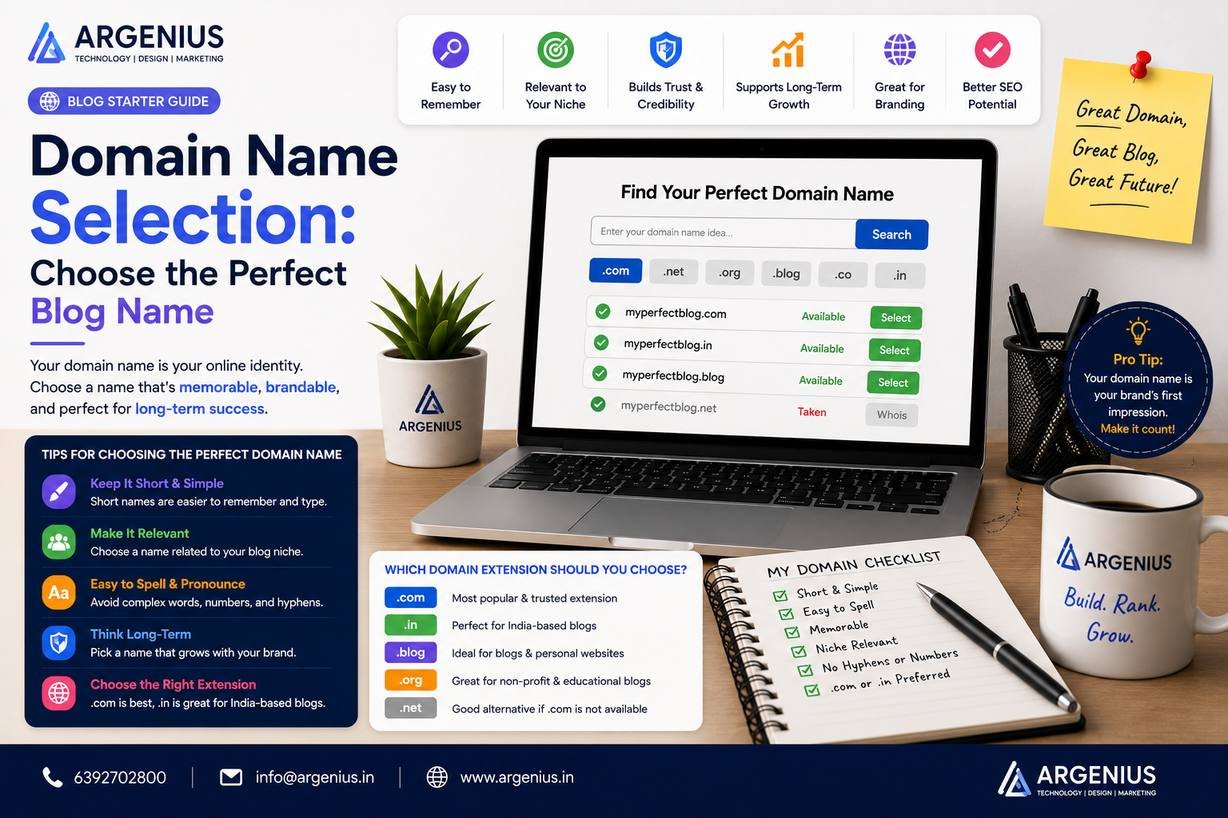
Choose the Right Domain Extension
Popular domain extensions include:
- .com
- .in
- .org
- .net
- .co
- .io
- .ai
- .blog
For most businesses and blogs, .com remains the preferred choice because it is widely recognized and trusted.
SEO and Domain Names
While exact-match keywords are no longer essential, your domain should still support good SEO practices.
A good SEO-friendly domain:
- Is Relevant
- Easy to Remember
- Easy to Type
- Brand Focused
- Free of Spammy Words
High-quality content and strong technical SEO remain much more important than stuffing keywords into a domain name.
Common Domain Naming Mistakes
Avoid these mistakes:
- Very Long Names
- Difficult Spellings
- Hyphens
- Numbers
- Trademark Violations
- Generic Names
- Temporary Branding
- Trend-Based Names
- Confusing Abbreviations
- Random Characters
These issues can reduce brand recognition and user trust.
Step-by-Step Domain Name Selection Process
Selecting the right domain name requires more than checking whether it's available. It should align with your brand, niche, audience, and future business goals.
Step 1: Define Your Blog's Purpose
Before brainstorming names, answer these questions:
- What is my blog about?
- Who is my target audience?
- Will this become a business?
- Do I plan to sell products or services?
- Will the niche expand in the future?
Having clear goals makes choosing a suitable domain much easier.
Step 2: Brainstorm Multiple Name Ideas
Don't settle for the first idea.
Create a list of at least 20–30 potential names.
Use inspiration from:
- Your niche
- Brand values
- Target audience
- Business name
- Industry keywords
- Unique words
- Short phrases
Compare all options before making your final decision.
Step 3: Keep It Short
Short domain names are:
- Easier to Remember
- Easier to Type
- Easier to Share
- Better for Branding
- More Professional
Aim for:
- 6–15 Characters (when possible)
- 2–3 Words Maximum
Shorter domains generally perform better for branding.
Step 4: Make It Brandable
A strong brand name should:
- Sound Professional
- Be Unique
- Be Easy to Pronounce
- Be Easy to Spell
- Be Easy to Recall
Think long-term instead of choosing a trendy name.
Step 5: Check Domain Availability
Before finalizing a name, verify:
- Domain Availability
- Trademark Conflicts
- Social Media Usernames
- Business Registration Conflicts
- Similar Existing Brands
Maintaining consistency across platforms strengthens your brand identity.
Step 6: Select the Best Domain Extension
Popular domain extensions include:
- .com (Best Overall)
- .in (India)
- .org
- .net
- .co
- .io
- .ai
- .blog
If available, .com should usually be your first choice because of its global recognition.
Domain Availability Checklist
Before registering your domain, confirm the following:
- Available Domain Name
- Matching Social Media Handles
- No Trademark Issues
- Easy Pronunciation
- Easy Spelling
- Mobile Friendly
- Future Business Expansion
- Professional Appearance
- No Numbers
- No Hyphens
Completing this checklist helps avoid branding problems later.
Blog Branding Strategy
Your domain name should support your overall branding.
A strong blog brand includes:
- Professional Logo
- Consistent Colors
- Brand Typography
- Clear Brand Message
- Memorable Domain
- Consistent Social Media Profiles
- Quality Content
- Professional Email Address
A consistent brand increases trust and recognition.
Premium vs Standard Domains
Standard Domains
Advantages:
- Affordable
- Easy to Register
- Large Selection
- Ideal for New Blogs
Premium Domains
Advantages:
- Highly Memorable
- Strong Branding
- Short Length
- Existing Market Value
Disadvantages:
- Expensive
- Limited Availability
Most new bloggers can start successfully with a standard domain.
Best Domain Registrars
Reliable domain registrars include:
- Namecheap
- GoDaddy
- Porkbun
- Dynadot
- Cloudflare Registrar
- Squarespace Domains
When choosing a registrar, compare:
- Pricing
- Renewal Costs
- Customer Support
- DNS Management
- Privacy Protection
- Security Features
Cost of Domain Registration (₹ INR)
| Service |
Estimated Cost |
| .com Domain |
₹800 – ₹1,500 / Year |
| .in Domain |
₹500 – ₹1,200 / Year |
| Domain Privacy Protection |
₹0 – ₹800 / Year |
| Professional Email Setup |
₹1,000 – ₹5,000 / Year |
| Complete Website Setup |
₹25,000 – ₹2,00,000+ |
Factors Affecting Domain Cost
The final price depends on:
- Domain Extension
- Registrar Pricing
- Renewal Charges
- Privacy Protection
- Premium Domain Status
- Additional Services
- Promotional Discounts
Always check renewal pricing before purchasing, not just the first-year cost.
Best Practices
For choosing the perfect domain:
- Keep it short and memorable.
- Choose a brandable name.
- Prefer .com whenever possible.
- Avoid numbers and hyphens.
- Check trademark availability.
- Verify social media usernames.
- Think long-term.
- Keep spelling simple.
- Choose a name that's easy to pronounce.
- Register your domain early to avoid losing it.
These practices create a stronger foundation for your online brand.
Common Mistakes to Avoid
Avoid these common mistakes:
- Choosing overly long names
- Using difficult spellings
- Adding unnecessary numbers
- Using multiple hyphens
- Copying competitor names
- Ignoring trademark conflicts
- Following temporary trends
- Selecting names that limit future growth
- Registering without checking renewal costs
- Delaying registration after finding a good name
Avoiding these mistakes saves time, money, and future rebranding efforts.
Future Trends in Domain Naming
The domain industry continues to evolve alongside digital branding.
Emerging trends include:
- Brand-First Domain Names
- AI & Tech-Focused Branding
- Short and Memorable Domains
- Voice Search-Friendly Names
- Industry-Specific Extensions
- Personal Branding Domains
- Localized Domain Strategies
- Stronger Cybersecurity Features
- Integrated Brand Protection
- AI-Powered Domain Discovery
Choosing a timeless, brandable domain helps your website remain relevant for years.
Why Businesses Choose Argenius
At Argenius, we help businesses create professional digital brands starting with the right domain strategy.
Our services include:
- Domain Selection Consulting
- Website Branding
- Logo Design
- WordPress Development
- Technical SEO
- Website Speed Optimization
- Professional Email Setup
- Content Strategy
- Website Maintenance
- Digital Marketing Services
We build websites that combine memorable branding with strong SEO and long-term scalability.
Final Thoughts
Your domain name is one of the most valuable digital assets you'll own. It's more than just a website address—it's the identity of your brand, the name your audience will remember, and the foundation for your online reputation. Taking the time to choose a short, memorable, and brandable domain can make marketing, SEO, and business growth much easier in the future.
Avoid rushing the decision. Research multiple options, check availability across domains and social media, verify trademark conflicts, and think about where your brand could be several years from now. A domain that supports both your current niche and future expansion offers the greatest long-term value. At Argenius, we help businesses build professional brands with strategic domain selection, modern website development, and SEO-focused digital solutions.
Frequently Asked Questions
How do I choose a good blog domain name?
Choose a domain that is short, easy to remember, simple to spell, brandable, and relevant to your niche. It should also be flexible enough to support future growth.
Which domain extension is best for a blog?
For most blogs and businesses, .com is the preferred extension because it is globally recognized, trusted, and easy for users to remember. If your audience is primarily in India, .in can also be a strong option.
Should I include keywords in my domain name?
Including a keyword can provide context, but it's not essential. Prioritize a memorable, brandable name over an exact-match keyword domain.
How much does a domain name cost?
A standard domain typically costs ₹500–₹1,500 per year, depending on the extension and registrar. Premium domains can cost significantly more.
Can I change my domain name later?
Yes, but changing a domain requires website migration, redirects, SEO updates, and rebranding. Choosing the right domain from the beginning helps avoid these challenges.
Does Argenius help with domain selection and website setup?
Yes. Argenius provides domain consulting, website development, branding, technical SEO, website migration, and ongoing maintenance to help businesses establish a strong online presence.