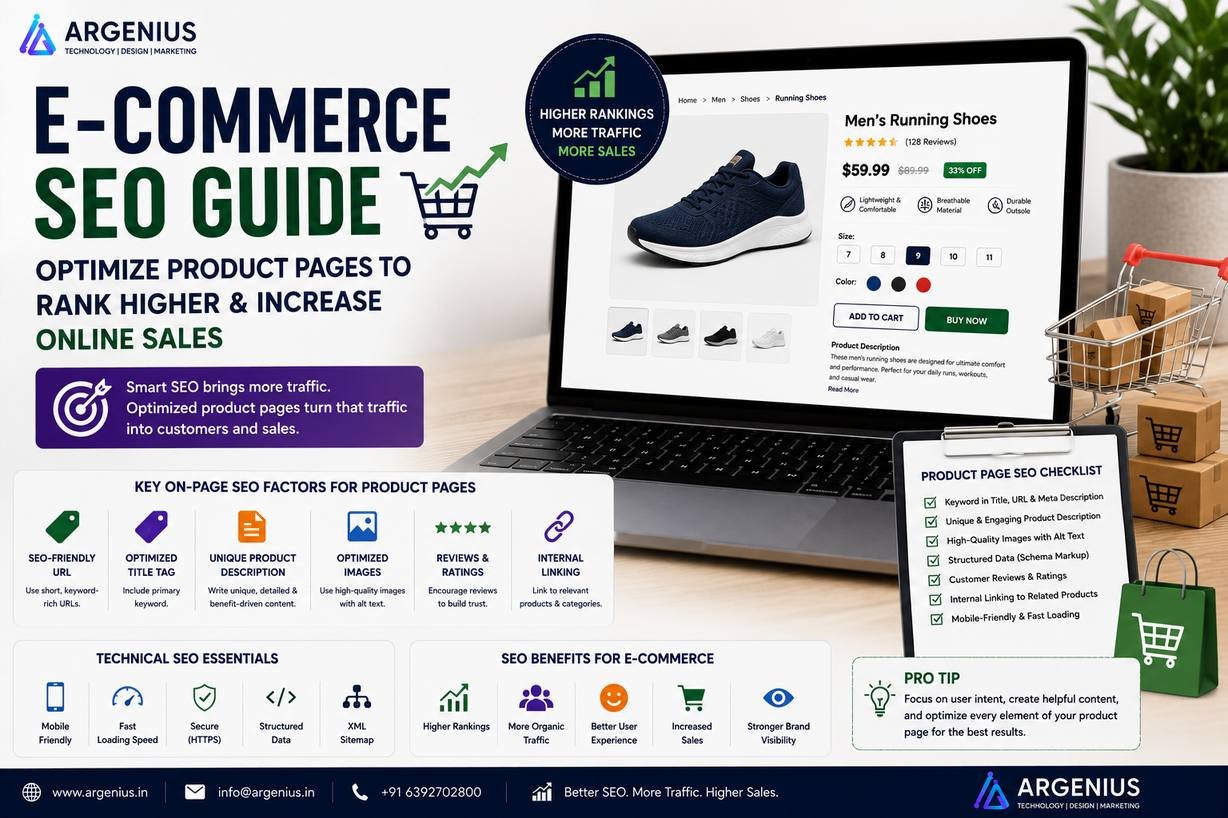
E-commerce SEO helps online stores rank higher in Google, attract qualified buyers, and increase sales without relying solely on paid advertising. This complete guide explains how to optimize product pages using keyword research, technical SEO, structured data, Core Web Vitals, internal linking, and conversion-focused content.
Introduction
Launching an online store is only the first step toward building a successful ecommerce business. The real challenge is getting potential customers to discover your products before they find your competitors. With millions of products competing for attention in search results, relying only on paid advertising can become expensive and difficult to sustain.
This is where E-commerce SEO becomes one of the most valuable long-term marketing strategies.
A well-optimized ecommerce website attracts highly targeted visitors who are actively searching for products they want to buy. Unlike paid campaigns that stop generating traffic once the budget runs out, strong SEO continues driving qualified visitors and sales over time.
However, ecommerce SEO is more complex than traditional website optimization. Product pages, category pages, filters, duplicate content, structured data, page speed, internal linking, and user experience all influence search visibility.
Google also evaluates factors such as Core Web Vitals, mobile usability, helpful content, and structured product information when determining rankings.
Whether you run a Shopify store, WooCommerce website, Magento store, Laravel ecommerce platform, or a custom-built online shop, optimizing every product page can significantly improve rankings, click-through rates, and conversions.
In this comprehensive guide, you'll learn how to optimize ecommerce product pages using keyword research, compelling product content, technical SEO, schema markup, image optimization, internal linking, and AI-ready SEO strategies.
At Argenius, we help ecommerce businesses improve organic visibility, increase qualified traffic, and grow online revenue through data-driven SEO and technical optimization.
What is E-commerce SEO?
E-commerce SEO is the process of optimizing an online store so that product pages, category pages, and other important sections rank higher in search engine results.
Unlike general SEO, ecommerce SEO focuses on helping customers discover products during every stage of the buying journey.
It involves optimizing:
- Product Pages
- Category Pages
- Product Descriptions
- Images
- Internal Linking
- Structured Data
- Technical SEO
- Mobile Experience
- Core Web Vitals
The goal is to increase organic traffic, improve conversions, and generate more online sales.
Why is E-commerce SEO Important?
Most online shopping journeys begin with a search engine. When your products appear at the top of search results, your business gains visibility exactly when customers are ready to purchase.
Benefits include:
- Higher Organic Traffic
- Better Product Visibility
- Increased Sales
- Lower Customer Acquisition Cost
- Improved Brand Trust
- Higher Conversion Rates
- Better User Experience
- Long-Term ROI
- Sustainable Business Growth
- Reduced Dependence on Paid Ads
How Google Ranks Ecommerce Product Pages
Google evaluates many ranking signals before displaying product pages.
Important factors include:
- Search Intent
- Product Relevance
- Content Quality
- Product Descriptions
- User Experience
- Core Web Vitals
- Mobile Friendliness
- Structured Data
- Backlinks
- Internal Linking
- HTTPS Security
- Website Authority
Understanding these signals helps prioritize the right optimization efforts.
Keyword Research for Product Pages
Keyword research is the foundation of ecommerce SEO.
Instead of targeting only broad keywords, focus on high-intent searches that indicate purchase intent.
Examples
Broad Keyword:
Running Shoes
High Intent Keywords:
- Best running shoes for beginners
- Lightweight running shoes for men
- Women's waterproof running shoes
- Running shoes under ₹5,000
- Buy running shoes online
Long-tail keywords generally attract visitors who are closer to making a purchase.
Optimize Product Titles
Product titles should include important keywords while remaining natural and readable.
Good Example:
Nike Air Zoom Pegasus 41 Men's Running Shoes
Poor Example:
Shoes Cheap Running Best Online Sale India
Well-written titles improve both SEO and click-through rates.
Write Unique Product Descriptions
One of the biggest ecommerce SEO mistakes is copying manufacturer descriptions.
Instead:
- Explain product benefits
- Highlight features
- Answer customer questions
- Include specifications
- Mention use cases
- Naturally include keywords
Unique content improves rankings and builds customer confidence.
Optimize Product Images
Images influence both SEO and conversions.
Best practices:
- Compress images
- Use descriptive filenames
- Add keyword-rich ALT text
- Use WebP format
- Enable Lazy Loading
- Maintain High Quality
Fast-loading images improve both user experience and Core Web Vitals.
Optimize URLs
Keep URLs short, descriptive, and keyword-friendly.
Good:
Poor:
Simple URLs are easier for users and search engines to understand.
Product Schema Markup
Structured data helps Google understand your products and display rich search results.
Useful schema properties include:
- Product Name
- Price
- Currency
- Availability
- Reviews
- Ratings
- Brand
- SKU
- Images
Schema can improve visibility with rich snippets.
Optimize Category Pages
Category pages often have higher ranking potential than individual product pages.
Optimize:
- Category Descriptions
- Meta Titles
- Meta Descriptions
- Internal Links
- Filters
- Canonical URLs
Well-optimized categories help distribute authority across product pages.
Internal Linking Strategy
Internal links guide both users and search engines.
Useful internal links include:
- Related Products
- Similar Categories
- Best Sellers
- Recently Viewed
- Buying Guides
- Blog Articles
A strong linking structure improves crawlability and user engagement.
Core Web Vitals for Ecommerce
Fast websites sell more products.
Improve:
- Loading Speed
- Mobile Performance
- Checkout Speed
- Image Optimization
- JavaScript Performance
Better performance reduces cart abandonment.
Mobile SEO
Most ecommerce purchases now begin on mobile devices.
Optimize:
- Responsive Design
- Fast Loading
- Easy Navigation
- Touch-Friendly Buttons
- Mobile Checkout
- Mobile Search
A seamless mobile experience improves rankings and conversions.
Technical SEO
Every ecommerce website should include:
- XML Sitemap
- Robots.txt
- HTTPS
- Canonical Tags
- Structured Data
- Pagination Optimization
- Crawl Budget Management
- Broken Link Monitoring
Technical SEO ensures search engines can efficiently crawl your store.
Avoid Duplicate Content
Duplicate content commonly occurs because of:
- Product Variations
- Filters
- Sorting Parameters
- Session IDs
- Manufacturer Descriptions
Use canonical tags and unique product content to reduce duplication issues.
Reviews & User-Generated Content
Customer reviews provide fresh content and build trust.
Benefits include:
- More Keywords
- Better CTR
- Rich Snippets
- Improved Conversions
- Higher Trust
Encourage genuine reviews after each purchase.
How to Perform an Ecommerce SEO Audit
A regular SEO audit helps identify technical and content issues before they affect rankings.
Review Product Pages
Check whether every product page has:
- Unique Titles
- Unique Descriptions
- Optimized Images
- Proper Internal Links
- Product Schema
Audit Category Pages
Verify:
- Category Descriptions
- Optimized Meta Tags
- Canonical URLs
- Pagination
- Internal Linking
Check Technical SEO
Review:
- XML Sitemap
- Robots.txt
- Crawl Errors
- Broken Links
- HTTPS
- Structured Data
- Duplicate Content
Measure Website Performance
Evaluate:
- Core Web Vitals
- Mobile Speed
- Page Load Time
- Server Response Time
- JavaScript Performance
Review User Experience
Ensure visitors can easily:
- Search Products
- Navigate Categories
- Compare Products
- Add Items to Cart
- Complete Checkout
Best Ecommerce SEO Tools
Professional SEO teams commonly use:
- Google Search Console
- Google Analytics 4
- Google PageSpeed Insights
- Google Lighthouse
- Google Merchant Center
- Semrush
- Ahrefs
- Screaming Frog SEO Spider
- GTmetrix
- Hotjar
These tools help monitor rankings, identify issues, and improve store performance.
Cost of Ecommerce SEO (₹ INR)
The cost of E-commerce SEO depends on the number of products, website complexity, competition, and optimization requirements.
| Service |
Estimated Cost |
| Ecommerce SEO Audit |
₹15,000 – ₹30,000 |
| Small Ecommerce Store SEO |
₹25,000 – ₹60,000/month |
| Medium Online Store SEO |
₹60,000 – ₹1,20,000/month |
| Enterprise Ecommerce SEO |
Custom Pricing |
Factors Affecting Cost
Pricing depends on:
- Number of Products
- Category Pages
- Website Platform
- Technical SEO Health
- Competition
- Content Requirements
- Link Building Strategy
- Ongoing SEO Monitoring
A well-executed ecommerce SEO strategy provides long-term organic traffic and reduces dependence on paid advertising.
E-commerce SEO Best Practices
For sustainable rankings and sales:
- Write unique product descriptions
- Optimize every product image
- Use structured data
- Improve Core Web Vitals
- Build strong internal linking
- Optimize category pages
- Publish buying guides
- Encourage customer reviews
- Keep inventory updated
- Continuously monitor SEO performance
These practices improve both rankings and customer trust.
Common Ecommerce SEO Mistakes
Avoid these mistakes:
- Copying manufacturer descriptions
- Using duplicate titles
- Ignoring category pages
- Slow-loading product pages
- Poor mobile experience
- Missing schema markup
- Weak internal linking
- Thin content
- Broken links
- Ignoring customer reviews
Correcting these issues can significantly improve search visibility and conversions.
Future Trends in Ecommerce SEO
The future of ecommerce search is driven by AI and personalized experiences.
Key trends include:
- Google AI Overviews
- Generative Engine Optimization (GEO)
- Voice Search Shopping
- Visual Search
- AI Product Recommendations
- Entity-Based SEO
- Google Merchant Experience
- Video Commerce
- Augmented Reality (AR) Shopping
- Hyper-Personalized Search Results
Businesses that adopt these trends early will gain a competitive advantage.
Why Businesses Choose Argenius
At Argenius, we help ecommerce businesses grow through data-driven SEO strategies that increase organic visibility, improve product rankings, and maximize online sales.
Our E-commerce SEO Services include:
- Complete Ecommerce SEO Audits
- Product Page Optimization
- Category Page SEO
- Keyword Research
- Schema Markup Implementation
- Core Web Vitals Optimization
- Technical SEO
- Content Optimization
- Internal Linking Strategy
- Monthly Performance Reporting
Our goal is to help online stores attract qualified traffic, improve conversions, and achieve sustainable business growth.
Final Thoughts
A successful ecommerce website is more than an attractive storefront—it needs to be discoverable by customers actively searching for your products. E-commerce SEO helps bridge that gap by improving product visibility, enhancing user experience, and increasing organic traffic.
By optimizing product pages, category pages, technical SEO, structured data, Core Web Vitals, and mobile usability, businesses can build a strong foundation for long-term growth. Unlike paid advertising, SEO continues delivering value over time, making it one of the most cost-effective digital marketing investments.
Whether you're managing a small online store or a large ecommerce platform, regular optimization and continuous monitoring are essential to staying competitive. If you're looking to improve your store's search rankings and increase sales, Argenius can help with customized E-commerce SEO solutions tailored to your business goals.
Frequently Asked Questions
What is E-commerce SEO?
E-commerce SEO is the process of optimizing an online store, including product pages and category pages, to improve search engine rankings and attract more organic traffic.
Why are product pages important for SEO?
Product pages target purchase-intent keywords and provide detailed information that helps search engines understand your products while encouraging customers to buy.
How does schema markup help ecommerce websites?
Product Schema enables rich search results by displaying details such as price, availability, ratings, and reviews directly in Google Search, improving visibility and click-through rates.
How often should I perform an ecommerce SEO audit?
A comprehensive ecommerce SEO audit should be conducted every 3–6 months, along with monthly monitoring of technical performance and ranking changes.
Is mobile optimization important for ecommerce SEO?
Yes. Most online shoppers browse and purchase on mobile devices, making responsive design, fast loading speed, and mobile-friendly navigation essential for both SEO and conversions.
Does Argenius provide E-commerce SEO services?
Yes. Argenius offers complete E-commerce SEO services, including product page optimization, technical SEO, schema implementation, Core Web Vitals improvements, category page SEO, and ongoing performance monitoring.