Geographic Keywords help businesses rank for location-based searches by targeting cities, states, neighborhoods, and "near me" queries. Learn how to research local SEO keywords, optimize your website, and attract more nearby customers with an effective geographic SEO strategy.
Introduction
If your business serves customers in a specific city, region, or country, ranking for generic keywords alone is often not enough. A user searching for "website development company" may simply be researching options, while someone searching for "website development company in Ahmedabad" or "mobile app developers near me" usually has much stronger buying intent.
This is why Geographic Keywords play a crucial role in modern Local SEO.
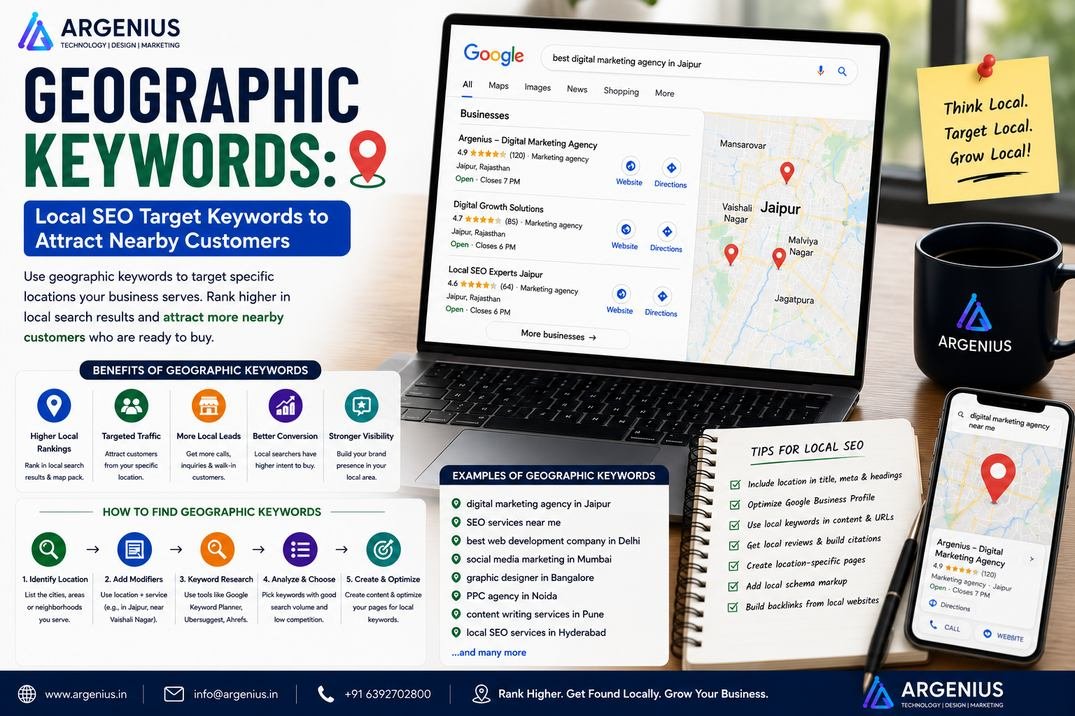
Geographic keywords are search terms that include a location such as a city, state, neighborhood, district, region, or country. They help search engines understand where your business operates and connect your website with users searching for services in that area.
Whether you run a local restaurant, law firm, healthcare clinic, software company, digital marketing agency, ecommerce store with regional delivery, or multi-location business, using the right location-based keywords can significantly improve your visibility in Google Search and Google Maps.
Local search has also evolved with Google AI Overviews, ChatGPT, Gemini, and Perplexity. These AI-powered platforms increasingly recommend businesses that provide accurate location information, consistent business details, helpful local content, and strong online authority. Simply adding a city name to a page is no longer enough. Businesses need comprehensive local SEO strategies supported by high-quality content and trustworthy signals.
In this guide, you'll learn what Geographic Keywords are, why they matter, how to research location-based search terms, optimize service pages, improve Google Business Profile visibility, and build a Local SEO strategy that attracts qualified customers from your target locations.
At Argenius, we help businesses create location-focused SEO strategies that improve local rankings, increase qualified leads, and drive sustainable business growth.
What are Geographic Keywords?
Geographic Keywords are search terms that include a specific location to help users find products or services in a particular area.
These locations may include:
- Cities
- States
- Countries
- Neighborhoods
- Districts
- Regions
- ZIP or PIN Code Areas
- "Near Me" Searches
Examples include:
- Website Development Company in Ahmedabad
- SEO Agency in Mumbai
- Flutter Developers in Delhi
- Best Restaurant Near Me
- Digital Marketing Company in Pune
These keywords signal strong local intent and often attract users who are ready to contact a business or make a purchase.
Why are Geographic Keywords Important?
Location-based keywords help businesses appear in front of customers searching within their service area.
Key benefits include:
- Higher Local Google Rankings
- Increased Google Maps Visibility
- More Qualified Leads
- Better Conversion Rates
- Stronger Local Brand Awareness
- Improved Mobile Search Performance
- Increased Walk-In Traffic
- Better Regional Targeting
- More Phone Calls and Inquiries
- Long-Term Local SEO Growth
Because these searches often have high purchase intent, they can deliver better business results than broad, generic keywords.
Types of Geographic Keywords
Different businesses should target different kinds of location-based searches.
City Keywords
Examples:
- SEO Company in Ahmedabad
- Web Design Agency in Jaipur
- App Developers in Bengaluru
State Keywords
Examples:
- Digital Marketing Services in Gujarat
- Software Company in Maharashtra
Country Keywords
Examples:
- Website Development Company in India
- SEO Services in USA
- Mobile App Development Company in Canada
Neighborhood Keywords
Examples:
- Dentist in Andheri
- Gym in Koramangala
- Cafe in Connaught Place
Near Me Keywords
Examples:
- Software Company Near Me
- Car Repair Near Me
- Best Bakery Near Me
Google uses device location and business relevance to serve these searches.
Service + Location Keywords
These are among the highest-converting local keywords.
Examples:
- Laravel Development Company in Ahmedabad
- Flutter App Development in Dubai
- Ecommerce Website Development in New York
- SEO Consultant in London
Geographic Keywords vs Generic Keywords
| Generic Keyword |
Geographic Keyword |
| SEO Services |
SEO Services in Ahmedabad |
| Website Development |
Website Development Company in Delhi |
| Mobile App Development |
Mobile App Development Company in Dubai |
| Restaurant |
Italian Restaurant in Mumbai |
| Dentist |
Best Dentist in Pune |
Location-based keywords generally attract visitors who are closer to making a decision.
How Geographic Keywords Improve Local SEO
Adding geographic keywords strategically helps search engines understand:
- Where your business operates
- Which customers you serve
- Relevant service areas
- Local search intent
- Regional relevance
- Google Maps association
This improves your chances of appearing in local search results and map listings.
How to Find Geographic Keywords
Research location-based keywords using:
- Google Autocomplete
- Google Keyword Planner
- Google Trends
- Google Search Console
- Google Business Profile Insights
- Ahrefs
- Semrush
- SE Ranking
- Competitor Research
- Customer Search Queries
Focus on locations where your business actually provides products or services.
Where to Use Geographic Keywords
Include them naturally in:
- Page Titles
- Meta Descriptions
- URLs
- Headings
- Service Pages
- Landing Pages
- Blog Articles
- Image ALT Text
- Internal Links
- Google Business Profile
Avoid keyword stuffing by using natural, readable language.
Optimize Google Business Profile
Your Google Business Profile is one of the most important assets for Local SEO.
Ensure it includes:
- Accurate Business Name
- Address
- Phone Number
- Business Hours
- Categories
- Services
- Photos
- Reviews
- Service Areas
A well-optimized profile improves your visibility in Google Maps and local search results.
Geographic Keywords and AI Search
AI-powered search engines increasingly evaluate:
- Accurate business information
- Location relevance
- Customer reviews
- Local expertise
- Consistent NAP (Name, Address, Phone)
- Helpful local content
- Authority within the service area
Businesses that combine location-focused content with strong Local SEO signals are more likely to be recommended by AI-powered search systems.
Common Industries That Benefit from Geographic Keywords
Almost every local business can benefit, including:
- Digital Marketing Agencies
- Software Companies
- Healthcare Clinics
- Restaurants
- Hotels
- Real Estate Agencies
- Lawyers
- Educational Institutes
- Home Services
- Retail Stores
If customers search for your services in a specific area, geographic keywords should be a core part of your SEO strategy.
Step-by-Step Strategy for Using Geographic Keywords
A successful Local SEO campaign starts with choosing the right locations and optimizing your website for local search intent. Follow these steps to use Geographic Keywords effectively.
Step 1: Define Your Service Areas
Begin by identifying the locations where your business actually operates.
These may include:
- Cities
- States
- Districts
- Neighborhoods
- Countries
- Service Regions
Target only locations where you can genuinely provide your products or services.
Step 2: Research Geographic Keywords
Use keyword research tools to identify location-based searches with commercial intent.
Examples:
- Website Development Company in Ahmedabad
- SEO Agency in Mumbai
- Flutter Developers in Dubai
- Digital Marketing Company in London
Analyze:
- Search Volume
- Keyword Difficulty
- Search Intent
- Local Competition
- CPC
- Seasonal Trends
Prioritize keywords that match both your business goals and customer intent.
Step 3: Create Dedicated Location Pages
Instead of targeting every city on one page, create unique landing pages for important service areas.
For example:
- Website Development Company in Ahmedabad
- Website Development Company in Surat
- Website Development Company in Mumbai
- Website Development Company in Pune
Each page should contain original, location-specific content rather than duplicated text.
Step 4: Optimize Your Google Business Profile
A well-maintained Google Business Profile is essential for Local SEO.
Ensure it includes:
- Accurate Business Name
- Complete Address
- Phone Number
- Website
- Business Hours
- Service Categories
- Photos
- Customer Reviews
- Service Areas
Keep all business information consistent across the web.
Step 5: Add Geographic Keywords Naturally
Place location-based keywords where they make sense.
Recommended locations include:
- SEO Title
- Meta Description
- URL
- Headings
- Service Content
- FAQs
- Image ALT Text
- Internal Links
Avoid repeating city names excessively, as this can make the content appear unnatural.
Step 6: Build Local Authority
Strengthen your local presence by:
- Earning customer reviews
- Creating city-specific blog content
- Listing your business in trusted directories
- Acquiring local backlinks
- Participating in community events
- Publishing local case studies
These signals help improve credibility and local search visibility.
Step 7: Monitor Local SEO Performance
Track important metrics such as:
- Local Keyword Rankings
- Google Maps Visibility
- Website Traffic
- Calls
- Contact Form Submissions
- Direction Requests
- Google Business Profile Insights
- Conversion Rate
Regular analysis helps identify opportunities for continuous improvement.
Geographic Keywords Checklist
Before publishing a local landing page, confirm that it includes:
- ✅ One Primary Geographic Keyword
- ✅ Supporting Local Keywords
- ✅ Optimized SEO Title
- ✅ Meta Description
- ✅ Unique Content
- ✅ Google Business Profile Link
- ✅ Internal Links
- ✅ Mobile-Friendly Design
- ✅ Fast Loading Speed
- ✅ FAQ Section
- ✅ Local Business Schema
- ✅ Clear Call-to-Action
A complete checklist improves both user experience and Local SEO performance.
Best Tools for Geographic Keyword Research
Free Tools
- Google Search
- Google Trends
- Google Search Console
- Google Keyword Planner
- Google Autocomplete
- Google Business Profile Insights
Paid Tools
- Ahrefs
- Semrush
- SE Ranking
- Moz Pro
- BrightLocal
- Whitespark
These tools provide valuable insights into local keyword opportunities, rankings, citations, and competitor performance.
Geographic Keywords and AI Search
AI-powered search engines are transforming Local SEO.
To improve visibility in Google AI Overviews, ChatGPT, Gemini, and Perplexity:
- Publish location-specific content
- Keep business information accurate
- Use structured data
- Build strong local authority
- Encourage genuine customer reviews
- Cover local FAQs
- Update service pages regularly
Businesses with trustworthy local information are more likely to be recommended by AI-driven search experiences.
Cost of Local SEO & Geographic Keyword Services (₹ INR)
The cost of Local SEO depends on the number of target locations, competition, and campaign scope.
| Service |
Estimated Cost |
| Local Keyword Research |
₹5,000 – ₹15,000 |
| Single Location SEO Setup |
₹15,000 – ₹30,000 |
| Multi-Location SEO Campaign |
₹30,000 – ₹80,000 |
| Enterprise Local SEO Management |
Custom Pricing |
Factors Affecting Cost
Pricing varies based on:
- Number of Target Locations
- Industry Competition
- Google Business Profile Optimization
- Landing Page Creation
- Technical SEO
- Local Citations
- Review Management
- Ongoing SEO Reporting
Investing in Local SEO can deliver long-term visibility and a steady stream of qualified local leads.
Geographic Keyword Best Practices
Follow these proven practices:
- Create unique content for every location
- Use location keywords naturally
- Optimize Google Business Profile
- Maintain consistent NAP (Name, Address, Phone)
- Add Local Business Schema
- Build high-quality local backlinks
- Collect authentic customer reviews
- Optimize for mobile users
- Improve page speed
- Update location pages regularly
These practices improve trust, rankings, and user experience.
Common Mistakes to Avoid
Avoid these common Local SEO mistakes:
- Stuffing city names throughout the content
- Creating duplicate location pages
- Inconsistent business information across directories
- Ignoring Google Business Profile
- Targeting locations where you don't provide services
- Missing local schema markup
- Weak internal linking
- Ignoring customer reviews
- Not updating business hours or contact details
- Forgetting mobile optimization
Providing accurate, useful, and location-specific information is essential for long-term Local SEO success.
Future Trends in Geographic SEO
Local search continues to evolve with advancements in AI and user behavior.
Key trends include:
- Google AI Overviews
- Generative Engine Optimization (GEO)
- Hyper-Local SEO
- Voice Search
- Entity-Based Search
- AI-Powered Local Recommendations
- Google Maps Personalization
- Zero-Click Local Searches
- Location-Based Personalization
- Real-Time Business Information
Businesses that keep their local information accurate and their content relevant will be better positioned for future search experiences.
Why Businesses Choose Argenius
At Argenius, we build Local SEO strategies that help businesses connect with nearby customers and improve visibility in competitive markets.
Our Local SEO Services include:
- Geographic Keyword Research
- Google Business Profile Optimization
- Location Landing Page Development
- Local Citation Building
- Technical SEO
- On-Page SEO
- Schema Markup Implementation
- Review Management Strategy
- Performance Tracking
- Monthly Local SEO Reports
Our focus is on increasing qualified local traffic, improving map visibility, and generating more leads through location-based search optimization.
Final Thoughts
Geographic Keywords are a cornerstone of any successful Local SEO strategy. By targeting city, state, neighborhood, and "near me" searches, businesses can reach customers who are actively looking for nearby products and services.
The most effective approach goes beyond simply adding location names to a page. It requires a combination of location-specific content, optimized Google Business Profiles, structured data, consistent business information, customer reviews, and a strong internal linking strategy.
As AI-powered search engines continue to prioritize relevance and local authority, businesses that invest in comprehensive Local SEO will gain a significant competitive advantage. Argenius helps businesses build scalable, location-focused SEO campaigns that drive qualified leads, improve local rankings, and support long-term business growth.
Frequently Asked Questions
What are Geographic Keywords?
Geographic Keywords are search terms that include a location, such as a city, state, neighborhood, or country, helping businesses target users searching for services in specific areas.
Why are Geographic Keywords important for Local SEO?
They help search engines understand where your business operates, improving visibility in local search results, Google Maps, and location-based searches.
How can I find the best Geographic Keywords?
Use tools like Google Keyword Planner, Google Trends, Google Search Console, Google Business Profile Insights, Ahrefs, and Semrush to discover relevant location-based search terms.
Should I create separate pages for each city?
Yes, if you serve multiple locations. Each page should contain unique, valuable content tailored to that specific city or region rather than duplicated information.
What is a Google Business Profile, and why does it matter?
A Google Business Profile helps your business appear in Google Search and Google Maps. An optimized profile with accurate details, reviews, and updated information is a critical ranking factor for Local SEO.
Does Argenius provide Local SEO services?
Yes. Argenius offers Geographic Keyword Research, Google Business Profile Optimization, Location Landing Pages, Local Citation Building, Technical SEO, and Complete Local SEO Campaign Management to help businesses attract more local customers.