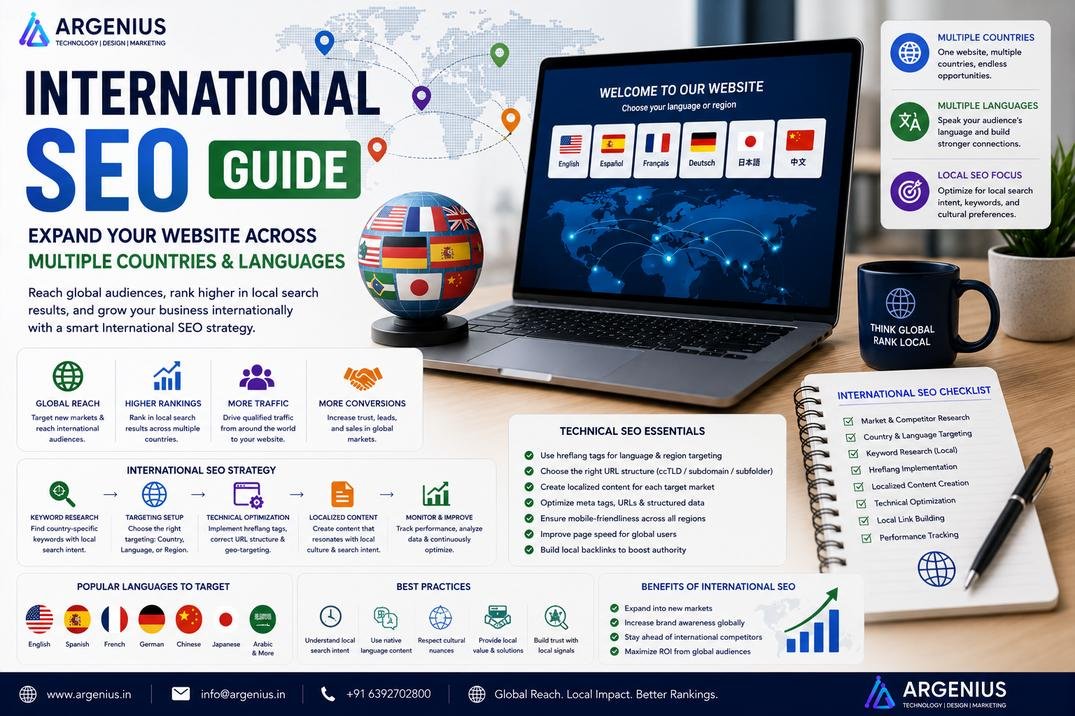
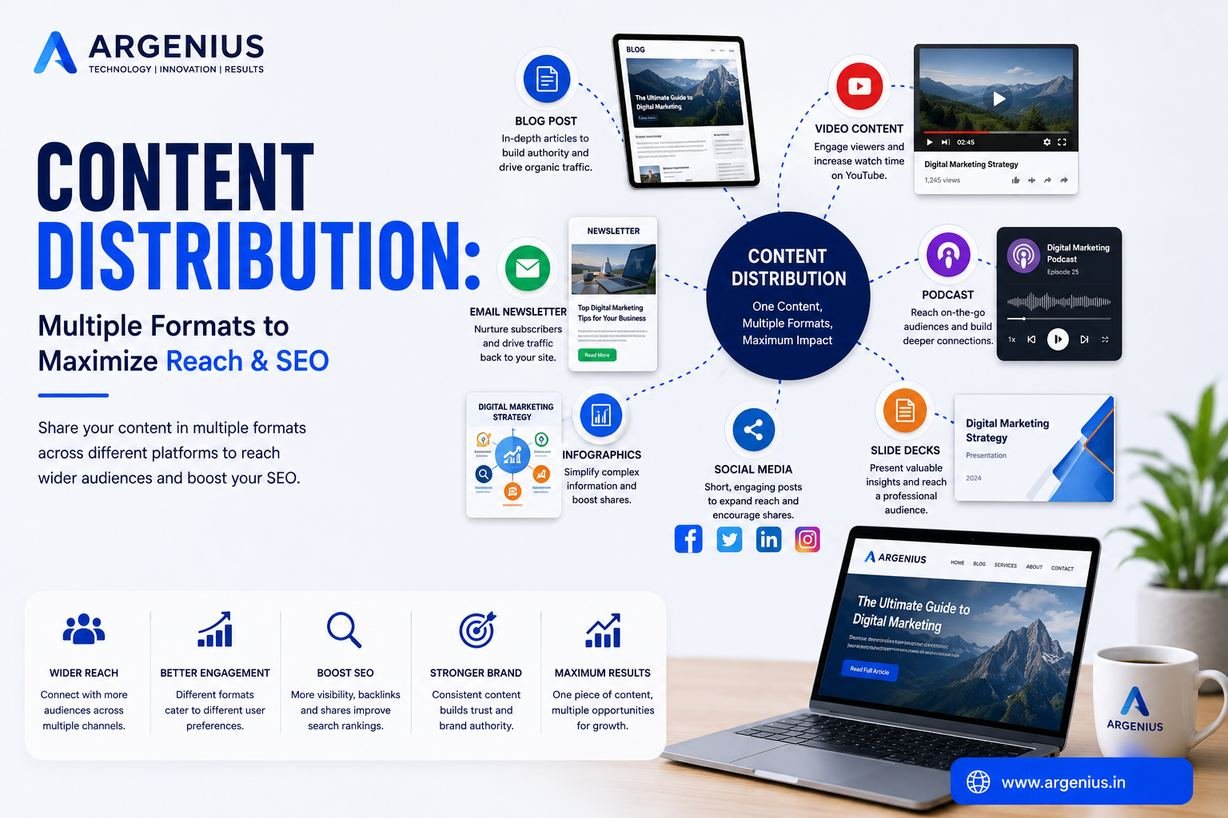
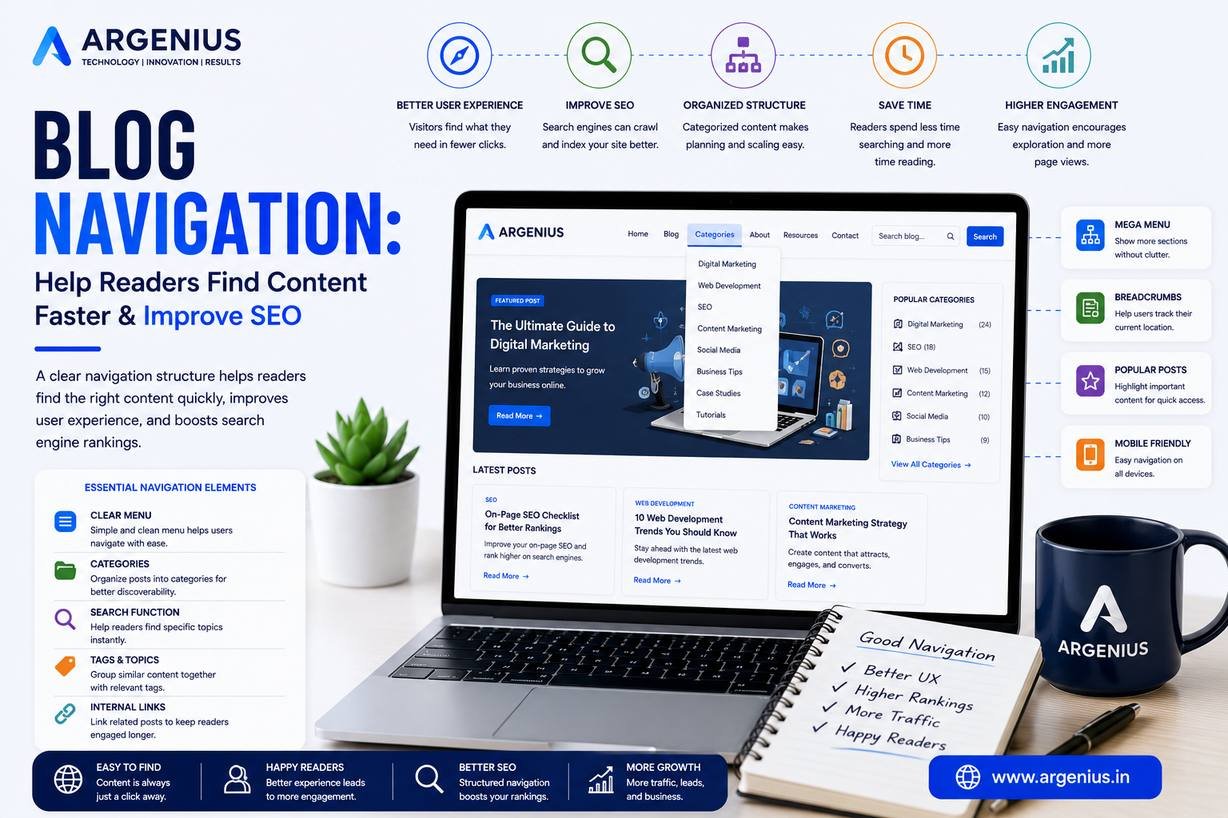
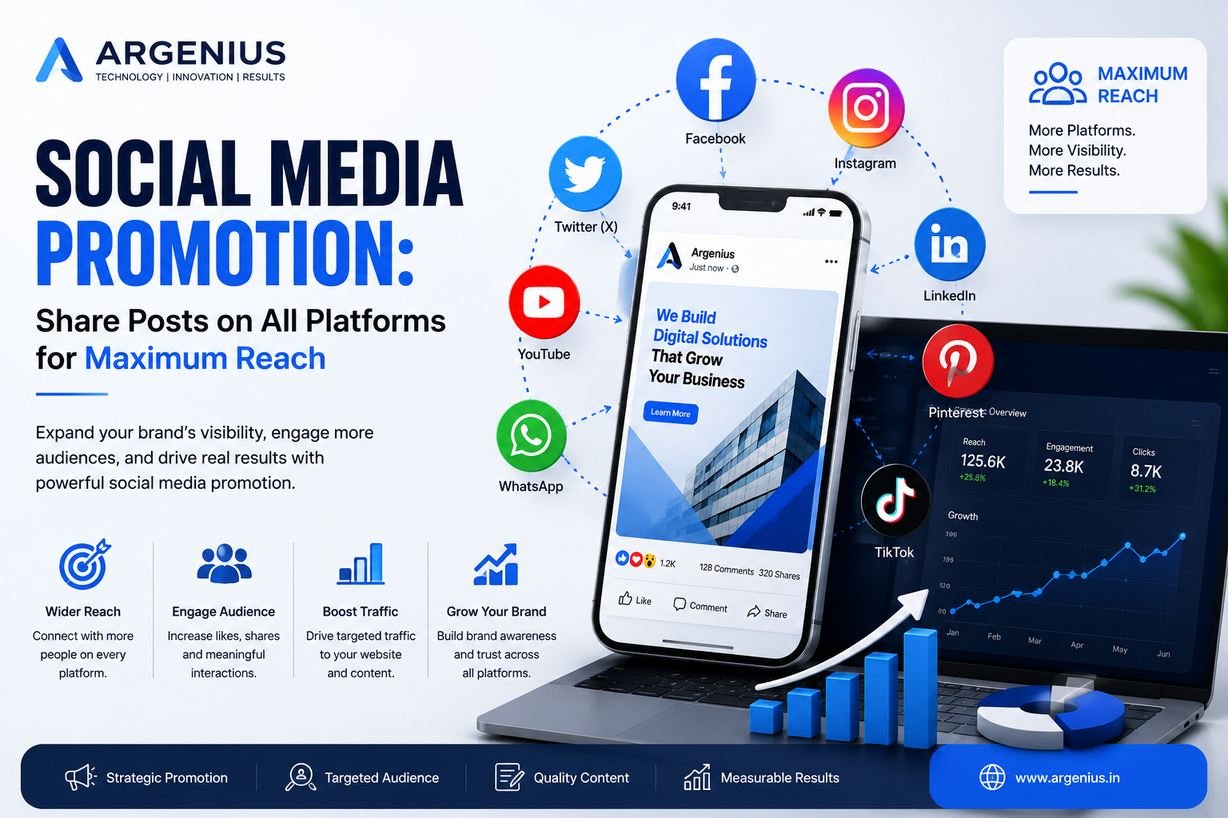
Planning to expand your business globally? This complete International SEO Guide explains how to optimize your website for multiple countries and languages using hreflang tags, multilingual content, country targeting, technical SEO, and localization strategies to improve international search rankings and attract customers worldwide.
Introduction
Expanding your business beyond your home country opens the door to millions of potential customers—but reaching those audiences requires more than simply translating your website. Search behavior, language preferences, cultural differences, and Google's regional search results all influence how users discover businesses online.
This is where International SEO becomes essential.
Whether you're selling products globally, offering SaaS solutions, providing professional services, or operating an ecommerce store, International SEO helps search engines understand which version of your website should be shown to users in different countries and languages.
Many businesses make the mistake of publishing translated content without considering technical SEO factors such as hreflang tags, country targeting, URL structure, localized keyword research, and regional content optimization. As a result, Google may display the wrong language version to users or struggle to determine which page should rank in a particular market.
A successful International SEO strategy combines technical optimization with localized content, ensuring that users in every target region receive the most relevant experience.
In this comprehensive guide, you'll learn everything about International SEO, including multilingual websites, country targeting, hreflang implementation, URL structures, localization, technical SEO, and proven strategies for ranking across multiple countries and languages.
At Argenius, we help businesses build scalable international SEO strategies that improve global visibility, attract qualified traffic, and support long-term international growth.
What is International SEO?
International SEO is the process of optimizing a website so that search engines can identify the countries and languages your content is intended for.
Its primary goal is to ensure that users in different regions are shown the most relevant version of your website based on their location and language preferences.
Unlike traditional SEO, which focuses on one target market, International SEO enables businesses to reach customers across multiple countries while delivering localized experiences.
A properly implemented international strategy helps search engines understand:
- Which language a page is written in
- Which country a page targets
- Which website version users should see
- How different regional pages relate to one another
This improves user experience while reducing duplicate content and indexing issues.
Why is International SEO Important?
Businesses expanding globally face unique SEO challenges.
Without a proper international strategy, your website may:
- Display the wrong language
- Rank in the wrong country
- Create duplicate content problems
- Reduce conversion rates
- Confuse search engines
A well-planned International SEO strategy helps:
- Increase Global Organic Traffic
- Improve Country-Specific Rankings
- Reach International Customers
- Enhance User Experience
- Improve Conversion Rates
- Strengthen Brand Visibility
- Build Global Authority
- Support International Business Growth
Who Needs International SEO?
International SEO is valuable for businesses targeting customers in multiple countries or languages.
Examples include:
- Ecommerce Brands
- SaaS Companies
- Software Development Companies
- Digital Marketing Agencies
- Educational Platforms
- Travel Companies
- Immigration Consultants
- Export Businesses
- Global Manufacturers
- Online Learning Platforms
- International Law Firms
- Healthcare Providers
If your business serves customers in more than one country or language, International SEO should be part of your digital marketing strategy.
How International SEO Works
Google determines which version of your website to show based on several factors:
- User Location
- Browser Language
- Search Language
- hreflang Tags
- URL Structure
- Content Relevance
- Regional Backlinks
- Local Search Signals
A successful international strategy aligns all of these elements to provide the best experience for users in every market.
Country Targeting vs Language Targeting
Many businesses confuse country targeting with language targeting, but they serve different purposes.
Country Targeting
Country targeting focuses on users in a specific geographic region.
Examples:
- United States
- India
- Canada
- Australia
- Germany
This approach is useful when products, pricing, regulations, or services vary by country.
Language Targeting
Language targeting focuses on the language users prefer, regardless of their location.
Examples:
- English
- Hindi
- Spanish
- French
- German
- Arabic
Language targeting is ideal when the same content is available in multiple languages.
Choosing the Right URL Structure
The way you organize your international website affects SEO performance.
Common structures include:
Country Code Top-Level Domains (ccTLDs)
Examples:
- example.in
- example.co.uk
- example.de
Advantages
- Strong country signals
- High local trust
Disadvantages
- Higher maintenance costs
- Separate authority for each domain
Subdomains
Examples:
- us.example.com
- fr.example.com
Useful for businesses managing regional websites independently.
Subdirectories (Recommended for Most Businesses)
Examples:
- example.com/us/
- example.com/in/
- example.com/fr/
Benefits include:
- Easier management
- Shared domain authority
- Better scalability
- Lower maintenance costs
Google supports all three structures, but subdirectories are often the most practical choice for growing businesses.
What is hreflang?
One of the most important technical elements of International SEO is the hreflang attribute.
hreflang tells Google which language and regional version of a page should be shown to users.
For example:
- English (United States)
- English (United Kingdom)
- Hindi (India)
- French (France)
Proper implementation helps prevent users from seeing the wrong language version of your website.
Benefits of hreflang
Correct hreflang implementation helps:
- Improve User Experience
- Reduce Duplicate Content
- Increase International Rankings
- Improve Country Targeting
- Help Google Understand Website Structure
- Deliver the Correct Language Version
Incorrect hreflang implementation can negatively affect your international search performance.
Localized Keyword Research
Directly translating keywords rarely produces the best SEO results.
Instead, research how users actually search within each country.
For example:
A keyword that performs well in India may be completely different from the preferred search term in the UK or Australia, even if both audiences speak English.
Localized keyword research improves:
- Search Intent Matching
- Organic Visibility
- Conversion Rates
- User Experience
Content Localization
Localization goes beyond translation.
Effective localization includes:
- Currency
- Date Formats
- Units of Measurement
- Local Examples
- Cultural References
- Images
- Pricing
- Contact Information
Localized content builds trust and improves engagement.
Technical SEO for International Websites
A technically optimized international website should include:
- hreflang Tags
- XML Sitemap
- HTTPS
- Fast Website Speed
- Mobile Optimization
- Clean URL Structure
- Canonical Tags
- Structured Data
- Internal Linking
- Crawl Optimization
Technical SEO ensures that search engines can efficiently crawl and index every language version.
Multilingual SEO Best Practices
Creating content in multiple languages requires more than simply translating text. Every language version should provide a natural, localized experience while remaining technically optimized for search engines.
Best Practices
- Create high-quality native content instead of machine-only translations
- Use dedicated URLs for each language
- Implement hreflang tags correctly
- Translate metadata (titles and descriptions)
- Localize images where appropriate
- Adapt currencies, dates, and measurements
- Use language-specific keywords
- Maintain consistent internal linking
A well-executed multilingual strategy improves user satisfaction and increases international rankings.
International Link Building
Backlinks remain one of Google's strongest ranking factors, even for international websites.
To rank well in different countries, earn links from trusted websites within each target region rather than relying solely on links from your home country.
Effective Global Link Building Strategies
- Guest Posting on Regional Websites
- International Digital PR
- Country-Specific Business Directories
- Industry Partnerships
- Local Influencer Collaborations
- Regional News Publications
- International Resource Pages
- Educational & Government Links (where relevant)
- Country-Specific Case Studies
- Local Community Sponsorships
Building geographically relevant backlinks strengthens authority within each target market.
Geo-Targeting
Geo-targeting allows search engines to understand which country your content is intended for.
You can strengthen country targeting through:
- Country-specific domains or subdirectories
- hreflang implementation
- Localized content
- Regional backlinks
- Country-specific contact details
- Local currency and pricing
- Local customer testimonials
- Google Business Profile (where applicable)
These signals help Google deliver the correct version of your website to users in different locations.
Google Search Console for International SEO
Google Search Console is one of the most valuable tools for monitoring your international website.
Use it to:
- Monitor indexing status
- Identify crawl errors
- Submit XML Sitemaps
- Analyze country-specific performance
- Track international keywords
- Detect hreflang issues
- Review Core Web Vitals
- Improve crawl efficiency
Regular monitoring ensures technical issues are identified before they impact rankings.
International SEO Checklist
Before launching a global website, ensure you have:
- ✅ Country-Specific Keyword Research
- ✅ Localized Content
- ✅ Correct hreflang Tags
- ✅ Optimized URL Structure
- ✅ XML Sitemap for All Languages
- ✅ HTTPS Enabled
- ✅ Mobile-Friendly Design
- ✅ Fast Website Speed
- ✅ Canonical Tags
- ✅ Structured Data
- ✅ Regional Backlinks
- ✅ Internal Linking Between Language Versions
- ✅ Local Contact Information
- ✅ Local Currency & Date Formats
- ✅ Google Search Console Monitoring
A comprehensive checklist reduces technical errors and improves international visibility.
Best Tools for International SEO
Professional SEO teams commonly use the following tools:
- Google Search Console
- Google Analytics 4
- Google Keyword Planner
- Google Trends
- Ahrefs
- Semrush
- Screaming Frog SEO Spider
- DeepL Translator
- WPML (WordPress)
- Cloudflare CDN
These tools support keyword research, technical optimization, localization, and performance tracking.
Cost of International SEO (₹ INR)
The cost of International SEO depends on the number of countries, languages, website size, and the level of localization required.
| Service |
Estimated Cost |
| Basic International SEO Setup |
₹30,000 – ₹60,000 |
| Single Country Expansion |
₹50,000 – ₹1,00,000 |
| Multi-Country SEO Campaign |
₹1,00,000 – ₹3,00,000+ |
| Enterprise Global SEO |
Custom Pricing |
Factors Affecting Cost
Pricing depends on:
- Number of Target Countries
- Number of Languages
- Website Size
- Translation & Localization
- Technical SEO Complexity
- Content Creation
- Link Building
- Ongoing SEO Maintenance
International SEO is a long-term investment that supports sustainable global growth.
International SEO Best Practices
For long-term success, follow these proven strategies:
- Conduct country-specific keyword research
- Localize content instead of directly translating it
- Use hreflang correctly
- Maintain a consistent URL structure
- Optimize website speed globally using a CDN
- Build local backlinks
- Publish market-specific content
- Monitor international search performance regularly
- Keep XML Sitemaps updated
- Continuously improve user experience
Consistency across technical SEO, content, and localization leads to stronger international rankings.
Common International SEO Mistakes
Many businesses struggle with international expansion because of avoidable mistakes.
Common issues include:
- Using automatic translations without review
- Incorrect hreflang implementation
- Targeting multiple countries with identical content
- Ignoring local keyword research
- Poor URL structure
- Missing localized metadata
- Duplicate content across language versions
- Slow website performance in international regions
- Weak internal linking
- Ignoring cultural differences
Avoiding these mistakes improves both rankings and user trust.
Future Trends in International SEO
Global search continues to evolve with AI and changing search behavior.
Key trends include:
- Google AI Overviews
- Generative Engine Optimization (GEO)
- AI-Assisted Content Localization
- Entity-Based Search
- Voice Search Across Multiple Languages
- Hyper-Personalized Search Results
- International E-E-A-T Signals
- Visual Search
- AI Translation Improvements
- Cross-Border Ecommerce Growth
Businesses that embrace these trends will be better positioned to compete in international markets.
Why Businesses Choose Argenius
At Argenius, we help businesses expand beyond local markets with scalable International SEO strategies that improve global visibility and drive qualified traffic from multiple countries.
Our International SEO services include:
- International SEO Strategy
- Country & Language Targeting
- hreflang Implementation
- Multilingual SEO
- Technical SEO Optimization
- International Keyword Research
- Content Localization
- Global Link Building
- International SEO Audits
- Performance Monitoring & Reporting
Our goal is to help businesses reach the right audience in the right country with the right language—while maximizing organic growth and ROI.
Final Thoughts
Expanding into international markets requires more than translating your website. A successful International SEO strategy combines technical excellence, localized content, market-specific keyword research, and a user-first approach to ensure that search engines deliver the right version of your website to the right audience.
By implementing hreflang, choosing the right URL structure, optimizing for multiple languages, building regional authority, and continuously monitoring performance, businesses can improve global search visibility and connect with customers across different countries.
International SEO is an ongoing process. As markets evolve, user behavior changes, and search engines introduce new technologies, continuous optimization becomes essential for long-term success.
If your business is ready to reach new international markets and grow its global presence, Argenius can help you build a customized International SEO strategy that supports sustainable expansion.
Frequently Asked Questions
What is International SEO?
International SEO is the process of optimizing a website so search engines can identify the countries and languages it targets, helping the correct content appear in regional search results.
What is the difference between multilingual SEO and International SEO?
Multilingual SEO focuses on optimizing content in multiple languages, while International SEO includes language optimization along with country targeting, localization, and technical configurations such as hreflang.
What are hreflang tags?
hreflang tags tell search engines which language and regional version of a page should be shown to users, improving user experience and reducing duplicate content issues.
Which URL structure is best for International SEO?
For many businesses, subdirectories (for example, /us/, /uk/, /fr/) offer a balance of scalability, easier management, and shared domain authority. However, the ideal structure depends on your business goals and technical requirements.
How long does International SEO take to show results?
Most websites start seeing meaningful improvements within 4–8 months, although timelines vary based on competition, website authority, content quality, and the number of target markets.
Does Argenius provide International SEO services?
Yes. Argenius offers comprehensive International SEO services, including multilingual SEO, hreflang implementation, localization, technical SEO, international keyword research, content optimization, and ongoing performance monitoring.