Keyword Research is the foundation of every successful SEO strategy. This complete guide explains how to find low-competition, high-volume keywords, analyze search intent, research competitors, and use professional SEO tools to drive more organic traffic and improve Google rankings.
Introduction
Every successful SEO campaign starts with one critical step: Keyword Research. No matter how well-designed your website is or how informative your content may be, it won't generate consistent organic traffic if you're targeting the wrong keywords.
Many website owners make the mistake of chasing highly competitive keywords with massive search volumes. While these keywords may look attractive, they are often dominated by established brands with years of authority and thousands of backlinks. As a result, newer websites struggle to rank and see little return on their SEO efforts.
The smarter approach is to identify low-competition, high-volume keywords that align with your audience's search intent. These keywords provide a better opportunity to rank faster, attract qualified visitors, and generate meaningful business results.
Effective keyword research goes beyond simply finding popular search terms. It involves understanding what users are looking for, analyzing competitors, evaluating keyword difficulty, and selecting opportunities that support your business goals.
Modern SEO also requires considering AI-powered search experiences, conversational queries, and topical authority. Search engines increasingly reward websites that provide comprehensive, helpful content rather than pages built around repetitive keyword usage.
Whether you're managing a business website, ecommerce store, SaaS platform, blog, or local service website, mastering keyword research is essential for sustainable organic growth.
In this complete guide, you'll learn how to find low-competition, high-volume keywords, analyze search intent, use professional keyword research tools, evaluate competitors, and build an SEO strategy that improves rankings, traffic, and conversions.
At Argenius, we use advanced keyword research techniques to help businesses target valuable search opportunities that drive qualified traffic and long-term growth.
What is Keyword Research?
Keyword Research is the process of discovering and analyzing the words and phrases people use when searching for information, products, or services on search engines like Google.
Instead of guessing what users might search for, keyword research provides real data that helps businesses create content aligned with user intent.
It includes identifying:
- High-Volume Keywords
- Low-Competition Keywords
- Long-Tail Keywords
- Commercial Keywords
- Informational Keywords
- Transactional Keywords
- Local Keywords
- Question-Based Keywords
The goal is to target search terms that bring qualified visitors who are more likely to engage, convert, or make a purchase.
Why is Keyword Research Important?
Choosing the right keywords influences every aspect of your SEO strategy.
Benefits include:
- Higher Organic Traffic
- Better Google Rankings
- Qualified Website Visitors
- Higher Conversion Rates
- Lower SEO Competition
- Improved Content Planning
- Better User Experience
- Stronger Topical Authority
- Sustainable Long-Term Growth
- Higher Return on Investment (ROI)
Without proper keyword research, even high-quality content may fail to reach its intended audience.
Understanding Search Intent
Search intent refers to the reason behind a user's search query. Google prioritizes content that best matches this intent.
The four primary types of search intent are:
Informational Intent
Users want to learn something.
Examples:
- What is SEO?
- How does keyword research work?
- Benefits of content marketing
Navigational Intent
Users are looking for a specific website or brand.
Examples:
- Argenius SEO Services
- Google Search Console
- Ahrefs Login
Commercial Investigation
Users are comparing options before making a decision.
Examples:
- Best SEO tools
- Semrush vs Ahrefs
- Best website development company
Transactional Intent
Users are ready to take action.
Examples:
- Hire SEO agency
- Buy keyword research tool
- SEO services pricing
Matching your content to the correct search intent significantly improves ranking potential.
What are Low-Competition Keywords?
Low-competition keywords are search terms with relatively fewer websites competing for top positions in search results.
These keywords are ideal for:
- New Websites
- Small Businesses
- Local Companies
- Blogs
- Startups
- Niche Industries
Ranking for several low-competition keywords often generates more sustainable traffic than targeting one extremely competitive keyword.
What are High-Volume Keywords?
High-volume keywords receive a significant number of monthly searches.
Examples:
- Website Development
- SEO Services
- Digital Marketing
- Ecommerce Website
- Mobile App Development
While attractive, these keywords usually have higher competition.
The ideal strategy is to combine high search volume with manageable competition.
Understanding Keyword Difficulty
Keyword Difficulty estimates how challenging it will be to rank on the first page of Google.
Factors affecting difficulty include:
- Domain Authority
- Backlink Profiles
- Content Quality
- Search Intent
- Topical Authority
- Competition Level
For newer websites, targeting low-to-medium difficulty keywords generally delivers better results.
Long-Tail Keywords
Long-tail keywords are longer, more specific search phrases.
Example:
Instead of:
SEO
Target:
- Affordable SEO services for startups
- SEO agency for ecommerce websites
- Technical SEO services in India
- Best SEO company for small businesses
Long-tail keywords often:
- Convert Better
- Have Lower Competition
- Match User Intent
- Rank Faster
Seed Keywords
Every keyword research project starts with seed keywords.
Examples for a software company:
- Website Development
- Mobile App Development
- SEO Services
- Digital Marketing
- Ecommerce Development
- UI/UX Design
Seed keywords help generate hundreds of related opportunities.
Competitor Keyword Analysis
Analyzing competitors helps identify keywords already driving traffic within your industry.
Look for:
- Top Ranking Pages
- Target Keywords
- Backlinks
- Content Structure
- Featured Snippets
- Internal Linking
Studying successful competitors can reveal valuable opportunities without copying their content.
Keyword Metrics to Evaluate
When selecting keywords, consider:
- Monthly Search Volume
- Keyword Difficulty
- Search Intent
- Cost Per Click (CPC)
- Organic Competition
- Trend Analysis
- Business Relevance
- Conversion Potential
Choosing keywords based on multiple metrics leads to more balanced SEO decisions.
Keyword Clustering
Instead of creating one page for every keyword, group related keywords into topical clusters.
Example:
Primary Keyword:
Keyword Research Guide
Supporting Keywords:
- SEO Keyword Research
- Keyword Difficulty
- Search Intent
- Long-Tail Keywords
- Keyword Analysis
- Competitor Research
This approach builds topical authority and reduces keyword cannibalization.
Keyword Research for Local SEO
Local businesses should include location-based keywords.
Examples:
- SEO company in Ahmedabad
- Website developer in Mumbai
- Best digital marketing agency in Delhi
- Ecommerce development company near me
Location-specific keywords attract users with strong purchase intent.
Free Keyword Research Tools
Excellent free tools include:
- Google Keyword Planner
- Google Search Console
- Google Trends
- Google Autocomplete
- People Also Ask
- Google Related Searches
These tools provide valuable keyword ideas without requiring a paid subscription.
Paid Keyword Research Tools
Professional SEO teams commonly use:
- Ahrefs
- Semrush
- Moz Keyword Explorer
- SE Ranking
- Mangools
- Ubersuggest
These platforms offer deeper insights into keyword difficulty, competitor rankings, backlinks, and traffic potential.
Step-by-Step Keyword Research Process
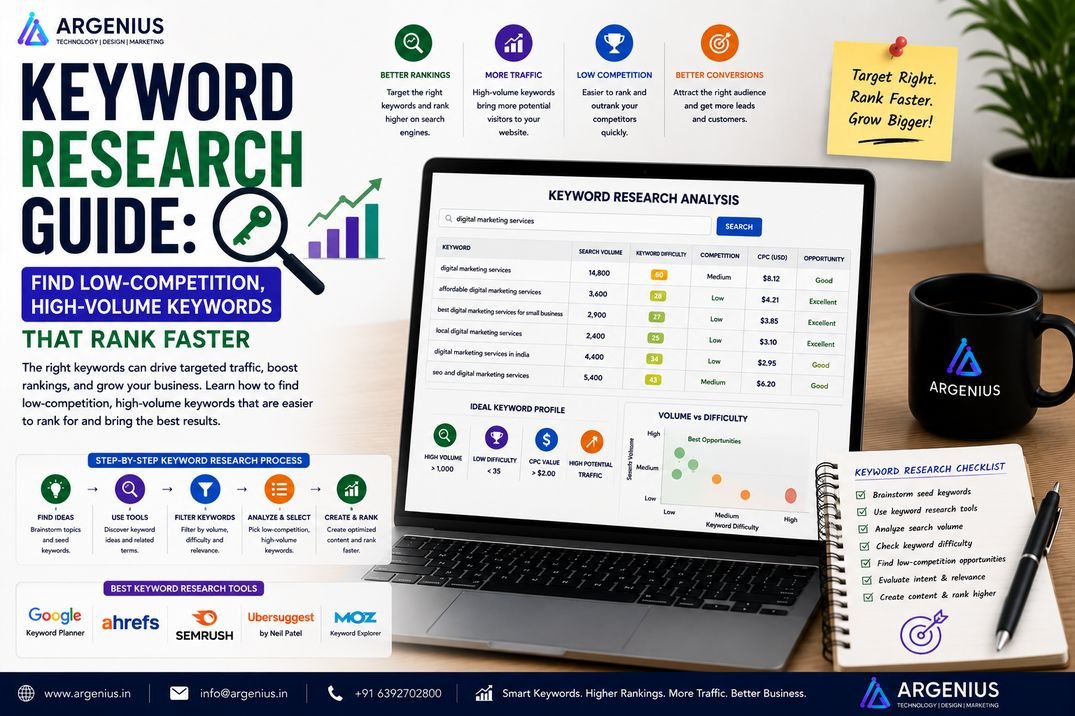
A structured keyword research process helps you discover search terms that bring qualified traffic and improve rankings.
Step 1: Understand Your Business Goals
Before researching keywords, identify:
- Your Target Audience
- Products or Services
- Customer Pain Points
- Business Objectives
- Target Locations
Choosing keywords aligned with business goals leads to higher-quality traffic.
Step 2: Create a List of Seed Keywords
Seed keywords are broad topics related to your business.
Example for a software company:
- Website Development
- Mobile App Development
- Ecommerce Development
- SEO Services
- Digital Marketing
- UI/UX Design
These keywords become the foundation for discovering hundreds of related opportunities.
Step 3: Expand Keyword Ideas
Use keyword research tools to generate variations.
Look for:
- Long-Tail Keywords
- Question-Based Searches
- Local Keywords
- Product Keywords
- Service Keywords
- Commercial Keywords
Expanding your keyword list ensures broader topical coverage.
Step 4: Analyze Search Intent
Ask yourself:
- Is the user looking for information?
- Are they comparing products or services?
- Are they ready to make a purchase?
- Are they searching for a local business?
Matching search intent increases ranking potential and conversion rates.
Step 5: Evaluate Keyword Metrics
Before selecting a keyword, analyze:
- Monthly Search Volume
- Keyword Difficulty
- Competition
- Cost Per Click (CPC)
- Search Trend
- Business Relevance
A balanced combination of search volume and manageable competition often produces the best results.
Step 6: Analyze Competitors
Study websites already ranking for your target keywords.
Review:
- Content Quality
- Page Structure
- Internal Linking
- Backlinks
- Featured Snippets
- FAQs
Competitor analysis reveals opportunities to create better, more comprehensive content.
Step 7: Group Keywords into Clusters
Instead of targeting one keyword per page, organize related terms into content clusters.
Example:
Primary Keyword:
Keyword Research Guide
Supporting Keywords:
- SEO Keyword Research
- Keyword Difficulty
- Search Intent
- Long-Tail Keywords
- Keyword Analysis
- Keyword Planner
This approach improves topical authority and reduces keyword cannibalization.
Keyword Research Checklist
Before publishing content, verify the following:
- ✅ Focus Keyword Selected
- ✅ Search Intent Matches Content
- ✅ Low Competition
- ✅ Good Monthly Search Volume
- ✅ Business Relevance
- ✅ Long-Tail Keywords Included
- ✅ Supporting Keywords Added
- ✅ Competitor Analysis Completed
- ✅ Internal Linking Planned
- ✅ SEO Title Optimized
- ✅ Meta Description Written
- ✅ FAQs Included
- ✅ AI-Friendly Content Structure
- ✅ Content Covers User Questions
Following this checklist helps improve content quality and ranking potential.
Best Keyword Research Tools
Professional SEO teams use a combination of free and paid tools.
Free Tools
- Google Keyword Planner
- Google Search Console
- Google Trends
- Google Autocomplete
- People Also Ask
- Google Related Searches
Paid Tools
- Ahrefs
- Semrush
- Moz Keyword Explorer
- SE Ranking
- Mangools
- Ubersuggest
- Keyword Insights
Each tool offers different strengths, so many SEO professionals use multiple platforms together.
Keyword Research for AI Search
Search is evolving beyond traditional keyword matching. AI-powered platforms such as Google AI Overviews, ChatGPT, Gemini, and Perplexity focus more on understanding topics, entities, and user intent.
To optimize for AI search:
- Write comprehensive content
- Cover related subtopics
- Answer common questions
- Use natural language
- Build topical authority
- Add structured headings
- Include FAQs
- Support claims with accurate information
Rather than optimizing for a single keyword, create content that thoroughly answers the user's problem.
Cost of Keyword Research Services (₹ INR)
Professional keyword research pricing depends on your industry, competition, website size, and business goals.
| Service |
Estimated Cost |
| Basic Keyword Research |
₹5,000 – ₹15,000 |
| Small Business SEO Strategy |
₹15,000 – ₹35,000 |
| Comprehensive Keyword Research |
₹35,000 – ₹75,000 |
| Enterprise SEO Strategy |
Custom Pricing |
Factors Affecting Cost
Pricing depends on:
- Industry Competition
- Number of Target Keywords
- Competitor Analysis
- Website Size
- Geographic Targeting
- Content Strategy
- Keyword Clustering
- Ongoing SEO Planning
A strong keyword strategy reduces wasted SEO efforts and creates a roadmap for sustainable organic growth.
Keyword Research Best Practices
For long-term SEO success:
- Focus on user intent before search volume
- Target low-competition opportunities first
- Use long-tail keywords
- Create topic clusters
- Monitor keyword trends regularly
- Update keyword strategy every few months
- Optimize existing content
- Combine SEO data with business goals
- Balance informational and commercial keywords
- Track keyword performance using Search Console
Consistent research helps maintain rankings as search behavior evolves.
Common Keyword Research Mistakes
Avoid these common mistakes:
- Targeting only high-volume keywords
- Ignoring search intent
- Stuffing keywords unnaturally
- Not analyzing competitors
- Choosing irrelevant keywords
- Ignoring local search opportunities
- Creating multiple pages for the same keyword
- Not updating keyword strategy
- Relying on one keyword tool
- Ignoring AI search optimization
Avoiding these issues improves both rankings and user experience.
Future Trends in Keyword Research
Keyword research is becoming more intelligent with advancements in AI and semantic search.
Key trends include:
- Google AI Overviews
- Generative Engine Optimization (GEO)
- Entity-Based SEO
- Semantic Search
- Voice Search Queries
- Conversational Keywords
- Predictive Search
- Topic Clustering
- AI-Powered Keyword Suggestions
- Search Intent Optimization
Businesses that adapt to these trends will be better prepared for the future of search.
Why Businesses Choose Argenius
At Argenius, we build keyword strategies that focus on business growth—not just rankings.
Our Keyword Research Services include:
- Comprehensive Keyword Research
- Low-Competition Keyword Discovery
- Competitor Keyword Analysis
- Search Intent Mapping
- Keyword Clustering
- Content Strategy Development
- Local SEO Keyword Research
- Technical SEO Planning
- Content Gap Analysis
- Monthly SEO Performance Reporting
Our goal is to help businesses target keywords that attract qualified visitors, improve search visibility, and generate measurable results.
Final Thoughts
Successful SEO begins with choosing the right keywords. Instead of chasing the most competitive search terms, focus on identifying low-competition, high-volume keywords that align with your audience's needs and business objectives.
By combining search intent analysis, competitor research, long-tail keywords, and keyword clustering, you can create content that ranks more effectively and attracts visitors who are more likely to convert. As search engines continue to evolve toward AI-driven experiences, comprehensive and user-focused content will become even more valuable.
Keyword research isn't a one-time activity—it should be an ongoing process that evolves with market trends, user behavior, and your business goals. If you're looking to build a data-driven SEO strategy, Argenius can help with professional keyword research and content planning tailored to your industry.
Frequently Asked Questions
What is keyword research?
Keyword research is the process of finding and analyzing search terms people use in search engines to help create content that attracts relevant organic traffic.
What are low-competition keywords?
Low-competition keywords are search terms with fewer websites competing for top rankings, making them easier for newer or smaller websites to rank for.
Why are long-tail keywords important?
Long-tail keywords are more specific, usually have lower competition, better search intent, and often result in higher conversion rates than broad keywords.
How often should keyword research be updated?
Review and update your keyword strategy every 3–6 months, or whenever you launch new products, services, or content campaigns.
Which is the best keyword research tool?
There isn't a single best tool. Many SEO professionals use Google Keyword Planner, Google Search Console, Ahrefs, and Semrush together for comprehensive keyword analysis.
Does Argenius provide keyword research services?
Yes. Argenius provides complete Keyword Research services, including competitor analysis, keyword clustering, search intent mapping, content strategy, Local SEO keyword planning, and ongoing SEO optimization.