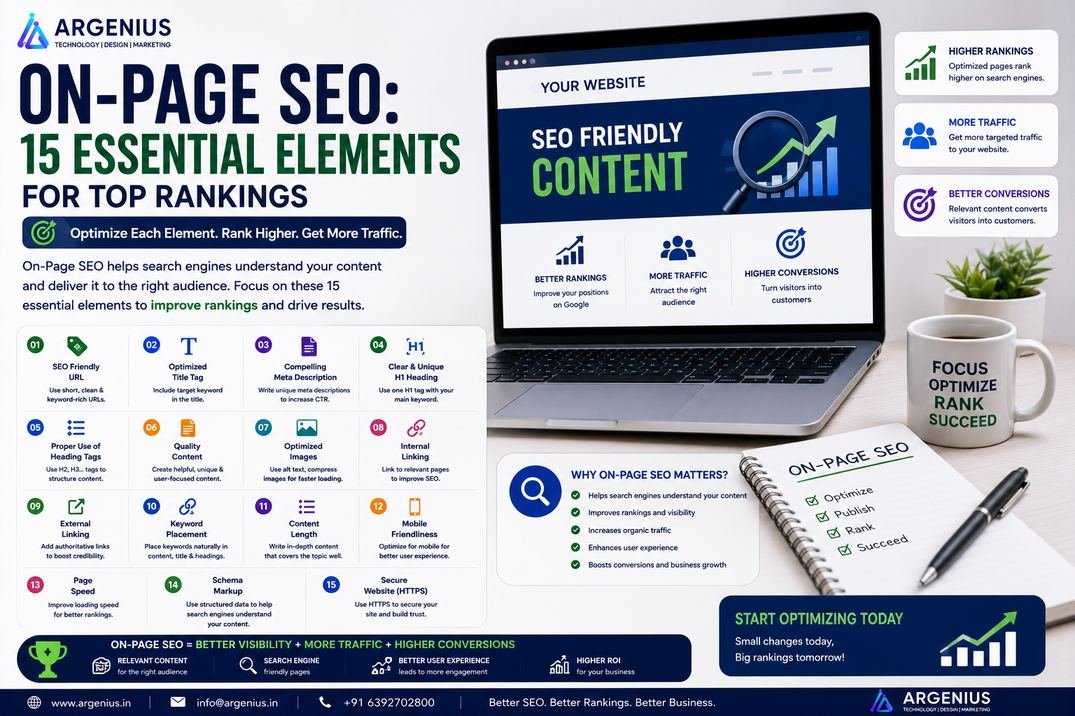
On-page SEO is the foundation of every successful SEO strategy. This complete guide explains the 15 essential on-page SEO elements that help improve search rankings, increase organic traffic, enhance user experience, and optimize content for Google and AI-powered search.
On-page SEO is one of the most important aspects of search engine optimization because it directly influences how search engines understand your website and how users interact with your content. Even if your website has high-quality backlinks and a strong domain authority, poor on-page optimization can prevent your pages from achieving their full ranking potential.
Today's search engines evaluate far more than just keywords. Google considers content quality, user experience, page speed, internal linking, structured data, mobile usability, search intent, and many other factors when determining rankings. At the same time, AI-powered search platforms like Google AI Overviews, ChatGPT, Gemini, and Perplexity increasingly favor well-structured, comprehensive, and trustworthy content.
For beginners, on-page SEO may seem overwhelming because it involves multiple elements working together. However, once you understand the essential components and follow a consistent optimization process, improving your website becomes much easier.
In this guide, you'll learn the 15 essential on-page SEO elements that every website should implement to improve search visibility, attract qualified traffic, and deliver a better user experience.
Whether you're running a business website, ecommerce store, blog, SaaS platform, or portfolio, mastering on-page SEO is one of the best long-term investments for organic growth.
At Argenius, we help businesses optimize every page of their website using proven on-page SEO strategies that improve rankings, increase traffic, and generate more leads.
What is On-Page SEO?
On-page SEO refers to the process of optimizing individual web pages so they rank higher in search engines and provide a better experience for users.
Unlike off-page SEO, which focuses on backlinks and external authority, on-page SEO deals with everything you can control directly on your website.
Its primary objectives are:
- Improve Search Rankings
- Increase Organic Traffic
- Enhance User Experience
- Improve Content Quality
- Increase Click-Through Rate (CTR)
- Improve Website Engagement
- Support AI Search Visibility
- Increase Conversions
A properly optimized page makes it easier for both users and search engines to understand the purpose of your content.
Why On-Page SEO is Important
Every page on your website competes with thousands of similar pages. Proper optimization helps search engines determine why your content deserves to rank.
Benefits include:
- Better Google Rankings
- Higher Organic Traffic
- Improved User Experience
- Better Indexing
- Increased Page Authority
- Higher Conversion Rates
- Lower Bounce Rate
- Better Core Web Vitals
- Increased Brand Trust
- Long-Term Organic Growth
The 15 Essential On-Page SEO Elements
A successful SEO strategy depends on optimizing multiple elements together rather than focusing on just one factor.
1. SEO-Friendly Title Tag
The title tag is often the first thing users see in search results.
Best practices:
- Include Primary Keyword
- Keep Length Between 50–60 Characters
- Make It Compelling
- Avoid Keyword Stuffing
2. Optimized Meta Description
A well-written meta description increases click-through rates.
Guidelines:
- Around 150–160 Characters
- Include Primary Keyword Naturally
- Explain the Page Clearly
- Encourage Users to Click
3. SEO-Friendly URL Structure
Keep URLs:
- Short
- Descriptive
- Readable
- Keyword-Focused
- Hyphen-Separated
Example:
4. High-Quality Content
Content remains the strongest ranking factor.
Good content should be:
- Original
- Helpful
- Comprehensive
- Well Structured
- Easy to Read
- User-Focused
5. Proper Heading Structure
Organize content using:
- H2 Sections
- H3 Subsections
- Logical Hierarchy
- Keyword-Relevant Headings
Avoid multiple H1 tags on the same page.
6. Keyword Optimization
Place keywords naturally in:
- Introduction
- Headings
- Body Content
- URL
- Title
- Meta Description
- Image Alt Text
Never overuse keywords.
7. Internal Linking
Internal links help search engines discover pages while guiding users to related content.
Benefits include:
- Better Crawling
- Improved Page Authority
- Increased Time on Site
- Lower Bounce Rate
8. External Links
Linking to trustworthy sources improves credibility.
Link to:
- Government Websites
- Official Documentation
- Research Studies
- Industry Leaders
9. Image Optimization
Images improve engagement but should also be optimized.
Checklist:
- Compress Images
- Descriptive File Names
- Alt Text
- Responsive Images
- Modern Formats (WebP/AVIF)
10. Mobile Optimization
Most searches now happen on mobile devices.
Ensure:
- Responsive Design
- Fast Loading
- Touch-Friendly Navigation
- Readable Fonts
- Proper Spacing
11. Page Speed Optimization
Fast websites improve rankings and user satisfaction.
Focus on:
- Image Compression
- Browser Caching
- Lazy Loading
- Minified CSS & JavaScript
- CDN Usage
12. Core Web Vitals
Google uses Core Web Vitals to measure page experience.
Important metrics:
- Largest Contentful Paint (LCP)
- Interaction to Next Paint (INP)
- Cumulative Layout Shift (CLS)
Improving these metrics contributes to better user experience and SEO performance.
13. Schema Markup
Structured data helps search engines better understand your content.
Useful schema types:
- Article
- FAQ
- Organization
- Product
- Breadcrumb
- Local Business
Schema can improve eligibility for rich search results.
14. User Experience (UX)
Google rewards websites that provide a positive user experience.
Improve UX by:
- Simplifying Navigation
- Using Clear CTAs
- Improving Readability
- Reducing Clutter
- Enhancing Accessibility
15. Search Intent Optimization
Every page should satisfy the reason behind a user's search.
Types of search intent include:
- Informational
- Navigational
- Commercial Investigation
- Transactional
Matching content to user intent improves rankings and conversions.
Common On-Page SEO Mistakes
Avoid these common issues:
- Keyword Stuffing
- Duplicate Content
- Missing Meta Tags
- Broken Internal Links
- Slow Website Speed
- Thin Content
- Poor Mobile Experience
- Missing Image Alt Text
- Weak Heading Structure
- Ignoring Search Intent
Recommended SEO Tools
Popular tools include:
- Google Search Console
- Google Analytics 4
- PageSpeed Insights
- Screaming Frog SEO Spider
- Ahrefs
- Semrush
- Rank Math
- Yoast SEO
- Surfer SEO
- Google Rich Results Test
Complete On-Page SEO Workflow
A structured On-Page SEO workflow ensures every page is fully optimized before publication. Following a repeatable process helps improve Google rankings, organic traffic, and user experience.
Typical workflow:
- Perform Keyword Research
- Identify Search Intent
- Create SEO-Friendly Title Tag
- Write Meta Description
- Optimize URL Structure
- Create High-Quality Content
- Add Internal Links
- Optimize Images
- Implement Schema Markup
- Improve Page Speed
- Test Mobile Responsiveness
- Publish & Monitor Performance
A consistent workflow reduces SEO errors and improves long-term rankings.
Content Optimization Strategy
Creating content isn't enough—it must be optimized for both users and search engines.
A successful Content SEO Strategy includes:
- Write for Search Intent
- Use Primary Keywords Naturally
- Include Secondary Keywords
- Cover the Topic in Depth
- Use Short Paragraphs
- Add Bullet Points
- Include Statistics & Examples
- Answer Frequently Asked Questions
- Optimize Images
- Update Content Regularly
Comprehensive content is more likely to rank well and be referenced by AI-powered search engines.
EEAT Implementation
Google evaluates content based on Experience, Expertise, Authoritativeness, and Trustworthiness (EEAT).
Improve EEAT by:
- Demonstrating Real Experience
- Publishing Original Research
- Citing Trusted Sources
- Displaying Author Information
- Maintaining Accurate Content
- Updating Older Articles
- Building Brand Authority
- Showcasing Client Success Stories
- Adding Testimonials
- Using Secure HTTPS Websites
Strong EEAT signals improve credibility and long-term SEO performance.
AI SEO & GEO Optimization
Search is evolving beyond traditional search engines. Platforms like Google AI Overviews, ChatGPT, Gemini, and Perplexity prefer content that is structured, comprehensive, and easy to understand.
Best practices include:
- Answer Questions Clearly
- Use Conversational Language
- Create Comprehensive Guides
- Add FAQ Sections
- Use Proper Heading Structure
- Include Relevant Statistics
- Implement Schema Markup
- Build Topical Authority
- Optimize for Featured Snippets
- Update Content Frequently
Combining SEO with Generative Engine Optimization (GEO) increases visibility across both search engines and AI assistants.
Complete On-Page SEO Checklist
Before publishing any page, ensure it includes:
- ✅ Optimized SEO Title
- ✅ Compelling Meta Description
- ✅ Primary Focus Keyword
- ✅ Related Secondary Keywords
- ✅ SEO-Friendly URL
- ✅ Proper Heading Structure
- ✅ High-Quality Content
- ✅ Internal Links
- ✅ External Links
- ✅ Optimized Images
- ✅ Image Alt Text
- ✅ Fast Page Speed
- ✅ Mobile-Friendly Design
- ✅ Schema Markup
- ✅ Clear Call-to-Action (CTA)
Following this checklist helps maximize search visibility.
On-Page SEO Audit Process
Regular audits help maintain and improve website performance.
A typical audit process includes:
- Review Title Tags
- Check Meta Descriptions
- Analyze Keyword Usage
- Test Page Speed
- Verify Mobile Responsiveness
- Check Internal Linking
- Find Broken Links
- Validate Schema Markup
- Review Core Web Vitals
- Monitor Rankings & Organic Traffic
Monthly SEO audits help identify optimization opportunities before rankings decline.
Cost of On-Page SEO (₹ INR)
The cost of On-Page SEO depends on website size, number of pages, industry competition, and optimization requirements.
| Service |
Estimated Cost |
| Basic Website On-Page SEO |
₹10,000 – ₹25,000 |
| Business Website SEO |
₹25,000 – ₹60,000 |
| Ecommerce On-Page SEO |
₹50,000 – ₹1,50,000 |
| Enterprise SEO Optimization |
₹1,50,000+ (Custom Pricing) |
Factors Affecting Cost
Pricing depends on:
- Website Size
- Number of Pages
- Content Quality
- Industry Competition
- Technical SEO Requirements
- CMS Platform
- Existing Website Health
- Schema Implementation
- Core Web Vitals Optimization
- Reporting & Maintenance
On-Page SEO Best Practices
Follow these proven practices for long-term success:
- Write for Users First
- Optimize Every Page Individually
- Use Natural Keyword Placement
- Create Original Content
- Improve Core Web Vitals
- Use Schema Markup
- Maintain Strong Internal Linking
- Optimize Every Image
- Keep Content Updated
- Track SEO Performance Regularly
Consistent optimization produces better rankings over time.
Common On-Page SEO Mistakes to Avoid
Avoid these common mistakes:
- Keyword Stuffing
- Duplicate Content
- Missing Meta Descriptions
- Weak Title Tags
- Poor Internal Linking
- Slow Website Speed
- Large Image Files
- Thin Content
- Ignoring Search Intent
- Not Updating Old Content
Eliminating these issues improves both rankings and user experience.
Future Trends in On-Page SEO
The future of On-Page SEO is closely tied to AI, user experience, and semantic search.
Key trends include:
- AI-Powered Search
- Google AI Overviews
- Generative Engine Optimization (GEO)
- Voice Search Optimization
- Entity-Based SEO
- Semantic Search
- Core Web Vitals
- Zero-Click Searches
- Structured Data Expansion
- Personalized Search Results
Businesses that adopt these trends early will have a competitive advantage.
Why Businesses Choose Argenius
At Argenius, we don't just optimize pages for rankings—we optimize them for traffic, lead generation, and business growth.
Our On-Page SEO Services include:
- Complete SEO Audit
- Keyword Research
- Content Optimization
- Meta Tag Optimization
- Internal Linking Strategy
- Schema Markup
- Image SEO
- Core Web Vitals Optimization
- Technical SEO Improvements
- Monthly SEO Reporting
Whether you're running a business website, ecommerce store, SaaS platform, or blog, Argenius builds customized on-page SEO strategies that deliver measurable results.
Final Thoughts
On-Page SEO is the foundation of every successful SEO campaign. By optimizing elements such as title tags, meta descriptions, content, URLs, internal links, images, Core Web Vitals, and schema markup, you make it easier for both users and search engines to understand and trust your website.
SEO is not a one-time activity—it requires continuous monitoring, regular content updates, and ongoing optimization to keep pace with changing algorithms and user behavior.
If you're looking to improve your website's visibility and generate sustainable organic traffic, Argenius can help you implement a data-driven on-page SEO strategy that delivers long-term results.
Frequently Asked Questions
What is On-Page SEO?
On-Page SEO is the process of optimizing individual web pages—including content, titles, meta descriptions, URLs, images, and internal links—to improve search engine rankings and user experience.
How many keywords should I use on a page?
Focus on one primary keyword and naturally include several secondary keywords where they fit contextually. Avoid keyword stuffing.
Is On-Page SEO enough to rank on Google?
No. While On-Page SEO is essential, it should be combined with Technical SEO, Off-Page SEO, high-quality content, and a strong user experience for the best results.
How often should I update On-Page SEO?
Review and update important pages every 3–6 months or whenever there are significant algorithm updates, new competitors, or changes in user search behavior.
What is the most important On-Page SEO factor?
There isn't a single ranking factor. High-quality content, proper search intent, optimized title tags, strong internal linking, and excellent Core Web Vitals all play a crucial role.
Does Argenius provide On-Page SEO services?
Yes. Argenius offers complete On-Page SEO, Technical SEO, Content Optimization, Schema Markup, Core Web Vitals Optimization, and long-term SEO strategies for businesses of all sizes.