Learn how Question-Based Keywords help websites rank for real user queries, improve Featured Snippets, increase organic traffic, and optimize content for Google, ChatGPT, Gemini, and AI-powered search engines.
Introduction
Every day, billions of people use search engines to ask questions. Instead of searching with short keywords like "SEO" or "website development," users now search with complete questions such as "What is SEO?", "How much does website development cost?", or "Which programming language is best for mobile app development?"
This shift in search behavior has transformed modern SEO.
Today, Google focuses on understanding user intent and delivering the most helpful answer—not simply matching keywords. This is why Question-Based Keywords have become one of the most effective ways to attract targeted organic traffic.
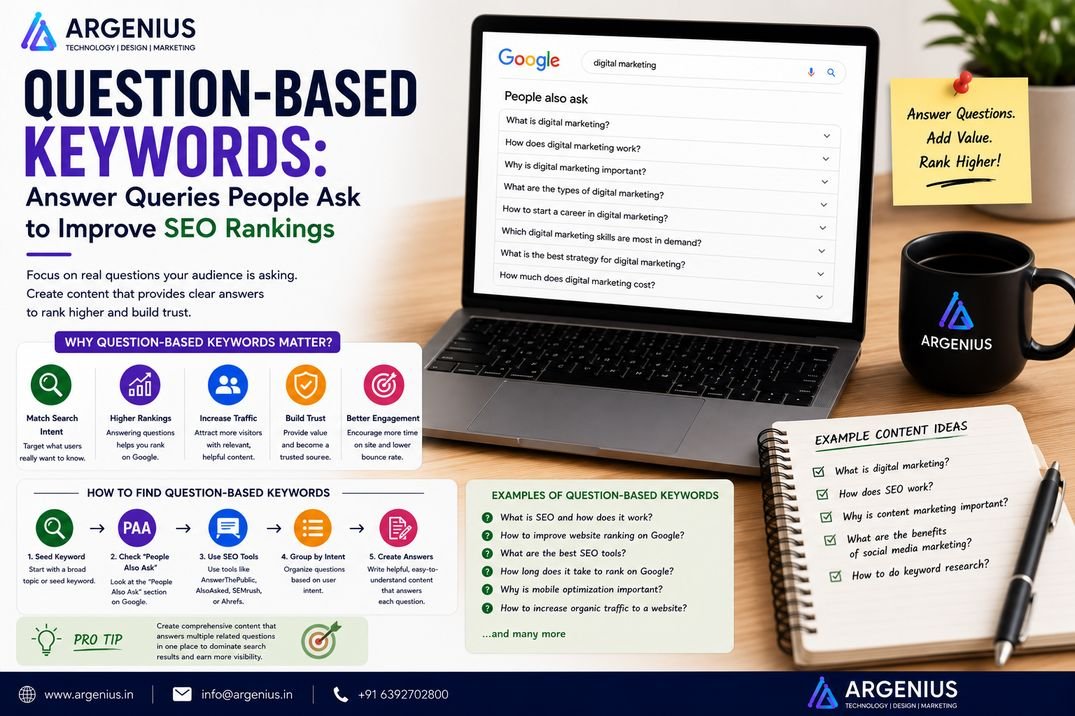
Question-based keywords are search queries written in the form of questions. They typically begin with words like What, Why, How, When, Where, Who, Which, and Can. These queries often represent users who are actively looking for answers before making a decision.
They are also essential for ranking in Google's Featured Snippets, People Also Ask (PAA) results, Voice Search, and AI-powered search platforms such as Google AI Overviews, ChatGPT, Gemini, and Perplexity.
For businesses, answering real customer questions helps build trust, establish expertise, and improve visibility throughout the customer journey. Whether you run a software company, ecommerce store, healthcare business, educational website, or local service agency, creating content around question-based keywords can significantly improve your SEO performance.
In this guide, you'll learn what Question-Based Keywords are, why they matter, how to find them, and how to use them effectively to increase rankings, organic traffic, and conversions.
At Argenius, we create SEO content strategies that answer real customer questions while improving search visibility and generating qualified business leads.
What are Question-Based Keywords?
Question-Based Keywords are search queries written as questions that users type or speak into search engines to find specific answers.
Examples include:
- What is SEO?
- How does Local SEO work?
- Why is keyword research important?
- Which CMS is best for ecommerce?
- Where can I hire Flutter developers?
- When should I update my website?
- Can AI improve SEO?
These keywords reveal user intent and help businesses create content that directly answers what potential customers want to know.
Why are Question-Based Keywords Important?
Question-based content offers several SEO advantages.
Benefits include:
- Better Search Intent Matching
- Higher Organic Rankings
- Increased Featured Snippet Opportunities
- Improved People Also Ask Visibility
- Better Voice Search Performance
- Increased User Engagement
- Stronger Topical Authority
- Higher Trust and Credibility
- More Qualified Traffic
- Better AI Search Visibility
When your content provides clear and accurate answers, search engines are more likely to recommend it.
Types of Question-Based Keywords
Different question formats represent different stages of the customer journey.
What Questions
Used by users seeking definitions or basic understanding.
Examples:
- What is Technical SEO?
- What is a CRM?
- What is Cloud Computing?
How Questions
Focused on learning a process.
Examples:
- How to optimize a website for SEO?
- How does Google rank websites?
- How to create a mobile app?
Why Questions
Users want explanations or reasons.
Examples:
- Why is SEO important?
- Why does website speed matter?
- Why should businesses invest in Local SEO?
Which Questions
Used for comparisons and decision-making.
Examples:
- Which CMS is best?
- Which SEO tools are worth using?
- Which programming language should I learn?
When Questions
Focused on timing.
Examples:
- When should I redesign my website?
- When should I publish blog content?
- When is the best time for SEO?
Where Questions
Usually have local or navigational intent.
Examples:
- Where can I hire a web developer?
- Where can I buy SEO tools?
- Where to find Local SEO experts?
Can Questions
Often relate to possibilities or capabilities.
Examples:
- Can SEO increase sales?
- Can AI replace SEO?
- Can a small business rank on Google?
Why Google Loves Question-Based Content
Google aims to provide the best possible answer to every search query.
Well-written question-based content:
- Matches user intent
- Improves content relevance
- Increases Featured Snippet opportunities
- Enhances user experience
- Supports AI-generated answers
- Builds topical authority
This makes question-focused content an essential part of modern SEO.
Question-Based Keywords vs Traditional Keywords
| Traditional Keyword |
Question-Based Keyword |
| SEO Services |
What are SEO Services? |
| Website Development |
How much does Website Development cost? |
| Flutter Development |
Why choose Flutter for app development? |
| CRM Software |
Which CRM Software is best for small businesses? |
Question-based keywords often attract users earlier in the buying journey and help nurture them toward conversion.
How to Find Question-Based Keywords
You can discover valuable questions using:
- Google People Also Ask
- Google Autocomplete
- Google Search Console
- Google Related Searches
- Ahrefs
- Semrush
- AnswerThePublic
- AlsoAsked
- Reddit
- Quora
- Customer Support Tickets
- Sales Team FAQs
These sources reveal the exact questions your audience is asking.
Question Keywords and AI Search
AI-powered search engines prioritize content that answers user questions clearly and accurately.
To improve AI visibility:
- Answer questions directly
- Use descriptive headings
- Add FAQ sections
- Cover related subtopics
- Use conversational language
- Keep information accurate and updated
These practices improve your chances of being referenced by Google AI Overviews and conversational AI platforms.
Common Industries That Benefit
Question-based SEO works well for:
- SaaS Companies
- Software Agencies
- Ecommerce Stores
- Healthcare
- Finance
- Education
- Travel
- Real Estate
- Law Firms
- Local Businesses
Any business whose customers ask questions before purchasing can benefit from this strategy.
Step-by-Step Strategy for Using Question-Based Keywords
A successful SEO strategy built around Question-Based Keywords starts with understanding what your audience wants to know and creating content that provides clear, accurate, and valuable answers.
Step 1: Understand Your Audience
Identify the questions your potential customers ask before making a decision.
Examples include:
- What is Website Development?
- How much does SEO cost?
- Which CMS is best?
- Why does page speed matter?
- Can AI improve digital marketing?
The better you understand your audience, the more relevant your content becomes.
Step 2: Find High-Value Question Keywords
Use keyword research tools to discover real questions users search for.
Research:
- Search Volume
- Keyword Difficulty
- Search Intent
- CPC
- Related Questions
- Featured Snippet Opportunities
Focus on questions that are relevant to your business and services.
Step 3: Group Similar Questions
Instead of creating separate pages for every question, organize related queries into one comprehensive guide.
Example:
Primary Topic: Website Development
Supporting Questions:
- What is Website Development?
- How does Website Development work?
- Why is Website Development important?
- How much does Website Development cost?
- Which technologies are used?
This creates stronger topical authority and avoids duplicate content.
Step 4: Provide Direct Answers
Answer each question clearly within the first few sentences.
Best practices include:
- Keep answers concise initially.
- Expand with detailed explanations afterward.
- Use bullet points where appropriate.
- Include examples and practical tips.
Clear answers improve your chances of appearing in Featured Snippets and People Also Ask results.
Step 5: Optimize Heading Structure
Use question-based headings naturally throughout your content.
Examples:
- What are Question-Based Keywords?
- Why are Question Keywords Important?
- How Can You Find Question Keywords?
- Which SEO Tools Are Best?
A logical heading structure improves readability for both users and search engines.
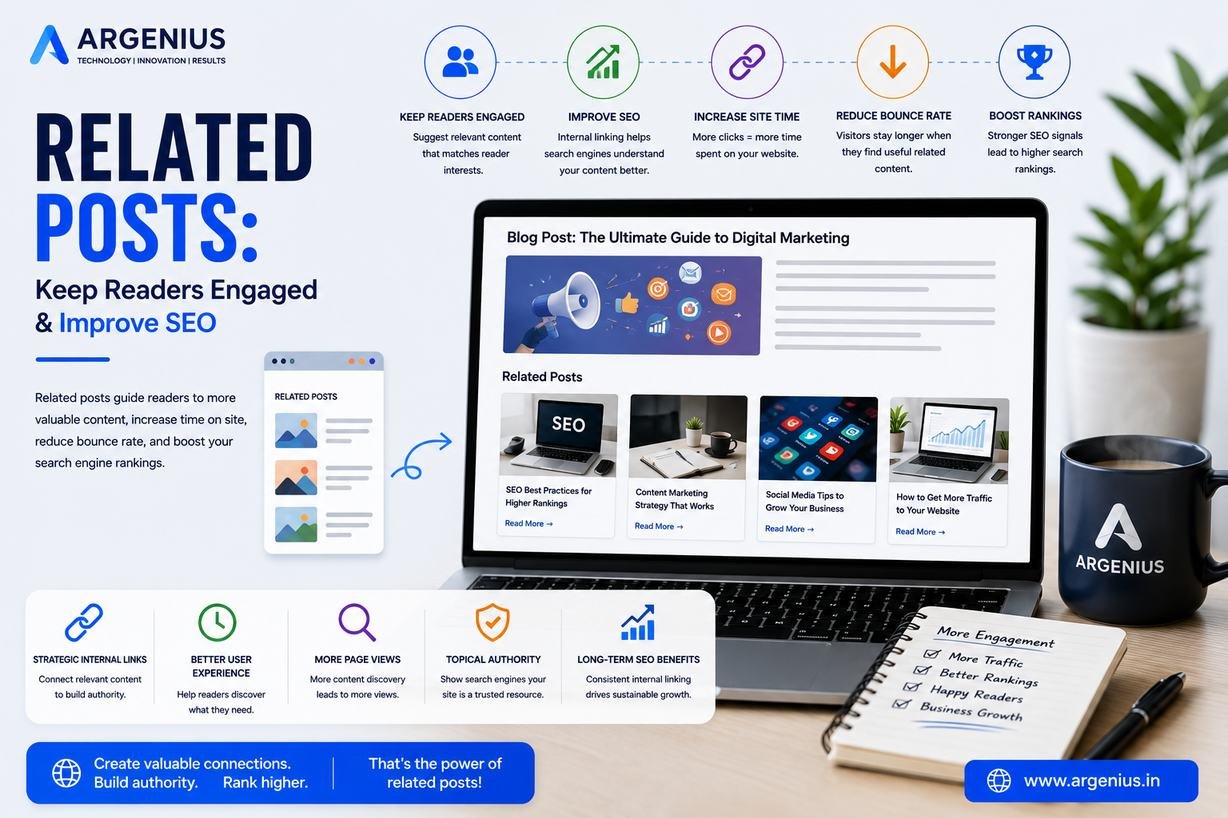
Step 6: Strengthen Internal Linking
Connect question-based content with related pages such as:
- Service Pages
- Blog Articles
- Case Studies
- Resource Guides
- Category Pages
Internal links help search engines understand your content relationships and improve topical authority.
Step 7: Measure Performance
Track important SEO metrics, including:
- Organic Traffic
- Featured Snippet Rankings
- People Also Ask Visibility
- Click-Through Rate (CTR)
- Average Position
- User Engagement
- Conversion Rate
Review performance regularly and update content based on user behavior and search trends.
Question-Based SEO Checklist
Before publishing, ensure your content includes:
- ✅ Primary Question Keyword
- ✅ Related Questions
- ✅ Search Intent Coverage
- ✅ Direct Answers
- ✅ Optimized Headings
- ✅ FAQ Section
- ✅ Internal Links
- ✅ Mobile-Friendly Layout
- ✅ Fast Page Speed
- ✅ Updated Metadata
- ✅ Structured Data (FAQ Schema where appropriate)
- ✅ Clear Call-to-Action
Following this checklist improves both user experience and SEO performance.
Best Tools for Finding Question-Based Keywords
Free Tools
- Google People Also Ask
- Google Search
- Google Autocomplete
- Google Search Console
- Google Related Searches
- Google Trends
Premium Tools
- Ahrefs
- Semrush
- AnswerThePublic
- AlsoAsked
- SE Ranking
- Moz Pro
These tools help identify common questions, search trends, and keyword opportunities.
Question-Based Keywords for AI Search
Modern AI-powered search engines are designed to answer user questions directly.
To improve visibility in Google AI Overviews, ChatGPT, Gemini, and Perplexity:
- Write in a conversational style.
- Answer questions clearly and accurately.
- Cover related subtopics.
- Include comprehensive FAQ sections.
- Update information regularly.
- Use structured headings.
- Demonstrate expertise with reliable information.
Question-focused content is one of the strongest formats for AI-driven search experiences.
Cost of Question-Based SEO Services (₹ INR)
The cost of creating question-focused SEO content depends on the level of research, content depth, and optimization required.
| Service |
Estimated Cost |
| Question Keyword Research |
₹5,000 – ₹15,000 |
| FAQ Content Strategy |
₹10,000 – ₹25,000 |
| Complete Question-Based SEO Campaign |
₹25,000 – ₹60,000 |
| Enterprise SEO & Content Planning |
Custom Pricing |
Factors Affecting Cost
Pricing depends on:
- Industry Competition
- Number of Target Questions
- Content Length
- Search Intent Analysis
- Technical SEO
- Schema Markup
- Competitor Research
- Ongoing Content Updates
Investing in question-based content helps businesses attract highly engaged users and improve long-term organic visibility.
Question-Based SEO Best Practices
To maximize results:
- Research real user questions
- Answer questions naturally
- Focus on search intent
- Use clear and descriptive headings
- Build topic clusters
- Add FAQ sections
- Strengthen internal linking
- Keep content updated
- Optimize for Featured Snippets
- Use conversational language
These practices improve both search visibility and user satisfaction.
Common Mistakes to Avoid
Avoid these common mistakes:
- Answering questions vaguely
- Ignoring search intent
- Stuffing question keywords unnaturally
- Creating thin FAQ pages
- Publishing duplicate questions
- Forgetting internal links
- Ignoring mobile optimization
- Not updating outdated information
- Overlooking structured data
- Focusing only on search volume instead of user value
Helpful, well-structured answers consistently outperform shallow content.
Future Trends in Question-Based SEO
As search evolves, question-focused content will become even more valuable.
Key trends include:
- Google AI Overviews
- Generative Engine Optimization (GEO)
- Conversational Search
- Voice Search
- Entity-Based SEO
- AI-Powered Answer Engines
- Featured Snippet Optimization
- Zero-Click Searches
- Topical Authority
- Personalized Search Experiences
Businesses that consistently answer customer questions will be better positioned for future search experiences.
Why Businesses Choose Argenius
At Argenius, we create SEO content strategies built around real customer questions and search intent.
Our Question-Based SEO Services include:
- Question Keyword Research
- People Also Ask Analysis
- Search Intent Mapping
- FAQ Content Development
- Content Strategy
- Technical SEO
- On-Page SEO Optimization
- Internal Linking Strategy
- Schema Markup Implementation
- Monthly SEO Performance Reports
Our goal is to help businesses become trusted information sources while generating qualified organic traffic and business leads.
Final Thoughts
Question-Based Keywords are one of the most effective ways to create content that aligns with how people search today. Users increasingly ask complete questions instead of typing short keywords, and search engines prioritize pages that provide clear, trustworthy, and comprehensive answers.
By identifying real customer questions, organizing them into topic clusters, and publishing high-quality content, businesses can improve rankings, capture Featured Snippets, appear in People Also Ask results, and increase visibility across AI-powered search platforms.
As conversational search continues to grow, businesses that focus on answering user questions—not just targeting keywords—will build stronger authority and achieve more sustainable SEO success. Argenius helps organizations develop question-driven content strategies that improve rankings, increase engagement, and drive long-term business growth.
Frequently Asked Questions
What are Question-Based Keywords?
Question-Based Keywords are search queries written as questions, such as "What is SEO?" or "How does Local SEO work?", that help businesses create content matching user search intent.
Why are Question-Based Keywords important for SEO?
They improve search intent matching, increase opportunities to rank in Featured Snippets and People Also Ask, and help websites attract highly relevant organic traffic.
How can I find Question-Based Keywords?
You can use Google People Also Ask, Google Autocomplete, Google Search Console, AnswerThePublic, AlsoAsked, Ahrefs, and Semrush to discover real questions users search for.
Do Question-Based Keywords help with Voice Search?
Yes. Since voice searches are usually phrased as natural questions, optimizing for question-based keywords can improve visibility in voice search results.
Should every blog include an FAQ section?
Whenever relevant, adding an FAQ section helps answer additional user questions, improves content depth, and may enhance visibility in search results.
Does Argenius provide Question-Based SEO services?
Yes. Argenius offers Question Keyword Research, People Also Ask Optimization, FAQ Content Strategy, Search Intent Analysis, Technical SEO, and Complete Content Marketing Services to help businesses improve search visibility and generate qualified leads.