Seasonal Keywords help businesses capture traffic during holidays, festivals, events, and peak buying seasons. Learn how to identify trending search topics, build a seasonal content strategy, and improve SEO rankings with timely, high-intent content.
Introduction
Search behavior changes throughout the year. The keywords people search in January are often very different from those they search during Diwali, Black Friday, Christmas, New Year, summer vacations, tax season, or back-to-school periods. Businesses that understand these changing search patterns can attract significantly more organic traffic by creating content at the right time.
This is where Seasonal Keywords become an essential part of a successful SEO strategy.
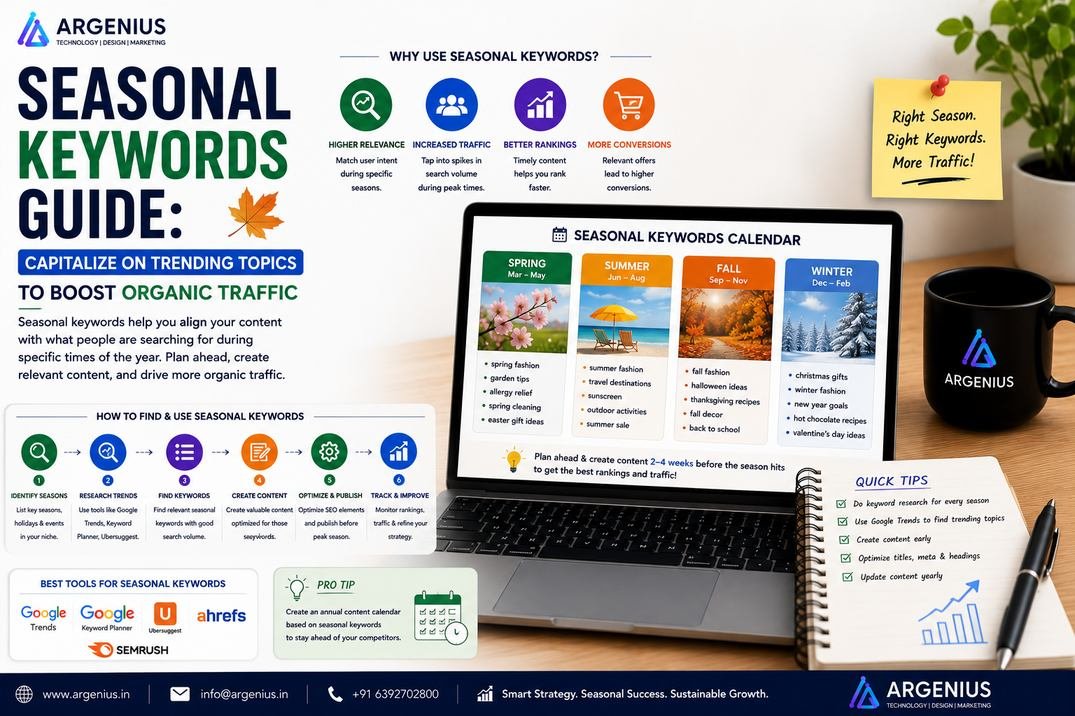
Seasonal keywords are search terms that experience predictable increases in search volume during specific times of the year. They may be related to holidays, festivals, shopping events, weather changes, sports tournaments, educational admissions, financial deadlines, or industry-specific trends.
For example, searches for "Black Friday Deals", "Christmas Gift Ideas", "Summer Vacation Packages", "Income Tax Filing", or "Diwali Offers" increase dramatically during particular seasons. By publishing optimized content before these search spikes occur, businesses can capture valuable organic traffic while competition is still manageable.
Seasonal SEO is no longer limited to ecommerce websites. Service-based businesses, SaaS companies, healthcare providers, educational institutions, travel agencies, financial firms, and local businesses can all benefit from identifying and targeting seasonal search opportunities.
With the rise of Google AI Overviews, ChatGPT, Gemini, and Perplexity, creating timely, comprehensive, and contextually relevant content has become even more important. AI-powered search systems prioritize fresh, authoritative information that matches current user interests and seasonal trends.
In this guide, you'll learn how to identify Seasonal Keywords, analyze search trends, plan content calendars, optimize for holidays and events, and create an SEO strategy that consistently drives qualified traffic throughout the year.
At Argenius, we help businesses build seasonal SEO campaigns that maximize visibility during peak demand periods and generate long-term organic growth.
What are Seasonal Keywords?
Seasonal Keywords are search terms that gain popularity during specific periods of the year due to predictable events, holidays, festivals, weather changes, shopping seasons, or recurring industry trends.
Unlike evergreen keywords, seasonal keywords experience fluctuations in search demand depending on the time of year.
Examples include:
- Black Friday Deals
- Christmas Gifts
- Diwali Offers
- Summer Travel Packages
- Valentine's Day Gifts
- New Year Fitness Plans
- Tax Filing Services
- Back-to-School Supplies
Understanding these trends helps businesses publish the right content before search demand reaches its peak.
Why are Seasonal Keywords Important?
Seasonal keyword optimization provides several business advantages.
Benefits include:
- Higher Organic Traffic During Peak Seasons
- Better Google Rankings
- Increased Conversion Rates
- Improved Brand Visibility
- More Qualified Visitors
- Better Content Planning
- Higher ROI
- Increased Sales Opportunities
- Stronger Local SEO Campaigns
- Long-Term SEO Growth
Businesses that prepare content early often outperform competitors who react after the trend has already peaked.
Evergreen Keywords vs Seasonal Keywords
| Evergreen Keywords |
Seasonal Keywords |
| Consistent search volume |
Search volume changes throughout the year |
| Relevant year-round |
Relevant during specific seasons |
| Long-term traffic |
Peak traffic during seasonal events |
| Stable rankings |
Requires timely optimization |
| Continuous updates |
Event-specific updates |
A balanced SEO strategy should include both evergreen and seasonal content.
Types of Seasonal Keywords
Different industries benefit from different types of seasonal search trends.
Holiday Keywords
Examples:
- Christmas Offers
- Black Friday Deals
- New Year Sale
- Valentine's Day Gifts
Festival Keywords
Examples:
- Diwali Decoration Ideas
- Holi Celebration Tips
- Eid Gift Ideas
- Thanksgiving Recipes
Weather-Based Keywords
Examples:
- Summer Clothing
- Winter Jackets
- Monsoon Travel Tips
- Air Conditioner Repair
Education Keywords
Examples:
- College Admission Process
- Online Courses
- Exam Preparation
- Scholarship Applications
Finance Keywords
Examples:
- Income Tax Filing
- Tax Saving Investments
- Financial Year Planning
- Budget Planning
Travel Keywords
Examples:
- Summer Vacation Packages
- Winter Destinations
- Holiday Travel Deals
- Family Tour Packages
Industry-Specific Seasonal Keywords
Every business has unique seasonal opportunities.
For example:
Software Companies:
- CRM Software for Small Businesses
- Year-End Business Automation
- New Financial Year ERP Solutions
Healthcare:
- Flu Vaccination
- Allergy Treatment
- Summer Health Tips
Real Estate:
- Best Time to Buy a Home
- Property Investment Trends
How Search Trends Change Throughout the Year
Search demand follows predictable patterns.
Examples include:
- January → Fitness & New Year Resolutions
- February → Valentine's Day
- March–April → Tax Filing
- May–June → Summer Travel
- August → Back-to-School
- October–November → Diwali & Black Friday
- December → Christmas & Year-End Shopping
Understanding this cycle allows businesses to prepare content before competitors.
How to Find Seasonal Keywords
You can discover seasonal opportunities using:
- Google Trends
- Google Search Console
- Google Autocomplete
- Google Related Searches
- Keyword Planner
- Ahrefs
- Semrush
- Industry News
- Social Media Trends
- Customer FAQs
Combining multiple data sources helps identify both recurring and emerging trends.
Planning a Seasonal Content Calendar
Instead of publishing content at the last minute, prepare a yearly content calendar.
Include:
- Holiday Campaigns
- Product Launches
- Industry Events
- Local Festivals
- Shopping Seasons
- Promotional Campaigns
Publishing content several weeks before peak demand gives Google enough time to crawl, index, and rank your pages.
Seasonal Keywords and AI Search
AI-powered search platforms increasingly prioritize fresh and timely information.
To optimize for AI search:
- Publish content early
- Update existing pages annually
- Cover related subtopics
- Answer seasonal questions
- Add FAQs
- Build topic clusters
- Use natural language
This improves visibility in Google AI Overviews, ChatGPT, Gemini, and Perplexity.
Common Industries That Benefit Most
Seasonal SEO works especially well for:
- Ecommerce
- Travel
- Education
- Healthcare
- Finance
- Real Estate
- Food & Restaurants
- Fashion
- Software Companies
- Local Businesses
Almost every industry has recurring search trends that can be targeted strategically.
Step-by-Step Strategy for Using Seasonal Keywords
A successful seasonal SEO campaign requires planning well before search demand reaches its peak. Follow these steps to maximize visibility and organic traffic.
Step 1: Identify Seasonal Opportunities
Start by listing the events, holidays, or recurring trends that are relevant to your industry.
Examples include:
- New Year
- Valentine's Day
- Holi
- Easter
- Summer Vacation
- Back-to-School
- Independence Day
- Diwali
- Black Friday
- Cyber Monday
- Christmas
- Year-End Sales
Every business has its own seasonal opportunities.
Step 2: Research Seasonal Search Trends
Use keyword research tools to understand:
- Monthly Search Volume
- Peak Search Periods
- Regional Trends
- Search Intent
- Related Questions
- Competitor Rankings
This helps you prioritize the most valuable seasonal keywords.
Step 3: Create a Seasonal Content Calendar
Instead of publishing content when the trend has already peaked, build a yearly SEO calendar.
Include:
- Blog Posts
- Landing Pages
- Product Pages
- Promotional Campaigns
- Local Events
- Industry Conferences
- Festivals
- Shopping Seasons
Publishing content 4–8 weeks before peak demand gives search engines enough time to crawl and rank your pages.
Step 4: Optimize Existing Content
Rather than creating new pages every year, update your existing seasonal content.
Refresh:
- Statistics
- Dates
- Images
- Pricing
- Offers
- FAQs
- Internal Links
- Meta Titles
- Meta Descriptions
Fresh content is more likely to rank during seasonal spikes.
Step 5: Target Search Intent
Different users search with different goals.
Examples:
Informational
- Best Christmas Marketing Ideas
- Summer Skin Care Tips
Commercial
- Best Air Conditioners
- Top Holiday Packages
Transactional
- Buy Christmas Gifts Online
- Book Summer Vacation
Matching content with user intent improves engagement and conversions.
Step 6: Strengthen Internal Linking
Connect seasonal pages with:
- Service Pages
- Product Categories
- Evergreen Blogs
- Case Studies
- Resource Guides
Internal links distribute authority and help search engines discover seasonal content more efficiently.
Step 7: Measure and Improve
Track campaign performance using:
- Organic Traffic
- Keyword Rankings
- CTR
- Bounce Rate
- Conversion Rate
- Revenue
- Indexed Pages
- Search Console Data
Use these insights to improve future seasonal campaigns.
Seasonal SEO Checklist
Before publishing, ensure your campaign includes:
- ✅ Seasonal Keyword Research
- ✅ Search Intent Analysis
- ✅ Content Calendar
- ✅ Updated Metadata
- ✅ Optimized Images
- ✅ Internal Linking
- ✅ Mobile Optimization
- ✅ Fast Page Speed
- ✅ FAQ Section
- ✅ Structured Data (where applicable)
- ✅ Updated Offers
- ✅ Performance Tracking
A structured checklist helps maintain consistency across every seasonal campaign.
Best Tools for Finding Seasonal Keywords
Free Tools
- Google Trends
- Google Search Console
- Google Keyword Planner
- Google Autocomplete
- Google Related Searches
- People Also Ask
Paid Tools
- Ahrefs
- Semrush
- SE Ranking
- Moz Pro
- Ubersuggest
- Exploding Topics
These tools help identify both recurring seasonal opportunities and emerging search trends.
Seasonal SEO for AI Search
Modern AI-powered search platforms prioritize fresh, authoritative, and contextually relevant information.
To optimize for AI-driven search:
- Publish content before peak demand
- Update seasonal pages every year
- Cover related questions
- Add structured FAQs
- Build topic clusters
- Use conversational language
- Demonstrate expertise with accurate information
These practices improve visibility across Google AI Overviews, ChatGPT, Gemini, and Perplexity.
Cost of Seasonal SEO Services (₹ INR)
The investment required for seasonal SEO depends on campaign size, competition, and the amount of content being produced.
| Service |
Estimated Cost |
| Seasonal Keyword Research |
₹5,000 – ₹15,000 |
| Seasonal Content Strategy |
₹15,000 – ₹35,000 |
| Complete Seasonal SEO Campaign |
₹35,000 – ₹75,000 |
| Enterprise Seasonal SEO Management |
Custom Pricing |
Factors Affecting Cost
Pricing is influenced by:
- Industry Competition
- Number of Seasonal Campaigns
- Geographic Targeting
- Content Creation Requirements
- Technical SEO
- Landing Page Optimization
- Competitor Analysis
- Ongoing Reporting
Investing in seasonal SEO can generate significant returns by capturing high-intent traffic during peak demand periods.
Seasonal SEO Best Practices
To maximize results:
- Research trends months in advance
- Publish content early
- Update existing pages instead of creating duplicates
- Combine evergreen and seasonal content
- Focus on user intent
- Optimize images and metadata
- Improve internal linking
- Monitor search trends regularly
- Refresh content annually
- Track performance after every season
These practices help maintain strong visibility year after year.
Common Mistakes to Avoid
Avoid these common seasonal SEO mistakes:
- Publishing content too late
- Ignoring search trend data
- Creating duplicate seasonal pages
- Forgetting to update old content
- Targeting irrelevant seasonal keywords
- Ignoring mobile optimization
- Weak internal linking
- Not tracking campaign performance
- Overusing promotional language
- Failing to refresh content annually
Planning ahead is the key to successful seasonal campaigns.
Future Trends in Seasonal SEO
Seasonal search behavior continues to evolve with AI and changing consumer habits.
Important trends include:
- Google AI Overviews
- Generative Engine Optimization (GEO)
- AI-Powered Search Predictions
- Voice Search
- Hyper-Local Seasonal SEO
- Entity-Based Search
- Real-Time Trend Analysis
- Personalized Search Results
- Topical Authority
- Predictive Content Planning
Businesses that anticipate search demand rather than react to it will gain a competitive advantage.
Why Businesses Choose Argenius
At Argenius, we create seasonal SEO strategies that help businesses capture high-intent traffic during peak demand periods.
Our Seasonal SEO Services include:
- Seasonal Keyword Research
- Content Calendar Planning
- Trend Analysis
- Landing Page Optimization
- Content Creation
- Technical SEO
- Internal Linking Strategy
- Search Intent Optimization
- Performance Tracking
- Monthly SEO Reporting
Our goal is to ensure your business is visible when customers are actively searching for your products or services.
Final Thoughts
Seasonal Keywords offer businesses a powerful opportunity to attract qualified traffic during periods of increased search demand. Whether you're targeting holiday shoppers, travelers, students, or local customers, publishing the right content at the right time can significantly improve visibility, engagement, and conversions.
The most successful seasonal SEO strategies are built on research, preparation, and continuous optimization. By combining trend analysis, content calendars, search intent optimization, and topical authority, businesses can consistently outperform competitors during key seasons.
As AI-powered search engines continue to emphasize freshness and relevance, investing in a well-planned seasonal SEO strategy will become even more valuable. Argenius helps businesses identify seasonal opportunities, create high-quality content, and execute campaigns that deliver measurable long-term results.
Frequently Asked Questions
What are Seasonal Keywords?
Seasonal Keywords are search terms that experience predictable increases in search volume during specific times of the year, such as holidays, festivals, shopping events, or weather-related seasons.
Why are Seasonal Keywords important for SEO?
They help businesses capture high-intent traffic during peak demand periods, leading to increased visibility, higher rankings, and improved conversions.
When should I publish seasonal content?
Ideally, publish and optimize seasonal content 4–8 weeks before the expected increase in search demand so search engines have time to crawl and rank the pages.
Which tools can I use to find Seasonal Keywords?
You can use Google Trends, Google Search Console, Google Keyword Planner, Ahrefs, Semrush, SE Ranking, and Exploding Topics to identify seasonal opportunities.
Should I create new pages every year?
Not always. Updating existing seasonal pages with fresh content, current dates, and new offers is often more effective than creating duplicate pages.
Does Argenius provide Seasonal SEO services?
Yes. Argenius offers Seasonal Keyword Research, Content Calendar Planning, Trend Analysis, Technical SEO, and Content Optimization to help businesses maximize traffic during peak seasons.