Want to learn SEO from scratch? This complete beginner's guide explains everything from keyword research and on-page SEO to technical SEO, backlinks, AI SEO, and ranking strategies that help websites grow organically.
If you've ever wondered why some websites consistently appear at the top of Google while others remain invisible, the answer is often Search Engine Optimization (SEO). SEO is one of the most powerful digital marketing strategies because it helps businesses attract organic traffic without paying for every click.
Every day, billions of searches are performed on Google by people looking for products, services, solutions, and information. Whether someone wants to hire a web development company, buy a smartphone, learn a new skill, or find a nearby restaurant, search engines connect them with the most relevant results. Businesses that optimize their websites effectively are far more likely to be discovered by potential customers.
For beginners, SEO can seem overwhelming. Terms like keywords, backlinks, crawlability, Core Web Vitals, indexing, structured data, and domain authority often make the learning process confusing. The good news is that SEO becomes much easier once you understand the fundamentals and follow a structured approach.
Modern SEO is no longer just about inserting keywords into content. Search engines evaluate hundreds of ranking signals, including content quality, user experience, website speed, mobile responsiveness, technical performance, authority, and trustworthiness. In addition, AI-powered search experiences such as Google AI Overviews, ChatGPT, Gemini, and Perplexity are changing how users discover information, making high-quality, well-structured content more important than ever.
Whether you're a student, blogger, business owner, freelancer, or digital marketer, learning SEO can help you increase website visibility, generate qualified leads, improve brand credibility, and achieve long-term online growth.
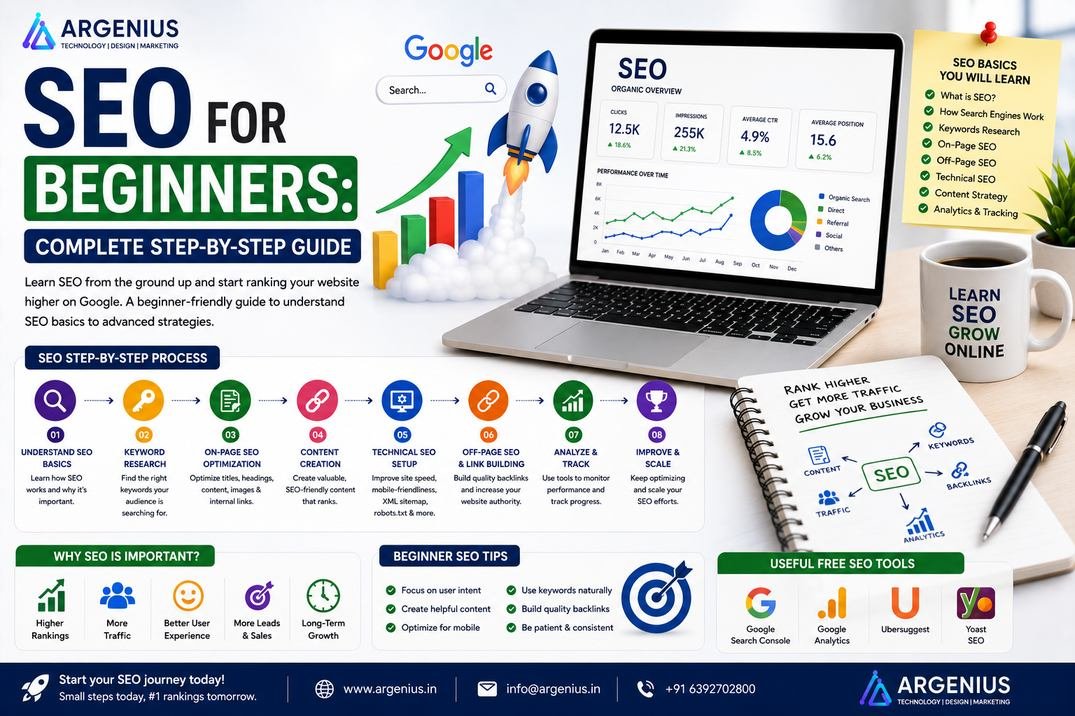
In this complete guide, you'll learn SEO step by step—from understanding how search engines work and finding the right keywords to optimizing pages, building backlinks, improving technical SEO, and measuring results.
At Argenius, we help businesses build SEO strategies that improve search visibility, increase organic traffic, and drive measurable business growth through sustainable digital marketing practices.
What is SEO?
Search Engine Optimization (SEO) is the process of improving a website so that it ranks higher in search engine results for relevant keywords.
The primary objective of SEO is to increase organic (non-paid) traffic by making your website more relevant, authoritative, and user-friendly.
SEO helps search engines understand:
- What your website is about
- Which keywords your pages target
- Whether your content answers user queries
- How trustworthy your website is
- Whether users have a good experience
Unlike paid advertising, SEO focuses on long-term growth by earning visibility naturally.
Why is SEO Important?
SEO is one of the highest ROI digital marketing channels because it continues delivering traffic long after content is published.
Benefits of SEO include:
- Higher Google Rankings
- Increased Organic Traffic
- More Qualified Leads
- Better Brand Visibility
- Higher Website Authority
- Improved User Experience
- Lower Customer Acquisition Cost
- Long-Term Business Growth
- Better Conversion Opportunities
- Increased Revenue
A well-executed SEO strategy helps businesses build sustainable online visibility.
How Search Engines Work
Before optimizing a website, it's important to understand how search engines process information.
The basic SEO workflow includes:
- Crawling
- Indexing
- Ranking
- Displaying Search Results
Search engine bots continuously discover new pages, analyze their content, store them in an index, and rank them based on hundreds of relevance and quality signals.
Types of SEO
SEO consists of several interconnected areas, each contributing to overall website performance.
On-Page SEO
Focuses on optimizing elements within your website.
Examples include:
- Title Tags
- Meta Descriptions
- Headings
- Content
- Internal Links
- Image Optimization
- URL Structure
Off-Page SEO
Builds your website's authority through external signals.
Activities include:
- Backlink Building
- Brand Mentions
- Guest Posting
- Digital PR
- Social Signals
Technical SEO
Improves your website's technical foundation.
Includes:
- Website Speed
- Mobile Optimization
- XML Sitemap
- Robots.txt
- Structured Data
- HTTPS
- Core Web Vitals
Local SEO
Helps businesses appear in location-based searches.
Examples:
- Google Business Profile Optimization
- Local Citations
- Reviews
- Location Pages
- Local Keywords
Ecommerce SEO
Designed specifically for online stores.
Focus areas:
- Product Pages
- Category Pages
- Product Schema
- Internal Linking
- Product Reviews
SEO vs SEM vs PPC
| Feature |
SEO |
SEM |
PPC |
| Traffic |
Organic |
Organic + Paid |
Paid |
| Cost Per Click |
No |
Sometimes |
Yes |
| Long-Term Results |
Excellent |
Moderate |
Limited |
| Time to Results |
Medium |
Fast |
Immediate |
| Sustainability |
High |
Medium |
Low |
White Hat vs Black Hat SEO
| White Hat SEO |
Black Hat SEO |
| Quality Content |
Keyword Stuffing |
| Natural Backlinks |
Paid Spam Links |
| User-Focused |
Search Engine Manipulation |
| Long-Term Growth |
Short-Term Gains |
| Google Approved |
Risk of Penalties |
Following ethical SEO practices ensures long-term success and protects your website from algorithm penalties.
SEO Terminology Every Beginner Should Know
Some essential SEO terms include:
- Keyword
- Search Intent
- SERP (Search Engine Results Page)
- Crawl Budget
- Indexing
- Canonical URL
- Backlink
- Domain Authority
- Internal Link
- Anchor Text
- Core Web Vitals
- Structured Data
- Featured Snippet
- Organic Traffic
- Bounce Rate
Understanding these terms makes it easier to implement advanced SEO strategies later.
Keyword Research Basics
Keyword research is the foundation of every successful SEO campaign.
When selecting keywords, consider:
- Search Volume
- Keyword Difficulty
- Search Intent
- Business Relevance
- Competition
- Conversion Potential
- Long-Tail Opportunities
- Seasonal Trends
Choosing the right keywords ensures your content targets the audience most likely to convert.
Essential SEO Tools for Beginners
Popular SEO tools include:
- Google Search Console
- Google Analytics 4
- Google Keyword Planner
- Google Trends
- Ahrefs
- Semrush
- Screaming Frog SEO Spider
- Yoast SEO
- Rank Math
- PageSpeed Insights
These tools help with keyword research, technical audits, performance monitoring, and content optimization.
On-Page SEO Complete Checklist
On-page SEO focuses on optimizing every individual page so that both users and search engines can easily understand its content. A well-optimized page improves rankings, user experience, and conversions.
Essential on-page SEO checklist:
- Optimize SEO Title
- Write Compelling Meta Description
- Use One Primary Keyword
- Add Related Secondary Keywords
- Create Clear URL Structure
- Use Proper Heading Hierarchy (H2 & H3)
- Write High-Quality Content
- Optimize Images with Alt Text
- Add Internal Links
- Link to Authoritative External Sources
- Improve Readability
- Include Strong Call-to-Action (CTA)
- Add FAQ Section
- Implement Schema Markup
- Optimize for Featured Snippets
Following these practices helps search engines understand your content while improving user engagement.
Technical SEO Checklist
Technical SEO ensures your website is crawlable, indexable, secure, and performs efficiently.
Important technical SEO tasks include:
- HTTPS Security
- Mobile-Friendly Design
- XML Sitemap
- Robots.txt Optimization
- Canonical Tags
- Structured Data (Schema)
- Fast Page Loading Speed
- Core Web Vitals Optimization
- Image Compression
- Browser Caching
- Lazy Loading
- Broken Link Fixes
- Crawl Error Monitoring
- Clean URL Structure
- Proper Redirect Management
Technical SEO forms the foundation of long-term organic growth.
Off-Page SEO Strategy
Off-page SEO builds your website's authority and trust through external signals.
Effective off-page SEO techniques include:
- High-Quality Backlink Building
- Guest Blogging
- Digital PR
- Brand Mentions
- Social Media Promotion
- Local Business Citations
- Podcast Appearances
- Industry Directories
- Influencer Collaborations
- Community Participation
Focus on earning relevant and authoritative backlinks instead of pursuing large quantities of low-quality links.
Link Building Methods
Backlinks remain one of the strongest ranking signals when earned naturally.
Popular link-building strategies include:
- Guest Posting
- Resource Page Outreach
- Broken Link Building
- HARO & Digital PR
- Skyscraper Technique
- Original Research & Statistics
- Infographics
- Case Studies
- Free Tools & Calculators
- High-Quality Blog Content
Avoid purchasing spammy backlinks, as they can lead to search engine penalties.
Content SEO
Content is at the heart of every successful SEO strategy. Search engines prioritize content that is helpful, original, well-structured, and aligned with user intent.
Best practices for content SEO:
- Understand Search Intent
- Cover Topics Comprehensively
- Write Original Content
- Use Natural Keyword Placement
- Optimize Heading Structure
- Include Images & Visuals
- Answer Common Questions
- Update Content Regularly
- Improve Readability
- Add Internal Links
Consistently publishing valuable content helps build topical authority and attract long-term organic traffic.
AI SEO & GEO Optimization
The way people search is evolving. AI-powered platforms such as Google AI Overviews, ChatGPT, Gemini, and Perplexity increasingly surface content that is accurate, well-structured, and authoritative.
To optimize for AI-driven search:
- Answer Questions Clearly
- Use Conversational Language
- Create Comprehensive Guides
- Add FAQ Sections
- Use Structured Headings
- Demonstrate Experience & Expertise
- Include Statistics and Examples
- Implement Schema Markup
- Build Topical Authority
- Keep Information Updated
Generative Engine Optimization (GEO) complements traditional SEO by making content easier for AI systems to understand and cite.
Common SEO Mistakes
Many websites struggle to rank because of avoidable mistakes.
Common SEO mistakes include:
- Targeting the Wrong Keywords
- Keyword Stuffing
- Duplicate Content
- Missing Meta Tags
- Slow Website Speed
- Poor Mobile Experience
- Broken Internal Links
- Ignoring Search Intent
- Weak Content Quality
- Not Monitoring Performance
Regular SEO audits help identify and resolve these issues before they impact rankings.
Popular SEO Tools Comparison
| Tool |
Best For |
Free Version |
| Google Search Console |
Performance & Indexing |
Yes |
| Google Analytics 4 |
Traffic Analysis |
Yes |
| Google Keyword Planner |
Keyword Research |
Yes |
| Google Trends |
Trend Analysis |
Yes |
| Ahrefs |
Backlinks & SEO Audits |
Limited |
| Semrush |
Complete SEO Suite |
Limited |
| Screaming Frog SEO Spider |
Technical SEO Audits |
Limited |
| PageSpeed Insights |
Website Speed |
Yes |
| Yoast SEO |
WordPress SEO |
Yes |
| Rank Math |
WordPress SEO |
Yes |
Using a combination of free and premium tools provides a more complete picture of your website's SEO performance.
SEO Cost (₹ INR)
SEO investment varies depending on business goals, competition, and the scope of work.
| SEO Service |
Estimated Cost |
| Basic SEO for Small Websites |
₹10,000 – ₹30,000 / Month |
| Local SEO |
₹20,000 – ₹50,000 / Month |
| Business SEO |
₹40,000 – ₹1,00,000 / Month |
| Enterprise SEO |
₹1,00,000 – ₹5,00,000+ / Month |
Factors Affecting SEO Cost
Pricing depends on:
- Website Size
- Industry Competition
- Number of Target Keywords
- Content Requirements
- Technical SEO Complexity
- Backlink Strategy
- Local vs National SEO
- Ecommerce Requirements
- Reporting Frequency
- Business Goals
SEO should be viewed as a long-term investment rather than a one-time expense.
Future of SEO
Search engine optimization continues to evolve with advancements in AI and user behavior.
Key trends shaping the future include:
- AI-Powered Search
- Google AI Overviews
- Generative Engine Optimization (GEO)
- Voice Search Optimization
- Video SEO
- Entity-Based SEO
- Semantic Search
- Core Web Vitals
- First-Party Data Strategies
- Personalized Search Experiences
Businesses that adapt to these trends will be better positioned to maintain long-term search visibility.
Why Businesses Choose Argenius
At Argenius, we believe SEO is more than achieving rankings—it’s about driving qualified traffic, generating leads, and supporting sustainable business growth. Our strategies combine technical expertise, high-quality content, and data-driven decision-making.
Our SEO services include:
- Comprehensive SEO Audits
- Keyword Research & Strategy
- On-Page SEO Optimization
- Technical SEO Improvements
- Content Marketing
- Link Building
- Local SEO
- Ecommerce SEO
- GEO & AI Search Optimization
- Monthly Reporting & Performance Analysis
Whether you're a startup, local business, ecommerce brand, or enterprise, Argenius creates customized SEO strategies that deliver measurable results.
Final Thoughts
SEO is one of the most effective long-term digital marketing strategies for building online visibility and attracting qualified customers. While results don't happen overnight, a consistent approach focused on high-quality content, technical excellence, user experience, and ethical optimization can generate sustainable growth for years.
For beginners, the key is to master the fundamentals—understand search intent, perform proper keyword research, optimize each page, improve technical performance, and create content that genuinely helps users. As your knowledge grows, you can expand into advanced areas like topical authority, schema markup, AI SEO, and conversion optimization.
If you're looking to improve your website's search rankings and grow your business organically, Argenius can help you build and execute an SEO strategy tailored to your goals.
Frequently Asked Questions
What is SEO in simple words?
SEO (Search Engine Optimization) is the process of improving a website so it appears higher in search engine results, helping attract more organic visitors without paying for ads.
How long does SEO take to show results?
Most websites begin seeing noticeable improvements within 3 to 6 months, depending on competition, website quality, and the consistency of SEO efforts.
Is SEO better than paid advertising?
SEO and paid advertising serve different purposes. SEO provides sustainable long-term traffic, while paid ads deliver immediate visibility. Combining both often produces the best results.
Can I learn SEO without technical knowledge?
Yes. Beginners can start with keyword research, content creation, and on-page SEO before gradually learning technical SEO and advanced optimization techniques.
Which SEO tools should beginners use?
Google Search Console, Google Analytics 4, Google Keyword Planner, Google Trends, PageSpeed Insights, and Rank Math or Yoast SEO are excellent starting points.
Does Argenius provide SEO services?
Yes. Argenius offers complete SEO solutions, including technical SEO, on-page optimization, content strategy, local SEO, ecommerce SEO, AI/GEO optimization, and long-term organic growth strategies.