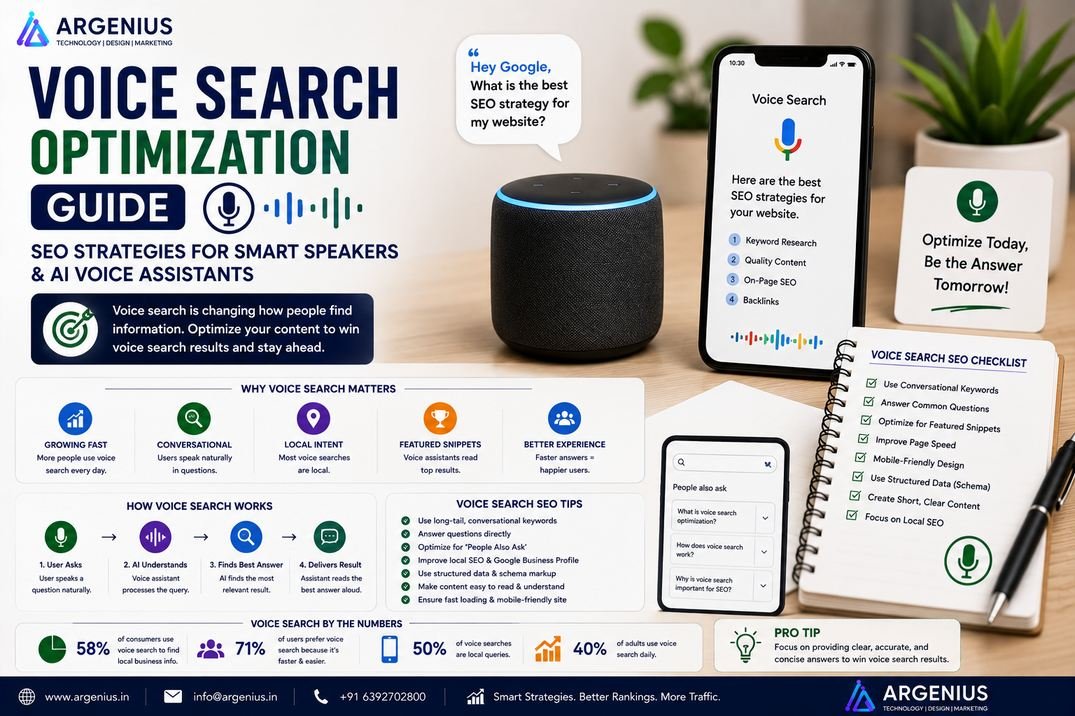
Voice Search Optimization helps websites rank for searches made through Google Assistant, Siri, Alexa, and smart speakers. This complete guide explains conversational keyword research, featured snippets, local SEO, structured data, AI-powered search, and best practices to increase voice search visibility and attract more qualified visitors.
Introduction
The way people search online is changing rapidly. Instead of typing short keywords into a search engine, millions of users now ask complete questions using voice assistants like Google Assistant, Apple Siri, Amazon Alexa, and Microsoft Copilot. Whether they're looking for nearby restaurants, checking the weather, finding business services, or shopping online, voice search has become part of everyday life.
This shift in search behavior has introduced a new challenge for businesses: optimizing websites for spoken queries rather than typed searches.
This is where Voice Search Optimization plays a crucial role.
Voice searches are usually longer, more conversational, and based on natural language. For example, instead of typing "SEO company Delhi," a user might ask, "Which is the best SEO company near me that offers affordable services?" Search engines now rely heavily on artificial intelligence, semantic understanding, and user intent to deliver accurate answers.
Google also favors websites that provide clear, trustworthy, and well-structured information—especially content that can appear in Featured Snippets, People Also Ask, and AI-generated search experiences.
Businesses that optimize for voice search improve their chances of reaching customers across smartphones, smart speakers, smart TVs, connected vehicles, and wearable devices.
In this comprehensive guide, you'll learn everything about Voice Search Optimization, including conversational keyword research, structured data, featured snippets, local SEO, AI search, smart speaker optimization, and future trends shaping voice-first search.
At Argenius, we help businesses build modern SEO strategies that prepare websites for traditional search engines, AI-powered search experiences, and the growing world of voice search.
What is Voice Search Optimization?
Voice Search Optimization is the process of optimizing your website so it can appear in search results generated by voice assistants like Google Assistant, Siri, Alexa, and other AI-powered devices.
Instead of targeting only short keywords, Voice SEO focuses on understanding how people naturally speak when asking questions.
It includes optimizing:
- Conversational Keywords
- Question-Based Content
- Featured Snippets
- Structured Data
- Local SEO
- Page Speed
- Mobile SEO
- Natural Language Content
The goal is to make your content easier for AI systems to understand and present as spoken answers.
Why is Voice Search Optimization Important?
Voice search is growing because it offers speed, convenience, and hands-free access to information.
A strong Voice SEO strategy helps businesses:
- Improve Search Visibility
- Reach Mobile Users
- Increase Local Traffic
- Appear in Voice Assistant Results
- Capture Featured Snippets
- Improve User Experience
- Increase Website Traffic
- Generate More Leads
- Support AI Search Platforms
- Stay Competitive
As voice-enabled devices become more common, optimizing for voice search is becoming an essential part of modern SEO.
How Voice Search Works
When a user asks a question using a voice assistant, several technologies work together to provide an answer:
- Speech Recognition
- Natural Language Processing (NLP)
- Artificial Intelligence (AI)
- Search Intent Analysis
- Knowledge Graphs
- Search Engine Ranking Algorithms
The assistant processes the spoken request, understands its meaning, searches for the most relevant information, and returns a spoken response or a search result.
Popular Voice Assistants
Today's most widely used voice assistants include:
- Google Assistant
- Apple Siri
- Amazon Alexa
- Microsoft Copilot
- Samsung Bixby
Although each assistant has its own ecosystem, they all rely on accurate, high-quality web content to answer user queries.
Voice Search vs Traditional Search
| Traditional Search |
Voice Search |
| Short Keywords |
Conversational Questions |
| Typed Queries |
Spoken Queries |
| Keyword Focus |
User Intent Focus |
| Desktop + Mobile |
Mostly Mobile & Smart Devices |
| Multiple Results |
Often One Direct Answer |
| Manual Search |
Hands-Free Search |
Voice search prioritizes direct, concise, and trustworthy answers.
Conversational Keyword Research
Voice searches sound like normal conversations.
Instead of targeting:
"SEO Company Delhi"
Users may ask:
- Which is the best SEO company in Delhi?
- Who provides affordable SEO services near me?
- How much does SEO cost for small businesses?
- What is the best digital marketing agency nearby?
Optimizing for these natural-language phrases improves your chances of appearing in voice search results.
Long-Tail Keywords
Voice searches are generally longer than text searches.
Examples include:
- Best website development company near me
- How do I improve Google rankings?
- What is the cost of mobile app development?
- Which SEO agency is best for startups?
Long-tail keywords often have higher search intent and better conversion potential.
Featured Snippets
Many voice assistants read answers directly from Featured Snippets.
Optimizing content for snippets increases the chances that your website becomes the spoken answer.
Tips for Winning Featured Snippets
- Answer questions clearly
- Keep explanations concise
- Use bullet lists
- Add numbered steps
- Include FAQ sections
- Structure content with headings
Well-organized content is easier for both users and search engines to understand.
Local Voice Search
A large percentage of voice searches have local intent.
Examples:
- Restaurant near me
- Best dentist nearby
- Website development company near me
- Coffee shop open now
- SEO agency in Ahmedabad
Optimizing your Google Business Profile, local keywords, and location pages improves visibility for these searches.
Mobile Optimization
Most voice searches originate from smartphones.
To improve performance:
- Use Responsive Design
- Improve Page Speed
- Optimize Core Web Vitals
- Create Mobile-Friendly Navigation
- Use HTTPS
- Simplify User Experience
A fast mobile website supports both traditional SEO and voice search optimization.
Structured Data (Schema Markup)
Structured data helps search engines understand your content more accurately.
Useful schema types include:
- FAQ
- Organization
- Local Business
- Product
- Article
- Review
- Breadcrumb
Schema increases the likelihood of rich results and improves AI understanding of your website.
Content for Voice Search
Content should answer real user questions naturally.
Best practices include:
- Write conversationally
- Answer questions directly
- Create FAQ sections
- Use simple language
- Organize information logically
- Target user intent instead of keyword repetition
Voice search rewards helpful, easy-to-understand content.
Technical SEO for Voice Search
Technical optimization remains essential.
Key areas include:
- Fast Website Speed
- Mobile-Friendly Design
- HTTPS
- XML Sitemap
- Robots.txt
- Internal Linking
- Crawl Optimization
- Core Web Vitals
Technical SEO ensures search engines can efficiently crawl and understand your website.
Benefits of Voice Search Optimization
Businesses investing in Voice SEO gain several advantages:
- Better Search Visibility
- Increased Organic Traffic
- Improved Local SEO
- Higher Mobile Engagement
- Greater Brand Authority
- Better AI Search Performance
- Enhanced User Experience
- More Qualified Leads
- Future-Ready SEO Strategy
- Competitive Advantage
Voice Search SEO Checklist
Before optimizing your website for voice search, verify that these essential elements are in place:
- ✅ Mobile-Friendly Website
- ✅ Fast Page Speed
- ✅ Optimized Core Web Vitals
- ✅ HTTPS Enabled
- ✅ Conversational Content
- ✅ Long-Tail Keywords
- ✅ FAQ Sections
- ✅ Featured Snippet Optimization
- ✅ Structured Data (Schema Markup)
- ✅ Google Business Profile Optimized
- ✅ Local Keywords Included
- ✅ XML Sitemap Updated
- ✅ Correct Robots.txt Configuration
- ✅ Internal Linking
- ✅ Clear Call-to-Action
- ✅ Voice-Friendly User Experience
- ✅ Regular Content Updates
- ✅ Google Search Console Monitoring
A well-optimized website is more likely to appear in voice search results and AI-generated answers.
Voice Search Ranking Factors
Google and voice assistants evaluate multiple signals before selecting an answer.
Important ranking factors include:
High-Quality Content
Content should directly answer user questions with clear, accurate, and trustworthy information.
Featured Snippets
Many voice assistants read answers directly from Featured Snippets, making snippet optimization one of the most valuable Voice SEO strategies.
Page Speed
Users expect instant responses. Fast-loading websites are more likely to perform well in voice search.
Mobile Friendliness
Since most voice searches happen on mobile devices, responsive design is essential.
Domain Authority
Websites with strong authority and high-quality backlinks have a better chance of appearing in voice results.
Structured Data
Schema Markup helps search engines understand your content, products, services, and business information.
Local SEO Signals
For "near me" searches, Google considers:
- Google Business Profile
- Reviews
- Business Categories
- NAP Consistency
- Distance
- Relevance
How AI is Changing Voice Search
Voice search is becoming more intelligent through advancements in Artificial Intelligence.
Modern AI systems understand:
- Search Intent
- User Context
- Previous Searches
- Natural Conversations
- Semantic Relationships
- Entity Recognition
Instead of matching only keywords, AI focuses on delivering the most relevant answer based on meaning.
This makes creating helpful, user-focused content more important than ever.
Voice Search for Local Businesses
Local businesses benefit significantly from voice search because users often look for immediate solutions nearby.
Examples include:
- Find a digital marketing agency near me
- Best dentist open now
- Coffee shop near me
- Car repair service nearby
- Website development company near me
To improve local voice visibility:
- Keep your Google Business Profile updated
- Encourage customer reviews
- Add local keywords
- Publish location-specific content
- Maintain consistent NAP information
Voice Search for Ecommerce Websites
Ecommerce businesses can optimize for voice search by targeting purchase-related questions.
Examples:
- Best wireless earbuds under ₹5,000
- Which laptop is best for programming?
- Affordable office chairs online
- Best skincare products for dry skin
Helpful strategies include:
- Product FAQs
- Product Schema
- Review Schema
- Clear Product Descriptions
- Fast Mobile Checkout
- Optimized Category Pages
Best Voice Search SEO Tools
Professional SEO teams commonly use these tools:
- Google Search Console
- Google Analytics 4
- Google Keyword Planner
- Google Trends
- Google PageSpeed Insights
- Google Lighthouse
- Semrush
- Ahrefs
- AnswerThePublic
- AlsoAsked
- Screaming Frog SEO Spider
These tools help identify conversational keywords, monitor performance, and improve technical SEO.
Cost of Voice Search Optimization (₹ INR)
The cost of Voice Search Optimization depends on website size, technical complexity, and the level of content optimization required.
| Service |
Estimated Cost |
| Voice SEO Audit |
₹10,000 – ₹25,000 |
| Small Business Voice SEO |
₹20,000 – ₹50,000 |
| Advanced Voice SEO Strategy |
₹50,000 – ₹1,20,000+ |
| Enterprise Voice SEO |
Custom Pricing |
Factors Affecting Cost
Pricing depends on:
- Website Size
- Number of Pages
- Technical SEO Health
- Content Optimization
- Structured Data Implementation
- Local SEO Requirements
- Industry Competition
- Ongoing Monitoring & Reporting
Voice SEO is an investment in long-term visibility across traditional search, AI-powered search, and voice-enabled devices.
Voice Search SEO Best Practices
To maximize your voice search visibility:
- Write naturally and conversationally
- Target long-tail, question-based keywords
- Optimize for Featured Snippets
- Improve page speed
- Maintain a mobile-first website
- Implement structured data
- Create comprehensive FAQ sections
- Strengthen local SEO
- Keep business information updated
- Continuously publish helpful content
These best practices improve both voice search performance and overall SEO.
Common Voice Search SEO Mistakes
Avoid these common mistakes:
- Targeting only short keywords
- Ignoring user intent
- Writing robotic content
- Missing FAQ sections
- Slow website speed
- Poor mobile experience
- No structured data
- Weak local SEO
- Inconsistent business information
- Outdated content
Correcting these issues can significantly improve your visibility in voice search results.
Future Trends in Voice Search
Voice search continues to evolve alongside AI technologies.
Key trends include:
- Google AI Overviews
- Generative Engine Optimization (GEO)
- Conversational AI Search
- Smart Home Device Growth
- Voice Commerce
- Multilingual Voice Search
- AI Personalization
- Entity-Based Search
- Visual + Voice Search Integration
- Real-Time AI Assistants
Businesses that prepare today will be better positioned as voice search becomes even more widespread.
Why Businesses Choose Argenius
At Argenius, we help businesses stay ahead of evolving search technologies by building SEO strategies optimized for traditional search engines, AI-powered search, and voice assistants.
Our Voice Search Optimization Services include:
- Voice SEO Audits
- Conversational Keyword Research
- Featured Snippet Optimization
- Schema Markup Implementation
- Local Voice SEO
- Mobile SEO Optimization
- Core Web Vitals Improvements
- Technical SEO Enhancements
- Content Optimization
- Performance Tracking & Reporting
Our approach focuses on improving visibility, driving qualified traffic, and preparing businesses for the future of search.
Final Thoughts
Voice search is transforming how people discover information online. Instead of typing short queries, users now ask complete questions using natural language, expecting quick and accurate answers from AI-powered assistants.
By optimizing your website for Voice Search, focusing on conversational keywords, Featured Snippets, structured data, mobile performance, and Local SEO, you can improve your chances of appearing in spoken search results and AI-generated responses.
Voice Search Optimization isn't separate from traditional SEO—it builds upon strong technical SEO, high-quality content, and excellent user experience. Businesses that invest in these areas today will be well-positioned as voice-enabled devices and AI assistants continue to shape the future of search.
If you're ready to make your website more discoverable across Google Assistant, Siri, Alexa, and other AI-powered platforms, Argenius can help with a customized Voice Search Optimization strategy designed for long-term success.
Frequently Asked Questions
What is Voice Search Optimization?
Voice Search Optimization is the process of optimizing your website so it can rank for spoken searches made through voice assistants such as Google Assistant, Siri, and Alexa.
Why is Voice Search important for SEO?
Voice search is becoming increasingly popular, especially on mobile devices and smart speakers. Optimizing for voice search helps businesses capture conversational queries and reach users with high purchase intent.
How do Featured Snippets help with Voice Search?
Many voice assistants read answers directly from Featured Snippets, making snippet optimization one of the most effective ways to improve voice search visibility.
Does Local SEO affect Voice Search?
Yes. Many voice searches include local intent, such as "near me" queries. Optimizing your Google Business Profile, reviews, and local content significantly improves local voice search performance.
Can ecommerce websites benefit from Voice Search Optimization?
Absolutely. Ecommerce websites can target conversational product searches, optimize product pages, implement structured data, and improve mobile usability to attract more voice-driven shoppers.
Does Argenius provide Voice Search Optimization services?
Yes. Argenius offers complete Voice Search Optimization services, including conversational keyword research, Featured Snippet optimization, schema implementation, Local SEO, technical SEO improvements, and ongoing performance monitoring.