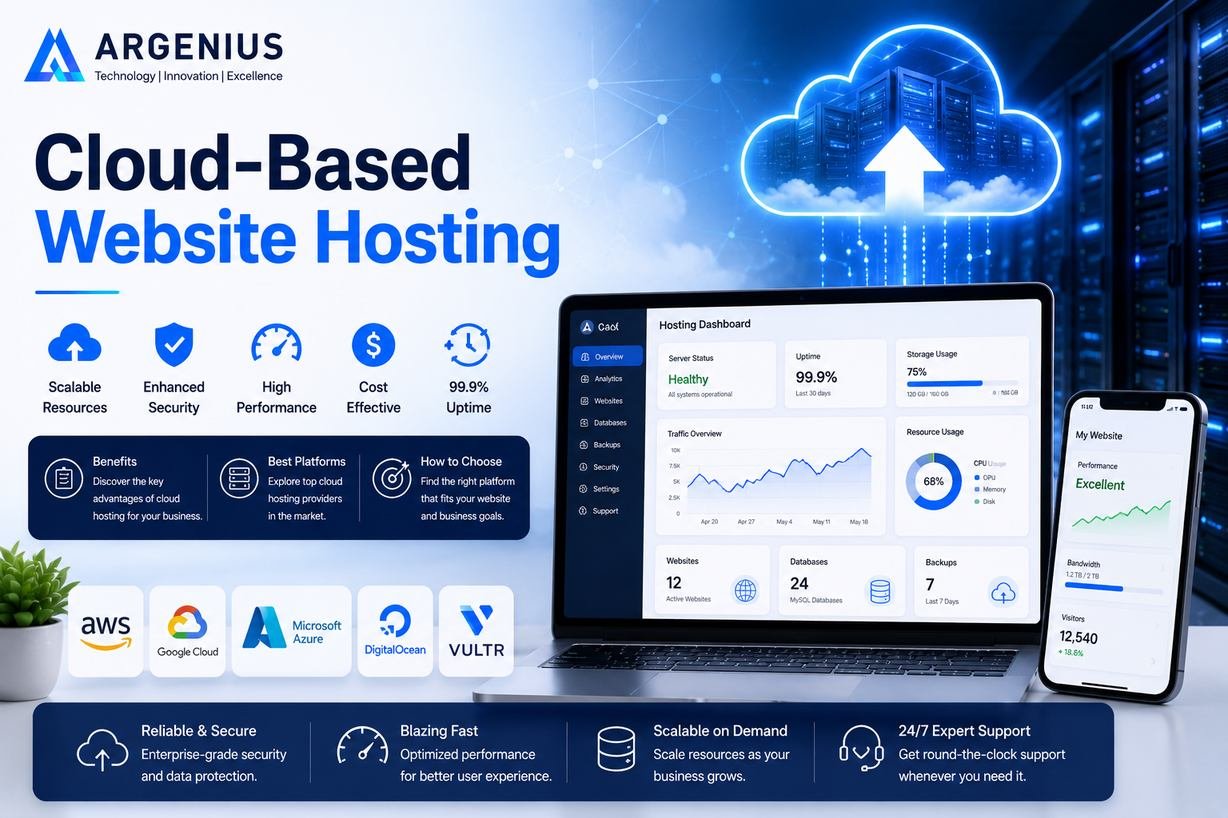
Cloud-based website hosting offers better speed, security, scalability, and reliability than traditional hosting. Learn how cloud hosting works, its benefits, and how to choose the best platform for your business website.
Why Choosing the Right Website Hosting Matters
Building a professional website is only one part of creating a successful online presence. The server that hosts your website plays an equally important role in determining how fast your pages load, how secure your data remains, and whether your website stays available during periods of high traffic. Even a beautifully designed website can disappoint visitors if it loads slowly or becomes unavailable when people need it most.
As businesses increasingly depend on digital channels to generate leads and serve customers, reliable hosting has become a strategic investment rather than a technical detail. This is why many organizations are moving away from traditional hosting environments and choosing cloud-based hosting solutions.
At Argenius, we recommend hosting solutions based on business requirements instead of simply selecting the cheapest option. The right hosting environment improves website performance, strengthens security, supports SEO, and provides the flexibility needed for future growth.
What Is Cloud-Based Website Hosting?
Cloud-based website hosting is a hosting model where your website is powered by a network of interconnected servers instead of relying on a single physical server. This distributed infrastructure allows resources such as storage, memory, and processing power to be allocated dynamically based on demand.
Unlike traditional shared hosting, cloud hosting can better handle traffic spikes, improve reliability, and reduce downtime because workloads are distributed across multiple servers.
For businesses expecting growth, seasonal traffic, or marketing campaigns, cloud hosting offers greater flexibility and stability.
Why Businesses Are Switching to Cloud Hosting
Cloud hosting has become popular because it addresses many of the limitations associated with traditional hosting environments.
Businesses choose cloud hosting because it provides:
- Better website speed
- Higher uptime
- Improved scalability
- Enhanced security
- Flexible resource allocation
- Easier maintenance
- Reliable backup options
These advantages make cloud hosting suitable for startups, growing businesses, eCommerce stores, and enterprise websites.
Better Website Performance
Website speed directly influences user experience and search visibility.
Cloud hosting distributes workloads across multiple servers, helping websites respond more efficiently during normal browsing as well as traffic spikes.
Visitors experience:
- Faster page loading
- More stable performance
- Better browsing experience
- Improved responsiveness
These improvements often contribute to stronger customer engagement and better conversion rates.
High Availability and Reduced Downtime
One of the biggest advantages of cloud hosting is reliability.
If one server experiences a problem, another server within the cloud infrastructure can continue serving your website.
This redundancy helps reduce downtime and keeps your website available even during hardware failures or maintenance activities.
For businesses that depend on online inquiries or sales, higher availability is a major advantage.
Easy Scalability
Business requirements change over time.
You may launch new products, run advertising campaigns, or experience seasonal increases in website traffic.
Cloud hosting allows businesses to increase or decrease resources without completely migrating to a different server environment.
This flexibility helps businesses pay for the resources they actually need while preparing for future growth.
Stronger Website Security
Security is one of the most important considerations when choosing a hosting platform.
Cloud hosting providers often include features such as:
- SSL support
- Firewalls
- DDoS protection
- Automated backups
- Malware monitoring
- Access management
- Data encryption
Although businesses must still follow secure development practices, modern cloud infrastructure provides a strong foundation for protecting websites and customer data.
Better Disaster Recovery
Unexpected issues such as hardware failures, accidental deletions, or cyberattacks can affect website availability.
Cloud hosting simplifies disaster recovery by maintaining backups and distributing data across multiple systems.
This reduces the risk of permanent data loss and allows websites to recover more quickly when problems occur.
Improved Website Speed for SEO
Website performance is closely connected to SEO.
Search engines prefer websites that provide smooth user experiences, particularly on mobile devices.
Cloud hosting supports technical SEO by helping improve:
- Loading speed
- Server response time
- Website availability
- Core Web Vitals
- User engagement
At Argenius, hosting recommendations always consider both performance and long-term SEO objectives.
Managed vs Unmanaged Cloud Hosting
Businesses should understand the difference between managed and unmanaged cloud hosting.
Managed cloud hosting typically includes server maintenance, updates, monitoring, backups, and technical support.
Unmanaged hosting provides greater control but requires technical expertise to manage security, updates, and server configuration.
The right choice depends on your team's technical knowledge and operational requirements.
Best Cloud Hosting Platforms
Several cloud hosting providers are trusted by businesses around the world. The best choice depends on your budget, technical requirements, expected traffic, and level of management you need.
Some popular options include:
- Amazon Web Services (AWS)
- Google Cloud Platform (GCP)
- Microsoft Azure
- DigitalOcean
- Cloudways
- Hostinger Cloud Hosting
- SiteGround Cloud Hosting
Rather than selecting a provider based only on price, evaluate performance, security, scalability, support quality, and ease of management.
How to Choose the Right Cloud Hosting
Before selecting a hosting platform, consider the following questions:
- How much traffic do you expect?
- Will your website continue growing?
- Do you need managed support?
- What level of security is required?
- Which CMS or framework will you use?
- Do you need automatic backups?
- What is your monthly hosting budget?
Choosing hosting based on long-term business goals usually provides better value than focusing only on initial costs.
Common Cloud Hosting Mistakes
Many businesses choose hosting without considering future requirements.
Avoid these common mistakes:
- Selecting the cheapest plan without evaluating performance
- Ignoring backup policies
- Weak security configuration
- No monitoring or maintenance
- Choosing limited scalability
- Not testing website speed after migration
- Poor server location selection
Planning ahead helps prevent performance and reliability issues later.
Why Businesses Choose Argenius
At Argenius, we help businesses choose cloud hosting solutions that match their current requirements while supporting future growth. Our team evaluates factors such as website traffic, application architecture, security requirements, performance expectations, and scalability before recommending a hosting strategy.
Whether you're launching a corporate website, an eCommerce platform, or a custom web application, we focus on building hosting environments that are secure, fast, and easy to maintain. From migration and server optimization to performance monitoring and ongoing support, we help businesses create reliable digital infrastructure that supports long-term success.
Final Thoughts
Cloud-based website hosting has become one of the most reliable and scalable solutions for modern businesses. By distributing resources across multiple servers, cloud hosting improves speed, availability, security, and flexibility while reducing the risks associated with traditional hosting environments.
Rather than viewing hosting as a simple technical requirement, businesses should treat it as a strategic investment that directly influences website performance, SEO, customer experience, and operational reliability.
At Argenius, we help businesses select and optimize cloud hosting environments that provide the performance, security, and scalability needed to support sustainable digital growth.
Frequently Asked Questions
What is cloud-based website hosting?
Cloud-based hosting stores and serves your website using multiple interconnected servers instead of relying on a single physical server, providing better reliability and scalability.
Is cloud hosting better than shared hosting?
For many businesses, yes. Cloud hosting generally offers improved performance, scalability, uptime, and security compared to traditional shared hosting.
Which businesses should choose cloud hosting?
Cloud hosting is ideal for startups, growing businesses, eCommerce stores, SaaS platforms, corporate websites, and businesses expecting variable traffic.
Does cloud hosting improve SEO?
While hosting alone doesn't guarantee rankings, faster loading speeds, higher uptime, and better user experience can positively support SEO performance.
Can Argenius help migrate my website to cloud hosting?
Yes. At Argenius, we assist businesses with cloud hosting selection, website migration, server optimization, security configuration, and ongoing performance management.