A secure payment gateway is one of the most important components of an eCommerce website. Learn how payment gateway integration works, why it matters, and how it improves customer trust, security, and conversions.
Why Secure Payment Gateway Integration Is Essential for Every Online Store
Online shopping has become part of everyday life, and customers expect a smooth, secure, and hassle-free payment experience whenever they purchase a product or service. While attractive product pages and competitive pricing can encourage visitors to add items to their cart, the checkout process ultimately determines whether a sale is completed. If customers feel uncertain about payment security or encounter a complicated checkout, many abandon their purchase before completing the transaction.
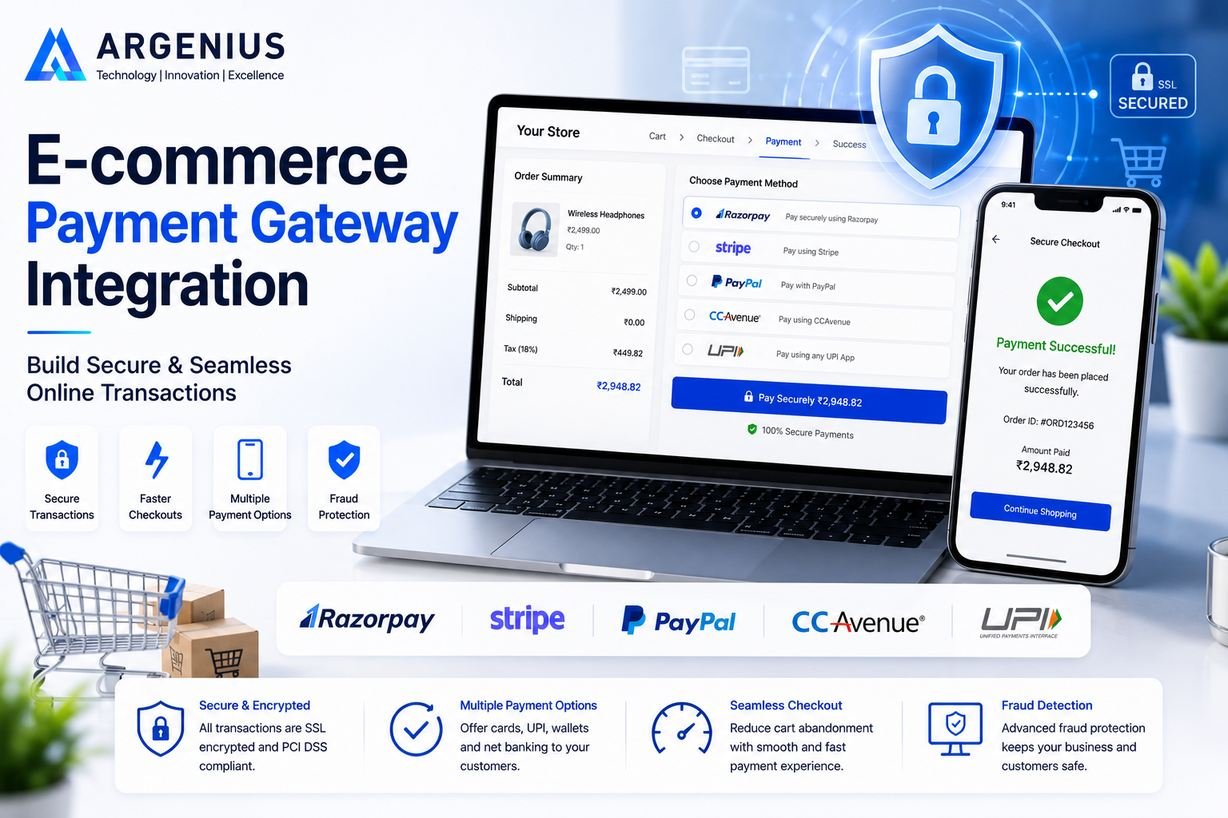
A payment gateway acts as the bridge between your online store, your customer, and the financial institution processing the payment. It ensures sensitive payment information is encrypted, verified, and transmitted securely. Without a reliable payment gateway, businesses risk losing customer trust, reducing conversions, and exposing themselves to unnecessary security risks.
At Argenius, we believe payment gateway integration should never be treated as a simple technical task. It is a critical part of your customer experience, website security, and long-term business growth. A properly integrated payment solution builds confidence, supports faster checkouts, and helps businesses process transactions safely.
What Is an E-commerce Payment Gateway?
A payment gateway is a secure technology that processes online payments between customers and merchants. It authorizes transactions, encrypts sensitive information, and communicates with banks or payment providers to complete the payment process.
Whenever a customer enters card details or selects an online payment method, the payment gateway verifies the transaction before approving or declining it. This entire process happens within seconds while maintaining strong security standards.
Modern payment gateways support multiple payment methods, making it easier for businesses to serve customers with different payment preferences.
How Payment Gateway Integration Works
Although payment processing appears simple from the customer's perspective, several important steps happen in the background.
The process generally includes:
- Customer selects products.
- Checkout page collects payment details.
- Payment gateway encrypts the information.
- Bank verifies the transaction.
- Payment is approved or declined.
- Customer receives confirmation.
- Merchant receives payment notification.
A well-integrated payment gateway completes this process quickly without creating unnecessary delays.
Why Secure Payments Matter
Customers share highly sensitive financial information while shopping online. Even a small security concern can reduce confidence and lead to abandoned purchases.
Secure payment integration helps businesses:
- Protect customer information
- Prevent fraudulent transactions
- Increase customer confidence
- Improve brand reputation
- Reduce payment disputes
- Meet industry security standards
Security is not just a technical requirement—it is an essential part of customer trust.
Offer Multiple Payment Options
Different customers prefer different payment methods.
Providing multiple payment options creates a more flexible checkout experience.
Popular payment methods include:
- Credit Cards
- Debit Cards
- UPI
- Net Banking
- Digital Wallets
- Buy Now Pay Later (BNPL)
- International Cards
The more convenient the payment process becomes, the higher the chances of completing the sale.
Choose the Right Payment Gateway
Every business has different payment requirements.
Before selecting a payment gateway, consider factors such as:
- Security standards
- Transaction fees
- Supported payment methods
- Settlement time
- Refund management
- International payments
- API support
- Customer support
Choosing the right provider helps avoid technical and operational challenges later.
Prioritize PCI DSS Compliance
If your website processes card payments, security standards become even more important.
PCI DSS (Payment Card Industry Data Security Standard) defines best practices for protecting cardholder information.
Although many payment providers handle much of this responsibility, businesses should still ensure their website follows secure development practices.
At Argenius, we always recommend implementing payment solutions that follow recognized industry security standards to help protect both businesses and customers.
Build Customer Trust During Checkout
The checkout page is often the final step before conversion.
Customers should immediately recognize that the payment process is secure.
Helpful trust signals include:
- SSL certificate
- Secure payment icons
- Trusted payment logos
- Privacy policy
- Refund policy
- Contact information
Visible trust indicators reassure customers that their information is protected.
Optimize Checkout for Mobile Users
A large percentage of online purchases now happen on smartphones.
Mobile-friendly checkout should provide:
- Responsive layouts
- Large touch-friendly buttons
- Fast loading pages
- Simple payment forms
- Quick UPI payments
- Auto-filled information where appropriate
A smooth mobile checkout significantly improves conversion rates.
Reduce Checkout Abandonment
Complicated checkout processes often lead to lost sales.
Businesses should avoid:
- Mandatory account creation
- Long forms
- Unexpected charges
- Slow loading pages
- Limited payment options
- Confusing navigation
Simplifying the checkout journey encourages more customers to complete their purchases.
Protect Against Fraud
Online businesses should implement additional security measures to reduce fraudulent activity.
Common protection methods include:
- OTP verification
- Two-factor authentication
- Address verification
- Fraud detection systems
- Transaction monitoring
- Secure tokenization
These measures protect both merchants and customers.
Monitor Payment Performance
Successful payment integration requires ongoing monitoring.
Businesses should regularly review:
- Failed payment rates
- Transaction success rates
- Refund requests
- Customer complaints
- Payment processing speed
- Checkout abandonment
Continuous monitoring helps identify opportunities for improvement.
Common Payment Gateway Integration Mistakes
Many businesses experience payment issues because of avoidable mistakes.
Some common problems include:
- Choosing the wrong payment provider
- Poor mobile checkout
- Missing SSL certificates
- Slow payment processing
- Limited payment methods
- Weak security measures
- Confusing checkout design
- Ignoring testing before launch
Avoiding these issues creates a more reliable shopping experience.
Why Businesses Choose Argenius
At Argenius, we build secure, scalable, and conversion-focused eCommerce websites with professionally integrated payment gateways. Our development approach prioritizes customer security, fast transaction processing, responsive checkout experiences, and seamless payment workflows across desktop and mobile devices.
Whether you're launching a Shopify store, WooCommerce website, Laravel-based eCommerce platform, or a fully custom online marketplace, we ensure your payment gateway is integrated securely and optimized for performance. We also focus on creating user-friendly checkout experiences that reduce cart abandonment and encourage successful transactions.
Final Thoughts
A payment gateway is far more than a payment processing tool—it is one of the most important trust-building components of your online store. Customers expect secure, fast, and convenient payment experiences, and businesses that meet those expectations are more likely to earn repeat purchases and positive brand recognition.
By selecting the right payment gateway, following security best practices, supporting multiple payment methods, and continuously optimizing the checkout experience, businesses can improve both customer satisfaction and revenue.
At Argenius, we help businesses implement secure payment gateway solutions that combine technical reliability, modern security standards, and exceptional user experience to support long-term eCommerce success.
Frequently Asked Questions
What is a payment gateway?
A payment gateway is a secure service that processes online payments between customers, merchants, and financial institutions while protecting sensitive payment information.
Why is payment gateway integration important?
It enables secure online transactions, improves customer trust, supports multiple payment methods, and helps businesses process payments efficiently.
Which payment methods should an eCommerce website support?
Most online stores should support credit cards, debit cards, UPI, net banking, digital wallets, and other popular payment options based on their target audience.
Does payment gateway integration improve conversions?
Yes. A secure and easy-to-use checkout process reduces cart abandonment and increases the likelihood of completed purchases.
Can Argenius integrate payment gateways into my eCommerce website?
Yes. At Argenius, we integrate secure payment gateways into Shopify, WooCommerce, Laravel, and custom-built eCommerce websites while ensuring performance, security, and a seamless checkout experience.