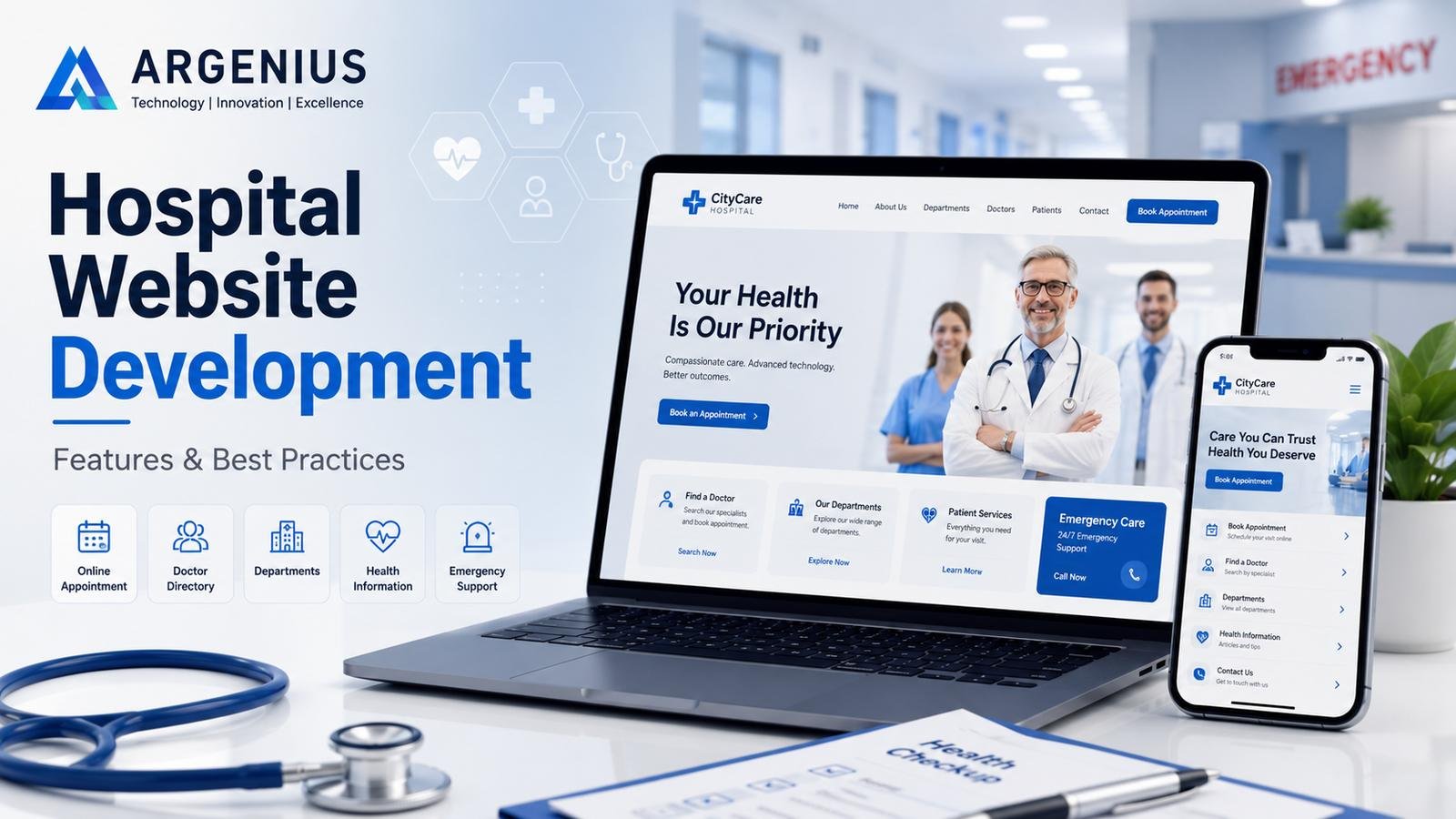
Discover how a modern hospital website can improve patient care, streamline appointment booking, enhance communication, and strengthen your healthcare organization's digital presence with this complete development guide.
Why Every Hospital Needs a Modern Website
The healthcare industry has undergone a major digital transformation in recent years. Patients no longer depend only on phone calls or physical visits to gather information about hospitals and healthcare services. Today, they search online to find specialists, compare hospitals, book appointments, access medical reports, and learn about available treatments before making healthcare decisions.
A professional hospital website has become much more than an online brochure. It serves as a digital healthcare platform that connects patients, doctors, administrative staff, and healthcare providers through one centralized system. From online appointment scheduling and doctor profiles to telemedicine consultations and patient portals, a modern website significantly improves patient convenience while reducing administrative workload.
An effective hospital website also builds trust. Patients expect healthcare organizations to have secure, responsive, and informative websites where they can easily find emergency contact numbers, department information, insurance details, operating hours, and treatment options. A slow, outdated, or difficult-to-use website can negatively impact a hospital's reputation and even influence a patient's decision when choosing healthcare services.
At Argenius, we develop custom hospital websites that combine intuitive user experiences, enterprise-grade security, responsive design, and scalable architecture. Whether you're a multi-specialty hospital, private clinic, diagnostic center, medical college, or healthcare chain, we build digital platforms that enhance patient engagement while supporting efficient healthcare management.
What Is a Hospital Website?
A hospital website is a comprehensive digital platform that provides patients with healthcare information and online services while helping hospitals manage appointments, doctors, departments, patient communication, and administrative operations.
Unlike a simple informational website, a hospital website integrates advanced healthcare features such as online appointment booking, doctor availability, patient portals, online payments, laboratory report access, emergency contact information, telemedicine consultations, and healthcare resource management.
For administrators, the platform simplifies hospital operations by offering centralized management of departments, doctors, patient inquiries, appointments, announcements, healthcare campaigns, and digital records.
A professionally developed hospital website improves accessibility, patient satisfaction, operational efficiency, and overall healthcare service delivery.
Benefits of a Hospital Website
A modern hospital website delivers significant advantages for healthcare organizations and patients alike.
Key benefits include:
- 24/7 online appointment booking
- Better patient communication
- Improved hospital credibility
- Faster appointment management
- Reduced administrative workload
- Online report access
- Telemedicine support
- Better healthcare awareness
- Increased patient engagement
- Improved local SEO visibility
- Secure patient services
- Better operational efficiency
These benefits help hospitals provide convenient, efficient, and patient-focused healthcare services.
Essential Features of a Hospital Website
A successful hospital website should include features that improve patient experience while simplifying hospital management.
Important features include:
- Online Appointment Booking
- Doctor Profiles
- Department Pages
- Patient Portal
- Telemedicine Integration
- Online Consultation
- Laboratory Report Download
- Health Packages
- Emergency Contact Section
- Pharmacy Information
- Ambulance Request
- Online Payment Gateway
- Insurance Information
- Medical Blog
- Health Awareness Articles
- Patient Testimonials
- Live Chat
- WhatsApp Integration
- Contact Forms
- Interactive Google Maps
These features create a complete healthcare platform that supports both patients and hospital staff.
Online Appointment Booking System
One of the most valuable features of a hospital website is an online appointment management system.
Patients should be able to:
- Select a department
- Choose a doctor
- View available time slots
- Book appointments online
- Receive confirmation notifications
- Cancel or reschedule appointments
- Get automated reminders
This system minimizes waiting times and reduces manual scheduling work for hospital staff.
Doctor Profiles
Patients often want to learn about doctors before booking an appointment.
Each doctor profile should include:
- Name
- Qualifications
- Specialization
- Experience
- Consultation timings
- Languages spoken
- Awards and certifications
- Patient reviews
- Appointment button
Detailed doctor profiles help build confidence and improve appointment conversions.
Patient Portal
A secure patient portal enhances convenience by allowing patients to access healthcare information anytime.
Features may include:
- Medical history
- Prescription records
- Lab reports
- Appointment history
- Billing information
- Online payments
- Downloadable documents
- Secure communication
This reduces paperwork while improving patient satisfaction.
Telemedicine and Online Consultation
Virtual healthcare services have become increasingly important.
A hospital website can support:
- Video consultations
- Audio consultations
- Secure messaging
- Digital prescriptions
- Follow-up appointments
- Online payment collection
Telemedicine expands healthcare accessibility for patients who cannot visit the hospital physically.
Health Packages and Services
Hospitals can promote preventive healthcare by showcasing available services and packages.
Examples include:
- Health check-up packages
- Diagnostic tests
- Vaccination services
- Wellness programs
- Surgery information
- Maternity packages
- Cardiac care
- Orthopedic services
Clear service pages improve patient understanding and increase inquiries.
Mobile-Friendly Design
Most healthcare searches now happen on smartphones.
A responsive hospital website ensures:
- Easy appointment booking
- Faster navigation
- Better accessibility
- Improved readability
- Excellent user experience
- Higher search engine rankings
Mobile optimization is essential for serving patients effectively.
SEO for Hospital Websites
Search engine optimization helps patients discover healthcare services online.
Important SEO practices include:
- Local SEO
- Department-specific landing pages
- Fast loading speed
- Structured Data
- XML Sitemap
- Optimized images
- Internal linking
- Medical content publishing
- Google Business Profile optimization
- Mobile optimization
A strong SEO strategy increases visibility for healthcare-related searches.
Security Best Practices
Healthcare websites manage sensitive patient information, making security a top priority.
Recommended security measures include:
- SSL Certificate
- Secure Login
- Role-Based Access
- Data Encryption
- Two-Factor Authentication
- Secure Payment Gateway
- Firewall Protection
- Regular Backups
- Malware Monitoring
- HIPAA/GDPR-ready architecture where applicable
Strong security helps protect patient privacy and hospital data.
Best Technology Stack for Hospital Website Development
Selecting the right technology ensures long-term performance and scalability.
Frontend
Backend
Database
Cloud Infrastructure
- AWS
- Google Cloud
- Microsoft Azure
This modern technology stack provides high performance, security, and flexibility.
Common Mistakes to Avoid
Many healthcare organizations miss opportunities because of outdated or poorly planned websites.
Avoid these common mistakes:
- No online appointment system
- Outdated doctor information
- Poor mobile experience
- Slow loading pages
- Weak security
- Missing emergency contacts
- Poor SEO implementation
- Difficult navigation
- No patient portal
- Limited accessibility features
Avoiding these issues improves both patient satisfaction and operational efficiency.
Why Healthcare Organizations Choose Argenius
At Argenius, we build secure, scalable, and patient-friendly hospital websites tailored to the unique needs of healthcare organizations. Our solutions combine responsive UI/UX, appointment scheduling, doctor management, patient portals, telemedicine integration, payment gateways, and healthcare-focused content management systems.
Every website is developed with performance, security, SEO, and future scalability in mind. Whether you're launching a hospital website, multi-location healthcare network, specialty clinic, diagnostic center, or medical institute, we create digital platforms that improve patient engagement while simplifying day-to-day healthcare operations.
Final Thoughts
A modern hospital website has become an essential part of healthcare delivery. Patients expect the convenience of booking appointments online, accessing medical information, communicating with healthcare providers, and receiving services digitally whenever possible. Hospitals that invest in professional websites improve patient trust, strengthen their online presence, and streamline administrative workflows.
By combining responsive design, secure patient portals, appointment scheduling, telemedicine capabilities, SEO optimization, and enterprise-level security, a hospital website becomes a valuable digital asset that supports long-term healthcare excellence.
At Argenius, we help hospitals, clinics, diagnostic centers, and healthcare organizations build high-performance websites that improve patient experiences while supporting future growth through reliable, scalable, and secure technology solutions.
Frequently Asked Questions
Why does a hospital need a professional website?
A hospital website allows patients to book appointments, access healthcare information, learn about doctors and services, communicate with the hospital, and receive healthcare updates online.
What features should a hospital website include?
Essential features include online appointments, doctor profiles, patient portals, telemedicine, health packages, emergency contacts, payment gateways, laboratory report access, and responsive design.
Can patients book appointments online?
Yes. A modern hospital website allows patients to select doctors, choose available time slots, receive confirmations, and manage appointments online.
Is SEO important for hospital websites?
Yes. Local SEO helps hospitals appear in search results when patients search for doctors, specialists, clinics, or hospitals in their area.
Can Argenius build a custom hospital website?
Yes. Argenius develops secure, scalable, SEO-friendly hospital websites with appointment booking, patient portals, telemedicine integration, healthcare management features, and responsive designs tailored to healthcare organizations.