Jamstack architecture is transforming modern web development by delivering lightning-fast performance, enhanced security, and improved scalability. Learn how Jamstack works and whether it's the right choice for your next website.
Why Modern Businesses Are Moving Toward Jamstack
Today's users expect websites to load instantly, remain secure, and deliver a seamless experience on every device. Even a slight delay in page loading can increase bounce rates, reduce conversions, and negatively impact search engine rankings. At the same time, businesses need websites that are easier to maintain, scale efficiently, and handle traffic spikes without compromising performance.
Traditional web architectures often rely on servers generating pages for every request. While this approach works well for many applications, it can introduce performance bottlenecks and increase security risks if not managed carefully.
This is where Jamstack architecture has gained popularity. By pre-building pages and delivering them through a global Content Delivery Network (CDN), Jamstack websites provide exceptional speed, improved reliability, and a highly secure browsing experience.
At Argenius, we help businesses adopt modern web technologies like Jamstack to build websites that are fast, SEO-friendly, scalable, and ready for future growth.
What Is Jamstack?
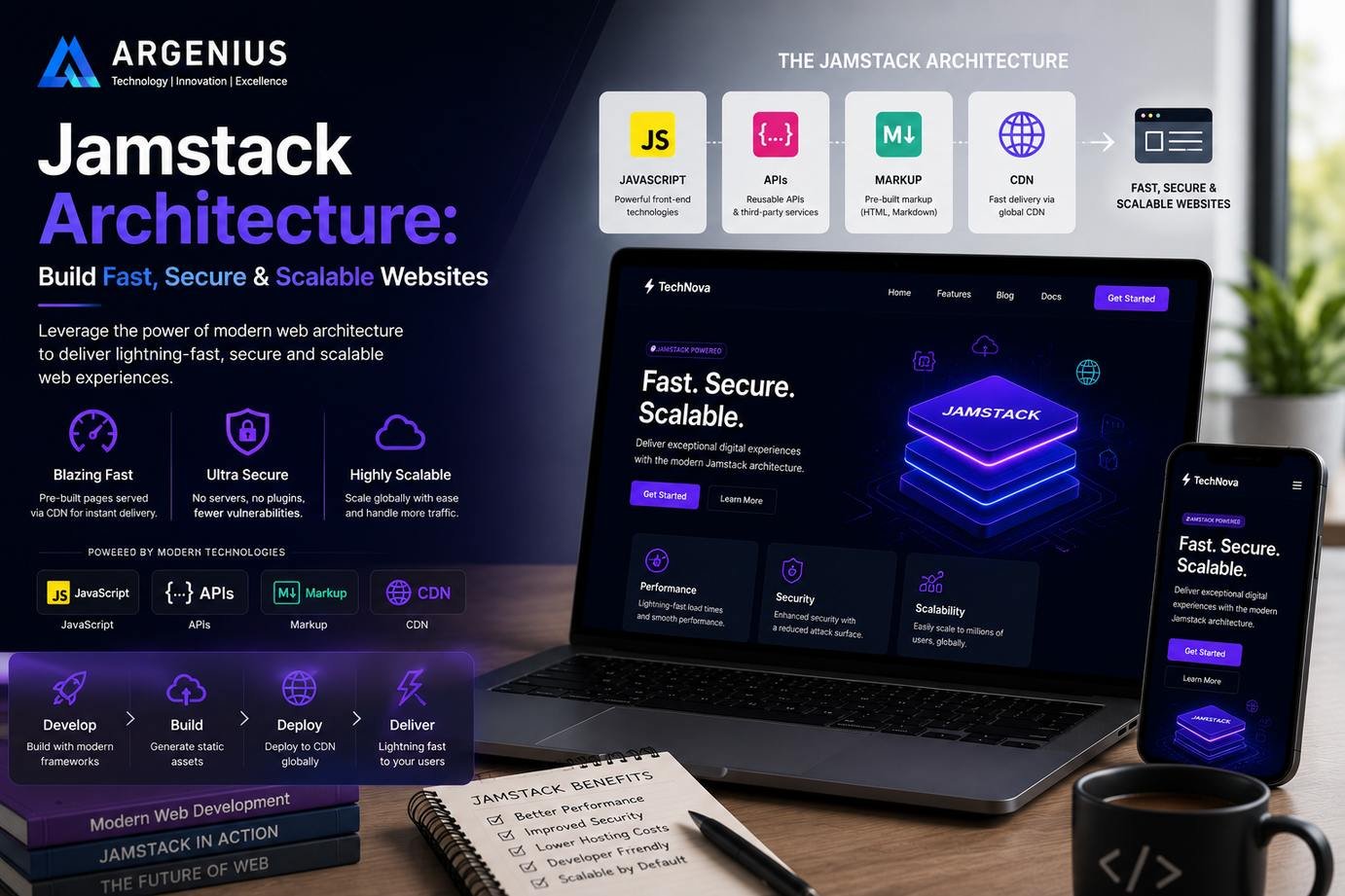
Jamstack is a modern web architecture that focuses on delivering websites using pre-rendered pages, reusable APIs, and JavaScript for dynamic functionality.
The term Jamstack stands for:
- J – JavaScript
- A – APIs
- M – Markup
Instead of generating pages every time a visitor accesses the website, pages are built during deployment and served through a CDN. Dynamic features such as contact forms, payments, authentication, or search are handled through APIs.
This architecture separates the frontend from the backend, making development more flexible and efficient.
How Jamstack Works
Jamstack follows a different workflow compared to traditional server-rendered websites.
A typical process looks like this:
- Developers create the frontend using frameworks such as Next.js, Gatsby, or Astro.
- The website is built into static HTML files.
- These files are deployed to a CDN.
- APIs provide dynamic functionality like forms, payments, or user authentication.
- Visitors receive content from the nearest CDN location for faster loading.
This approach reduces server workload while improving speed and reliability.
Key Benefits of Jamstack Architecture
Businesses adopting Jamstack often experience several advantages:
- Faster page loading
- Better SEO performance
- Improved website security
- High scalability
- Lower hosting costs
- Easy deployment
- Excellent developer experience
- Reliable performance during traffic spikes
These benefits make Jamstack an attractive option for modern websites.
Exceptional Website Performance
Speed is one of Jamstack's greatest strengths.
Since pages are pre-generated and served from a CDN, visitors receive content almost instantly without waiting for server-side rendering.
Benefits include:
- Reduced loading times
- Faster navigation
- Improved Core Web Vitals
- Better user experience
- Lower bounce rates
Fast websites not only satisfy users but also support higher search engine rankings.
Strong SEO Advantages
Search engines favor websites that load quickly and provide a good user experience.
Jamstack supports SEO by offering:
- Pre-rendered HTML
- Fast page speed
- Mobile-friendly performance
- Optimized Core Web Vitals
- Crawlable content
- Stable site structure
At Argenius, we combine Jamstack development with technical SEO best practices to maximize visibility in search results.
Improved Website Security
Traditional websites often expose servers, databases, and backend applications directly to the internet.
Jamstack minimizes many of these risks by serving static files and relying on secure APIs for dynamic features.
Security advantages include:
- Reduced attack surface
- No direct database exposure
- Secure API integrations
- HTTPS support
- Easier infrastructure management
Although APIs still require proper protection, the overall architecture is generally more secure.
Scalability Without Complexity
Handling sudden traffic increases can be challenging for traditional websites.
Jamstack websites scale more efficiently because static files are distributed across CDNs.
Whether your website receives hundreds or millions of visitors, the infrastructure can continue serving content quickly without significant performance degradation.
Lower Maintenance Requirements
Jamstack simplifies ongoing website management.
Since there is less server-side complexity, businesses often spend less time dealing with:
- Server maintenance
- Software updates
- Performance tuning
- Infrastructure issues
Development teams can focus on building new features instead of maintaining complex backend systems.
Perfect for Modern Frontend Frameworks
Jamstack works exceptionally well with modern technologies, including:
- Next.js
- Gatsby
- Astro
- Nuxt.js
- React
- Vue.js
- SvelteKit
These frameworks enable developers to create interactive, high-performance user interfaces while benefiting from static site generation.
Headless CMS Integration
One of the biggest strengths of Jamstack is its ability to integrate with Headless CMS platforms.
Popular options include:
- Contentful
- Strapi
- Sanity
- Hygraph
- Directus
Content editors can manage website content independently while developers maintain complete control over the frontend experience.
Ideal Use Cases for Jamstack
Jamstack is well-suited for many types of digital projects, such as:
- Corporate websites
- Marketing websites
- Landing pages
- Blogs
- Documentation portals
- Portfolio websites
- SaaS marketing sites
- Product websites
- Educational platforms
For applications requiring extensive real-time interactions, a hybrid architecture may be more appropriate.
Challenges to Consider
While Jamstack offers many benefits, it is not the ideal solution for every project.
Potential challenges include:
- Build times for very large websites
- Complex dynamic functionality
- API dependency
- Content rebuild requirements
- Learning curve for new teams
Understanding these limitations helps businesses choose the right architecture.
Jamstack vs Traditional Architecture
Traditional websites generate pages on the server whenever a visitor requests them.
Jamstack websites generate pages before deployment and serve them directly from a CDN.
As a result, Jamstack often provides:
- Faster loading
- Better scalability
- Enhanced security
- Simplified deployment
- Improved reliability
However, traditional architectures remain valuable for applications that require extensive server-side processing or highly dynamic content.
Why Businesses Choose Argenius
At Argenius, we build Jamstack websites that combine speed, security, scalability, and outstanding user experiences. Our development team uses modern frameworks such as Next.js, React, and Headless CMS solutions to create websites that perform exceptionally well while remaining easy to maintain.
Every project is optimized for Core Web Vitals, technical SEO, responsive design, API integration, and future scalability. Whether you need a business website, SaaS landing page, documentation portal, or enterprise marketing platform, we deliver Jamstack solutions that support long-term digital growth.
Final Thoughts
Jamstack architecture has become one of the most effective approaches for building modern websites that prioritize speed, security, and scalability. By separating the frontend from backend services and delivering pre-built pages through a CDN, businesses can provide users with a fast, reliable, and engaging experience across all devices.
While Jamstack may not be the perfect fit for every application, it is an excellent choice for content-driven websites, marketing platforms, documentation portals, and businesses that value high performance and strong SEO. Selecting the right architecture ultimately depends on your project's goals, technical requirements, and future growth plans.
At Argenius, we help businesses evaluate whether Jamstack is the right solution for their needs and build websites that are secure, SEO-friendly, and designed for long-term success.
Frequently Asked Questions
What is Jamstack architecture?
Jamstack is a modern web development architecture that uses JavaScript, APIs, and pre-rendered markup to build fast, secure, and scalable websites.
Is Jamstack good for SEO?
Yes. Jamstack websites are typically pre-rendered, load quickly, and provide excellent Core Web Vitals, all of which contribute to better SEO performance.
Which frameworks are commonly used with Jamstack?
Popular Jamstack frameworks include Next.js, Gatsby, Astro, Nuxt.js, React, Vue.js, and SvelteKit.
Is Jamstack suitable for eCommerce websites?
Yes. Jamstack works well for many eCommerce stores when combined with APIs for payments, inventory management, authentication, and other dynamic features.
Can Argenius develop Jamstack websites?
Yes. At Argenius, we develop custom Jamstack websites using modern frameworks, Headless CMS platforms, and API-driven architectures to deliver secure, scalable, and high-performance digital experiences.