Explore the latest website design trends for 2025–2026 and discover how businesses can create modern, user-friendly, and high-performing websites that improve engagement, build trust, and support long-term growth.
Why Website Design Trends Matter for Modern Businesses
A website is often the first interaction people have with your business. Within a few seconds, visitors form an opinion about your brand based on your website's appearance, speed, usability, and overall experience. As user expectations continue to evolve, businesses that rely on outdated website designs risk losing credibility, engagement, and potential customers.
Website design trends are not simply about following what's fashionable. Many modern design practices are driven by changes in user behavior, mobile technology, accessibility standards, and search engine expectations. A website that looks current, loads quickly, and provides an intuitive experience is more likely to build trust and encourage visitors to take action.
At Argenius, we've noticed that businesses investing in modern website design often experience better user engagement, improved conversion rates, and stronger long-term brand recognition. The goal isn't to redesign your website every year but to adopt design principles that remain effective while adapting to changing user expectations.
What Is Driving Website Design in 2025–2026?
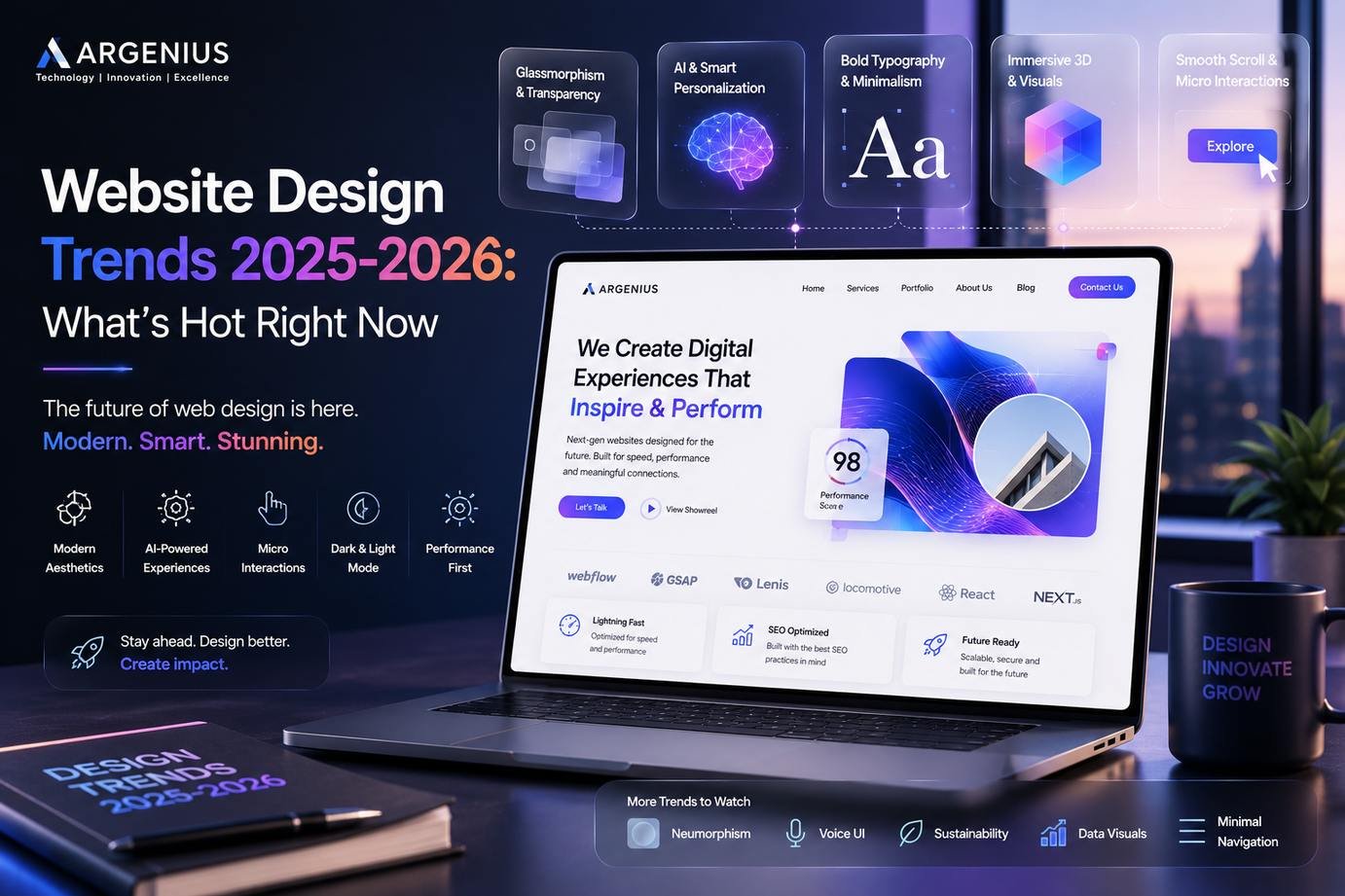
Modern website design is becoming more user-focused than ever before. Instead of filling pages with unnecessary animations or complex layouts, designers are prioritizing speed, clarity, accessibility, and meaningful interactions.
Artificial intelligence, mobile-first browsing, Core Web Vitals, and accessibility guidelines are influencing how websites are designed. Visitors expect websites to be fast, responsive, visually appealing, and easy to navigate regardless of the device they use.
Businesses that understand these expectations are better positioned to create websites that support both customer satisfaction and business growth.
Trend 1: Minimalist and Purpose-Driven Design
Minimalism continues to dominate website design because it helps visitors focus on what truly matters. Instead of overwhelming users with excessive colors, animations, or content, modern websites emphasize clean layouts, generous spacing, and clear messaging.
Minimalist design does not mean empty pages. It means removing distractions and highlighting important content, calls-to-action, and business information.
A clean interface also improves readability, navigation, and overall user experience.
Trend 2: Mobile-First Design Is No Longer Optional
More than half of all website traffic now comes from mobile devices. Because of this, websites should be designed for smaller screens first before expanding to desktop layouts.
Mobile-first design encourages designers to prioritize essential content, simplify navigation, and ensure every interactive element works comfortably on touchscreens.
Businesses that ignore mobile optimization risk losing both visitors and search visibility.
Trend 3: Faster Websites with Better Performance
Website speed has become a major factor in user experience and SEO.
Modern websites focus on:
- Optimized images
- Lightweight code
- Lazy loading
- Efficient caching
- Faster hosting
- Core Web Vitals optimization
Users expect websites to load quickly, and search engines reward websites that deliver a smooth browsing experience.
Trend 4: AI-Powered User Experiences
Artificial intelligence is changing how visitors interact with websites.
Businesses are increasingly integrating:
- AI chat assistants
- Smart search functionality
- Personalized recommendations
- Automated customer support
- Intelligent forms
These features help users find information faster while reducing the workload for customer support teams.
At Argenius, we see AI becoming a valuable enhancement rather than replacing thoughtful UX design. The best websites use AI to simplify the customer journey, not complicate it.
Trend 5: Bold Typography and Clear Messaging
Typography is becoming a central design element rather than simply a way to display text.
Large headings, readable fonts, and clear messaging immediately communicate value to visitors.
Instead of long introductions, modern websites use concise headlines supported by helpful content that answers user questions quickly.
This approach improves both readability and conversion rates.
Trend 6: Dark Mode and Theme Switching
Many users now prefer dark interfaces, especially during evening browsing.
Offering optional dark mode provides:
- Better readability in low-light environments
- Reduced eye strain
- Modern appearance
- Improved personalization
Businesses increasingly allow users to choose between light and dark themes without affecting website functionality.
Trend 7: Custom Illustrations and Authentic Visuals
Generic stock photos are gradually being replaced with authentic imagery, custom illustrations, branded graphics, and original photography.
Visitors connect more strongly with visuals that represent real businesses, real teams, and genuine customer experiences.
Authentic visuals also strengthen brand identity and improve credibility.
Trend 8: Accessibility Is Becoming Standard
Website accessibility is no longer considered an optional feature.
Modern websites are designed to accommodate users with different abilities by providing:
- Keyboard navigation
- High color contrast
- Descriptive image alt text
- Readable typography
- Logical heading structure
- Screen reader compatibility
Accessible websites create better experiences for everyone while supporting broader compliance requirements.
Trend 9: Micro-Interactions That Improve Usability
Small animations can make websites feel more responsive without becoming distracting.
Examples include:
- Button hover effects
- Loading indicators
- Progress animations
- Interactive icons
- Smooth page transitions
When used thoughtfully, micro-interactions provide useful feedback and make navigation feel more intuitive.
Trend 10: Personalized User Experiences
Modern websites increasingly adapt content based on user behavior.
Visitors may see:
- Personalized recommendations
- Relevant services
- Location-based information
- Customized offers
- Dynamic content
Personalization improves engagement by presenting information that is more relevant to each visitor.
Trend 11: Sustainable and Lightweight Design
Businesses are becoming more conscious of website efficiency.
Reducing unnecessary code, limiting oversized media, and optimizing assets not only improve speed but also reduce server resources and energy consumption.
Lightweight websites benefit users, search engines, and hosting performance alike.
Trend 12: Stronger Focus on Conversion Design
Modern websites are designed with clear business objectives in mind.
Every page should encourage visitors to take meaningful actions, whether that's contacting the business, requesting a quote, subscribing to a newsletter, or making a purchase.
Effective conversion-focused design includes:
- Clear call-to-action buttons
- Simple forms
- Trust signals
- Testimonials
- Logical page flow
- Easy navigation
Good design supports business goals while respecting the user's experience.
Common Website Design Mistakes to Avoid
Even visually attractive websites can underperform if they ignore usability.
Some common mistakes include:
- Cluttered layouts
- Slow loading pages
- Confusing navigation
- Poor mobile responsiveness
- Weak call-to-action buttons
- Low-quality visuals
- Inconsistent branding
- Ignoring accessibility
- Overusing animations
Avoiding these mistakes creates a more professional and user-friendly website.
Why Businesses Choose Argenius for Modern Website Design
At Argenius, we believe successful websites combine attractive visuals with practical functionality. Our approach focuses on creating responsive, SEO-friendly, and performance-optimized websites that support real business objectives rather than simply following temporary design trends.
From responsive layouts and intuitive navigation to UX optimization and conversion-focused design, we build websites that help businesses create lasting impressions while delivering measurable results. Every project is designed with scalability, accessibility, and long-term growth in mind.
Final Thoughts
Website design continues to evolve, but one principle remains constant: successful websites put users first. Businesses that prioritize speed, accessibility, responsive design, meaningful content, and intuitive navigation are better positioned to build trust and stay competitive.
Rather than chasing every new trend, focus on adopting design improvements that genuinely enhance the visitor experience. A modern website should not only look impressive but also help users complete their goals quickly and confidently.
At Argenius, we help businesses create future-ready websites that balance modern design with performance, usability, and SEO. By combining industry best practices with thoughtful strategy, we ensure every website is prepared to support long-term business growth.
Frequently Asked Questions
Why should businesses follow website design trends?
Following modern design trends helps improve user experience, mobile usability, credibility, and engagement while keeping your website aligned with current technology and customer expectations.
Is responsive design still important in 2025–2026?
Yes. Responsive design remains essential because users access websites from a wide range of devices, and search engines prioritize mobile-friendly experiences.
How often should a business redesign its website?
There is no fixed timeline, but reviewing your website every two to three years helps ensure it remains secure, modern, and aligned with evolving user expectations.
Does website design affect SEO?
Yes. Factors such as loading speed, mobile responsiveness, navigation, accessibility, and user engagement all influence SEO performance.
Can Argenius help redesign an existing business website?
Absolutely. At Argenius, we help businesses modernize outdated websites by improving design, performance, responsiveness, SEO, and user experience while maintaining brand consistency.