Why WordPress Maintenance Is More Important Than Most Business Owners Realize
Launching a WordPress website is a significant milestone for any business, but it is only the beginning of your online journey. Many website owners invest time and money into designing a professional website, publishing content, and promoting their services. Unfortunately, once the website goes live, regular maintenance is often ignored.
A website is not a static asset. It is a dynamic platform that depends on software updates, security improvements, database optimization, backups, and ongoing performance monitoring. Without regular maintenance, even a well-designed website can gradually become slower, less secure, and more vulnerable to technical issues.
Think of your website like a car. Buying a new vehicle doesn't eliminate the need for servicing. Regular maintenance keeps it running efficiently, prevents unexpected breakdowns, and extends its lifespan. The same principle applies to WordPress websites. Consistent maintenance ensures your website remains fast, secure, and capable of supporting your business goals.
At Argenius, we've worked with businesses across different industries and have seen firsthand how proactive website maintenance helps prevent expensive problems while improving long-term performance and reliability.
What Is WordPress Maintenance?
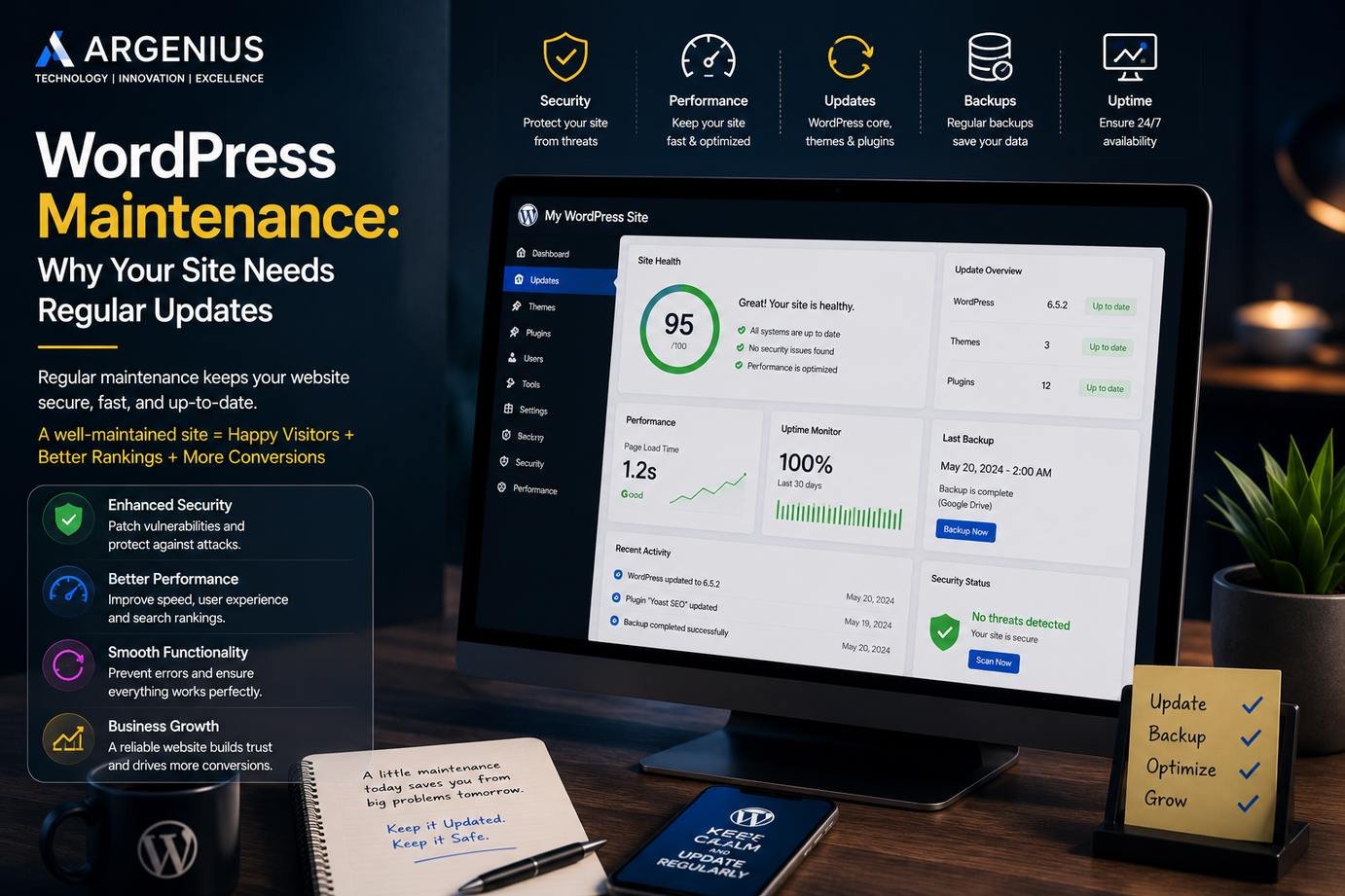
WordPress maintenance refers to the routine tasks performed to keep your website secure, updated, and operating efficiently. It involves much more than clicking the update button.
A complete maintenance routine typically includes:
- Updating WordPress core
- Updating themes and plugins
- Creating regular backups
- Monitoring website security
- Improving page speed
- Cleaning the database
- Checking for broken links
- Monitoring uptime
- Reviewing website performance
- Fixing compatibility issues
Each of these tasks contributes to the overall health of your website and helps prevent issues before they impact your visitors.
Why Regular Updates Matter
Every update released by WordPress or plugin developers serves a purpose. While some updates introduce new features, many are designed to fix bugs, improve compatibility, and patch newly discovered security vulnerabilities.
Running outdated software increases the likelihood of your website becoming vulnerable to attacks. Hackers often target websites using known vulnerabilities that have already been fixed in newer versions.
Regular updates also improve compatibility between plugins, themes, and the latest versions of PHP, ensuring your website continues to function smoothly as technology evolves.
Before applying major updates, it's always recommended to create a backup and test changes in a staging environment whenever possible.
Improved Website Security
Website security is one of the strongest reasons to perform regular maintenance.
Cyber threats continue to evolve, and websites that remain outdated are much easier targets for automated attacks. Weak passwords, outdated plugins, abandoned themes, and missing security patches are among the most common causes of website compromises.
Regular maintenance includes reviewing administrator accounts, monitoring login activity, scanning for malware, updating software, and ensuring SSL certificates remain active.
These small but consistent actions significantly reduce the chances of unauthorized access or data loss.
Better Website Performance
Visitors expect websites to load quickly. Even a few extra seconds of loading time can increase bounce rates and reduce conversions.
Over time, WordPress websites collect unnecessary data such as post revisions, spam comments, expired transients, and temporary cache files. Without regular cleanup, this unnecessary data can affect website performance.
Routine maintenance includes:
- Database optimization
- Image optimization
- Cache management
- Removing unused plugins
- Eliminating unnecessary files
- Monitoring Core Web Vitals
These optimizations help maintain fast loading speeds and provide a better browsing experience for visitors.
Better SEO Performance
Search engines prioritize websites that provide a positive user experience.
A well-maintained website is more likely to:
- Load faster
- Avoid downtime
- Prevent broken pages
- Maintain secure HTTPS connections
- Deliver better mobile performance
- Pass Core Web Vitals more consistently
All of these factors contribute to stronger search engine visibility over time.
SEO isn't only about publishing quality content. Technical maintenance plays an equally important role in helping your website remain competitive.
Prevent Costly Website Problems
Ignoring maintenance often leads to larger issues that require expensive fixes later.
For example:
- Plugin conflicts
- Malware infections
- Website crashes
- Broken layouts
- Database corruption
- Slow loading speeds
- Missing backups
Most of these problems develop gradually and can be prevented through routine maintenance.
Preventive maintenance is almost always more affordable than emergency recovery.
Keep Your Website Compatible with Modern Technology
Technology changes continuously.
Browsers receive updates, hosting environments evolve, PHP versions improve, and search engines introduce new standards.
Without regular maintenance, your website may become incompatible with newer technologies, leading to errors or reduced functionality.
Routine updates help ensure your website continues working across modern browsers, devices, and operating systems.
Regular Backups Protect Your Business
No website is completely immune to unexpected problems.
Server failures, accidental file deletion, plugin conflicts, or cyberattacks can happen at any time.
Having reliable backups allows you to restore your website quickly with minimal downtime.
Businesses should maintain automatic backups and store copies in secure off-site locations instead of relying solely on hosting providers.
Monitor Website Health Regularly
Website maintenance also involves continuous monitoring rather than waiting for problems to appear.
Regular health checks may include:
- Uptime monitoring
- Security scans
- Speed testing
- Broken link checks
- Form testing
- Mobile responsiveness
- Analytics review
Monitoring helps identify small issues before they affect customers or search rankings.
Common WordPress Maintenance Mistakes
Many website owners unintentionally create problems by neglecting routine maintenance.
Some common mistakes include:
- Ignoring update notifications
- Never testing website backups
- Installing plugins without removing unused ones
- Using outdated PHP versions
- Skipping malware scans
- Forgetting to renew SSL certificates
- Not monitoring website uptime
Avoiding these mistakes helps keep your website healthy and reliable.
How Often Should WordPress Maintenance Be Performed?
Maintenance frequency depends on how actively your website changes.
For most business websites:
Daily
- Automatic backups
- Security monitoring
Weekly
- Plugin updates
- Theme updates
- Performance review
Monthly
- Database optimization
- Broken link checks
- SEO review
- Full website audit
Following a regular maintenance schedule helps prevent issues from accumulating over time.
Why Businesses Trust Argenius for WordPress Maintenance
Managing a website requires time, technical expertise, and continuous monitoring. Many business owners prefer focusing on growing their business instead of worrying about software updates or security issues.
At Argenius, we provide professional WordPress maintenance services designed to keep business websites secure, fast, and up to date. Our maintenance process includes software updates, security monitoring, performance optimization, backups, uptime checks, and technical support.
Rather than waiting for problems to occur, we take a proactive approach that helps businesses minimize downtime and maintain a reliable online presence throughout the year.
Final Thoughts
Your website is one of your most valuable digital assets, and like any important business investment, it requires ongoing care. Regular WordPress maintenance is not simply about installing updates—it's about protecting your website, improving performance, strengthening security, and ensuring visitors always have a positive experience.
Businesses that invest in routine maintenance often enjoy better search rankings, improved reliability, fewer technical issues, and greater customer confidence. Whether you manage a small company website or a large business platform, maintaining your WordPress site should be an essential part of your digital strategy.
At Argenius, we believe prevention is always better than repair. Our team helps businesses keep their WordPress websites secure, optimized, and ready for long-term growth through reliable maintenance and ongoing technical support.
Frequently Asked Questions
Why is WordPress maintenance important?
Regular maintenance keeps your website secure, improves performance, reduces technical issues, and helps maintain better search engine visibility.
How often should I update my WordPress website?
Check for updates every week and install them after creating a backup. High-traffic websites may require more frequent monitoring.
Can I maintain my WordPress website myself?
Yes, but businesses with critical websites often choose professional maintenance services to ensure updates, backups, security, and performance are managed consistently.
What happens if I don't update WordPress?
Outdated websites are more vulnerable to security risks, compatibility issues, slow performance, and unexpected errors that may affect visitors and search rankings.
Does website maintenance improve SEO?
Yes. A well-maintained website generally performs better in terms of speed, uptime, mobile usability, and Core Web Vitals—all of which support better SEO performance.