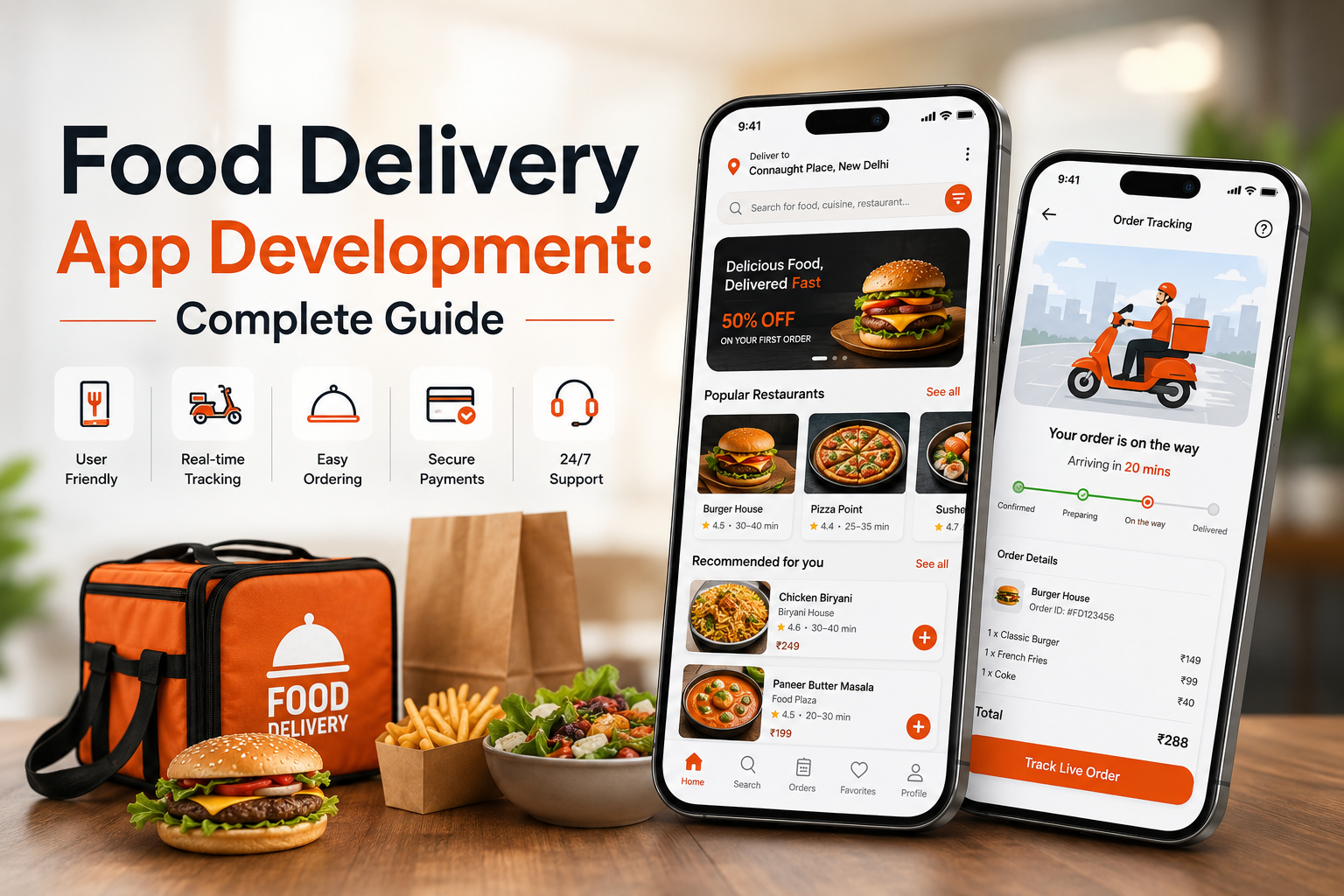
Food delivery apps have transformed the restaurant industry by making online ordering fast, convenient, and accessible. Whether you're launching a restaurant app, cloud kitchen platform, or multi-vendor marketplace, this guide covers everything you need to know about food delivery app development, including features, technologies, costs, security, and best practices.
Introduction
Food delivery apps have completely transformed the way people order food. Instead of calling restaurants or waiting in long queues, customers can browse menus, place orders, track deliveries in real time, and make secure online payments directly from their smartphones.
The rapid growth of online ordering, cloud kitchens, and digital payment solutions has created tremendous opportunities for restaurants, startups, and entrepreneurs to launch their own food delivery platforms. Whether you're operating a single restaurant, managing multiple outlets, or building a marketplace similar to Swiggy or Zomato, investing in a food delivery app can help you expand your customer base, improve operational efficiency, and increase revenue.
However, building a successful food delivery app requires much more than an attractive interface. It involves choosing the right business model, implementing real-time order tracking, integrating secure payment gateways, managing restaurants and delivery partners, and ensuring a seamless experience for every user.
In this complete guide, you'll learn everything about Food Delivery App Development, including app types, business models, essential features, technology stack, development process, costs, and future trends.
At Argenius, we develop scalable food delivery applications that help restaurants and food businesses deliver exceptional customer experiences while supporting long-term business growth.
What is a Food Delivery App?
A food delivery app is a mobile application that allows customers to order food online from restaurants, cloud kitchens, cafés, or grocery stores.
These applications connect customers, restaurants, delivery partners, and administrators through a single digital platform, making the entire ordering process simple and efficient.
A modern food delivery solution typically includes:
- Customer Mobile App
- Restaurant Dashboard
- Delivery Partner App
- Admin Panel
- Payment Gateway
- GPS Tracking
- Notification System
Together, these components streamline operations while providing a seamless ordering experience.
Types of Food Delivery Apps
Different businesses require different food delivery solutions depending on their goals and operational model.
Restaurant-Owned Apps
These apps are designed for individual restaurants or restaurant chains that want customers to order directly without relying on third-party platforms.
Benefits include:
- Direct customer relationships
- No commission fees
- Brand control
- Customer loyalty programs
- Higher profit margins
Aggregator Apps
Aggregator platforms connect multiple restaurants with customers through a single application.
Examples include marketplace-style platforms where users can browse hundreds of restaurants, compare menus, and place orders.
Features include:
- Restaurant listings
- Search and filters
- Ratings and reviews
- Multiple payment methods
- Live delivery tracking
This model is ideal for startups aiming to create a multi-vendor food marketplace.
Cloud Kitchen Apps
Cloud kitchens operate without physical dining spaces and rely entirely on online orders.
A cloud kitchen app focuses on:
- Online ordering
- Delivery management
- Kitchen operations
- Order tracking
- Customer communication
This model reduces operational costs while maximizing delivery efficiency.
Grocery & Food Delivery Apps
Some platforms combine restaurant food delivery with grocery shopping, allowing customers to purchase meals, beverages, and household essentials from a single app.
This hybrid model increases order value and customer convenience.
How Food Delivery Apps Work
Although the ordering process appears simple to customers, multiple systems work together behind the scenes.
A typical workflow includes:
- Customer creates an account.
- Restaurants display menus.
- Customer selects food items.
- Order is placed.
- Payment is processed.
- Restaurant receives the order.
- Delivery partner accepts the request.
- Food is prepared.
- Live tracking begins.
- Order is delivered.
- Customer provides ratings and reviews.
Each step requires secure APIs, real-time communication, and seamless coordination between different stakeholders.
Business Models
Selecting the right business model is essential for generating sustainable revenue.
Commission Model
Restaurants pay a percentage commission on every successful order.
This is one of the most common revenue models for marketplace platforms.
Delivery Fee
Customers pay a delivery charge based on factors such as distance, demand, or delivery speed.
Many businesses use dynamic pricing during peak hours.
Subscription Model
Premium memberships offer benefits such as:
- Free delivery
- Exclusive discounts
- Faster delivery
- Priority customer support
- Loyalty rewards
Recurring subscriptions create predictable revenue.
Advertising
Restaurants can pay to promote their listings within the app, increasing visibility and customer orders.
Sponsored listings create an additional revenue stream.
Service Charges
Many food delivery platforms include convenience fees or platform service charges that contribute to overall profitability.
Essential Features for Customers
Customer satisfaction depends heavily on a smooth and intuitive mobile experience.
Essential customer features include:
- User Registration
- Social Login
- Restaurant Search
- Smart Filters
- Categories
- Restaurant Profiles
- Menu Browsing
- Product Customization
- Shopping Cart
- Coupon Codes
- Multiple Payment Options
- Live Order Tracking
- Push Notifications
- Order History
- Favorites
- Ratings & Reviews
- Customer Support
- In-App Chat
These features improve engagement while simplifying the ordering process.
Features for Delivery Partners
Delivery executives require a dedicated application to manage deliveries efficiently.
Important features include:
- Secure Login
- Order Requests
- Accept/Reject Orders
- GPS Navigation
- Live Location Sharing
- Delivery Status Updates
- Earnings Dashboard
- Wallet Management
- Customer Calling
- Chat Support
- Delivery History
- Availability Toggle
These tools help optimize delivery operations while improving driver productivity.
Features for Restaurants
Restaurants need a centralized dashboard to manage menus, orders, and business operations.
Essential features include:
- Restaurant Profile
- Menu Management
- Price Updates
- Inventory Management
- Order Dashboard
- Order Acceptance
- Order Status Updates
- Sales Reports
- Customer Reviews
- Business Analytics
- Operating Hours
- Staff Management
These features enable restaurants to efficiently manage daily operations.
Admin Panel Features
The admin dashboard acts as the control center for the entire platform.
Key functionalities include:
- Dashboard Overview
- Customer Management
- Restaurant Management
- Delivery Partner Management
- Order Monitoring
- Payment Management
- Commission Settings
- Coupons & Promotions
- Reports & Analytics
- Notification Management
- Banner Management
- Complaint Resolution
A powerful admin panel helps ensure smooth platform operations and business growth.
Technology Stack
Choosing the right technology stack is crucial for building a secure, scalable, and high-performing food delivery platform.
A recommended modern stack includes:
Mobile App
- Flutter
- React Native
- Kotlin
- Swift
Backend
Database
Cloud Services
- AWS
- Google Cloud
- Microsoft Azure
Real-Time Communication
Maps & Navigation
Payments
Using modern technologies ensures better performance, easier maintenance, and future scalability.
Why Businesses Invest in Food Delivery Apps
The demand for online food ordering continues to rise, making food delivery apps a valuable investment for restaurants and entrepreneurs.
Key business benefits include:
- Increased online orders
- Wider customer reach
- Higher revenue opportunities
- Improved customer loyalty
- Real-time order management
- Reduced manual operations
- Better operational insights
- Stronger brand presence
Businesses that embrace digital ordering platforms are better positioned to meet changing customer expectations and stay competitive in a rapidly evolving market.
Food Delivery App Development Process
Developing a successful food delivery app requires careful planning, user-focused design, and scalable technology. Following a structured development process helps reduce risks and ensures a smooth launch.
A typical development process includes:
1. Business Requirement Analysis
The first step is understanding your business goals, target audience, competitors, and revenue model.
This stage includes:
- Market Research
- Competitor Analysis
- Business Model Selection
- Feature Planning
- Budget Estimation
2. UI/UX Design
A simple and intuitive interface improves customer engagement and increases order completion rates.
Design activities include:
- User Flow
- Wireframes
- Interactive Prototype
- Mobile UI Design
- Dashboard Design
3. Backend Development
The backend manages users, restaurants, payments, orders, notifications, and analytics.
Important backend modules include:
- Authentication
- Order Management
- Restaurant Management
- Delivery Management
- Payment Processing
- Notification Services
- Reports & Analytics
4. Mobile App Development
Separate applications are developed for:
- Customer App
- Delivery Partner App
- Restaurant App
Cross-platform frameworks like Flutter and React Native can significantly reduce development time and costs.
5. Testing & Quality Assurance
Before launch, every feature should be tested thoroughly.
Testing includes:
- Functional Testing
- UI Testing
- Performance Testing
- Security Testing
- API Testing
- Device Compatibility Testing
6. Deployment
After successful testing, the application is deployed to:
- Google Play Store
- Apple App Store
- Cloud Server
Deployment also includes server monitoring and production configuration.
7. Maintenance & Updates
Post-launch support is essential for long-term success.
Regular maintenance includes:
- Bug Fixes
- Performance Improvements
- Feature Updates
- Security Updates
- Server Monitoring
- Customer Support
Cost of Food Delivery App Development
The development cost depends on the complexity of the application, the number of platforms, integrations, and custom features.
| App Type |
Estimated Cost |
| Basic MVP |
$8,000 – $15,000 |
| Medium Business App |
$15,000 – $35,000 |
| Advanced Multi-Vendor Platform |
$35,000 – $80,000+ |
| Enterprise Solution |
Custom Pricing |
The total investment is influenced by:
- Number of Platforms
- UI/UX Complexity
- Real-Time Features
- Third-Party Integrations
- AI Features
- Admin Panel
- Maintenance Requirements
Development Timeline
A realistic development timeline depends on project scope.
| Phase |
Estimated Duration |
| Planning |
1–2 Weeks |
| UI/UX Design |
2–4 Weeks |
| Backend Development |
4–8 Weeks |
| Mobile App Development |
6–10 Weeks |
| Testing |
2–3 Weeks |
| Deployment |
1 Week |
A complete production-ready food delivery platform generally takes 3–6 months, depending on its complexity.
Essential API Integrations
Third-party APIs help extend the app's functionality without building every feature from scratch.
Popular integrations include:
Maps & Navigation
Payment Gateways
Authentication
- Firebase Authentication
- Google Sign-In
- Apple Sign-In
Notifications
- Firebase Cloud Messaging (FCM)
- OneSignal
SMS & Communication
Analytics
- Firebase Analytics
- Google Analytics
These integrations improve reliability while accelerating development.
AI Features for Food Delivery Apps
Artificial Intelligence is reshaping the food delivery industry by making applications smarter and more personalized.
Popular AI-powered features include:
- Personalized Food Recommendations
- Smart Search Suggestions
- AI Chatbots
- Demand Forecasting
- Route Optimization
- Delivery Time Prediction
- Fraud Detection
- Customer Behavior Analysis
- Dynamic Pricing
- Inventory Prediction
AI helps improve operational efficiency while enhancing the customer experience.
Security Best Practices
Since food delivery apps handle sensitive customer information and online payments, security should be a top priority.
Recommended security measures include:
- HTTPS Encryption
- Secure User Authentication
- Multi-Factor Authentication (MFA)
- Payment Gateway Security
- JWT Authentication
- Data Encryption
- Input Validation
- API Rate Limiting
- Secure Cloud Storage
- Regular Security Audits
A secure platform builds customer trust and protects business data.
Common Challenges
Developing a food delivery application involves several technical and operational challenges.
Some common challenges include:
- Managing multiple restaurants
- Real-time order synchronization
- Accurate GPS tracking
- Peak-hour traffic handling
- Delivery partner availability
- Payment failures
- High server load
- Customer support management
- Inventory synchronization
- Order cancellation handling
Planning for these challenges early helps create a more stable and reliable platform.
Food Delivery App vs Grocery Delivery App
Although these platforms appear similar, their operational workflows differ.
| Feature |
Food Delivery App |
Grocery Delivery App |
| Products |
Prepared Meals |
Grocery Items |
| Delivery Speed |
20–60 Minutes |
Same Day / Scheduled |
| Inventory |
Restaurant Menu |
Warehouse/Store Inventory |
| Order Frequency |
High |
Moderate |
| Preparation Time |
Required |
Not Required |
Some businesses combine both services into a single application to increase customer convenience and revenue.
Advantages of Food Delivery Apps
Food delivery applications offer significant benefits for both businesses and customers.
Major advantages include:
- Increased online sales
- Wider customer reach
- Better customer convenience
- Improved brand visibility
- Digital payment support
- Real-time tracking
- Automated order management
- Better customer retention
- Data-driven business decisions
- Higher operational efficiency
These benefits contribute to long-term business growth and customer satisfaction.
Future Trends
The food delivery industry continues to evolve with new technologies and changing consumer expectations.
Emerging trends include:
- AI-Powered Recommendations
- Drone Deliveries
- Autonomous Delivery Vehicles
- Voice Ordering
- Smart Kitchen Integration
- Contactless Delivery
- Subscription-Based Services
- Hyperlocal Delivery Models
- Sustainable Packaging
- Predictive Analytics
Businesses that adopt these innovations will be better positioned to remain competitive.
Why Businesses Choose Argenius
Building a successful food delivery platform requires much more than coding an application. It demands strategic planning, intuitive design, scalable architecture, secure payment integration, and seamless user experiences.
At Argenius, we specialize in developing high-performance food delivery applications tailored to the unique needs of restaurants, cloud kitchens, startups, and enterprise businesses.
Our expertise includes customer apps, delivery partner apps, restaurant management systems, admin dashboards, payment gateway integration, GPS tracking, push notifications, AI-powered features, cloud deployment, and ongoing maintenance.
Whether you're launching a local restaurant ordering app or a multi-vendor marketplace similar to Swiggy or Zomato, our team delivers scalable and future-ready solutions designed for long-term success.
Final Thoughts
Food delivery applications have become an essential part of the digital economy, helping restaurants and food businesses reach more customers while improving operational efficiency.
From intuitive customer experiences and real-time delivery tracking to secure payments and AI-powered recommendations, modern food delivery platforms combine multiple technologies to create seamless digital experiences.
Choosing the right business model, technology stack, and development partner plays a critical role in the success of your application.
At Argenius, we help businesses transform innovative food delivery ideas into secure, scalable, and feature-rich mobile applications that support sustainable growth and deliver exceptional customer experiences.
Frequently Asked Questions
How much does it cost to develop a food delivery app?
The cost depends on features, platforms, and complexity. A basic MVP may cost $8,000–$15,000, while advanced multi-vendor platforms can exceed $80,000.
Which technology is best for food delivery app development?
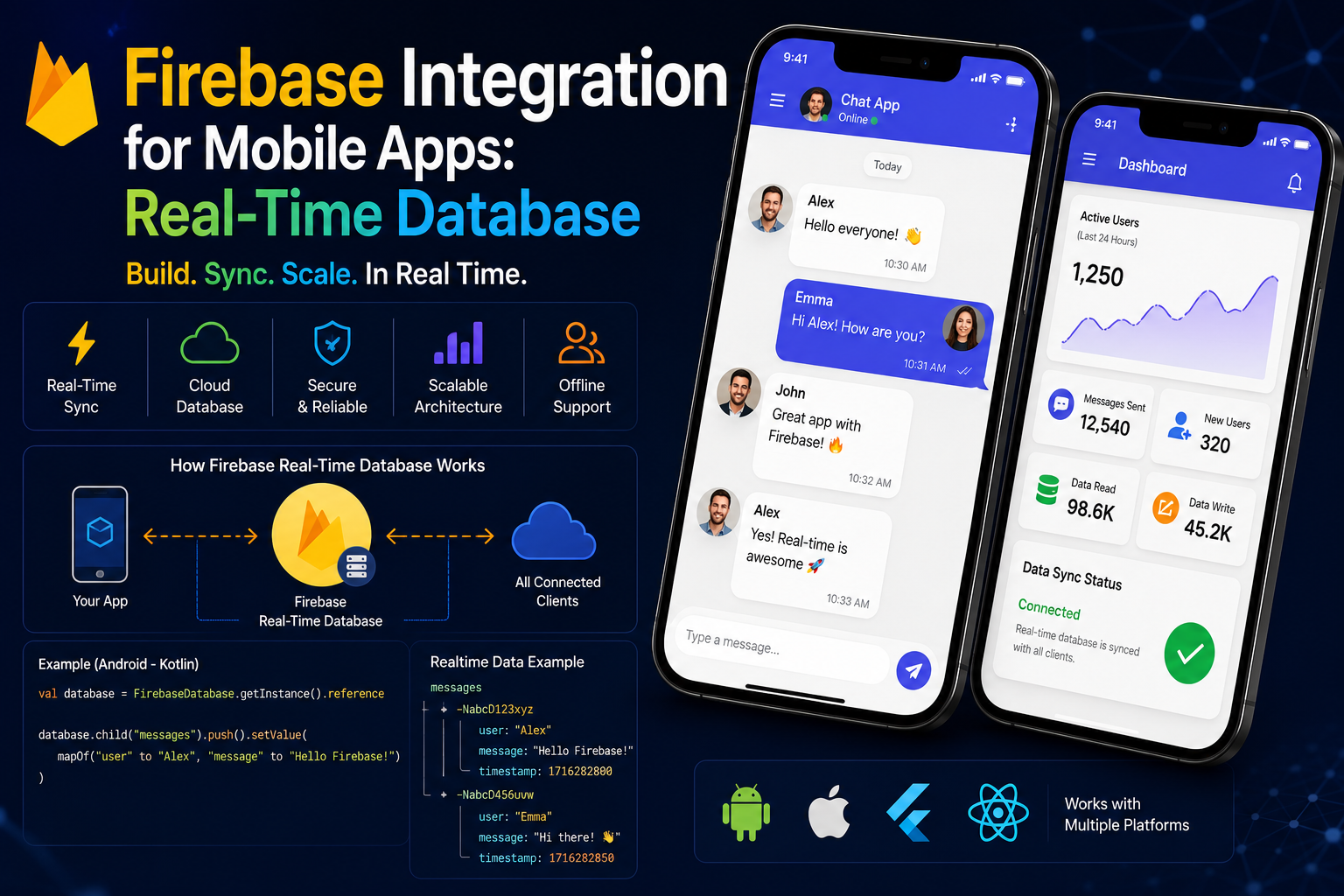
Flutter and React Native are excellent choices for cross-platform development, while Node.js or Laravel are commonly used for backend development. Firebase and WebSocket are popular for real-time features.
How long does it take to build a food delivery app?
A production-ready application typically takes 3–6 months, depending on features and integrations.
What are the essential features of a food delivery app?
Core features include user registration, restaurant listings, menu browsing, cart, secure payments, order tracking, push notifications, ratings, delivery management, and an admin dashboard.
Can I build a food delivery app like Swiggy or Zomato?
Yes. With the right development strategy, scalable architecture, and experienced team, you can build a multi-vendor platform with features similar to Swiggy or Zomato.
Is real-time tracking necessary?
Yes. Live order tracking improves transparency, enhances customer trust, and significantly improves the overall user experience.
Which payment gateways should I integrate?
Popular payment gateways include Razorpay, Stripe, PayPal, and other region-specific providers, depending on your target market.
Can Argenius develop a custom food delivery application?
Yes. Argenius provides complete food delivery app development services, including UI/UX design, mobile app development, backend systems, admin panels, payment integration, GPS tracking, cloud deployment, testing, and long-term maintenance.