Building a mobile app is only the beginning. Regular maintenance and ongoing support keep your application secure, fast, compatible with new devices, and ready for future business growth. This guide explains everything you need to know about mobile app maintenance and support.
Launching a mobile application is a major milestone, but it's not the end of the journey. Once your app is live, it requires continuous attention to ensure it remains secure, performs well, and delivers a great experience for users. Operating systems receive updates, devices evolve, security threats emerge, and user expectations continue to grow. Without regular maintenance, even the best applications can become outdated, slow, or vulnerable.
Many businesses focus heavily on development but underestimate the importance of ongoing support. Small bugs can turn into major issues if ignored, compatibility problems may appear after Android or iOS updates, and performance can gradually decline as new features are added. Regular maintenance helps identify and resolve these issues before they impact users or business operations.
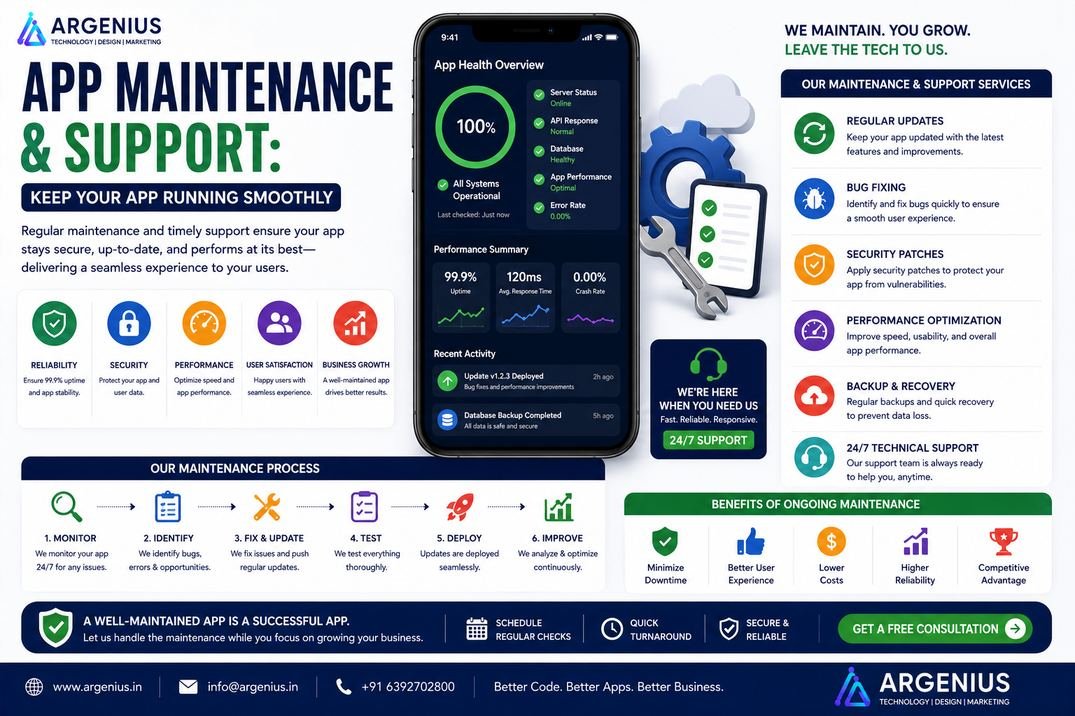
App maintenance goes far beyond fixing bugs. It includes monitoring application health, optimizing performance, improving security, updating third-party libraries, adding new features, ensuring compatibility with the latest devices, and continuously enhancing the user experience based on real feedback.
A proactive maintenance strategy also helps businesses reduce downtime, improve customer satisfaction, maintain strong app store ratings, and extend the lifespan of their application. Instead of reacting to problems after they occur, businesses can prevent them through continuous monitoring and timely updates.
In this guide, you'll learn what app maintenance and support involve, why they're essential, the different types of maintenance, best practices, technologies, costs, and how to keep your application running smoothly long after launch.
At Argenius, we provide end-to-end app maintenance and support services that help businesses keep their Android and iOS applications secure, optimized, and ready for future growth.
What is App Maintenance & Support?
App maintenance is the continuous process of updating, improving, monitoring, and fixing an application after it has been launched.
Support services ensure that technical issues are resolved quickly while keeping the application stable, secure, and compatible with modern devices and operating systems.
App maintenance typically includes:
- Bug Fixes
- Performance Optimization
- Security Updates
- Feature Enhancements
- OS Compatibility Updates
- Database Optimization
- API Maintenance
- Cloud Monitoring
- Crash Analysis
- User Support
Maintenance ensures that your application continues to deliver a reliable experience throughout its lifecycle.
Why App Maintenance is Important
Technology changes rapidly, and applications must evolve to remain useful and competitive.
Key benefits include:
- Better User Experience
- Improved Security
- Faster Performance
- Higher App Store Ratings
- Increased Customer Retention
- Reduced Downtime
- Better Device Compatibility
- Longer App Lifespan
- Lower Long-Term Costs
- Continuous Business Growth
An actively maintained application is more likely to retain users and support long-term business success.
Types of App Maintenance
Different maintenance activities address different business needs.
Corrective Maintenance
Corrective maintenance focuses on fixing issues discovered after launch.
Examples include:
- Bug Fixes
- Crash Resolution
- UI Issues
- API Errors
- Database Problems
Preventive Maintenance
Preventive maintenance helps reduce future risks.
It includes:
- Code Refactoring
- Dependency Updates
- Security Patches
- Performance Monitoring
- Infrastructure Improvements
Adaptive Maintenance
Applications must adapt to changing technologies and platforms.
Examples include:
- Android Version Updates
- iOS Version Compatibility
- New Device Support
- API Changes
- Cloud Service Updates
Perfective Maintenance
Perfective maintenance improves the application based on user feedback and business goals.
Examples include:
- New Features
- UI Improvements
- Workflow Enhancements
- Faster Performance
- Better Accessibility
Common Maintenance Activities
Regular maintenance tasks include:
- Bug Fixing
- Security Monitoring
- Performance Optimization
- Server Maintenance
- Database Optimization
- API Updates
- Backup Management
- Crash Monitoring
- Analytics Review
- User Feedback Analysis
These activities help maintain application quality and reliability.
Essential Maintenance Features
A complete maintenance strategy should include:
- 24/7 Monitoring
- Error Reporting
- Crash Analytics
- Automated Backups
- Performance Tracking
- Security Audits
- Version Management
- Update Deployment
- User Support
- Maintenance Reports
Industries That Need Continuous Maintenance
Regular maintenance is essential for:
- eCommerce Applications
- Banking & FinTech
- Healthcare Platforms
- Logistics Solutions
- Food Delivery Apps
- Education Platforms
- Travel Applications
- Enterprise Software
- Social Media Apps
- SaaS Platforms
These industries rely on uninterrupted performance and security to serve their users effectively.
Recommended Technology Stack
Monitoring
- Firebase Crashlytics
- Sentry
- New Relic
Analytics
- Firebase Analytics
- Google Analytics
- Mixpanel
Backend
Cloud Platforms
- AWS
- Google Cloud
- Microsoft Azure
DevOps
- Docker
- Kubernetes
- GitHub Actions
- Jenkins
Databases
Using the right maintenance tools allows teams to detect issues early, monitor application health, automate updates, and deliver a consistently reliable user experience.
App Maintenance Workflow
An effective maintenance workflow ensures that issues are identified quickly, resolved efficiently, and prevented from recurring. Instead of waiting for users to report problems, businesses should continuously monitor their applications and release improvements on a regular schedule.
A typical maintenance workflow includes:
- Monitor Application Health
- Detect Bugs & Performance Issues
- Prioritize Reported Problems
- Assign Tasks to Developers
- Implement Fixes
- Perform QA Testing
- Deploy Updates
- Monitor Production Environment
- Collect User Feedback
- Plan Future Improvements
Following a structured workflow helps maintain application stability while minimizing downtime.
Monitoring & Performance Tracking
Continuous monitoring allows businesses to identify issues before they affect users.
Important metrics to monitor include:
- App Startup Time
- Crash Rate
- API Response Time
- Memory Usage
- CPU Utilization
- Battery Consumption
- Network Performance
- Active Users
- User Retention
- Error Logs
Performance monitoring provides valuable insights for improving application reliability and user satisfaction.
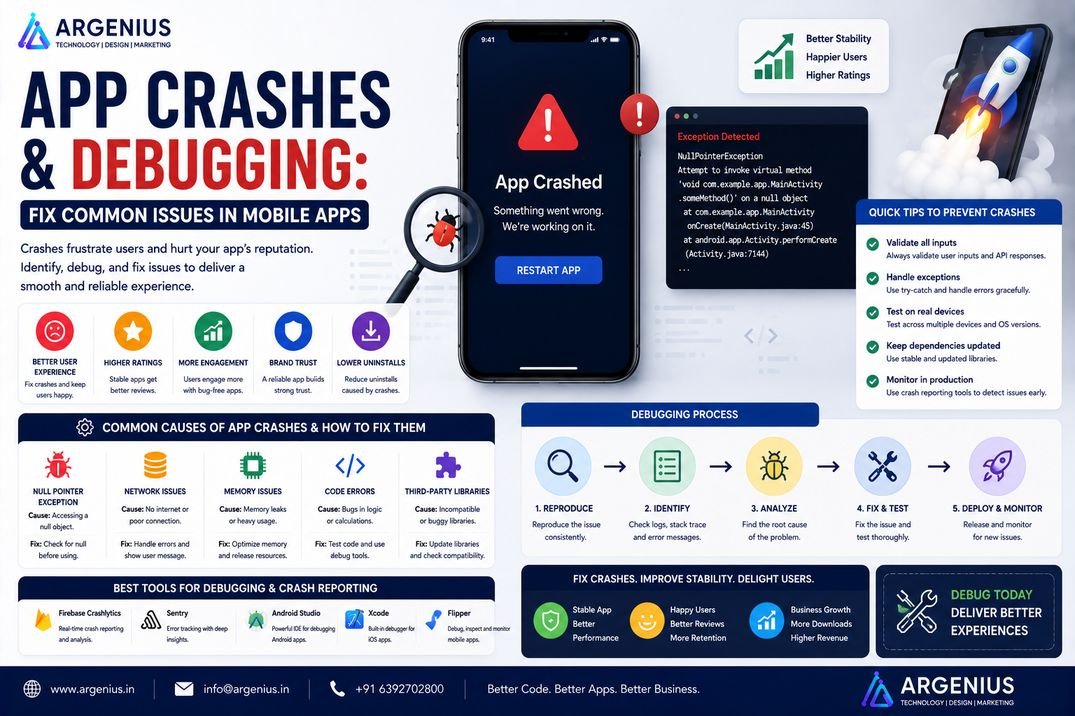
Bug Management Process
No application is completely free from bugs. A well-defined bug management process ensures issues are resolved quickly without affecting other features.
The process generally includes:
- Bug Identification
- Severity Assessment
- Issue Reproduction
- Root Cause Analysis
- Development Fix
- QA Verification
- Production Deployment
- Post-Release Monitoring
A disciplined bug management process reduces recurring issues and improves software quality.
Security Updates & Patch Management
Cybersecurity threats evolve constantly, making regular security updates essential.
Security maintenance includes:
- Security Patch Installation
- Library & Dependency Updates
- Vulnerability Scanning
- Malware Protection
- API Security Updates
- SSL Certificate Renewal
- Authentication Improvements
- Data Encryption Updates
- Access Control Review
- Security Audit Reports
Timely security updates help protect both user data and business operations.
OS & Device Compatibility Updates
Every year, Android and iOS release new operating system versions that may affect application behavior.
Compatibility maintenance involves:
- Android Version Support
- iOS Version Support
- Tablet Compatibility
- Foldable Device Support
- Screen Size Optimization
- Device Performance Testing
- SDK Updates
- Framework Updates
- Third-Party Library Compatibility
- Hardware Feature Support
Keeping applications compatible with modern devices ensures a consistent experience for all users.
Feature Enhancement Strategy
Successful applications continue evolving after launch based on user feedback and business requirements.
Feature enhancement may include:
- New Functionalities
- UI/UX Improvements
- Dashboard Enhancements
- Faster Workflows
- AI-Based Features
- Notification Improvements
- Search Optimization
- Payment Gateway Updates
- Third-Party Integrations
- Accessibility Improvements
Regular feature updates help businesses remain competitive and improve customer retention.
Development Cost (₹ INR)
App maintenance costs depend on the application's size, complexity, infrastructure, and support requirements.
| Maintenance Plan |
Estimated Cost |
| Basic Maintenance |
₹20,000 – ₹50,000 / Month |
| Standard Business Maintenance |
₹50,000 – ₹1,50,000 / Month |
| Enterprise Maintenance |
₹1,50,000 – ₹5,00,000 / Month |
| Large Enterprise Support |
Custom Pricing |
Factors Affecting Maintenance Cost
Maintenance costs are influenced by:
- Application Size
- Number of Active Users
- Android & iOS Support
- Cloud Infrastructure
- Third-Party Integrations
- Security Monitoring
- Performance Optimization
- Feature Enhancements
- Server Maintenance
- Support Availability (Business Hours or 24/7)
Maintenance Best Practices
Following industry best practices helps ensure long-term application stability.
Recommended practices include:
- Monitor the Application Continuously
- Schedule Regular Updates
- Keep Dependencies Updated
- Perform Automated Backups
- Review User Feedback Regularly
- Conduct Security Audits
- Optimize Performance Frequently
- Test Before Every Release
- Maintain Documentation
- Plan Updates in Phases
These practices help reduce risks while improving user satisfaction.
Common Maintenance Challenges
Maintaining an application over time presents several challenges.
Common issues include:
- Frequent OS Updates
- Device Fragmentation
- Increasing Security Threats
- Legacy Code Maintenance
- Third-Party API Changes
- Performance Degradation
- Limited Documentation
- Growing User Expectations
- Unexpected Downtime
- Budget Constraints
Addressing these challenges proactively helps keep applications reliable and scalable.
Corrective vs Preventive vs Adaptive vs Perfective Maintenance
| Maintenance Type |
Purpose |
Example |
| Corrective |
Fix Existing Issues |
Bug Fixes & Crash Resolution |
| Preventive |
Reduce Future Problems |
Code Refactoring & Security Updates |
| Adaptive |
Support New Technologies |
Android/iOS Updates & API Changes |
| Perfective |
Improve User Experience |
New Features & UI Enhancements |
Using all four maintenance types ensures an application remains secure, stable, and competitive.
Benefits of Ongoing App Maintenance
Consistent maintenance delivers long-term value for both businesses and users.
Key benefits include:
- Better User Experience
- Higher Application Stability
- Improved Security
- Reduced Downtime
- Faster Performance
- Better Device Compatibility
- Higher Customer Retention
- Lower Long-Term Development Costs
- Increased Business Efficiency
- Extended Application Lifespan
Businesses that invest in ongoing maintenance are better prepared to adapt to changing technology and customer expectations.
Future Trends in App Maintenance
The future of application maintenance is becoming more proactive and intelligent.
Emerging trends include:
- AI-Powered Error Detection
- Predictive Maintenance
- Automated Performance Optimization
- Self-Healing Applications
- Cloud-Native Monitoring
- Continuous Deployment
- DevSecOps Integration
- AI-Based Crash Analysis
- Real-Time User Experience Monitoring
- Intelligent Infrastructure Scaling
These technologies help reduce downtime while improving application reliability.
Why Businesses Choose Argenius
At Argenius, we believe that launching an application is only the beginning. Our maintenance and support services help businesses keep their applications secure, optimized, and aligned with evolving technology.
Our maintenance services include:
- Bug Fixing & Issue Resolution
- Performance Optimization
- Security Updates
- Android & iOS Compatibility Updates
- Feature Enhancements
- API & Database Maintenance
- Cloud Monitoring
- Crash Analysis
- Regular Health Checks
- Long-Term Technical Support
Whether you operate an eCommerce platform, healthcare application, fintech solution, logistics system, or enterprise software, Argenius provides proactive maintenance and reliable support to keep your application performing at its best.
Final Thoughts
A successful mobile application requires continuous care long after its initial launch. Regular maintenance ensures that the app remains secure, compatible with new devices, performs efficiently, and continues to meet changing user expectations.
By investing in ongoing support, businesses can prevent costly issues, improve customer satisfaction, and extend the life of their application. A proactive maintenance strategy is far more effective than waiting for problems to impact users.
If you're looking for a trusted partner to maintain and support your Android or iOS application, Argenius offers comprehensive maintenance services that keep your app secure, reliable, and ready for future growth.
Frequently Asked Questions
Why is app maintenance important after launch?
App maintenance ensures your application remains secure, compatible with new operating systems, free from critical bugs, and optimized for performance. It also helps improve user experience and extend the application's lifespan.
How often should a mobile app be updated?
The frequency depends on your application's needs. Security patches should be applied as soon as necessary, while feature updates and performance improvements are typically released every few weeks or months.
What is included in app maintenance services?
App maintenance generally includes bug fixing, performance optimization, security updates, OS compatibility updates, server monitoring, database maintenance, API updates, feature enhancements, and technical support.
How much does mobile app maintenance cost?
Basic maintenance plans usually start at ₹20,000 per month, while enterprise applications with advanced monitoring, cloud infrastructure, and continuous support can require significantly larger monthly budgets.
Can app maintenance improve App Store ratings?
Yes. Regular updates, faster performance, fewer crashes, and quick issue resolution often lead to better user reviews, higher ratings, and improved retention.
Does Argenius provide long-term app maintenance?
Yes. Argenius offers ongoing maintenance and support services, including monitoring, security updates, feature enhancements, bug fixes, performance optimization, and compatibility updates for Android and iOS applications.