App Store Optimization (ASO) is one of the most effective ways to increase organic app downloads without relying solely on paid advertising. This guide explains how ASO works, ranking factors, keyword optimization, screenshots, reviews, and best practices to help your app rank higher on Google Play and the Apple App Store.
Publishing your mobile application on Google Play or the Apple App Store is only the first step toward success. Every day, thousands of new apps are released across different categories, making it increasingly difficult for users to discover your application. Even if your app offers exceptional features and a great user experience, it may struggle to gain downloads if people cannot find it.
This is where App Store Optimization (ASO) becomes essential. Often referred to as the SEO of mobile apps, ASO focuses on improving an application's visibility within app stores, helping it rank higher for relevant keywords and attract more organic downloads. A well-optimized app listing increases discoverability, improves conversion rates, and reduces dependence on paid advertising.
Effective ASO goes beyond adding keywords to your app title. It involves optimizing metadata, creating compelling descriptions, designing attractive icons and screenshots, encouraging positive reviews, improving ratings, localizing listings for different markets, and continuously monitoring performance.
Whether you're launching a startup app, an eCommerce platform, a healthcare solution, a fintech application, a food delivery service, or an enterprise product, ASO plays a critical role in driving sustainable growth.
In this guide, you'll learn everything about App Store Optimization, including ranking factors, keyword research, optimization strategies, tools, costs, best practices, and common mistakes to avoid.
At Argenius, we help businesses optimize their mobile applications for maximum visibility, increased downloads, and long-term success across both Google Play and the Apple App Store.
What is App Store Optimization (ASO)?
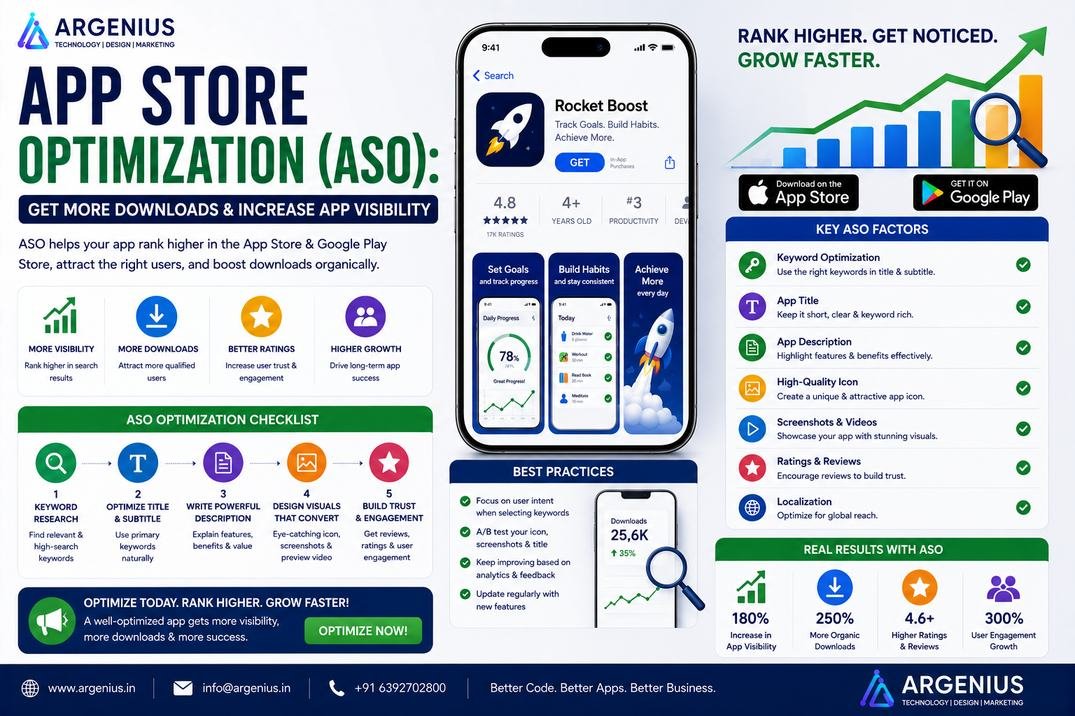
App Store Optimization (ASO) is the process of improving an app's visibility and ranking within app stores like Google Play and Apple's App Store.
The primary goal of ASO is to increase organic downloads by making the app easier to discover and more appealing to potential users.
ASO focuses on optimizing:
- App Title
- Subtitle
- Keywords
- Description
- App Icon
- Screenshots
- Preview Videos
- Ratings & Reviews
- Localization
- App Updates
Unlike paid advertising, ASO provides long-term organic growth by improving search visibility and conversion rates.
Why ASO is Important
Millions of users search app stores every day to find solutions to their needs. Without optimization, even a high-quality app can remain hidden among competitors.
Benefits of ASO include:
- Higher App Store Rankings
- More Organic Downloads
- Increased Visibility
- Better User Trust
- Higher Conversion Rates
- Lower User Acquisition Costs
- Improved Brand Recognition
- Better Return on Marketing Investment
- Sustainable Growth
- Competitive Advantage
ASO helps businesses attract users who are actively searching for apps like theirs.
How App Store Search Works
When a user searches for an app, the store's algorithm evaluates multiple ranking signals before displaying results.
Important ranking factors include:
- Keyword Relevance
- App Title
- Description Quality
- User Ratings
- Number of Reviews
- Download Volume
- Retention Rate
- Update Frequency
- App Performance
- User Engagement
Understanding these factors helps developers optimize their listings effectively.
Key Elements of App Store Optimization
App Title Optimization
The app title is one of the strongest ranking signals.
Best practices:
- Include the primary keyword naturally
- Keep it concise and memorable
- Highlight your brand name
- Avoid keyword stuffing
Keyword Optimization
Choosing the right keywords improves discoverability.
Consider:
- High Search Volume
- Low to Medium Competition
- User Intent
- Long-Tail Keywords
- Competitor Keywords
App Description Optimization
A compelling description helps users understand your app's value.
Include:
- Main Features
- Benefits
- Keywords Naturally
- Clear Formatting
- Strong Call-to-Action
App Icon Design
Your icon creates the first impression.
A good icon should be:
- Simple
- Recognizable
- High Contrast
- Consistent with Branding
- Easy to Identify
Screenshots & Preview Videos
Visual assets significantly influence conversion rates.
Best practices:
- Showcase Core Features
- Highlight Benefits
- Use Clear Captions
- Maintain Brand Consistency
- Demonstrate Real Usage
Ratings & Reviews
Positive reviews improve both rankings and user trust.
Encourage users to:
- Leave Ratings
- Write Reviews
- Report Issues
- Share Feedback
Responding to reviews also builds credibility.
On-Metadata vs Off-Metadata Factors
On-Metadata Factors
These are elements you control directly.
Examples:
- App Title
- Subtitle
- Description
- Keywords
- Screenshots
- Preview Video
- App Icon
- Category
Off-Metadata Factors
These are influenced by user behavior.
Examples:
- Ratings
- Reviews
- Downloads
- Retention Rate
- Crash Rate
- Engagement
- Update Frequency
Both categories play a major role in ASO success.
ASO for Google Play vs Apple App Store
Although both platforms use similar principles, their ranking algorithms differ.
| Feature |
Google Play |
Apple App Store |
| Description Keywords |
Yes |
Limited Impact |
| Keyword Field |
No |
Yes |
| Reviews |
Important |
Important |
| Ratings |
Important |
Important |
| Backlinks |
Some Influence |
Minimal |
| Updates |
Important |
Important |
Optimizing for each platform individually improves overall performance.
Industries That Benefit from ASO
Almost every mobile application can benefit from ASO, including:
- eCommerce
- Healthcare
- Food Delivery
- Education
- Banking & FinTech
- Logistics
- Social Networking
- Travel
- Fitness
- Enterprise Applications
Recommended ASO Tools
Popular ASO tools include:
- AppTweak
- Sensor Tower
- Mobile Action
- App Radar
- AppFollow
- Google Play Console
- App Store Connect
- Firebase Analytics
- Mixpanel
- Google Looker Studio
These tools help track rankings, analyze competitors, monitor downloads, and optimize app store performance.
Complete ASO Workflow
A successful App Store Optimization strategy follows a structured process rather than making random changes to an app listing. Continuous optimization helps improve rankings, increase downloads, and boost user engagement over time.
A typical ASO workflow includes:
- Market Research
- Competitor Analysis
- Keyword Research
- Optimize App Metadata
- Design High-Converting Visual Assets
- Publish or Update the App
- Track Rankings & Downloads
- Collect User Reviews
- Analyze Performance
- Continuously Improve Listings
ASO is an ongoing process, not a one-time task.
Keyword Research Strategy
Keywords determine how easily users can discover your app through search.
A strong keyword strategy includes:
- Identify Primary Keywords
- Find Long-Tail Keywords
- Analyze Competitor Keywords
- Use High-Intent Search Terms
- Balance Search Volume & Competition
- Target Different User Segments
- Localize Keywords for Different Countries
- Monitor Ranking Changes
- Remove Low-Performing Keywords
- Refresh Keywords Regularly
Example for a food delivery app:
- Food Delivery
- Online Food Order
- Restaurant Delivery
- Grocery Delivery
- Fast Food App
- Meal Delivery
Choosing the right keywords significantly improves app discoverability.
Competitor Analysis
Studying successful competitors helps identify opportunities to improve your own app listing.
Analyze competitors based on:
- App Title
- Keywords
- Description
- Icon Design
- Screenshots
- Preview Videos
- Ratings
- Reviews
- Update Frequency
- User Feedback
Competitor analysis helps uncover ranking opportunities without copying another app's strategy.
Conversion Rate Optimization (CRO)
Getting users to visit your app listing is only half the battle. The next goal is converting those visitors into downloads.
Ways to improve conversion include:
- Attractive App Icon
- Professional Screenshots
- High-Quality Preview Video
- Clear Value Proposition
- Strong App Description
- Positive Reviews
- High Ratings
- Regular Updates
- Trust-Building Visuals
- Clear Call-to-Action
Improving your listing's conversion rate often leads to higher rankings because app stores recognize strong user engagement.
Localization Strategy
Expanding into global markets requires more than simply translating your app description.
Localization includes:
- Translate App Title
- Localize Keywords
- Adapt Screenshots
- Translate Descriptions
- Support Local Languages
- Optimize for Regional Search Trends
- Use Country-Specific Examples
- Display Local Currency
- Respect Cultural Preferences
- Test Region-Specific Messaging
Localization increases visibility and downloads in international markets.
A/B Testing
A/B testing compares two versions of an app listing to determine which performs better.
Elements commonly tested include:
- App Icon
- Screenshots
- Preview Video
- Title
- Subtitle
- Short Description
- Feature Graphics
- Call-to-Action
- Promotional Text
- Screenshot Order
Regular testing helps improve conversion rates using real user behavior rather than assumptions.
ASO Metrics & KPIs
Tracking the right metrics helps measure the effectiveness of your optimization efforts.
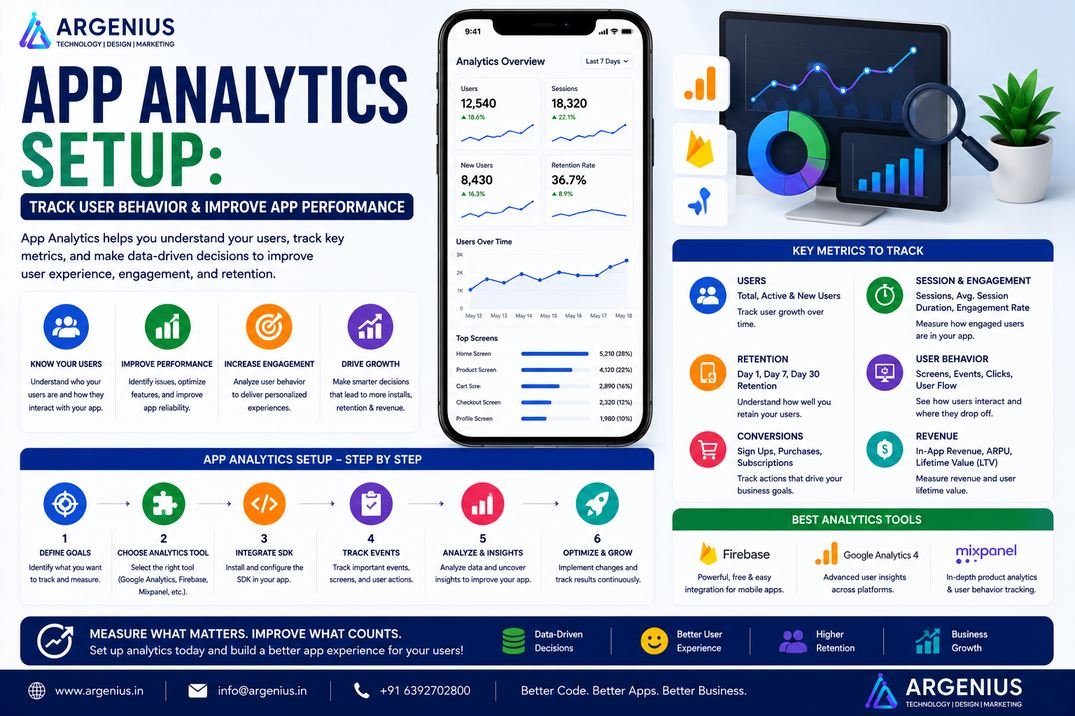
Key performance indicators include:
- App Store Impressions
- Keyword Rankings
- Organic Downloads
- Conversion Rate
- Install Rate
- Daily Active Users (DAU)
- Monthly Active Users (MAU)
- User Retention
- Ratings
- Review Volume
- Crash Rate
- Revenue
- Cost Per Install (CPI)
- Customer Lifetime Value (CLV)
Reviewing these metrics regularly helps identify what is working and where improvements are needed.
Development & Marketing Cost (₹ INR)
The cost of App Store Optimization depends on the scope of work, market competition, and whether optimization is handled in-house or by an agency.
| ASO Service |
Estimated Cost |
| Basic ASO Setup |
₹20,000 – ₹50,000 |
| Complete ASO Optimization |
₹50,000 – ₹1,50,000 |
| Enterprise ASO Strategy |
₹1,50,000 – ₹5,00,000 |
| Monthly ASO Management |
₹25,000 – ₹2,00,000 / Month |
Factors Affecting Cost
ASO pricing depends on:
- Number of Target Keywords
- Competitor Research
- Market Competition
- App Category
- Localization Requirements
- Screenshot & Graphic Design
- A/B Testing
- Content Writing
- Review Management
- Monthly Performance Monitoring
ASO Best Practices
Following industry best practices increases the chances of achieving sustainable rankings.
Recommended practices include:
- Research Keywords Before Publishing
- Optimize App Title Naturally
- Write User-Focused Descriptions
- Design Professional Icons
- Use High-Quality Screenshots
- Add an Engaging Preview Video
- Encourage Positive Reviews
- Fix Bugs Quickly
- Release Regular Updates
- Monitor Performance Continuously
Consistency is one of the most important factors in long-term ASO success.
Common ASO Mistakes
Many developers lose downloads because of avoidable optimization mistakes.
Common mistakes include:
- Keyword Stuffing
- Ignoring User Reviews
- Low-Quality Screenshots
- Generic App Icons
- Rarely Updating the App
- Misleading Descriptions
- No Localization
- Ignoring Competitor Analysis
- Poor Crash Performance
- Tracking the Wrong Metrics
Avoiding these mistakes improves visibility, trust, and download conversion rates.
ASO vs Paid App Advertising
| Feature |
App Store Optimization (ASO) |
Paid App Advertising |
| Cost |
Lower Long-Term |
Higher Ongoing |
| Traffic |
Organic |
Paid |
| Sustainability |
Long-Term |
Stops When Budget Ends |
| Brand Trust |
High |
Medium |
| ROI |
Excellent Over Time |
Depends on Budget |
| Speed |
Gradual |
Immediate |
| Best For |
Long-Term Growth |
Quick User Acquisition |
The most effective growth strategy often combines strong ASO with targeted paid advertising.
Benefits of App Store Optimization
Investing in ASO provides long-term value beyond increasing download numbers.
Major benefits include:
- Higher App Visibility
- More Organic Downloads
- Lower User Acquisition Costs
- Better Search Rankings
- Improved Brand Awareness
- Higher Conversion Rates
- Increased User Trust
- Better App Store Ratings
- Sustainable Business Growth
- Improved Return on Marketing Investment
A well-optimized app listing continues to attract users even after marketing campaigns end.
Future Trends in ASO
App discovery is evolving as app stores introduce new technologies and ranking signals.
Emerging trends include:
- AI-Powered Keyword Research
- Personalized Search Results
- Voice Search Optimization
- AI-Generated Metadata Suggestions
- Video-First App Listings
- Predictive User Behavior Analysis
- Hyper-Localization
- Privacy-Focused Analytics
- Visual Search in App Stores
- Machine Learning-Based Ranking Algorithms
Businesses that adapt to these trends will have a competitive advantage in app store search.
Why Businesses Choose Argenius
At Argenius, we help businesses maximize app visibility and organic downloads through data-driven App Store Optimization strategies. Our ASO specialists combine keyword research, conversion optimization, creative design, and continuous performance monitoring to improve rankings on both Google Play and the Apple App Store.
Our ASO services include:
- Complete ASO Audit
- Keyword Research & Strategy
- App Listing Optimization
- App Title & Description Writing
- Screenshot & Preview Video Optimization
- Competitor Analysis
- Review & Rating Strategy
- Localization
- Performance Tracking
- Ongoing ASO Management
Whether you're launching a new application or looking to increase downloads for an existing one, Argenius provides customized ASO solutions that deliver measurable results.
Final Thoughts
Creating a great mobile application is only part of the journey. To achieve long-term success, users need to discover your app before they can experience its value. App Store Optimization provides a sustainable way to improve visibility, attract qualified users, and increase organic downloads without relying entirely on paid advertising.
By combining effective keyword research, compelling visuals, continuous testing, and ongoing optimization, businesses can improve rankings, increase conversions, and build a stronger presence on both major app stores.
If you're ready to grow your app organically, Argenius can help you develop and execute an ASO strategy that delivers long-term results.
Frequently Asked Questions
What is App Store Optimization (ASO)?
App Store Optimization is the process of improving an app's visibility in Google Play and the Apple App Store to increase organic downloads through better rankings and higher conversion rates.
How is ASO different from SEO?
SEO focuses on improving rankings in search engines like Google, while ASO focuses specifically on ranking mobile applications within app stores.
How long does ASO take to show results?
Most apps begin seeing measurable improvements within 4–12 weeks, depending on competition, keyword difficulty, app quality, and update frequency.
Which factors affect app rankings?
Important ranking factors include keyword relevance, app title, description, ratings, reviews, download volume, retention rate, engagement, app performance, and regular updates.
Do ratings and reviews impact ASO?
Yes. High ratings, genuine positive reviews, and timely responses to user feedback improve both app visibility and conversion rates.
Does Argenius provide App Store Optimization services?
Yes. Argenius offers complete ASO services, including keyword research, listing optimization, competitor analysis, screenshot design recommendations, localization, performance tracking, and ongoing optimization for Google Play and the Apple App Store.