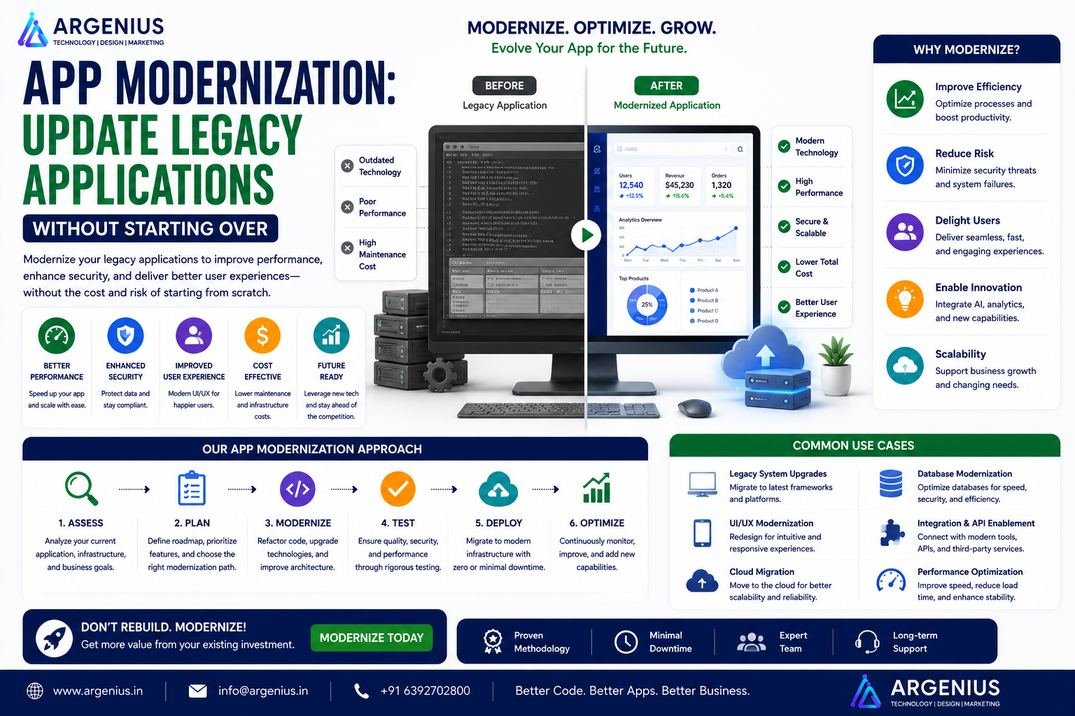
Legacy applications can slow business growth, increase maintenance costs, and expose organizations to security risks. This guide explains how app modernization helps businesses upgrade outdated software using modern technologies, cloud platforms, APIs, and scalable architectures without rebuilding everything from scratch.
Many businesses still rely on software built years ago. While these legacy applications may continue to perform their basic functions, they often struggle to meet modern business requirements. Slow performance, outdated user interfaces, security vulnerabilities, limited scalability, and integration challenges can prevent organizations from growing efficiently.
As customer expectations evolve and technology advances, businesses need applications that are fast, secure, mobile-friendly, and capable of integrating with cloud platforms and third-party services. Unfortunately, replacing an entire legacy system from scratch is expensive, time-consuming, and risky.
This is where App Modernization becomes the smarter approach.
Instead of discarding an existing application, modernization focuses on improving what already works while replacing outdated technologies, redesigning user experiences, strengthening security, and making the software easier to maintain. This approach helps businesses reduce costs, minimize downtime, and extend the life of valuable software investments.
App modernization can involve migrating applications to the cloud, rebuilding outdated interfaces, upgrading databases, introducing APIs, adopting microservices, or replacing legacy frameworks with modern technologies like Flutter, React Native, Laravel, Node.js, or .NET.
Whether you're modernizing an enterprise ERP system, healthcare platform, banking application, CRM, inventory management software, or customer portal, a structured modernization strategy can significantly improve performance, security, and scalability.
In this guide, you'll learn everything about app modernization, including modernization strategies, migration approaches, technologies, challenges, costs, and best practices for successfully updating legacy applications.
At Argenius, we help businesses transform outdated applications into secure, scalable, and high-performance digital solutions without disrupting day-to-day operations.
What is App Modernization?
App modernization is the process of upgrading an existing software application using modern technologies, architectures, and development practices while preserving valuable business functionality.
Instead of rebuilding the entire application, modernization focuses on improving performance, security, scalability, and user experience.
Modernization may include:
- UI/UX Redesign
- Cloud Migration
- API Integration
- Database Upgrade
- Performance Optimization
- Security Enhancement
- Code Refactoring
- Framework Migration
- Mobile Enablement
- DevOps Implementation
The objective is to create an application that meets current business needs while remaining adaptable for future growth.
Why Legacy Applications Need Modernization
Legacy software often becomes a barrier to innovation.
Common reasons businesses modernize include:
- Slow Performance
- Outdated User Interface
- Security Vulnerabilities
- High Maintenance Costs
- Limited Scalability
- Poor Mobile Experience
- Difficult Third-Party Integrations
- Unsupported Technologies
- Frequent Downtime
- Rising Infrastructure Costs
Modernization helps businesses overcome these limitations while protecting their existing investment.
Signs Your Application Needs Modernization
Not every application needs a complete rebuild, but there are clear signs that modernization is the right choice.
Common indicators include:
- Slow System Response
- Frequent Application Crashes
- High Server Costs
- Difficult Feature Updates
- Poor User Experience
- Unsupported Programming Languages
- Outdated Database Systems
- Security Compliance Issues
- Lack of Cloud Support
- Low Customer Satisfaction
Ignoring these issues can lead to higher operational costs and reduced business efficiency.
App Modernization Strategies
Different businesses require different modernization approaches depending on their goals and existing systems.
Rehosting (Lift and Shift)
Move the application to cloud infrastructure without changing the application code.
Best for:
- Quick Migration
- Lower Initial Cost
- Faster Deployment
Refactoring
Improve the application's internal code while keeping the core functionality unchanged.
Benefits include:
- Better Performance
- Easier Maintenance
- Improved Scalability
- Cleaner Code
Replatforming
Move the application to a modern platform while making only minimal code changes.
Common upgrades include:
- Modern Databases
- Containerization
- Cloud Services
- Managed Infrastructure
Rebuilding
Develop a new version of the application while keeping the existing business logic.
Suitable when:
- Technology is Outdated
- Architecture Cannot Scale
- Major UI Improvements are Required
Replacing
Replace the legacy application with a completely new solution when modernization is no longer practical.
This option is typically chosen for highly outdated or unsupported systems.
Benefits of App Modernization
Modernizing an application provides long-term business value.
Major benefits include:
- Better Performance
- Improved Security
- Modern User Experience
- Lower Maintenance Costs
- Faster Feature Development
- Cloud Readiness
- Easier Integrations
- Better Scalability
- Increased Productivity
- Longer Software Lifespan
Industries That Benefit from App Modernization
App modernization is valuable across many industries.
Examples include:
- Healthcare
- Banking & FinTech
- Manufacturing
- Logistics
- Retail & eCommerce
- Education
- Government
- Real Estate
- Enterprise Software
- Travel & Hospitality
Essential Features of a Modernized Application
A modern application should include:
- Responsive UI
- Cloud Integration
- Secure Authentication
- API-Based Architecture
- Real-Time Data Synchronization
- Analytics Dashboard
- Role-Based Access
- High Performance
- Scalable Infrastructure
- Continuous Monitoring
Recommended Technology Stack
Frontend
- Flutter
- React Native
- React.js
- Angular
- Vue.js
Backend
- Laravel
- Node.js
- ASP.NET Core
- Spring Boot
- Django
Cloud Platforms
- AWS
- Microsoft Azure
- Google Cloud
Database
- PostgreSQL
- MySQL
- MongoDB
- SQL Server
DevOps
- Docker
- Kubernetes
- GitHub Actions
- Jenkins
Using modern technologies helps businesses improve software performance, reduce maintenance efforts, and prepare applications for future growth.
App Modernization Architecture
A successful app modernization project begins with a scalable architecture that allows businesses to upgrade their applications without disrupting daily operations. Rather than replacing everything at once, modern architectures enable gradual improvements while keeping essential business functions running.
A typical app modernization architecture includes:
- Modern Mobile or Web Application
- API Gateway
- Authentication Service
- Microservices Layer
- Cloud Infrastructure
- Database Layer
- Monitoring & Logging
- CI/CD Pipeline
- Analytics Platform
- Backup & Disaster Recovery
This architecture provides flexibility, scalability, and improved long-term maintainability.
Cloud Migration Process
Migrating legacy applications to the cloud is one of the most common modernization strategies. Cloud infrastructure reduces hardware dependency, improves scalability, and simplifies maintenance.
A typical migration process includes:
- Assess Existing Infrastructure
- Analyze Dependencies
- Select the Right Cloud Platform
- Migrate Databases
- Move Application Services
- Configure Security Policies
- Perform Testing
- Optimize Performance
- Monitor Production Environment
- Continue Improvements
Cloud migration enables businesses to scale resources as demand grows while reducing infrastructure costs.
Monolithic vs Microservices Architecture
Modernization often involves replacing monolithic systems with microservices.
| Feature |
Monolithic |
Microservices |
| Deployment |
Single Application |
Independent Services |
| Scalability |
Limited |
Highly Scalable |
| Maintenance |
Difficult |
Easier |
| Development Speed |
Slower |
Faster |
| Fault Isolation |
Low |
High |
| Technology Flexibility |
Limited |
Excellent |
Microservices allow organizations to update individual components without affecting the entire application.
API Modernization
Legacy applications often use outdated communication methods that limit integration with modern systems.
API modernization includes:
- REST API Development
- GraphQL Integration
- Secure Authentication
- API Gateway
- Rate Limiting
- Version Management
- Third-Party Integration
- Real-Time APIs
- API Monitoring
- Documentation
Modern APIs improve interoperability and simplify future development.
Database Modernization
An outdated database can become a major performance bottleneck.
Database modernization focuses on:
- Schema Optimization
- Data Migration
- Query Optimization
- Indexing Improvements
- Backup Automation
- Replication
- High Availability
- Database Security
- Cloud Databases
- Performance Monitoring
Modern databases improve application speed, reliability, and scalability.
UI/UX Modernization
Many legacy applications suffer from outdated interfaces that no longer meet user expectations.
Modern UI/UX improvements include:
- Responsive Design
- Mobile-Friendly Layouts
- Faster Navigation
- Improved Accessibility
- Dark Mode Support
- Interactive Dashboards
- Better User Workflows
- Simplified Forms
- Modern Visual Design
- Consistent Branding
A refreshed user experience increases productivity, customer satisfaction, and user adoption.
Development Cost (₹ INR)
The cost of app modernization depends on the size of the existing application, the technologies involved, migration complexity, and business requirements.
| Modernization Level |
Estimated Cost |
| Small Application Modernization |
₹3,00,000 – ₹8,00,000 |
| Medium Business Application |
₹8,00,000 – ₹20,00,000 |
| Enterprise Legacy Modernization |
₹20,00,000 – ₹50,00,000 |
| Large Digital Transformation Project |
₹50,00,000+ (Custom Pricing) |
Factors Affecting Cost
Project costs vary depending on:
- Existing Application Size
- Legacy Technology Stack
- Cloud Migration
- Database Migration
- API Development
- UI/UX Redesign
- Security Improvements
- Third-Party Integrations
- Performance Optimization
- Ongoing Support & Maintenance
Security Best Practices During Modernization
Modernizing an application is the perfect opportunity to strengthen its security.
Recommended practices include:
- Implement Multi-Factor Authentication
- Encrypt Sensitive Data
- Secure APIs
- Apply Role-Based Access Control
- Keep Dependencies Updated
- Conduct Security Audits
- Perform Penetration Testing
- Enable Activity Logging
- Monitor Security Events
- Follow Secure Coding Standards
Building security into the modernization process reduces future risks and protects valuable business data.
Common Modernization Challenges
Organizations often face several challenges while upgrading legacy applications.
Common challenges include:
- Outdated Technology Stack
- Legacy Database Compatibility
- Limited Documentation
- Business Downtime Concerns
- Data Migration Risks
- Integration Complexity
- Budget Constraints
- User Adoption Issues
- Performance Bottlenecks
- Compliance Requirements
Proper planning and phased execution help minimize these risks.
Best Practices for App Modernization
Following a structured modernization strategy improves project success.
Recommended best practices include:
- Assess the Existing System
- Define Clear Business Goals
- Modernize in Phases
- Prioritize High-Impact Features
- Automate Testing
- Use Cloud-Native Services
- Optimize Performance
- Strengthen Security
- Train End Users
- Continuously Monitor Performance
These practices reduce migration risks while ensuring long-term success.
Rehosting vs Refactoring vs Replatforming vs Rebuilding
| Strategy |
Best For |
Cost |
Complexity |
| Rehosting |
Quick Cloud Migration |
Low |
Low |
| Refactoring |
Improve Existing Code |
Medium |
Medium |
| Replatforming |
Upgrade Infrastructure |
Medium |
Medium |
| Rebuilding |
Complete Modern Experience |
High |
High |
The right approach depends on the application's age, business goals, budget, and long-term technology roadmap.
Benefits of App Modernization
Modernization provides measurable improvements across technology, operations, and user experience.
Major benefits include:
- Improved Application Performance
- Better Security
- Lower Maintenance Costs
- Faster Development Cycles
- Modern User Experience
- Easier System Integration
- Greater Scalability
- Improved Reliability
- Better Compliance
- Increased Business Agility
Modernized applications are easier to maintain and better prepared for future business growth.
Future Trends in App Modernization
Technology continues to evolve, creating new opportunities for legacy application transformation.
Emerging trends include:
- AI-Assisted Code Modernization
- Cloud-Native Development
- Serverless Computing
- Containerization with Kubernetes
- Low-Code & No-Code Platforms
- Edge Computing
- Event-Driven Architecture
- Intelligent Automation
- AI-Based Performance Monitoring
- Zero Trust Security
Businesses adopting these trends can accelerate innovation while reducing operational complexity.
Why Businesses Choose Argenius
At Argenius, we help businesses modernize outdated applications without disrupting daily operations. Our modernization approach focuses on improving performance, strengthening security, enhancing user experience, and preparing applications for future growth.
Our expertise includes:
- Legacy Application Assessment
- Cloud Migration
- UI/UX Modernization
- API Development & Integration
- Database Migration
- Performance Optimization
- Security Enhancement
- Flutter & React Native Migration
- Laravel & Node.js Development
- Long-Term Maintenance & Support
Whether you're upgrading an ERP system, CRM platform, healthcare application, eCommerce solution, or enterprise software, Argenius delivers scalable modernization solutions tailored to your business goals.
Final Thoughts
Legacy applications often contain years of valuable business logic and operational knowledge, but outdated technologies can limit growth, increase maintenance costs, and create security risks. App modernization offers a practical way to preserve what works while upgrading the parts that no longer meet today's standards.
By adopting modern architectures, cloud platforms, secure APIs, and improved user experiences, businesses can extend the life of their software, improve operational efficiency, and stay competitive in an evolving digital landscape.
If you're planning to modernize a legacy application, Argenius can help you transform it into a secure, scalable, and future-ready solution with minimal disruption to your business.
Frequently Asked Questions
What is app modernization?
App modernization is the process of upgrading legacy software using modern technologies, cloud platforms, improved architectures, and enhanced user interfaces while preserving valuable business functionality.
When should a business modernize its application?
Businesses should consider modernization when their application suffers from poor performance, outdated technology, security vulnerabilities, high maintenance costs, limited scalability, or integration challenges.
Is modernization better than rebuilding from scratch?
In many cases, yes. Modernization is often more cost-effective because it reuses existing business logic and reduces development time. However, a complete rebuild may be necessary if the existing application is too outdated or difficult to maintain.
How much does app modernization cost?
Modernization costs generally range from ₹3 lakh for smaller applications to ₹50 lakh or more for large enterprise transformation projects, depending on the complexity and scope of work.
What technologies are commonly used for app modernization?
Popular technologies include Flutter, React Native, Laravel, Node.js, ASP.NET Core, Docker, Kubernetes, AWS, Microsoft Azure, and Google Cloud.
Can Argenius modernize existing business applications?
Yes. Argenius specializes in modernizing legacy applications by upgrading technology stacks, migrating to the cloud, redesigning user interfaces, improving security, optimizing performance, and integrating modern APIs.