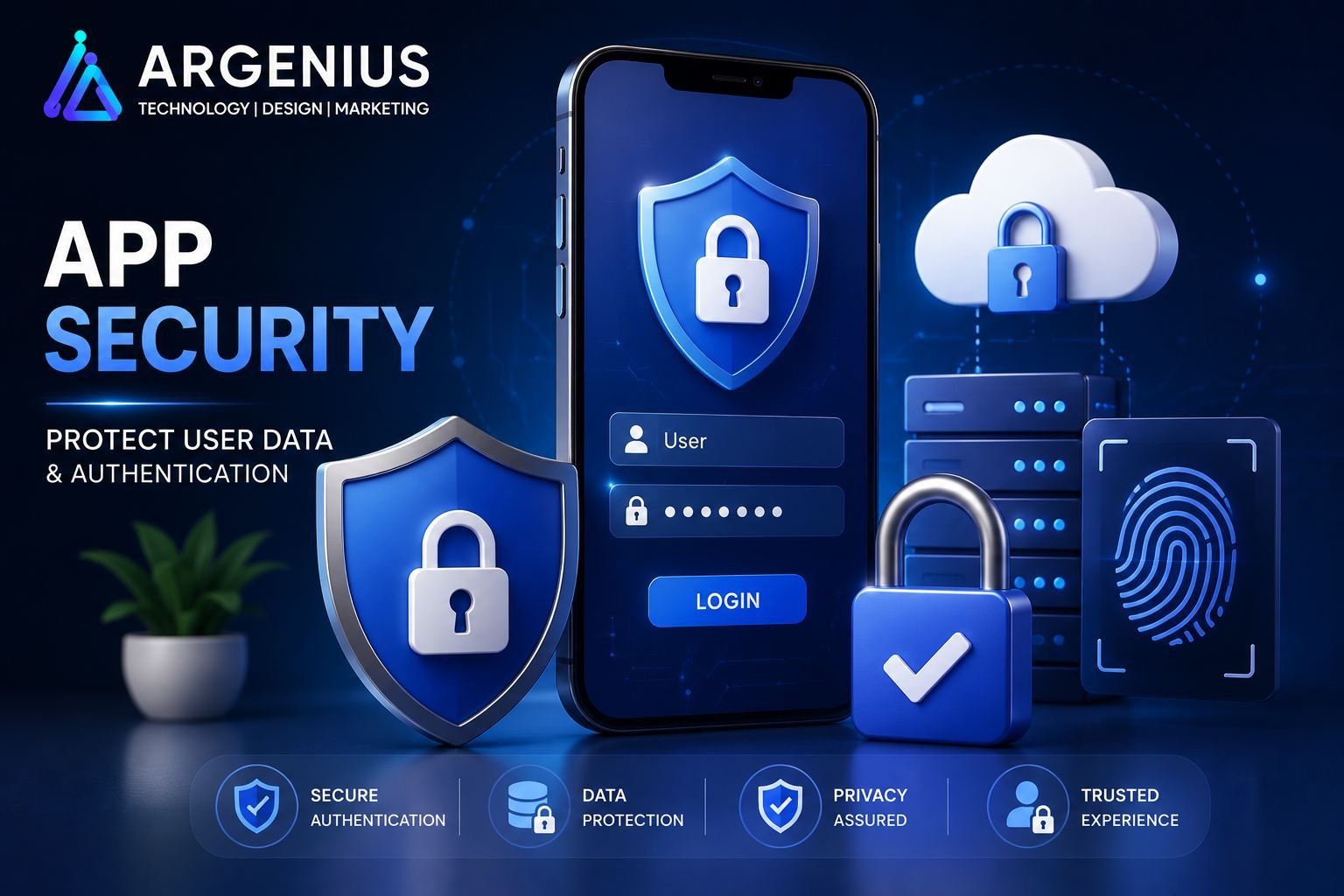
Mobile app security is essential for protecting user data, preventing cyber threats, and building customer trust. This guide covers authentication methods, data encryption, API security, secure storage, biometric login, and best practices for creating secure mobile applications.
Every day, millions of people use mobile applications to transfer money, shop online, book appointments, communicate with friends, and store personal information. Users trust these applications with sensitive data such as passwords, bank details, contact information, medical records, and business documents. That trust can disappear instantly if an application suffers a security breach.
Cyberattacks targeting mobile applications are becoming more advanced. Weak passwords, insecure APIs, unencrypted data, and poor authentication mechanisms can expose sensitive information and damage both user confidence and business reputation. Even a single vulnerability can lead to financial losses, legal issues, and negative reviews.
App security is much more than adding a login screen. It involves protecting data throughout its lifecycle—from the moment it is entered by a user to the time it is stored, processed, and transmitted between devices and servers. Developers must secure authentication systems, encrypt sensitive information, validate APIs, manage user sessions, and continuously monitor for threats.
A secure application not only protects users but also improves compliance with privacy regulations, reduces business risks, and strengthens customer loyalty. Whether you're developing an eCommerce platform, banking app, healthcare solution, social networking application, or enterprise software, security should be integrated into every stage of development—not added as an afterthought.
In this guide, you'll learn how mobile app security works, common security threats, authentication methods, encryption techniques, API protection strategies, security best practices, and the technologies used to build secure mobile applications.
At Argenius, security is a core part of our development process. We design mobile applications with robust authentication systems, secure APIs, encrypted communication, and industry-standard security practices to protect both businesses and their users.
What is App Security?
App security is the practice of protecting a mobile application, its data, and its users from unauthorized access, cyberattacks, data breaches, and malicious activities.
A secure application focuses on:
- Protecting User Data
- Secure Authentication
- Data Encryption
- API Protection
- Secure Storage
- Session Security
- Access Control
- Threat Detection
- Privacy Compliance
- Secure Communication
Security should be considered throughout the entire software development lifecycle rather than only before deployment.
Why App Security is Important
Security directly affects user trust and business credibility.
Key benefits include:
- Protects Sensitive User Data
- Prevents Unauthorized Access
- Reduces Cybersecurity Risks
- Builds Customer Trust
- Improves Compliance
- Protects Business Reputation
- Prevents Financial Losses
- Secures Online Transactions
- Reduces Fraud
- Increases Customer Retention
A secure application creates confidence for both users and businesses.
Common Mobile App Security Threats
Understanding potential threats helps developers build stronger applications.
Common security risks include:
- Data Breaches
- Weak Passwords
- API Vulnerabilities
- Malware
- Reverse Engineering
- SQL Injection
- Cross-Site Scripting (XSS)
- Man-in-the-Middle (MITM) Attacks
- Session Hijacking
- Insecure Data Storage
Identifying these threats early helps reduce the risk of successful attacks.
User Authentication Methods
Authentication verifies a user's identity before granting access to the application.
Email & Password Authentication
The most widely used login method.
Features include:
- Secure Password Hashing
- Password Reset
- Email Verification
- Login Validation
- Account Recovery
OTP Authentication
One-Time Password (OTP) authentication provides an additional layer of security.
Common use cases include:
- Mobile Login
- Banking Apps
- Payment Verification
- Two-Step Login
- Account Recovery
Social Login
Users can authenticate using trusted third-party accounts.
Popular providers include:
- Google
- Apple
- Facebook
- LinkedIn
- GitHub
Social authentication simplifies the login process while improving user convenience.
Biometric Authentication
Modern smartphones support biometric verification.
Popular methods include:
- Fingerprint Authentication
- Face Recognition
- Iris Recognition
Biometric authentication enhances both security and user experience.
Multi-Factor Authentication (MFA)
MFA requires users to verify their identity using two or more authentication methods.
Examples include:
- Password + OTP
- Password + Fingerprint
- Password + Face ID
- OTP + Authenticator App
MFA significantly reduces the risk of unauthorized access.
Data Encryption
Encryption converts readable information into secure data that can only be accessed using the correct decryption key.
Applications should encrypt:
- User Passwords
- Payment Information
- Personal Details
- API Requests
- Database Records
- Authentication Tokens
Strong encryption protects sensitive information even if data is intercepted.
API Security
Most mobile applications communicate with backend servers through APIs.
API security includes:
- HTTPS Communication
- JWT Authentication
- OAuth 2.0
- API Keys
- Rate Limiting
- Request Validation
- Response Validation
- Access Control
Securing APIs prevents unauthorized access and data manipulation.
Secure Data Storage
Sensitive information should never be stored in plain text.
Best practices include:
- Encrypted Local Storage
- Secure Keychain (iOS)
- Android Keystore
- Token Encryption
- Secure Preferences
- Database Encryption
Proper storage techniques reduce the risk of data exposure.
Security Features Every App Should Include
A secure mobile application should provide:
- Secure Login
- Password Encryption
- Biometric Authentication
- Multi-Factor Authentication
- Role-Based Access Control
- Secure APIs
- Session Management
- Data Encryption
- Activity Logging
- Device Verification
Industries That Require Strong Security
Security is essential across many industries, especially those handling sensitive information.
Examples include:
- Banking & FinTech
- Healthcare
- eCommerce
- Education
- Logistics
- Government Services
- Insurance
- Enterprise Software
- Travel Platforms
- Social Networking Apps
Recommended Technology Stack
Authentication
- Firebase Authentication
- Auth0
- OAuth 2.0
- JWT
Mobile Development
- Flutter
- React Native
- Kotlin
- Swift
Backend
- Laravel
- Node.js
- Django
- Spring Boot
Encryption
Security Monitoring
- Firebase App Check
- Google Play Integrity API
- Apple DeviceCheck
- Sentry
Choosing proven security technologies helps developers protect user information while maintaining high application performance.
Mobile App Security Architecture
A strong security architecture protects user information at every stage—from login and data storage to API communication and payment processing. Instead of relying on a single security layer, modern mobile applications use multiple security mechanisms working together.
A typical mobile app security architecture includes:
- Mobile Application
- Authentication Server
- API Gateway
- Secure Backend APIs
- Encrypted Database
- Identity & Access Management (IAM)
- Secure Cloud Storage
- Monitoring & Logging
- Threat Detection System
- Backup & Recovery
A layered security approach minimizes vulnerabilities and helps defend against a wide range of cyber threats.
JWT Authentication
JSON Web Token (JWT) is one of the most widely used authentication methods for mobile applications.
After a successful login, the server generates a secure token that the app includes with future API requests instead of repeatedly sending user credentials.
Benefits of JWT
- Stateless Authentication
- Faster API Requests
- Secure Token-Based Login
- Easy Mobile Integration
- Better Scalability
- Reduced Server Load
JWT is ideal for REST APIs and modern mobile applications.
OAuth 2.0 Authentication
OAuth 2.0 enables users to sign in using trusted third-party accounts without sharing their passwords with the application.
Popular OAuth providers include:
- Google
- Apple
- Microsoft
- Facebook
- GitHub
- LinkedIn
Advantages
- Secure Authorization
- Faster Registration
- Better User Experience
- Reduced Password Management
- Trusted Authentication
OAuth improves convenience while maintaining strong security standards.
Biometric Authentication Workflow
Biometric authentication allows users to access the application using unique physical characteristics instead of passwords.
The workflow typically includes:
- User enables biometric login.
- Device verifies fingerprint or face scan.
- Operating system validates biometric data.
- Secure token is released.
- User gains access to the application.
Benefits
- Faster Login
- Better User Experience
- Stronger Security
- Reduced Password Fatigue
- Lower Risk of Credential Theft
Biometric authentication is especially valuable for banking, healthcare, and enterprise applications.
Secure API Implementation
APIs act as the communication bridge between mobile applications and backend servers. If APIs are not properly secured, attackers may gain unauthorized access to sensitive information.
A secure API should include:
- HTTPS Communication
- JWT Validation
- OAuth Authentication
- API Key Verification
- Request Validation
- Input Sanitization
- Rate Limiting
- Access Control
- Response Encryption
- Activity Logging
Secure APIs are one of the most important components of mobile application security.
Session Management
Proper session management ensures users remain authenticated securely without exposing sensitive information.
Best practices include:
- Secure Session Tokens
- Automatic Session Expiry
- Refresh Tokens
- Logout from All Devices
- Device Verification
- Idle Session Timeout
- Token Rotation
- Session Monitoring
Effective session management reduces the risk of account hijacking.
Data Privacy & Compliance
Many industries must comply with privacy regulations to protect user information.
Common compliance standards include:
- GDPR (General Data Protection Regulation)
- CCPA (California Consumer Privacy Act)
- HIPAA (Healthcare Data Protection)
- PCI DSS (Payment Card Security)
- ISO 27001 (Information Security Management)
Following these standards helps businesses protect user privacy while avoiding legal and financial penalties.
Development Cost (₹ INR)
The cost of implementing app security depends on application complexity, authentication methods, compliance requirements, and security testing.
| Security Level |
Estimated Cost |
| Basic Authentication & Security |
₹2,00,000 – ₹5,00,000 |
| Advanced Security Implementation |
₹5,00,000 – ₹12,00,000 |
| Enterprise Security Solution |
₹12,00,000 – ₹25,00,000 |
| Banking / Healthcare Grade Security |
₹25,00,000+ (Custom Pricing) |
Factors Affecting Cost
Security implementation costs depend on:
- Android & iOS Support
- Authentication Methods
- API Complexity
- Data Encryption
- Compliance Requirements
- Third-Party Integrations
- Security Audits
- Penetration Testing
- Cloud Infrastructure
- Ongoing Maintenance
Security Best Practices
Building a secure application requires following proven security practices throughout development.
Recommended practices include:
- Use HTTPS Everywhere
- Encrypt Sensitive Data
- Implement Multi-Factor Authentication
- Hash Passwords Securely
- Store Tokens Safely
- Validate All User Inputs
- Protect APIs with Authentication
- Keep Libraries Updated
- Perform Regular Security Audits
- Monitor Suspicious Activity
These practices significantly reduce security risks and improve overall application resilience.
Common Security Challenges
Developers often encounter several security challenges while building mobile applications.
Common issues include:
- Weak Password Policies
- Insecure APIs
- Token Theft
- Reverse Engineering
- Malware Attacks
- Phishing Attempts
- Data Leakage
- Third-Party Library Vulnerabilities
- Improper Session Handling
- Device Fragmentation
Addressing these challenges early helps prevent costly security incidents after launch.
JWT vs OAuth vs Firebase Authentication
| Feature |
JWT |
OAuth 2.0 |
Firebase Authentication |
| Authentication Type |
Token-Based |
Authorization Framework |
Managed Authentication |
| Third-Party Login |
No |
Yes |
Yes |
| Mobile Support |
Excellent |
Excellent |
Excellent |
| Backend Control |
Full |
Medium |
Limited |
| Ease of Integration |
Easy |
Moderate |
Very Easy |
| Best For |
Custom Applications |
Social Login |
Rapid Development |
Selecting the right authentication method depends on your application's security requirements and user experience goals.
Benefits of Strong App Security
Investing in mobile app security provides long-term benefits for both businesses and users.
Key advantages include:
- Better User Trust
- Stronger Brand Reputation
- Protection Against Cyber Threats
- Reduced Risk of Data Breaches
- Secure Online Transactions
- Regulatory Compliance
- Lower Financial Risk
- Improved Customer Retention
- Faster Incident Response
- Long-Term Business Growth
Strong security becomes a competitive advantage in today's digital landscape.
Future Trends in Mobile App Security
Mobile security continues to evolve as cyber threats become more sophisticated.
Emerging trends include:
- AI-Based Threat Detection
- Passwordless Authentication
- Behavioral Biometrics
- Zero Trust Security
- Blockchain-Based Identity Verification
- Secure Multi-Cloud Environments
- Real-Time Fraud Detection
- Continuous Authentication
- Privacy-First Application Design
- AI-Powered Security Monitoring
Businesses that adopt these technologies will be better equipped to protect user data and maintain customer trust.
Why Businesses Choose Argenius
At Argenius, security is built into every stage of the development lifecycle—not added at the end. We design mobile applications that protect user data, secure business operations, and meet modern security standards.
Our security expertise includes:
- Secure Mobile App Development
- JWT & OAuth Authentication
- Firebase Authentication
- Biometric Login Integration
- API Security
- Data Encryption
- Secure Cloud Integration
- Security Audits
- Penetration Testing Support
- Ongoing Security Maintenance
Whether you're building a fintech platform, healthcare app, eCommerce solution, enterprise application, or SaaS product, Argenius helps you create secure, scalable, and trustworthy mobile applications.
Final Thoughts
Security is one of the most important foundations of a successful mobile application. A secure app protects user information, prevents unauthorized access, and builds long-term trust with customers. As cyber threats continue to evolve, businesses must move beyond basic password protection and adopt a comprehensive security strategy that includes strong authentication, encrypted communication, secure APIs, and continuous monitoring.
By implementing modern security practices from the beginning of the development process, organizations can reduce risks, meet compliance requirements, and confidently deliver applications that users can rely on.
If you're planning to build a secure mobile application, Argenius can help you implement industry-standard security solutions that protect both your business and your users.
Frequently Asked Questions
What is mobile app security?
Mobile app security is the process of protecting an application, its users, and its data from cyber threats, unauthorized access, and security vulnerabilities through secure coding, authentication, encryption, and continuous monitoring.
Which authentication method is best for mobile apps?
The best authentication method depends on your requirements. JWT is ideal for custom API-based applications, OAuth 2.0 is excellent for social login, and Firebase Authentication is a great choice for rapid and scalable mobile app development.
Why is data encryption important?
Data encryption ensures that sensitive information such as passwords, payment details, and personal records cannot be read by unauthorized users, even if the data is intercepted or accessed without permission.
How much does mobile app security implementation cost?
Basic security implementation generally starts from ₹2 lakh, while enterprise-grade security solutions with advanced authentication, encryption, compliance, and security testing can exceed ₹25 lakh, depending on project complexity.
What are the biggest security risks for mobile applications?
Common risks include insecure APIs, weak authentication, data leaks, malware, phishing attacks, reverse engineering, insecure local storage, and session hijacking.
Can Argenius build highly secure mobile applications?
Yes. Argenius develops secure Android and iOS applications with advanced authentication, encrypted communication, secure APIs, biometric login, compliance support, and ongoing security monitoring.