Large mobile applications discourage users from downloading and updating apps. This guide explains how to optimize app size using modern development techniques, reduce APK and IPA sizes, improve installation speed, and increase user retention.
One of the first things users notice before installing a mobile application is its download size. A large application often discourages users from completing the installation, especially when they have limited storage space or slower internet connections. Even existing users may postpone updates if every new version significantly increases the app size.
Application size directly affects download rates, installation speed, user retention, and overall business growth. Research consistently shows that lightweight applications achieve higher installation rates, lower abandonment, and better user satisfaction. As smartphones continue to support richer features, developers face the challenge of adding functionality while keeping applications compact and efficient.
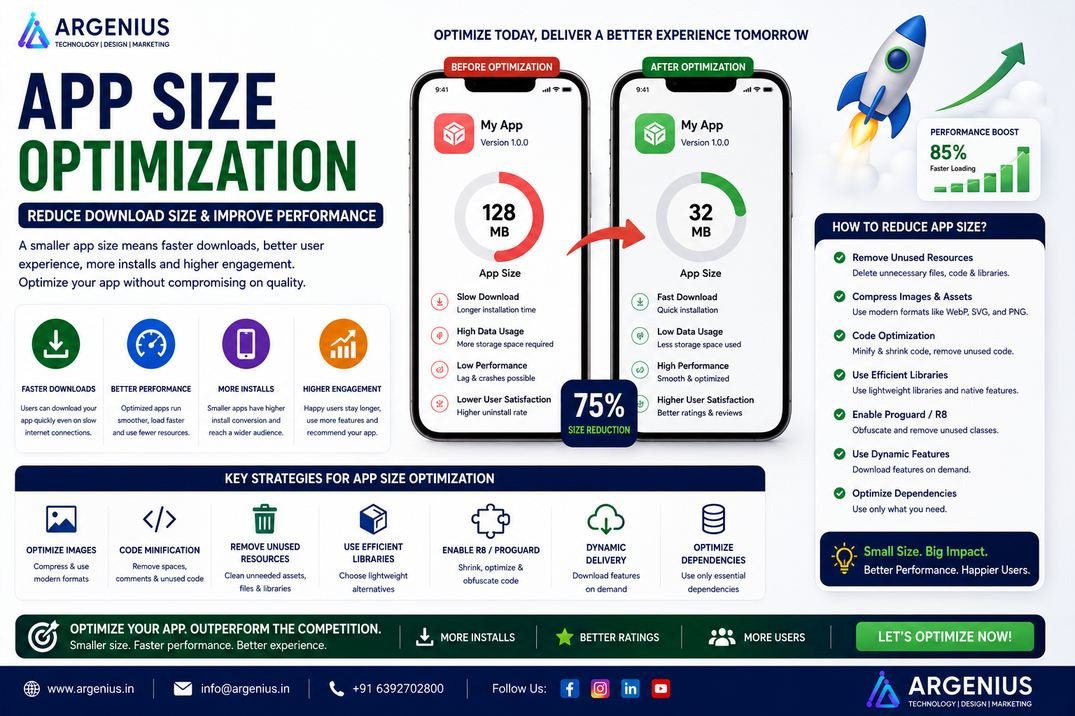
App size optimization is the process of reducing the overall size of an application without compromising functionality, security, or user experience. It involves removing unnecessary resources, optimizing images, shrinking code, compressing assets, using modern packaging formats, and improving dependency management.
Whether you're building an eCommerce application, healthcare platform, fintech solution, logistics system, gaming app, or enterprise software, optimizing app size helps improve performance while making your application accessible to a wider audience.
In this guide, you'll learn everything about app size optimization, including common causes of large applications, optimization techniques, development tools, best practices, costs, and strategies for reducing download size effectively.
At Argenius, we help businesses build lightweight, high-performance mobile applications that deliver exceptional user experiences while minimizing download size.
What is App Size Optimization?
App size optimization is the process of reducing the total installation and download size of a mobile application while maintaining its features, stability, and performance.
The goal is to create applications that:
- Download Faster
- Install Quickly
- Consume Less Storage
- Load Faster
- Improve Performance
- Increase User Retention
- Reduce Update Size
- Support More Devices
- Improve App Store Rankings
- Lower Bandwidth Usage
Optimized applications provide a better experience for both users and businesses.
Why App Size Matters
Application size influences multiple aspects of user experience and business success.
Key benefits of a smaller app include:
- Higher Download Rates
- Faster Installation
- Better User Retention
- Reduced Storage Usage
- Faster Updates
- Lower Data Consumption
- Improved Performance
- Better App Store Ratings
- Higher Conversion Rates
- Increased Global Accessibility
Users are more likely to install and keep applications that use minimal device storage.
Common Reasons Apps Become Large
Many applications grow unnecessarily because of poor optimization practices.
Common causes include:
- Large Image Files
- Unused Libraries
- Duplicate Assets
- High-Resolution Videos
- Large Font Files
- Unoptimized Code
- Multiple SDKs
- Debug Files
- Unused Resources
- Heavy Animations
Identifying these issues is the first step toward reducing application size.
Techniques to Reduce App Size
Several optimization techniques can significantly decrease application size.
Code Shrinking
Remove unused classes, methods, and resources.
Benefits include:
- Smaller APK
- Better Performance
- Cleaner Code
- Faster Loading
Resource Shrinking
Unused resources increase application size.
Examples include:
- Images
- Icons
- Fonts
- XML Files
- Audio Files
Removing unused assets reduces storage requirements.
Image Optimization
Images often occupy a large portion of an application.
Recommended techniques:
- Compress Images
- Use WebP Format
- Resize Assets
- Lazy Load Images
- Remove Duplicate Graphics
Dependency Optimization
Many projects include unnecessary third-party libraries.
Best practices:
- Remove Unused Packages
- Use Lightweight Libraries
- Update Dependencies
- Audit SDK Usage
App Bundle (AAB)
Android App Bundles generate device-specific APKs instead of distributing one large APK to every user.
Benefits include:
- Smaller Downloads
- Device-Specific Resources
- Better Install Speed
- Reduced Storage Usage
Lazy Loading
Load resources only when they are needed.
Examples:
- Images
- Videos
- Documents
- API Data
- Modules
Lazy loading reduces the application's initial download size and memory usage.
Android vs iOS Optimization
Different platforms require different optimization techniques.
| Feature |
Android |
iOS |
| App Bundle |
Supported |
Not Applicable |
| Resource Shrinking |
Yes |
Limited |
| Bitcode |
No |
Optional (Legacy Projects) |
| Dynamic Delivery |
Yes |
App Thinning |
| Asset Catalog |
Basic |
Advanced |
Optimizing separately for Android and iOS provides the best results.
Best Assets to Optimize
The largest contributors to application size usually include:
- Images
- Videos
- Audio Files
- Fonts
- Animations
- SDKs
- JSON Files
- Offline Data
- Machine Learning Models
- PDF Documents
Optimizing these assets provides significant reductions in download size.
Industries That Benefit from App Size Optimization
Nearly every mobile application benefits from reduced download size.
Examples include:
- eCommerce
- Healthcare
- Banking & FinTech
- Food Delivery
- Education
- Logistics
- Travel
- Social Networking
- Gaming
- Enterprise Applications
Recommended Optimization Tools
Popular tools include:
- Android Studio APK Analyzer
- Flutter DevTools
- ProGuard
- R8
- Android App Bundle
- Xcode Instruments
- TinyPNG
- ImageOptim
- Firebase Performance Monitoring
- Sentry
These tools help developers identify unnecessary resources, analyze package size, and optimize application performance.
App Size Optimization Architecture
A well-designed app size optimization architecture ensures that only the essential code, resources, and assets are included in the final application package. This reduces download size while maintaining excellent performance and functionality.
A typical app size optimization architecture includes:
- Mobile Application Source Code
- Build Optimization Layer
- Code Shrinking Engine
- Resource Shrinking Module
- Image Compression Pipeline
- App Bundle Generator
- Dynamic Feature Modules
- Asset Delivery System
- CI/CD Build Pipeline
- Monitoring & Analytics
This architecture helps development teams build lightweight applications without compromising user experience.
APK & IPA Analysis Workflow
Before reducing app size, developers should identify which files occupy the most storage.
A standard optimization workflow includes:
- Analyze Build Size
- Identify Large Assets
- Detect Unused Resources
- Remove Unnecessary Dependencies
- Compress Images & Media
- Enable Code Shrinking
- Generate Optimized Build
- Test Application Performance
- Compare Build Sizes
- Release Optimized Version
Regular build analysis helps prevent unnecessary size growth during development.
Code Shrinking & Obfuscation
Code shrinking removes unused classes, methods, and libraries from the final application.
Popular techniques include:
- R8 Optimization
- ProGuard Rules
- Dead Code Elimination
- Method Optimization
- Class Merging
- Unused Package Removal
- Tree Shaking (Flutter)
- JavaScript Minification (React Native)
- Symbol Stripping
- Build-Time Optimization
Benefits include:
- Smaller APK/IPA
- Faster Startup
- Better Performance
- Improved Security Through Obfuscation
- Reduced Memory Usage
Resource Optimization Strategy
Application resources often consume a significant portion of the final package size.
Optimize resources by:
- Removing Unused Images
- Eliminating Duplicate Icons
- Compressing PNG Files
- Using WebP or AVIF Images
- Optimizing Font Files
- Removing Unused Localizations
- Cleaning XML Resources
- Compressing Audio Files
- Optimizing Animation Assets
- Removing Legacy Resources
Even small optimizations across multiple assets can significantly reduce download size.
Dynamic Feature Modules
Instead of shipping every feature to every user, dynamic delivery installs modules only when required.
Examples include:
- Premium Features
- AR Modules
- Video Editors
- Language Packs
- Offline Maps
- AI Models
- Games
- Payment Modules
- Enterprise Features
- Region-Specific Content
Benefits:
- Smaller Initial Download
- Faster Installation
- Reduced Storage Usage
- Better User Experience
- Lower Bandwidth Consumption
Asset Compression Techniques
Large media files can dramatically increase application size.
Recommended compression methods include:
- WebP for Images
- AVIF for High-Efficiency Images
- SVG for Icons
- Vector Drawables
- MP3/AAC Audio Compression
- H.265 Video Compression
- GZIP Compression
- Brotli Compression
- Texture Compression
- Optimized Lottie Animations
Using modern file formats improves both size and performance.
Development Cost (₹ INR)
The cost of app size optimization depends on application complexity, supported platforms, media assets, and existing code quality.
| Optimization Service |
Estimated Cost |
| Basic App Size Optimization |
₹25,000 – ₹75,000 |
| Medium Business Application |
₹75,000 – ₹2,00,000 |
| Enterprise Optimization |
₹2,00,000 – ₹6,00,000 |
| Continuous Build Optimization |
₹30,000 – ₹1,50,000 / Month |
Factors Affecting Cost
Optimization costs vary based on:
- Application Complexity
- Android & iOS Support
- Number of Features
- Third-Party SDKs
- Media Assets
- Offline Content
- Build Pipeline Configuration
- Testing Requirements
- Performance Validation
- Maintenance Scope
App Size Optimization Best Practices
Following proven optimization practices ensures consistent application performance.
Recommended best practices include:
- Use Android App Bundles (AAB)
- Enable R8 Code Shrinking
- Remove Unused Dependencies
- Compress Images Before Deployment
- Optimize Font Usage
- Avoid Duplicate Assets
- Use Lazy Loading
- Implement Dynamic Feature Delivery
- Monitor Build Size Regularly
- Review Every Release Before Publishing
These practices help maintain a lightweight application as new features are added.
Common App Size Optimization Mistakes
Many applications become unnecessarily large due to avoidable mistakes.
Common mistakes include:
- Bundling Unused Libraries
- Including High-Resolution Images Without Compression
- Keeping Debug Files in Release Builds
- Shipping Duplicate Resources
- Ignoring Build Size Reports
- Embedding Large Videos
- Using Heavy SDKs Without Evaluation
- Loading All Assets at Startup
- Poor Dependency Management
- Skipping Release Build Optimization
Avoiding these issues leads to smaller downloads and a better user experience.
APK vs Android App Bundle (AAB)
| Feature |
APK |
Android App Bundle (AAB) |
| Download Size |
Larger |
Smaller |
| Device-Specific Resources |
No |
Yes |
| Play Store Optimization |
Limited |
Excellent |
| Dynamic Feature Delivery |
No |
Yes |
| Installation Speed |
Standard |
Faster |
| Recommended by Google |
No |
Yes |
For Android applications distributed through Google Play, AAB is the recommended format because it generates optimized APKs for each user's device.
Benefits of App Size Optimization
Reducing application size delivers measurable benefits for both users and businesses.
Key benefits include:
- Higher Download Conversion Rates
- Faster Installation
- Better User Retention
- Reduced Mobile Data Usage
- Improved Performance
- Lower Storage Requirements
- Faster App Updates
- Better App Store Ratings
- Increased Global Accessibility
- Lower Infrastructure Costs
A smaller application often translates into a smoother user experience and higher engagement.
Future Trends in App Size Optimization
Modern mobile development continues to introduce smarter optimization techniques.
Emerging trends include:
- AI-Based Build Optimization
- Intelligent Asset Compression
- Predictive Resource Loading
- Advanced Tree Shaking
- Cloud Asset Streaming
- Dynamic Code Delivery
- AI-Powered Image Optimization
- Modular Application Architecture
- Automated Dependency Analysis
- Continuous Build Size Monitoring
These innovations will help developers create feature-rich applications while keeping download sizes minimal.
Why Businesses Choose Argenius
At Argenius, we focus on building lightweight, scalable, and high-performance mobile applications that deliver exceptional user experiences without unnecessary storage overhead.
Our optimization services include:
- APK & IPA Size Analysis
- Android App Bundle Implementation
- Flutter Tree Shaking
- React Native Optimization
- Image & Asset Compression
- Code Shrinking & Obfuscation
- Dependency Optimization
- Performance Testing
- Build Pipeline Optimization
- Continuous Application Monitoring
Whether you're launching a startup MVP or maintaining an enterprise application, Argenius helps ensure your app remains fast, efficient, and easy to download.
Final Thoughts
Application size is more than a technical metric—it directly influences user acquisition, installation success, update adoption, and long-term retention. Every unnecessary image, unused library, or oversized asset increases the download burden on users and can negatively impact business growth.
By implementing modern optimization techniques such as code shrinking, resource optimization, image compression, Android App Bundles, and dynamic feature delivery, development teams can significantly reduce application size while maintaining excellent functionality and performance.
If you're looking to optimize your Android or iOS application for faster downloads and better user experiences, Argenius can help you build a lightweight, scalable, and performance-focused mobile app.
Frequently Asked Questions
What is app size optimization?
App size optimization is the process of reducing the download and installation size of a mobile application by optimizing code, assets, resources, and dependencies without affecting functionality.
Why is reducing app size important?
Smaller applications download faster, install more quickly, consume less storage, improve user retention, reduce update sizes, and generally achieve better app store performance.
How can I reduce APK size?
You can reduce APK size by enabling R8, removing unused resources, compressing images, using Android App Bundles, optimizing dependencies, implementing lazy loading, and shrinking assets.
What is the difference between APK and AAB?
An APK is a complete application package, while an Android App Bundle (AAB) allows Google Play to generate device-specific APKs, resulting in smaller downloads and more efficient installations.
Does app size affect App Store rankings?
While size alone isn't a direct ranking factor, smaller apps often achieve higher download completion rates, better user reviews, and improved retention, which can positively influence overall app performance.
Does Argenius provide app optimization services?
Yes. Argenius offers complete app optimization services, including app size reduction, performance optimization, build analysis, dependency management, asset compression, and continuous application maintenance.