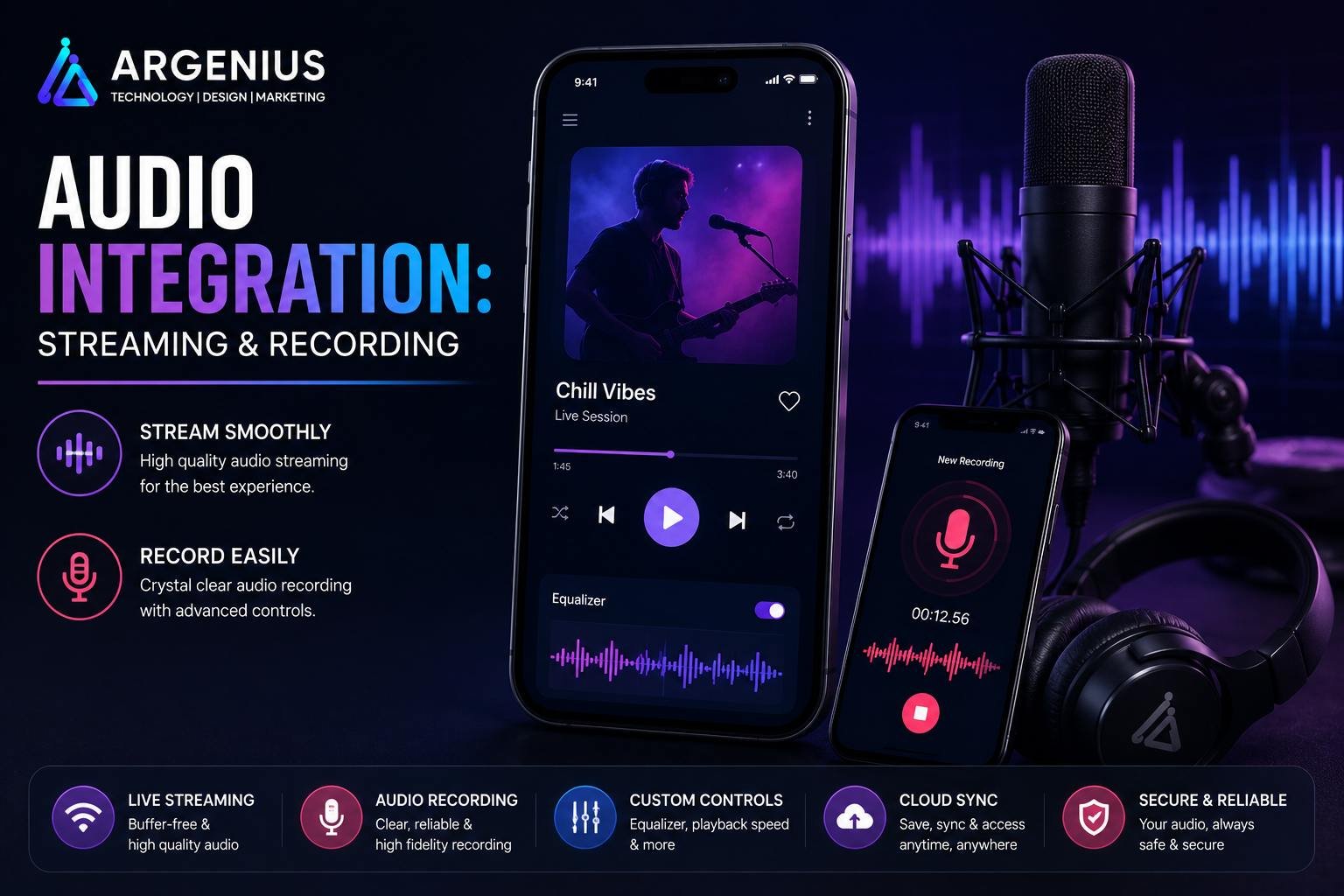
Audio is no longer limited to music apps. From voice messaging and podcasts to online learning, healthcare consultations, and AI assistants, modern applications rely heavily on audio streaming and recording. This guide explains how audio integration works, the technologies involved, and the best practices for building secure and scalable audio-enabled mobile applications.
Think about how often you use audio on your smartphone. You might listen to your favorite playlist during a workout, record voice notes while driving, join an online meeting, attend a virtual classroom, or ask an AI assistant to perform a task. Audio has quietly become one of the most important ways people interact with modern mobile applications.
For businesses, audio is no longer just an optional feature. It powers podcast platforms, music streaming services, telemedicine apps, language learning platforms, online education, customer support systems, social networking apps, and even eCommerce applications that use voice search and voice commands.
Creating a smooth audio experience, however, requires much more than simply playing an MP3 file. Developers need to handle recording permissions, background playback, audio compression, streaming protocols, cloud storage, synchronization, offline listening, and device compatibility. A poorly implemented audio system can lead to distorted recordings, playback interruptions, excessive battery usage, and a frustrating user experience.
Whether you're building a podcast application, a music streaming platform, a voice messaging feature, or an AI-powered assistant, choosing the right architecture from the beginning makes development easier and ensures the application can scale as your audience grows.
In this guide, you'll learn how audio streaming and recording work, the technologies behind modern audio applications, essential architecture components, and the best practices for building secure, reliable, and high-performance audio experiences.
At Argenius, we build intelligent audio-enabled mobile applications that deliver crystal-clear sound, reliable streaming, secure cloud storage, and seamless playback across Android, iOS, and web platforms.
What is Audio Integration?
Audio integration is the process of adding audio-related features to a mobile application, allowing users to record, upload, stream, store, and play audio content.
Instead of treating audio as a simple media file, modern applications combine recording, cloud storage, streaming services, background playback, and intelligent processing to provide a seamless experience.
Typical audio features include:
- Voice Recording
- Music Streaming
- Podcast Playback
- Voice Messages
- Audio Notes
- Live Audio Streaming
- Background Playback
- Audio Downloads
- Speech Recognition
- AI Voice Interaction
These capabilities help businesses create more engaging and interactive applications.
Why Audio Integration Matters
Audio makes digital experiences more natural, convenient, and accessible. Users can consume content while driving, exercising, or multitasking without constantly looking at a screen.
Some of the biggest advantages include:
- Better User Engagement
- Hands-Free Interaction
- Improved Accessibility
- Longer Session Duration
- Personalized Experiences
- Lower Data Consumption Than Video
- Offline Listening
- Better Learning Experience
- Higher User Retention
- New Monetization Opportunities
As voice-based experiences continue to grow, audio integration is becoming a valuable feature across many industries.
Types of Audio Applications
Different applications use audio in different ways depending on their business model and target audience.
Music Streaming
Music platforms allow users to stream songs instantly without downloading the complete file.
Popular features include:
- Playlist Creation
- Personalized Recommendations
- Offline Listening
- Lyrics Display
- Background Playback
- High-Quality Audio
Podcast Platforms
Podcast applications focus on long-form spoken content.
Common features include:
- Episode Streaming
- Offline Downloads
- Playback Speed Control
- Sleep Timer
- Subscription Management
- Listening History
Voice Recording Apps
Recording applications allow users to capture and manage audio files.
Typical use cases include:
- Voice Notes
- Interviews
- Meeting Recordings
- Student Lectures
- Medical Dictation
- Field Reporting
Live Audio Streaming
Live audio applications broadcast sound in real time.
Examples include:
- Live Radio
- Sports Commentary
- Audio Conferences
- Community Discussions
- Religious Events
- Live Podcasts
How Audio Streaming & Recording Works
Although recording and streaming appear simple, multiple processes occur behind the scenes.
A typical workflow includes:
- User starts recording.
- Microphone captures audio.
- Audio is compressed.
- Recording is stored temporarily.
- File is uploaded to cloud storage.
- Metadata is saved in the database.
- Audio becomes available for streaming.
- Users play the audio instantly.
- Streaming quality adjusts based on network conditions.
This workflow ensures efficient storage, faster playback, and reliable synchronization across devices.
Business Models That Use Audio Integration
Audio technology supports a wide variety of industries.
Popular examples include:
- Music Streaming Apps
- Podcast Platforms
- Online Learning Apps
- Telemedicine Applications
- Customer Support Systems
- Voice Messaging Apps
- AI Assistant Applications
- Language Learning Platforms
- Meditation Apps
- Religious Streaming Apps
- Fitness Applications
- Enterprise Collaboration Tools
Essential User Features
A successful audio application should offer a simple yet engaging listening experience.
Recommended features include:
- Audio Recording
- Live Streaming
- Playlist Management
- Background Playback
- Offline Downloads
- Playback Speed Control
- Audio Sharing
- Search & Filters
- Continue Listening
- Multi-Device Synchronization
- Favorite Audio
- Sleep Timer
Admin Features
Administrators need tools to manage audio content and monitor platform performance.
Important admin features include:
- Audio Upload Dashboard
- Recording Management
- Content Moderation
- User Management
- Playback Analytics
- Storage Monitoring
- Advertisement Management
- Subscription Management
- Copyright Reports
- Performance Dashboard
Recommended Technology Stack
Mobile Development
- Flutter
- React Native
- Kotlin
- Swift
Backend
- Laravel
- Node.js
- Django
- Spring Boot
Audio Processing
- FFmpeg
- ExoPlayer
- AVFoundation
- MediaCodec
Streaming Protocols
- HLS Audio
- Icecast
- RTMP (for ingestion)
- WebRTC (real-time audio)
Cloud Storage
- Firebase Storage
- AWS S3
- Azure Blob Storage
- Google Cloud Storage
Database
CDN
- Amazon CloudFront
- Cloudflare
- Akamai
Choosing the right technology stack helps deliver high-quality audio with low latency, secure storage, and smooth playback across different devices.
Audio Streaming Architecture
A well-designed audio application is built on an architecture that ensures users can record, upload, stream, and play audio with minimal delay and excellent sound quality.
A modern audio streaming architecture typically includes:
- Mobile or Web Application
- Authentication Service
- Backend API
- Audio Recording Module
- Audio Processing Service
- Cloud Storage
- Content Delivery Network (CDN)
- Streaming Server
- Database
- Analytics & Monitoring
Each layer works together to deliver uninterrupted playback while maintaining security, scalability, and performance.
Audio Recording Workflow
Recording audio involves more than simply capturing sound from the microphone. Modern applications process and optimize recordings before making them available to users.
A typical recording workflow includes:
- User grants microphone permission.
- Recording starts.
- Audio is captured from the device microphone.
- Noise reduction is applied (optional).
- Audio is compressed into the required format.
- Recording is stored temporarily.
- File is uploaded to cloud storage.
- Metadata is saved in the database.
- Audio becomes available for playback or sharing.
This workflow ensures consistent recording quality while reducing storage requirements.
Cloud Storage Integration
Audio files can quickly consume storage space, making cloud storage essential for modern applications.
Popular cloud storage platforms include:
Firebase Storage
Best suited for:
- Startups
- MVP Applications
- Flutter Apps
- Voice Messaging Apps
Benefits:
- Simple Integration
- Automatic Scaling
- Secure Storage Rules
- Fast File Delivery
AWS S3
Ideal for:
- Music Streaming Platforms
- Podcast Applications
- Enterprise Systems
- Large Audio Libraries
Benefits:
- High Durability
- Global Availability
- Lifecycle Management
- Excellent Scalability
Azure Blob Storage
Recommended for:
- Enterprise Applications
- Healthcare Platforms
- Corporate Collaboration Tools
Benefits:
- Secure Object Storage
- Enterprise Security
- Microsoft Ecosystem Integration
- Global Infrastructure
Audio Compression & Encoding
Raw audio files are often too large for efficient storage and streaming. Compression helps reduce file size while maintaining acceptable sound quality.
Common audio formats include:
- MP3
- AAC
- WAV
- FLAC
- OGG Opus
- M4A
Benefits of audio compression:
- Faster Uploads
- Reduced Storage Costs
- Lower Bandwidth Usage
- Faster Streaming
- Better Device Compatibility
Choosing the right format depends on the application's quality requirements and target audience.
Live Audio Streaming Process
Live audio streaming delivers sound to listeners almost instantly.
A typical workflow includes:
- Speaker begins broadcasting.
- Audio is captured in real time.
- Encoder compresses the stream.
- Streaming server receives the audio.
- CDN distributes the stream globally.
- Listeners connect to the nearest edge server.
- Audio plays with minimal latency.
This approach is commonly used for internet radio, live podcasts, audio conferences, sports commentary, and community discussions.
Development Cost (₹ INR)
The cost of integrating audio streaming and recording depends on the application's features, cloud infrastructure, storage requirements, and scalability.
| Solution Type |
Estimated Cost |
| Basic Audio Recording App |
₹2,00,000 – ₹5,00,000 |
| Podcast Streaming Platform |
₹5,00,000 – ₹12,00,000 |
| Music Streaming Application |
₹10,00,000 – ₹25,00,000 |
| Enterprise Audio Platform |
₹25,00,000+ (Custom Pricing) |
Factors Affecting Cost
Development costs vary depending on:
- Live Streaming Support
- Offline Downloads
- Audio Quality
- Cloud Storage
- CDN Integration
- Subscription Features
- AI Recommendations
- Search Functionality
- Analytics Dashboard
- Ongoing Maintenance
Security Best Practices
Audio content often contains personal conversations, premium content, or confidential business information. Implementing strong security measures is essential.
Recommended practices include:
- HTTPS Encryption
- Secure Authentication
- Token-Based Access
- Signed URLs
- Role-Based Permissions
- Audio Encryption
- Secure Cloud Storage
- Copyright Protection
- Activity Monitoring
- Regular Security Audits
Protecting both user privacy and intellectual property helps build trust and reduces security risks.
Common Challenges
Developers frequently encounter challenges when building audio applications.
Common issues include:
- Background Playback Interruptions
- Network Instability
- Audio Synchronization
- Microphone Permission Errors
- Storage Management
- Large Audio Libraries
- Playback Buffering
- Device Compatibility
- Battery Consumption
- Audio Quality Optimization
Proper planning and testing can significantly reduce these issues.
Performance Optimization
Performance directly impacts user satisfaction, especially for streaming applications.
Best practices include:
- Compress Audio Before Upload
- Use Adaptive Streaming
- Enable CDN Caching
- Optimize API Requests
- Support Background Playback
- Preload Frequently Played Content
- Minimize Startup Delay
- Cache Metadata
- Monitor Playback Analytics
- Scale Infrastructure Automatically
These optimizations help deliver a smooth and uninterrupted listening experience.
Music Streaming vs Podcast vs Voice Recording
| Feature |
Music Streaming |
Podcast Platform |
Voice Recording |
| Primary Purpose |
Entertainment |
Spoken Content |
User Recordings |
| Live Streaming |
Optional |
Optional |
No |
| Offline Support |
Yes |
Yes |
Yes |
| Background Playback |
Yes |
Yes |
Limited |
| Recording Feature |
No |
Creator Only |
Yes |
| Cloud Storage |
High |
High |
Moderate |
| Best For |
Music Apps |
Learning & Media |
Productivity Apps |
Each audio application has unique technical requirements, but all benefit from scalable cloud infrastructure, efficient audio processing, and secure storage.
Benefits of Audio Integration
Adding audio capabilities provides several advantages for both businesses and users.
Key benefits include:
- Higher User Engagement
- Better Accessibility
- Hands-Free Experience
- Lower Bandwidth Usage Than Video
- Longer Session Duration
- Improved Customer Retention
- Personalized Listening Experience
- Flexible Content Consumption
- New Revenue Opportunities
- Scalable Digital Services
Audio integration enables businesses to deliver content in a convenient and user-friendly format.
Future Trends
Audio technology continues to evolve with advances in artificial intelligence and cloud computing.
Emerging trends include:
- AI Voice Assistants
- Voice Search
- Real-Time Speech Translation
- AI Noise Cancellation
- Personalized Audio Recommendations
- Spatial Audio
- Voice Biometrics
- Edge Audio Processing
- Interactive Audio Experiences
- AI-Powered Podcast Generation
Businesses that adopt these technologies can create more immersive and intelligent audio experiences.
Why Businesses Choose Argenius
At Argenius, we build secure and scalable audio-enabled applications that deliver reliable recording, smooth streaming, and exceptional listening experiences.
Our expertise includes:
- Music Streaming App Development
- Podcast Platform Development
- Voice Recording Applications
- Live Audio Streaming Solutions
- Cloud Storage Integration
- Audio Processing & Optimization
- Flutter & React Native Development
- Laravel & Node.js Backend Development
- API Integration
- Long-Term Support & Maintenance
Whether you're building a podcast platform, a music streaming service, a voice messaging application, or an enterprise collaboration tool, Argenius provides end-to-end development solutions tailored to your business goals.
Final Thoughts
Audio has become a core part of modern mobile applications, enabling users to communicate, learn, entertain themselves, and collaborate more effectively. From voice notes and podcasts to live audio broadcasts and AI-powered assistants, audio integration enhances user engagement while creating new opportunities for businesses.
A successful audio application requires more than high-quality playback. It depends on a well-planned architecture, efficient compression, secure cloud storage, scalable streaming infrastructure, and reliable security practices.
If you're planning to build a music streaming platform, podcast application, voice recording solution, or live audio streaming service, Argenius can help you create a secure, scalable, and high-performance application that delivers an outstanding listening experience.
Frequently Asked Questions
What is audio integration in mobile apps?
Audio integration allows mobile applications to record, stream, upload, store, and play audio content. It is commonly used in music apps, podcast platforms, voice messaging services, online learning, healthcare, and AI-powered applications.
Which audio format is best for streaming?
AAC and MP3 are widely used because they provide a good balance between sound quality and file size. OGG Opus is another excellent option for efficient streaming, while FLAC is preferred for lossless audio quality.
How much does it cost to build an audio streaming app?
A basic audio recording application typically costs ₹2 lakh–₹5 lakh. Advanced podcast or music streaming platforms with subscriptions, cloud storage, offline downloads, and analytics can cost ₹25 lakh or more, depending on the project's complexity.
Why is cloud storage important for audio applications?
Cloud storage enables secure file management, scalable storage, faster content delivery, automatic backups, and seamless access across multiple devices without overloading the application server.
How can audio content be secured?
Security measures include encrypted communication, token-based authentication, signed URLs, secure cloud storage, role-based permissions, and copyright protection to prevent unauthorized access or distribution.
Can Argenius build custom audio applications?
Yes. Argenius develops end-to-end audio solutions, including music streaming apps, podcast platforms, voice recording applications, live audio streaming services, cloud storage integration, scalable backend systems, and ongoing maintenance.