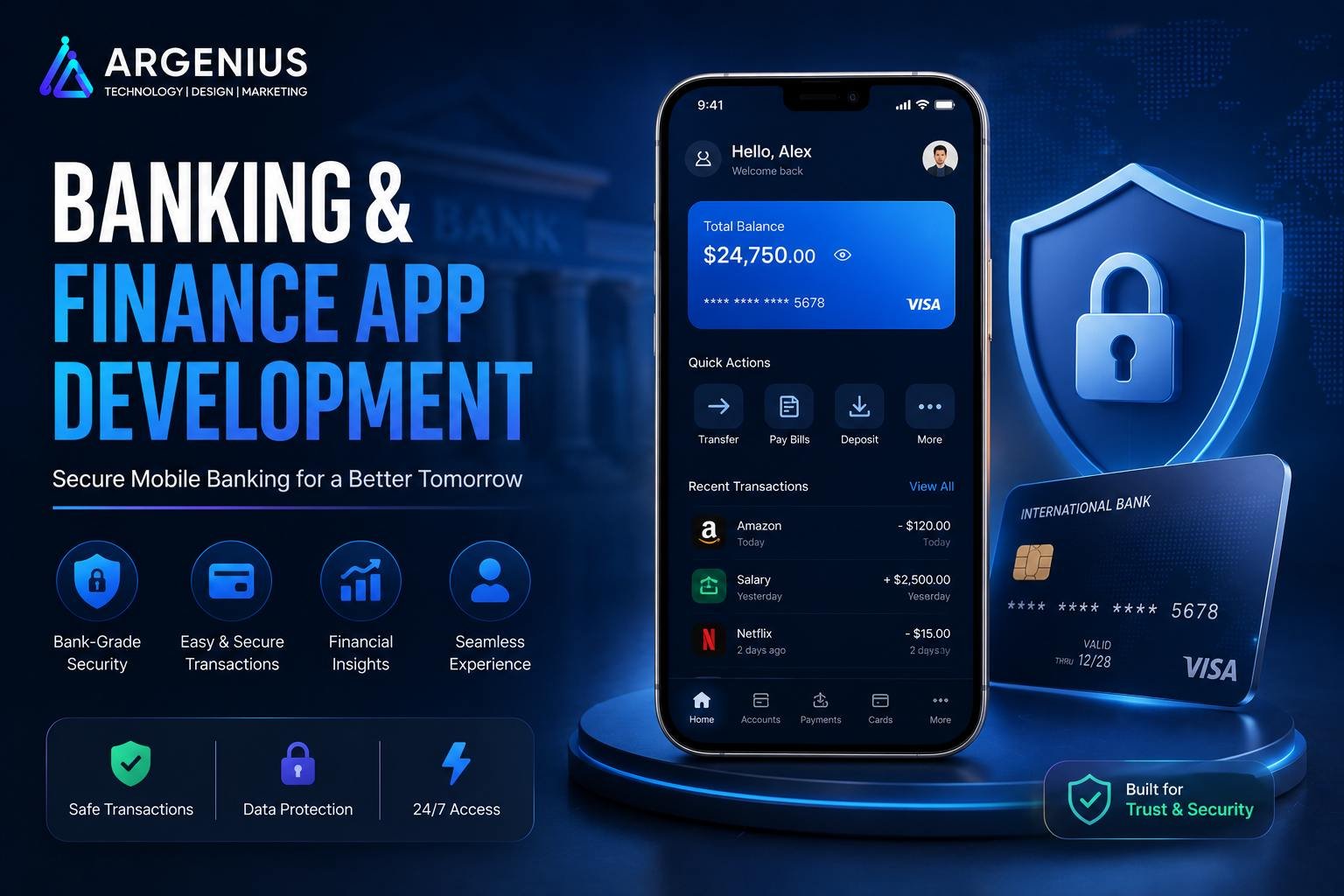
Banking and finance apps have revolutionized how users manage money, transfer funds, pay bills, invest, and access financial services. Whether you're planning to build a mobile banking app, digital wallet, fintech platform, or financial management application, this complete guide covers everything about banking & finance app development, including security, AI, compliance, technology stack, business models, development costs, and future trends.
The banking and financial services industry has undergone a major digital transformation over the past decade. Today, customers expect to manage their finances anytime and anywhere through secure mobile applications. From checking account balances and transferring funds to paying bills, applying for loans, investing, and managing personal finances, mobile banking apps have become an essential part of everyday life.
The rapid growth of smartphones, digital payments, UPI, AI-driven financial services, biometric authentication, and cloud computing has accelerated the demand for secure banking and fintech applications. Traditional banks, NBFCs, fintech startups, insurance companies, investment firms, and payment providers are investing heavily in digital platforms that offer convenience, security, and seamless user experiences.
Developing a banking application requires much more than creating an attractive interface. Financial applications must comply with regulatory standards, protect sensitive customer information, prevent fraud, enable secure transactions, and provide high availability. Features such as multi-factor authentication, encrypted communications, AI-powered fraud detection, digital KYC, real-time transaction monitoring, and secure payment gateways are now industry standards.
In this comprehensive guide, you'll learn everything about Banking & Finance App Development, including different types of banking applications, business models, essential features, technology stack, security practices, AI capabilities, development process, estimated costs, and future industry trends.
At Argenius, we build secure, scalable, and enterprise-grade banking and fintech applications that help financial institutions deliver trusted digital experiences.
What is Banking & Finance App Development?
Banking & Finance App Development is the process of designing, developing, testing, and deploying secure digital applications that allow users to manage financial activities using smartphones, tablets, or web platforms.
These applications enable users to:
- View Account Balances
- Transfer Money
- Make Digital Payments
- Pay Utility Bills
- Apply for Loans
- Track Investments
- Manage Credit Cards
- Monitor Expenses
- Receive Transaction Alerts
- Access Customer Support
A complete banking platform generally consists of:
- Customer Mobile App
- Internet Banking Portal
- Employee Dashboard
- Admin Panel
- Core Banking Integration
- Payment Processing System
- Fraud Detection Engine
- Analytics Dashboard
- Notification System
Together, these components create a secure and reliable digital banking ecosystem.
Why Banking Apps Are Growing Rapidly
Consumer expectations have shifted toward digital-first financial services.
Several factors are driving the growth of mobile banking applications:
- Increasing Smartphone Usage
- Digital Banking Adoption
- Growth of UPI & Digital Payments
- Contactless Transactions
- AI-Based Financial Services
- Secure Online Banking
- Faster Loan Processing
- Digital KYC Verification
- Personalized Financial Insights
- 24×7 Banking Accessibility
These factors have made banking and finance app development one of the fastest-growing segments in the fintech industry.
Types of Banking & Finance Apps
Different financial institutions require different applications based on their services and customer needs.
Mobile Banking Apps
Mobile banking applications allow customers to manage bank accounts directly from their smartphones.
Popular features include:
- Balance Inquiry
- Fund Transfer
- Mini Statement
- Bill Payments
- Card Management
- UPI Integration
Digital Wallet Apps
Digital wallets allow users to store money digitally and make secure cashless payments.
Key features include:
- Wallet Balance
- QR Code Payments
- Money Transfer
- Merchant Payments
- Recharge & Bill Payments
Personal Finance Apps
Personal finance applications help users manage income, expenses, budgets, and savings.
Core features include:
- Expense Tracking
- Budget Planning
- Savings Goals
- Financial Reports
- Bill Reminders
Investment & Trading Apps
These platforms allow users to invest in stocks, mutual funds, ETFs, and other financial instruments.
Common features include:
- Portfolio Management
- Live Market Data
- Investment Analytics
- SIP Management
- Stock Watchlists
Loan & Lending Apps
Loan applications simplify borrowing and repayment processes.
Popular features include:
- Loan Applications
- EMI Calculator
- Digital KYC
- Loan Approval Status
- Repayment Tracking
Insurance Apps
Insurance platforms enable customers to purchase, renew, and manage insurance policies.
Typical features include:
- Policy Management
- Premium Payments
- Claims Tracking
- Digital Documents
- Customer Support
Payment Gateway Apps
Payment applications securely process online transactions for businesses and consumers.
Features include:
- Online Payments
- Merchant Dashboard
- Transaction Reports
- Refund Management
- Settlement Tracking
Cryptocurrency Wallet Apps
Crypto wallet applications securely manage digital assets.
Common features include:
- Wallet Management
- Token Transfers
- Portfolio Tracking
- QR Code Payments
- Multi-Currency Support
Corporate Banking Apps
Enterprise banking applications are designed for business customers.
Popular features include:
- Bulk Payments
- Payroll Management
- Vendor Payments
- Cash Flow Reports
- User Permission Management
Financial Management Apps
Financial management platforms help individuals and businesses monitor overall financial health.
Features include:
- Income Tracking
- Expense Management
- Budget Reports
- Investment Tracking
- Financial Analytics
How Mobile Banking Apps Work
Behind every secure banking application is a powerful infrastructure that processes transactions while maintaining the highest security standards.
A typical workflow includes:
- Users register and complete identity verification (KYC).
- Secure authentication verifies the user's identity.
- Users access account information through encrypted communication.
- Banking services such as transfers, bill payments, and investments are processed.
- AI systems monitor transactions for suspicious activities.
- Notifications inform users about every account activity.
- Administrators monitor transactions, customer requests, and compliance through secure dashboards.
This workflow ensures safe, efficient, and seamless digital banking experiences.
Business Models
Choosing the right business model is essential for sustainable growth in fintech.
Subscription Plans
Banks and fintech providers offer premium financial services through monthly or yearly subscription plans.
Premium services may include:
- Advanced Analytics
- Wealth Management
- Premium Cards
- Financial Planning
- Dedicated Relationship Managers
Transaction Fees
Revenue is generated through processing fees on payments, transfers, or merchant transactions.
Loan Processing Fees
Digital lending platforms earn fees from loan origination, approvals, and servicing.
Investment Commission
Investment platforms earn commissions on stock trading, mutual fund investments, and portfolio management.
Merchant Services
Payment platforms generate revenue by providing payment processing and merchant solutions.
Insurance Commission
Insurance marketplaces earn commissions from policy sales and renewals.
Financial Advisory Services
Premium users can access certified financial advisors for personalized investment and wealth management guidance.
Essential Customer App Features
A successful banking application should deliver convenience without compromising security.
Essential features include:
- Secure Registration
- Biometric Login
- Two-Factor Authentication
- Account Dashboard
- Fund Transfer
- UPI Payments
- Bill Payments
- QR Payments
- Transaction History
- Investment Tracking
- Card Management
- Loan Services
- Push Notifications
- Customer Support Chat
- Secure Document Storage
Employee/Relationship Manager Features
Bank employees require dedicated tools to efficiently manage customer accounts and financial services.
Key features include:
- Customer Management
- KYC Verification
- Loan Processing
- Ticket Management
- Customer Communication
- Financial Reports
- Approval Workflows
- Performance Dashboard
Admin Panel Features
The admin panel manages the entire banking ecosystem securely.
Core functionalities include:
- Dashboard Overview
- User Management
- Transaction Monitoring
- Fraud Detection Dashboard
- Compliance Management
- Payment Management
- Reports & Analytics
- Role & Permission Management
- Audit Logs
- Notification Management
Recommended Technology Stack
Selecting the right technology stack is essential for building a secure and scalable banking application.
Mobile Development
- Flutter
- React Native
- Kotlin
- Swift
Backend Development
- Java Spring Boot
- .NET
- Laravel
- Node.js
Database
- PostgreSQL
- Oracle Database
- MySQL
Cloud Infrastructure
- AWS
- Microsoft Azure
- Google Cloud Platform
Security Technologies
- OAuth 2.0
- JWT Authentication
- SSL/TLS Encryption
- AES-256 Encryption
Storage
- Amazon S3
- Azure Blob Storage
A robust technology stack ensures secure financial transactions, high availability, regulatory compliance, and enterprise-level scalability.
Banking & Finance App Development Process
Building a secure banking application requires a structured development process that prioritizes security, compliance, scalability, and user experience. Whether you're developing a mobile banking app, fintech platform, digital wallet, or financial management solution, following a proven workflow ensures a reliable and future-ready product.
1. Discovery & Requirement Analysis
Every successful banking application begins with understanding business objectives, regulatory requirements, and customer expectations.
This phase includes:
- Market Research
- Competitor Analysis
- Business Requirement Gathering
- User Persona Development
- Compliance Planning
- Feature Prioritization
- Technical Architecture Design
2. UI/UX Design
A banking application should offer a secure, intuitive, and user-friendly interface that simplifies financial transactions while building customer trust.
The design phase includes:
- User Journey Mapping
- Wireframes
- Interactive Prototypes
- Customer Mobile App Design
- Employee Dashboard Design
- Admin Panel Design
- Responsive UI Design
A well-designed interface improves customer satisfaction and increases user retention.
3. Backend Development
The backend is the foundation of every banking application, managing financial transactions, authentication, security, and integrations.
Core backend modules include:
- User Authentication
- Account Management
- Transaction Processing
- Payment Management
- Loan Management
- Card Management
- Notification System
- Fraud Detection
- Audit Logs
- API Management
4. Mobile App Development
Most financial institutions develop applications for both Android and iOS to reach a wider customer base.
Popular technologies include:
- Flutter
- React Native
- Kotlin
- Swift
Cross-platform development reduces development time while ensuring a consistent user experience.
5. API Integration
Modern banking applications integrate multiple third-party services to enhance functionality.
Popular integrations include:
- Payment Gateway APIs
- UPI APIs
- Banking APIs
- Identity Verification APIs
- SMS & Email APIs
- Push Notification Services
- Analytics Platforms
- Cloud Storage Services
6. Testing & Quality Assurance
Since banking apps manage sensitive financial data, rigorous testing is essential before launch.
Testing includes:
- Functional Testing
- Security Testing
- Penetration Testing
- API Testing
- Performance Testing
- Load Testing
- Device Compatibility Testing
- Compliance Testing
7. Deployment
After successful testing, the application is deployed to secure cloud infrastructure and app stores.
Deployment includes:
- Google Play Store
- Apple App Store
- Cloud Infrastructure Setup
- CDN Configuration
- Monitoring Tools
- Backup Systems
8. Maintenance & Continuous Improvement
Continuous updates help maintain security, improve performance, and comply with changing financial regulations.
Post-launch services include:
- Bug Fixes
- Performance Optimization
- Feature Enhancements
- Security Updates
- Regulatory Compliance Updates
- Technical Support
Banking & Finance App Development Cost
The cost of developing a banking application depends on security requirements, compliance, integrations, AI capabilities, and overall platform complexity.
Estimated Pricing (INR)
| Platform Type |
Estimated Cost |
| Basic Finance App |
₹8,00,000 – ₹15,00,000 |
| Mobile Banking App |
₹15,00,000 – ₹35,00,000 |
| Advanced FinTech Platform |
₹35,00,000 – ₹70,00,000 |
| Enterprise Digital Banking Solution |
₹70,00,000+ (Custom Pricing) |
Factors Affecting Development Cost
Several factors influence the final project budget:
- Android & iOS Development
- Security Infrastructure
- Regulatory Compliance
- Core Banking Integration
- Payment Gateway Integration
- UPI Integration
- AI-Based Fraud Detection
- Cloud Infrastructure
- Third-Party APIs
- Long-Term Maintenance & Support
Development Timeline
The timeline depends on business requirements, compliance, and feature complexity.
| Development Phase |
Estimated Duration |
| Planning & Research |
2–3 Weeks |
| UI/UX Design |
3–5 Weeks |
| Backend Development |
8–12 Weeks |
| Mobile App Development |
10–14 Weeks |
| Testing & Security Audit |
3–5 Weeks |
| Deployment |
1–2 Weeks |
A production-ready banking application generally takes 5–8 months to develop and launch.
Essential API Integrations
Modern banking applications rely on trusted APIs for secure financial services.
Authentication
- OAuth 2.0
- Firebase Authentication
- Biometric Authentication
Payments
- Razorpay
- Stripe
- UPI Integration
- Payment Gateway APIs
Identity Verification
- Aadhaar eKYC APIs
- PAN Verification APIs
- DigiLocker Integration
Notifications
- Firebase Cloud Messaging (FCM)
- OneSignal
- SMS Gateway APIs
- Email APIs
Cloud Storage
- Amazon S3
- Azure Blob Storage
Analytics
- Firebase Analytics
- Google Analytics
- Business Intelligence Tools
AI Features for Banking & Finance Apps
Artificial Intelligence is transforming digital banking by improving security, customer service, and financial decision-making.
Popular AI features include:
- AI Fraud Detection
- AI Transaction Monitoring
- AI Credit Risk Assessment
- AI Personal Finance Assistant
- AI Budget Recommendations
- AI Spending Insights
- AI Investment Recommendations
- AI Loan Eligibility Prediction
- AI Customer Support Chatbot
- AI Document Verification
These AI capabilities improve operational efficiency, reduce fraud, and provide personalized financial experiences.
Security Best Practices
Security is the foundation of every banking application.
Recommended security measures include:
- Multi-Factor Authentication (MFA)
- Biometric Authentication
- End-to-End Encryption
- SSL/TLS Communication
- AES-256 Data Encryption
- Role-Based Access Control
- Secure API Gateway
- Fraud Detection Systems
- Audit Logs
- Backup & Disaster Recovery
Implementing these practices helps protect financial data and maintain customer trust.
Banking Regulations & Compliance
Financial applications must comply with national and international regulatory standards.
Common compliance requirements include:
- PCI DSS Compliance
- GDPR Compliance
- RBI Guidelines (India)
- AML (Anti-Money Laundering)
- KYC (Know Your Customer)
- PSD2 (Europe)
- ISO 27001 Security Standards
- SOC 2 Compliance
Meeting regulatory requirements is essential for ensuring legal compliance and protecting customer data.
Common Challenges
Developing banking applications involves several technical and regulatory challenges.
Common challenges include:
- Cybersecurity Threats
- Fraud Prevention
- Regulatory Compliance
- Secure Payment Processing
- Legacy Banking System Integration
- High Availability Requirements
- Real-Time Transaction Processing
- Data Privacy
- User Trust
- Continuous Security Updates
Addressing these challenges early helps build a secure and reliable banking platform.
Mobile Banking App vs Digital Wallet
| Feature |
Mobile Banking App |
Digital Wallet |
| Primary Purpose |
Complete Banking Services |
Digital Payments |
| Bank Account Access |
✅ Yes |
Limited |
| Fund Transfer |
✅ Yes |
✅ Yes |
| Bill Payments |
✅ Yes |
✅ Yes |
| Loans & Deposits |
✅ Yes |
❌ No |
| Investments |
✅ Yes |
Limited |
| Merchant Payments |
✅ Yes |
✅ Yes |
| Target Users |
Bank Customers |
General Consumers |
A mobile banking app provides comprehensive banking services, while a digital wallet focuses primarily on storing funds and facilitating quick digital payments.
Benefits of Banking & Finance App Development
Digital banking applications deliver significant advantages for both financial institutions and customers.
Key benefits include:
- 24×7 Banking Access
- Improved Customer Experience
- Faster Financial Transactions
- Reduced Operational Costs
- Enhanced Security
- Better Customer Retention
- Increased Revenue Opportunities
- Real-Time Financial Insights
- Greater Business Scalability
- Competitive Market Advantage
These benefits make banking app development a strategic investment for modern financial institutions.
Future Trends
The fintech industry continues to evolve with emerging technologies that improve financial services and customer experiences.
Key trends include:
- AI-Powered Banking
- Open Banking APIs
- Embedded Finance
- Blockchain-Based Banking
- Digital-Only Banks (Neobanks)
- Voice Banking
- Biometric Authentication
- Hyper-Personalized Financial Services
- Predictive Financial Analytics
- Green & Sustainable Banking Solutions
Businesses embracing these innovations will remain competitive in the rapidly evolving financial ecosystem.
Why Businesses Choose Argenius
At Argenius, we specialize in developing secure, scalable, and enterprise-grade banking and fintech applications tailored to banks, NBFCs, fintech startups, payment providers, insurance companies, and financial institutions.
Our banking app development services include:
- Mobile Banking Applications
- FinTech Platform Development
- Digital Wallet Solutions
- Payment Gateway Applications
- Investment & Wealth Management Apps
- AI-Powered Financial Solutions
- Flutter & React Native Development
- Secure API & Core Banking Integration
- Cloud Infrastructure & Long-Term Support
Whether you're launching a digital banking platform, fintech startup, or enterprise financial solution, Argenius delivers innovative, compliant, and future-ready applications that help your business grow.
Final Thoughts
Digital banking has become an essential part of modern financial services. Customers expect secure, fast, and convenient access to banking services from their smartphones, while financial institutions seek scalable solutions that improve efficiency, strengthen security, and enhance customer satisfaction.
A successful banking application combines robust security, seamless user experiences, regulatory compliance, AI-powered intelligence, and reliable infrastructure. Investing in the right technology stack and experienced development partner enables financial institutions to deliver trusted digital banking experiences while staying ahead in an increasingly competitive fintech landscape.
If you're planning to build a secure mobile banking application, fintech platform, digital wallet, or enterprise financial solution, Argenius can help you transform your vision into a secure, scalable, and future-ready digital product.
Frequently Asked Questions
How much does banking app development cost?
A basic finance application typically costs ₹8 lakh–₹15 lakh, while advanced mobile banking and fintech platforms generally range from ₹35 lakh–₹70 lakh or more, depending on security, compliance, integrations, and project complexity.
How long does it take to develop a banking application?
A production-ready banking application usually takes 5–8 months, depending on required features, compliance standards, security requirements, and third-party integrations.
Which technologies are best for banking app development?
Flutter and React Native are excellent for mobile development, while Java Spring Boot, .NET, Laravel, and Node.js are widely used for backend systems. PostgreSQL, AWS, Azure, OAuth 2.0, and AES-256 encryption provide secure and scalable infrastructure.
What are the essential features of a mobile banking app?
Core features include secure login, biometric authentication, fund transfers, UPI payments, bill payments, transaction history, account management, investment tracking, card controls, loan services, and customer support.
How does AI improve banking applications?
AI helps detect fraudulent transactions, assess credit risk, automate customer support, personalize financial advice, analyze spending behavior, recommend investments, and enhance overall security.
Why is regulatory compliance important for banking apps?
Compliance with standards such as PCI DSS, GDPR, RBI guidelines, AML, and KYC ensures legal operation, protects customer data, minimizes financial risks, and builds trust.
Can Argenius build a custom banking or fintech application?
Yes. Argenius provides end-to-end banking and finance app development services, including mobile banking, fintech platforms, digital wallets, payment solutions, AI-powered financial applications, cloud deployment, security implementation, and long-term maintenance.