Real estate apps are transforming how people buy, sell, rent, and manage properties. Whether you're building a property listing platform, rental marketplace, real estate CRM, or PropTech solution, this complete guide covers everything you need to know about real estate app development, including features, AI capabilities, technology stack, costs, monetization strategies, and future trends.
The real estate industry has evolved significantly with the rise of digital technology. Today, buyers, sellers, investors, and tenants no longer rely solely on newspaper advertisements or local brokers to find properties. Instead, they expect mobile apps that allow them to search listings, compare prices, schedule property visits, communicate with agents, and even take virtual tours—all from the convenience of their smartphones.
The increasing demand for digital property solutions has encouraged real estate agencies, builders, brokers, property management companies, and PropTech startups to invest in modern mobile applications. Property listing apps not only simplify property discovery but also improve lead generation, streamline communication, and provide valuable market insights.
Developing a successful real estate application requires much more than displaying property images. Modern users expect advanced search filters, interactive maps, AI-powered property recommendations, mortgage calculators, secure messaging, virtual tours, and seamless payment options. Businesses also need powerful admin dashboards, agent management tools, analytics, and cloud-based infrastructure to efficiently manage thousands of property listings.
In this comprehensive guide, you'll learn everything about Real Estate App Development, including different types of property apps, business models, essential features, technology stacks, AI-powered capabilities, development processes, estimated costs, and future industry trends.
At Argenius, we build secure, scalable, and feature-rich real estate applications that help developers, brokers, agencies, and property marketplaces grow their business in the digital era.
What is Real Estate App Development?
Real estate app development is the process of designing, developing, testing, and deploying mobile or web applications that enable users to buy, sell, rent, invest in, and manage residential or commercial properties online.
These applications simplify the property buying and selling process by providing users with digital tools to:
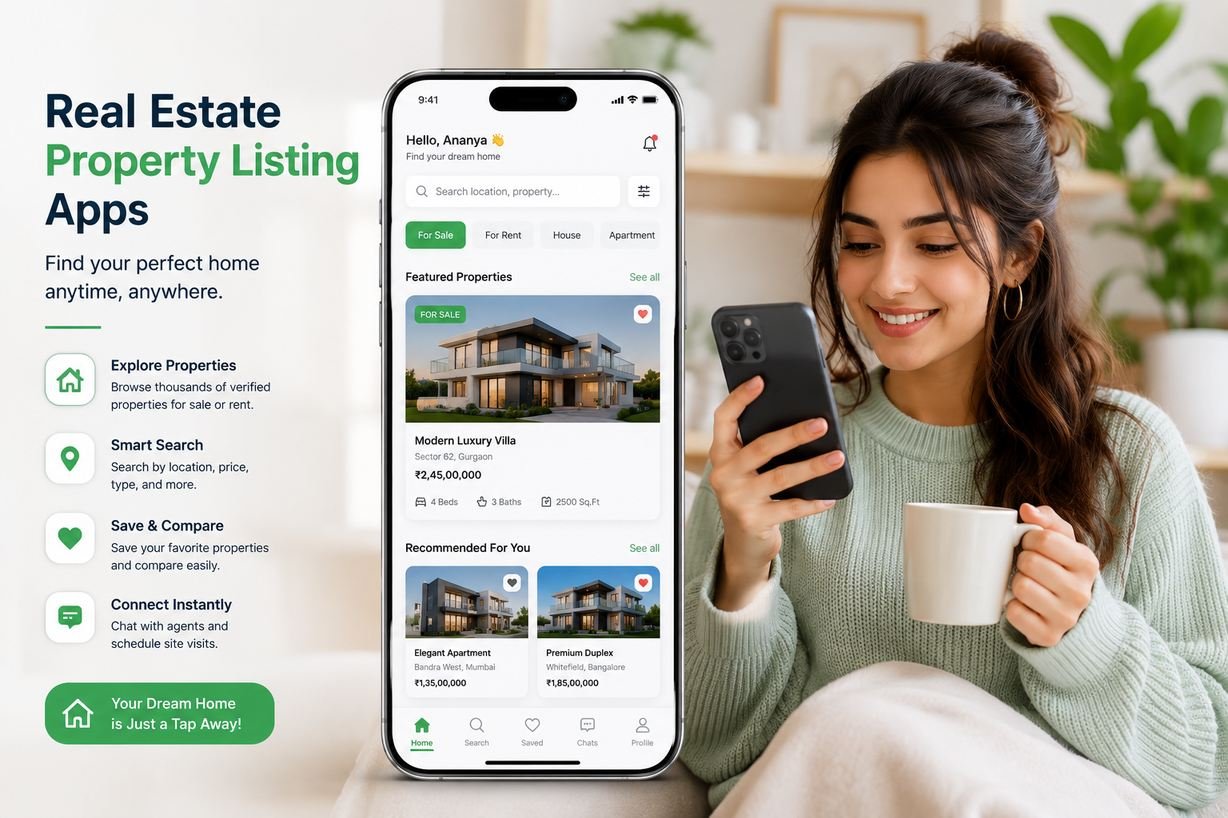
- Search Properties
- Filter Listings
- View Property Images & Videos
- Schedule Site Visits
- Contact Property Agents
- Compare Properties
- Calculate EMI & Mortgage
- Save Favorite Listings
- Receive Property Alerts
- Complete Digital Inquiries
A complete real estate platform generally consists of:
- Buyer Mobile App
- Seller/Agent App
- Admin Dashboard
- Property Management System
- CRM Integration
- Analytics Dashboard
- Notification System
- Payment Management
Together, these components create a modern property marketplace that enhances user experience and improves business efficiency.
Why Property Listing Apps Are Growing Rapidly
The real estate market has become increasingly digital as consumers expect faster and more transparent property transactions.
Several factors are driving the popularity of property listing applications:
- Increasing Smartphone Usage
- Digital Property Search
- Growth of Online Property Marketplaces
- AI-Based Property Recommendations
- Interactive Maps & Location Services
- Virtual Property Tours
- Remote Property Buying
- Secure Digital Documentation
- Better Investment Analysis
- Improved Customer Experience
These trends have made real estate app development one of the fastest-growing sectors within the PropTech industry.
Types of Real Estate Apps
Different businesses require different types of property applications depending on their services and target audience.
Property Listing Apps
Property listing applications allow buyers and tenants to browse available properties with detailed descriptions, pricing, images, videos, and amenities.
Popular features include:
- Property Search
- Advanced Filters
- Property Gallery
- Interactive Maps
- Contact Agent
- Save Favorites
These apps are suitable for property portals, brokers, and developers.
Property Rental Apps
Rental applications help users find residential and commercial rental properties while simplifying tenant and landlord communication.
Core features include:
- Rental Listings
- Monthly Rent Details
- Property Availability
- Tenant Communication
- Booking Requests
- Digital Agreements
Real Estate Marketplace Apps
Marketplace platforms connect buyers, sellers, agents, and builders within a single ecosystem.
Essential features include:
- Property Listings
- Verified Agents
- Lead Management
- Secure Messaging
- Reviews & Ratings
- Payment Integration
Commercial Property Apps
These applications focus on office spaces, warehouses, retail shops, industrial properties, and commercial investments.
Common features include:
- Commercial Listings
- ROI Calculators
- Investment Insights
- Property Comparison
- Commercial Leasing
Builder & Developer Apps
Builders use dedicated applications to showcase projects, generate leads, and communicate with prospective buyers.
Typical features include:
- Project Portfolio
- Construction Updates
- Floor Plans
- Site Visit Booking
- Sales Inquiry Management
Real Estate CRM Apps
CRM applications help agencies and brokers manage leads, customers, and property transactions efficiently.
Features include:
- Lead Tracking
- Follow-Up Reminders
- Customer Profiles
- Sales Pipeline
- Reports & Analytics
Property Management Apps
Property management applications simplify maintenance, rent collection, tenant communication, and property operations.
Popular modules include:
- Rent Collection
- Maintenance Requests
- Tenant Management
- Financial Reports
- Lease Management
Home Buying & Selling Apps
These applications simplify the entire property buying and selling journey.
Key features include:
- Property Search
- Mortgage Calculator
- Agent Contact
- Offer Management
- Document Upload
Property Investment Apps
Investment-focused platforms help users discover profitable real estate opportunities.
Core features include:
- Investment Analysis
- ROI Calculator
- Market Trends
- Property Valuation
- Portfolio Tracking
Vacation Rental Apps
Vacation rental applications connect travelers with short-term property owners.
Common features include:
- Property Booking
- Availability Calendar
- Reviews
- Online Payments
- Host Dashboard
How Property Listing Apps Work
Although users experience a simple interface, several technologies work together behind the scenes.
A typical workflow includes:
- Users register and create an account.
- Buyers search properties using filters such as location, budget, property type, and amenities.
- Property listings display detailed information, images, videos, and interactive maps.
- Users save favorite properties or compare multiple listings.
- Buyers contact agents through chat, calls, or inquiry forms.
- Property visits are scheduled directly within the app.
- Mortgage calculators help estimate financing costs.
- Notifications alert users about new listings, price changes, and scheduled visits.
- Agents and administrators manage listings, leads, and customer interactions through the backend dashboard.
This workflow delivers a seamless experience while helping businesses generate and manage high-quality property leads.
Business Models
Choosing the right monetization strategy is essential for creating a profitable property marketplace.
Property Listing Fees
Property owners, builders, or brokers pay a fee to publish listings on the platform.
This model provides a steady source of revenue for marketplace operators.
Featured Property Listings
Sellers can pay additional charges to highlight their properties at the top of search results or homepage sections.
Featured listings improve visibility and increase inquiry rates.
Subscription Plans
Real estate agencies and brokers subscribe to premium plans that provide benefits such as unlimited property listings, advanced analytics, lead management tools, and promotional features.
Recurring subscriptions generate predictable monthly revenue.
Commission-Based Revenue
The platform earns a commission on successful property sales, rentals, or transactions facilitated through the application.
Premium Agent Accounts
Verified agents can purchase premium memberships that include enhanced profiles, priority placement, marketing tools, and detailed performance analytics.
Advertisement Revenue
Developers, banks, insurance companies, and home service providers can advertise their products and services within the app.
Sponsored listings and banner advertisements create additional revenue streams.
Lead Generation Services
The platform can generate qualified buyer and seller leads for real estate agencies and charge on a per-lead or subscription basis.
Essential Buyer/User App Features
A successful property listing app should provide a seamless, fast, and engaging experience for users looking to buy, rent, or invest in real estate.
Essential features include:
- User Registration & Login
- Property Search
- Smart Filters
- Interactive Maps
- Property Details
- High-Quality Image Gallery
- Video Tours
- Virtual Property Tours
- Save Favorite Properties
- Compare Properties
- Chat with Agents
- Schedule Property Visits
- Mortgage & EMI Calculator
- Push Notifications
- Secure Payments
These features help users make informed decisions while improving engagement and lead conversion.
Agent/Broker App Features
Real estate agents require dedicated tools to manage property listings, communicate with buyers, and close deals efficiently.
Key features include:
- Agent Registration
- Property Listing Management
- Lead Management
- Appointment Scheduling
- Customer Chat
- Property Analytics
- Document Upload
- Earnings Dashboard
- Notifications
These tools improve agent productivity and enhance customer relationships.
Admin Panel Features
The admin dashboard serves as the central management system for the entire real estate platform.
Core functionalities include:
- Dashboard Overview
- User Management
- Agent Verification
- Property Approval
- Subscription Management
- Payment Management
- Reports & Analytics
- Content Management System (CMS)
- Notification Management
- Role & Permission Management
A robust admin panel ensures efficient platform management while maintaining listing quality and security.
Recommended Technology Stack
Selecting the right technology stack is essential for building a scalable and secure real estate application.
Mobile Development
- Flutter
- React Native
- Kotlin
- Swift
Backend Development
Database
Cloud Infrastructure
- AWS
- Google Cloud Platform
- Microsoft Azure
Maps & Location Services
Storage
A modern technology stack ensures fast property searches, reliable map services, secure data storage, and long-term scalability.
Real Estate App Development Process
Building a successful real estate application requires careful planning, a scalable architecture, and an exceptional user experience. Whether you're creating a property listing platform, rental marketplace, real estate CRM, or a PropTech solution, following a structured development process helps ensure long-term success.
1. Discovery & Requirement Analysis
Every successful real estate project starts with understanding business goals, target users, and market requirements.
This phase includes:
- Market Research
- Competitor Analysis
- Business Requirement Gathering
- User Persona Development
- Feature Planning
- Monetization Strategy
- Technical Architecture
2. UI/UX Design
Real estate applications should offer a modern, intuitive, and visually appealing experience that helps users discover properties quickly.
The design phase includes:
- User Journey Mapping
- Wireframes
- Interactive Prototypes
- Buyer App Design
- Agent Dashboard Design
- Admin Panel Design
- Responsive Interface
A well-designed interface improves engagement and increases property inquiries.
3. Backend Development
The backend manages users, property listings, payments, messaging, analytics, and notifications.
Core backend modules include:
- User Authentication
- Property Management
- Agent Management
- Lead Management
- Appointment Scheduling
- Payment Management
- Notification System
- Analytics Dashboard
- Admin Controls
- API Management
4. Mobile App Development
Real estate applications are usually developed for both Android and iOS.
Popular technologies include:
- Flutter
- React Native
- Kotlin
- Swift
Cross-platform development enables faster delivery while maintaining a consistent user experience.
5. API Integration
Modern property applications rely on third-party APIs to provide advanced functionality.
Popular integrations include:
- Maps & Location Services
- Payment Gateway
- Authentication
- Push Notifications
- Analytics
- Cloud Storage
- Email & SMS Services
6. Testing & Quality Assurance
A real estate application should be thoroughly tested before launch to ensure reliability and performance.
Testing includes:
- Functional Testing
- UI/UX Testing
- API Testing
- Performance Testing
- Security Testing
- Device Compatibility Testing
- Load Testing
7. Deployment
After successful testing, the application is deployed to production.
Deployment includes:
- Google Play Store
- Apple App Store
- Cloud Hosting
- CDN Configuration
- Monitoring Tools
8. Maintenance & Continuous Improvement
Launching the application is only the beginning. Regular updates help maintain performance and user satisfaction.
Post-launch services include:
- Bug Fixes
- Performance Optimization
- New Feature Development
- Security Updates
- Cloud Monitoring
- Technical Support
Real Estate App Development Cost
The cost of developing a property listing app depends on platform complexity, AI capabilities, third-party integrations, cloud infrastructure, and scalability.
Estimated Pricing (INR)
| Platform Type |
Estimated Cost |
| Basic Property Listing App |
₹6,00,000 – ₹12,00,000 |
| Standard Real Estate Marketplace |
₹12,00,000 – ₹25,00,000 |
| Advanced Platform (Like 99acres or MagicBricks) |
₹25,00,000 – ₹50,00,000 |
| Enterprise Real Estate Solution |
₹50,00,000+ (Custom Pricing) |
Factors Affecting Development Cost
The final budget depends on:
- Android & iOS Development
- UI/UX Design Complexity
- Property Search Engine
- Interactive Maps
- Virtual Tours
- AI Features
- Cloud Hosting
- Third-Party API Integrations
- Payment Gateway
- Maintenance & Support
Development Timeline
The timeline varies depending on project scope and custom features.
| Development Phase |
Estimated Duration |
| Planning & Research |
1–2 Weeks |
| UI/UX Design |
2–4 Weeks |
| Backend Development |
5–8 Weeks |
| Mobile App Development |
8–12 Weeks |
| Testing & QA |
2–4 Weeks |
| Deployment |
1 Week |
A production-ready real estate application generally takes 4–7 months to build and launch.
Essential API Integrations
Modern real estate applications rely on trusted APIs to deliver advanced functionality.
Maps & Location
Authentication
- Firebase Authentication
- Google Sign-In
- Apple Sign-In
Payments
Notifications
- Firebase Cloud Messaging (FCM)
- OneSignal
Media Storage
Analytics
- Firebase Analytics
- Google Analytics
AI Features for Real Estate Apps
Artificial Intelligence is reshaping the real estate industry by delivering personalized experiences and smarter decision-making.
Popular AI features include:
- AI Property Recommendations
- AI Property Valuation
- AI Chatbot
- AI Image Recognition
- AI Lead Scoring
- AI Mortgage Estimation
- AI Search Personalization
- AI Fraud Detection
- AI Investment Insights
- AI Market Trend Analysis
These capabilities improve user engagement, increase lead quality, and help buyers discover relevant properties faster.
Security Best Practices
Real estate platforms store sensitive user information, property documents, and financial data. Strong security practices are essential.
Recommended measures include:
- Secure Authentication
- Multi-Factor Authentication (MFA)
- HTTPS Communication
- Secure APIs
- Role-Based Access Control
- Data Encryption
- Secure Cloud Storage
- Audit Logs
- Backup & Disaster Recovery
- Fraud Detection Mechanisms
Implementing these security practices helps protect user data and builds trust in your platform.
Common Challenges
Developing a real estate application involves several technical and operational challenges.
Common challenges include:
- Fake Property Listings
- Property Verification
- Accurate Location Data
- Lead Quality Management
- Large Media File Optimization
- Platform Scalability
- Secure Payment Processing
- User Trust & Transparency
- Market Data Updates
- Ongoing Maintenance
Addressing these challenges early helps ensure a reliable and scalable PropTech solution.
Property Listing App vs Real Estate CRM
| Feature |
Property Listing App |
Real Estate CRM |
| Primary Users |
Buyers & Sellers |
Real Estate Agencies |
| Property Search |
✅ Yes |
Limited |
| Property Listings |
✅ Yes |
Limited |
| Lead Management |
Basic |
Advanced |
| Customer Relationship Management |
Limited |
✅ Yes |
| Sales Pipeline |
❌ No |
✅ Yes |
| Revenue Model |
Listings, Ads, Subscriptions |
SaaS Subscription |
| Scalability |
High |
High |
A property listing app focuses on connecting buyers with available properties, while a Real Estate CRM is designed to help agencies manage leads, sales pipelines, and customer relationships.
Benefits of Real Estate App Development
Real estate applications offer significant benefits for buyers, sellers, brokers, and developers.
Key advantages include:
- Better Lead Generation
- Increased Property Visibility
- Faster Property Sales & Rentals
- Improved Customer Experience
- Enhanced Agent Productivity
- Digital Property Management
- Better Business Analytics
- Increased Revenue Opportunities
- Wider Market Reach
- Scalable Business Growth
These benefits make property listing applications an essential investment for modern real estate businesses.
Future Trends
The PropTech industry continues to evolve with emerging technologies that improve property discovery and customer engagement.
Key trends include:
- AI-Powered Property Search
- AR/VR Virtual Property Tours
- Blockchain Property Transactions
- Smart Home Integration
- Predictive Market Analytics
- Voice-Based Property Search
- Drone Property Showcases
- Personalized Property Recommendations
- Digital Documentation & E-Signatures
- Smart Investment Platforms
Businesses that adopt these technologies will gain a competitive advantage and deliver better customer experiences.
Why Businesses Choose Argenius
At Argenius, we specialize in building secure, scalable, and feature-rich real estate applications for property developers, brokers, agencies, builders, rental businesses, and PropTech startups.
Our real estate app development services include:
- Custom Property Listing Apps
- Real Estate Marketplace Development
- Property Rental Platforms
- Real Estate CRM Development
- AI-Powered Property Solutions
- Flutter & React Native App Development
- Cloud Infrastructure & API Integration
- Long-Term Maintenance & Technical Support
Whether you're launching a local property portal or a nationwide real estate marketplace, Argenius delivers innovative solutions tailored to your business goals.
Final Thoughts
Digital transformation has changed the way people search, buy, sell, and rent properties. Modern users expect fast property searches, interactive maps, virtual tours, secure communication, and personalized recommendations—all from a single mobile application.
A successful real estate app combines intuitive design, powerful search capabilities, secure infrastructure, and intelligent automation to create an outstanding user experience. By investing in the right technology and development partner, businesses can increase lead generation, improve operational efficiency, and stay ahead in the competitive real estate market.
If you're planning to build a property listing app, rental platform, or complete PropTech solution, partnering with Argenius can help you develop a scalable, secure, and future-ready real estate application.
Frequently Asked Questions
How much does real estate app development cost?
A basic property listing app generally costs ₹6 lakh–₹12 lakh, while advanced real estate marketplaces with AI, virtual tours, CRM integration, and premium features typically range from ₹25 lakh–₹50 lakh or more, depending on project complexity.
How long does it take to develop a real estate app?
A production-ready real estate application usually takes 4–7 months, depending on the required features, integrations, and level of customization.
Which technologies are best for real estate app development?
Flutter and React Native are excellent for cross-platform mobile development, while Laravel, Node.js, and Django are popular backend frameworks. Google Maps API, AWS, PostgreSQL, Firebase, and Cloudinary are commonly used to build scalable property platforms.
What are the must-have features of a property listing app?
Essential features include property search, advanced filters, interactive maps, virtual tours, image galleries, mortgage calculators, property comparison, agent chat, visit scheduling, and push notifications.
How can AI improve a real estate application?
AI can recommend relevant properties, estimate property values, personalize search results, qualify leads, detect fraud, analyze market trends, and improve customer support with intelligent chatbots.
Can a real estate app support rental and property sales together?
Yes. A single platform can manage property sales, rentals, commercial listings, vacation rentals, and property management services with separate modules for each business model.
Can Argenius build a custom real estate application?
Yes. Argenius provides end-to-end real estate app development services, including property marketplaces, rental platforms, broker portals, CRM systems, AI-powered property solutions, cloud deployment, and long-term maintenance.